GAGOSIAn QuarterlyYou’re a true Venetian! What was it like to grow up in Venice? How did you get around town? Did you take a boat to school?
Marcantonio Brandolini D’AddaYes, I grew up in Venice, though I don’t really identify as the typical Venetian. The idea feels nostalgic to me. Growing up in the lagoon is definitely something I would suggest, as you have no cars or major dangers. You get your freedom at the age of five, walking to school, playing soccer with your friends in the streets, and many other activities that in other cities you couldn’t do. No, no boat to school, but we used a boat to escape from school and from the streets.
gQWhat’s something that someone would be surprised to learn about “the real Venice”?
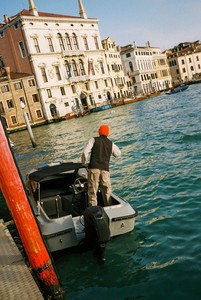
MBDaI think most people who come to Venice don’t understand the city’s unique environment. The lagoon is a complex ecosystem that made Venice what it is today. Without the shallow waters of the lagoon, Venice would have been conquered in a few days by its enemies. Without the balance between sea, salt water, and sweet water, the foundations that support the city’s buildings would collapse. Without the many shores and the different communities there, I wouldn’t live in Venice—they’re a refuge when you feel overwhelmed.
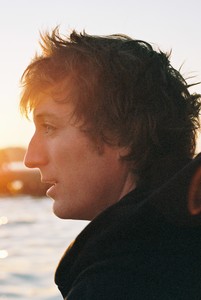
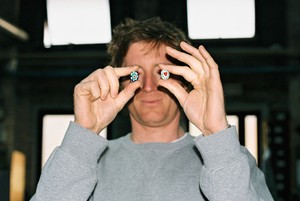
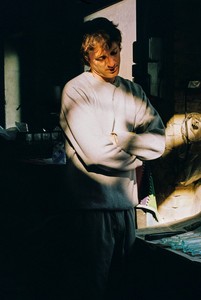
Marcantonio Brandolini d’Adda, Venice, 2024
gQYour family has lived in the same palazzo on the Grand Canal for centuries. When was the Palazzo Brandolini built, and what’s the wildest thing that’s happened there?
MBDaI’m not sure that anybody from my family actually lived in the building, except for my parents. But I know that nobody ever worked here, like most of the owners of other palazzi in the last two centuries or more. I think that’s part of what made Venice a place without much innovation. Back in the glorious period of the city, palaces were places of commerce and melting pots for different nationalities and backgrounds. That made a lot of things happen—think about the political structure of the Serenissima, the development of printing, and many other innovations. If you want to know about wild things, there were probably many, but I’m not sure that’s interesting—it’s easy to make wild things happen.
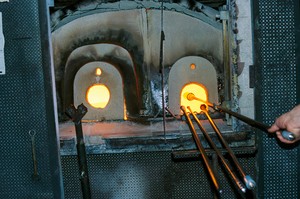
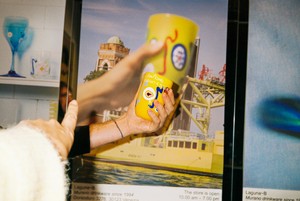
Laguna~B workshop, Venice, 2024
Marcantonio Brandolini d’Adda, Venice, 2024
gQLet’s talk about Laguna~B. Start at the beginning. When was the company founded? And by whom?
MBDaThe company was founded in 1994 by my mother, Marie, after her stepfather gave her a glass cherry made by the glass artist Bruno Amadi. She liked it, and decided to explore the material and the culture of [the glassmaking center] Murano. There she discovered the goti de fornasa, a kind of crazy drinking glass that glassmakers would make at the end of their working day using leftovers from previous productions. That made these glasses completely different from one another and uneven in shape. She got inspired by them and created Goto, our most iconic collection. That’s where everything began.
gQWhat are the core tenets behind Laguna~B? What do you strive to achieve with each piece, and with the company as a whole?
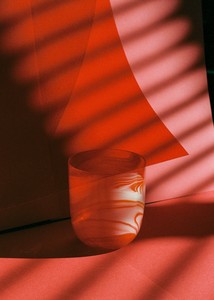
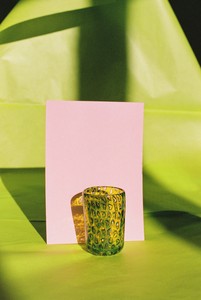
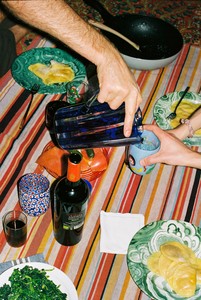
Glassware by Laguna~B
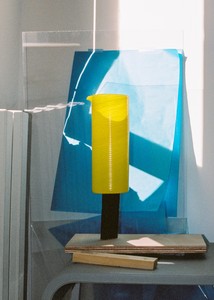
Glassware by Laguna~B
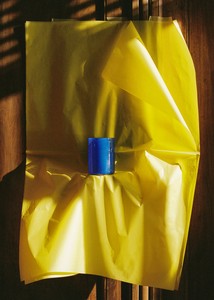
Glassware by Laguna~B
MBDaThe core tenets of Laguna~B are to be a contemporary company that adapts to the present and prepares for the future. Quality and attention to detail must manifest in every aspect of our business, from the design process to production, from advertising to customer care. Our purpose is to do business not just to sell but to participate in the future we desire, and to invest in culture, community, and the environment. Every piece has to embody our tenets.
gQAt what age did you get involved? What has it meant to take on the role of director?
MBDaI started working for the company seriously at twenty-five. It was basically out of business back then; my mother had passed away years earlier, and nobody had worked on it since. Before that I was working as an assistant to the CEO of an auto company in Milan, and I didn’t have much experience. I made many, many, many commercial mistakes, which I think made Laguna~B an outsider in the world of craft and design companies.
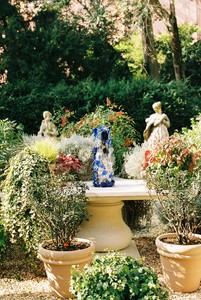
Glassware by Laguna~B
gQCould you speak to the influence of Venice on the aesthetics and process behind the glassworks? And for readers who might not know, could you explain the history of Murano glass masters and the goti de fornasa?
MBDaThe key to our design process is to keep tradition out of the picture and let creativity flow. The general idea about Murano is really nostalgic, as it is for most Italian crafts. Their storytelling hasn’t changed for 100 years: “Murano is an island where the most skilled glass masters in the world live, coming from generations of glass masters, using secret techniques that are nearly impossible to reproduce.” The reality is that whatever is made in Murano can be replicated worldwide with the same quality; there’s no secret difference. So we believe the only way to “save” Murano is by investing in innovation and making free creativity the drive for the future.
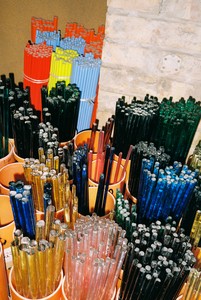
Laguna~B workshop, Venice, 2024
gQSince this year marks the thirtieth anniversary of Laguna~B, we’d love to hear where you hope to see the company in five years? Twenty years?
MBDaMy goal is to make Laguna~B the point of reference for drinking glasses of excellence. We understand that our customers have begun to see our products as collectibles, not just simple functional glasses for setting a nice tablescape. Our customers use them as functional art pieces and treat them with extreme care. One client once told me that drinking from her goto made her feel a sense of belonging, as if she were participating in a bigger family. Within five years, we’d like to see an increase in our collectors as we design and develop over sixty new collections. Having a lot of collections would encourage customers to create more diverse and playful selections of glasses for their table. Let’s forget about the baroque, classic tablescape where everything matches. My ambition in twenty years is to have an exhibition about our work.
Glassware by Laguna~B
Glassware by Laguna~B
gQYou’ve collaborated with various artists—what have those experiences been like? Do you have a dream list of other artists you’d like to bring in and collaborate with in the future?
MBDaIt’s always a good challenge, but the design process is complicated. Glass is a material without many limitations, but money, as always, is an issue, and the other challenge is to be able to find compromises between our clients’ designs and the production process. Sometimes I prefer to have the freedom to create a really complex drinking glass myself and sell it for thousands of dollars. Even if it’s difficult to sell. But who knows, I love challenges.
Marcantonio Brandolini d’Adda, Venice, 2024
Glassware by Laguna~B
gQAre there any upcoming or recent projects that you’d like to draw attention to?
MBDaAs I said, we have purposes other than selling. Since 2017, we’ve been investing in various nonprofit projects in different fields. This year we decided to focus on two major programs, Vital and Autonoma. We cofounded Vital four years ago with the local nonprofit We Are Here Venice; the goal is to regenerate the lagoonal ecosystem, restoring the salt marshes (and their ability to stock carbon dioxide), which have been eroded by human activities. Autonoma is one of our most important cultural projects, aiming at fostering creativity and talent in a young generation of glassmakers. Today, Autonoma works with schools and US social institutions that support kids from difficult backgrounds, using art and creativity to cultivate talent. We think involving young, passionate people is the key to ensuring a thriving future for Murano and the creative world in general.
Photos: Karla Hiraldo Voleau
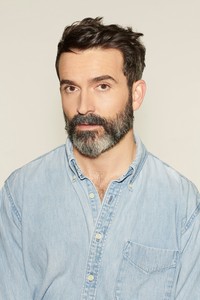
Marcantonio Brandolini d’Adda is an Italian artist, designer, entrepreneur, and CEO and art director of Laguna~B. Photo: Karla Hiraldo Voleau