June 24, 2024

David Cronenberg:
The Shrouds

David Cronenberg’s film The Shrouds made its debut at the 77th edition of the Cannes Film Festival in France. Film writer Miriam Bale reports on the motifs and questions that make up this latest addition to the auteur’s singular body of work.

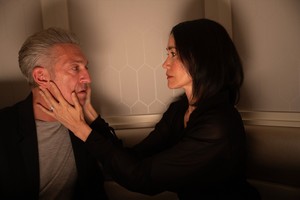
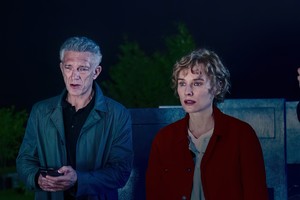
Vincent Cassel and Diane Kruger in a film still from David Cronenberg’s "The Shrouds" 2024

Still from The Shrouds (2024), directed by David Cronenberg

Still from The Shrouds (2024), directed by David Cronenberg

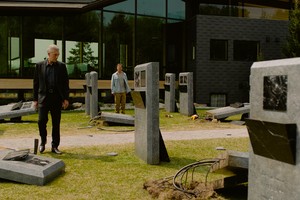
“Until death do us part” is a new beginning for Karsh (Vincent Cassel) in David Cronenberg’s new film, The Shrouds. Karsh, still inconsolable four years after the death of his beloved wife, Becca (Diane Kruger), has started GraveTech, a service that allows clients to monitor the deteriorating corpses of their loved ones through high-tech shrouds and surveillance. Dominating the film are screens (LCD gravestones) and an elegant Howard Shore score, equally mournful and romantic. The overall artistic tone sustains that same midpoint, with jokes on top.

Many of the jokes are more overtly Jewish in tone than in previous Cronenberg films. Matzo ball soup, pastrami sandwiches, and the phrase “duck soup” pop up frequently. This is Jewishness as positioned against Christianity; the Shroud of Turin is brought up as a fraud compared with Karsh’s too real shrouds. But it is also a secular, atheistic Jewish identity, like Cronenberg’s own, where in life and after death there is only the body. As in his previous peculiar Jewish comedy, A Dangerous Method, a theme here is valuing the body (Freud) over the spirit (Jung).

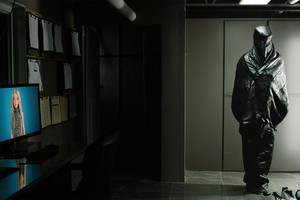
“I am involved with her body in the way that I was in life, and even more,” Karsh explains ecstatically about tracking Becca’s skeleton in zoomed-in, high-resolution close-ups. He was so merged with his wife that her body belongs to him, too. It is perversity as an all-encompassing romance. Karsh’s excitement is that of the longtime lover as well as the filmmaker. The GraveTech observational camera creates a sort of film installation within the narrative film, seen most clearly when Karsh tries on shrouds himself, producing gorgeous renderings of his flesh, muscles, then skeleton.

Gagosian quarterly weekend reads

Get the best of the Quarterly in your inbox twice a month.

By subscribing you agree to our Privacy Policy.

Still from The Shrouds (2024), directed by David Cronenberg

Still from The Shrouds (2024), directed by David Cronenberg

The main narrative thrust of the film is that Karsh is trying to date again, to learn to have sex with another body while thinking and dreaming of his late wife’s. One date goes askew when dinner ends with a visit to Becca’s grave. After that, he successfully starts a relationship with possible new investor Soo-Min Szabo (Sandrine Holt), who notably cannot see. In contrast to Karsh, she sees through physical touch, not flat screens.

“I’m out of practice. It’s been decades since I’ve tried to seduce women,” Karsh says, narrating his dating progress to Becca’s dog groomer sister Terry (also played by Diane Kruger), and her ex-husband, Maury (a terrific Guy Pearce). Maury is an IT schlemiel and probable schmuck who becomes central to an improbable conspiracy plot involving Russian, Chinese, or Japanese operators who want control of GraveTech’s surveillance technology. And Terry, after years of friendship, jumps into bed with Karsh the minute he becomes involved with Soo-Min.

One reading of the film, eccentric but narratively sound, is that Terry and Maury don’t exist. These characters could be like the dreams Karsh has of conversing with his dead wife while her body is increasingly mutilated by cancer until it resembles the Venus de Milo. The sex Karsh has with Terry—which ends as suddenly as it begins—could be a physical manifestation of his thinking of his wife’s body while sleeping with Soo-Min. And Maury, the obsessive stalker ex-husband, is the perfect contrast to Karsh as widower. In one scene, Maury describes Terry as Karsh’s “ex-sister-in-law.” Karsh is affronted. “I don’t think there are ‘exes’ after death!” he says.

Still from The Shrouds (2024), directed by David Cronenberg

This intensely personal film, written by Cronenberg while grieving his wife of forty-three years, is essentially about the strange present tense of being widowed. There may be resentment, pain, and longing in a divorce, but hopefully there is also closure. But with widower Karsh, the extreme physical loss is contrasted by a mental and emotional continuum.

Whether Maury and Becca are hallucinations or cinematic devices, the conspiracy plots are familiar emotionally to anyone experiencing loss. Why did the loved one die on this day, this hour, but not yesterday, not two months from now? The randomness is hard to process, so the mind looks for answers, whether spiritual or medical. But ultimately there is no answer because death is definitively arbitrary. And when the film ends suddenly, the viewer is left holding on to that feeling.
Photos: courtesy Saint Laurent Productions

Miriam Bale is a writer and film programmer based in California.

Miriam Bale is a writer and film programmer based in California.

See all Articles

Francis Bacon: Reinventing Realism

Francis Bacon: Reinventing Realism

Francis Bacon lived and worked in Paris for a decade starting in the mid-1970s. The city and the art he encountered there provided a profound backdrop for his austere late style, which often brings together smooth, colorful backgrounds, spare architectural signifiers, and sculptural human forms. Here, three striking paintings from that period are considered by Sebastian Smee.

Divine Emanations: Nymphs, Poets, and the Painter’s Palette

Divine Emanations: Nymphs, Poets, and the Painter’s Palette

Janne Sirén considers Anselm Kiefer’s new paintings, the subject of an exhibition at Gagosian, New York, entitled Seal My Ears Shut and I Shall Hear You Still.

Giuseppe Penone: The Reflection of Bronze

Giuseppe Penone: The Reflection of Bronze

Adam D. Weinberg has been working with Giuseppe Penone on an exhibition of the artist’s new sculptures, The Reflection of Bronze, that opens at Gagosian, New York, on April 22. The works explore the character and possibilities of bronze. Here, Weinberg considers Penone’s enduring engagement with the alloy and addresses the conceptual underpinnings of the exhibition’s three-room structure.

Donald Judd: Patiently Constructed

Donald Judd: Patiently Constructed

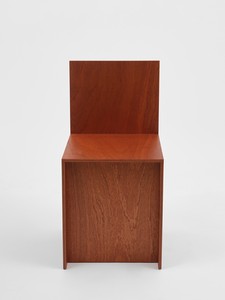
From their respective fields, three international cultural figures—artist and designer Ronan Bouroullec, fashion visionary Michèle Lamy, and chef and restaurateur Enrique Olvera—reflect on Donald Judd’s work in furniture, the subject of recent exhibitions in South Korea and Japan.

Henry Moore: Monumental Nature

Henry Moore: Monumental Nature

Laura Bruni writes about a major exhibition celebrating the work of the British sculptor Henry Moore at the Royal Botanic Gardens, Kew, London.

Georg Baselitz and the Possibilities of Print

Georg Baselitz and the Possibilities of Print

On the occasion of Baselitz: AVANTI! at the Museo Novecento in Florence, Italy, Holly EJ Black considers the roots and reverberations of Georg Baselitz’s printmaking.

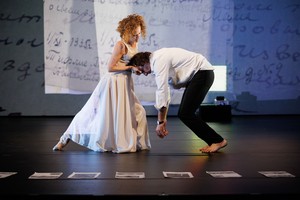
Portrait of the Artist as a Young Choreographer: Emily Coates Dances Early Balanchine

Portrait of the Artist as a Young Choreographer: Emily Coates Dances Early Balanchine

Mark Franko considers how Emily Coates resurrects the spirit of George Balanchine’s American beginnings through archival research, spoken dialogue, and movement in her performance Tell Me Where It Comes From.

Tradition and Innovation: The 2026 Loewe Foundation Craft Prize

Tradition and Innovation: The 2026 Loewe Foundation Craft Prize

The Loewe Foundation Craft Prize celebrates its ninth edition with an exhibition at the National Gallery Singapore.

Francesca Woodman: Brushing with Infinity

Francesca Woodman: Brushing with Infinity

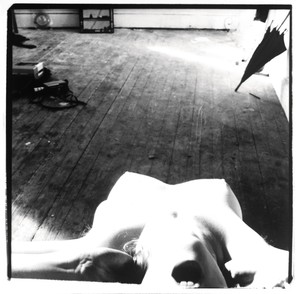
On the occasion of the exhibition Francesca Woodman: Lately I Find a Sliver of Mirror Is Simply to Slice an Eyelid at Gagosian, Rome, Alyce Mahon explores the artist’s engagements and affinities with Surrealism, from the writings of André Breton to the photographs of Hans Bellmer. Mahon focuses on the time Woodman spent in Rome while she was a student at the Rhode Island School of Design.

Ellen Gallagher: Submergent Visions

Ellen Gallagher: Submergent Visions

Sharad Chari reflects on a recent visit to Ellen Gallagher’s studio in Rotterdam, Netherlands, thinking through the artist’s intertextual interrogation of the oceanic and the ways in which her practice is informed by a wider Black intellectual and artistic world, an abiding interest in Herman Melville’s Moby-Dick, and the imperatives that surround this studio by the Port of Rotterdam.

The American Library in Paris

The American Library in Paris

Christian House reports on Paris’s American Library, a storied collection of English-language books in the French capital, tracking its evolution and enduring role in a cosmopolitan literary milieu from World War I to the present day.

Beatrice Wood

Game Changer
Beatrice Wood

Salomé Gómez-Upegui honors Beatrice Wood, the “Mama of Dada,” an underappreciated trailblazer within the movement who went on to become a brilliant ceramist.