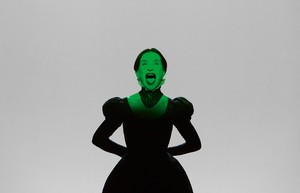
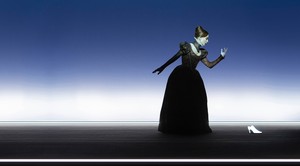
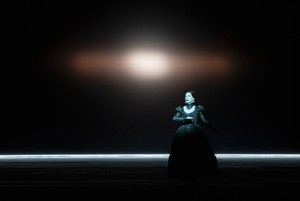
For over three decades, avant-garde theater and opera director Robert Wilson and actor Isabelle Huppert have shared a forceful, profound collaboration. Their latest piece is Mary Said What She Said, an almost unbelievably demanding ninety-minute monologue by Huppert that is based on the life of Mary, Queen of Scots. Opening first in Paris in 2019, and performed last spring at London’s Barbican Centre to critical acclaim, Mary Said What She Said will have its American premiere at NYU Skirball, New York, on February 27. Author William Middleton caught up with the actor and the director in Paris.
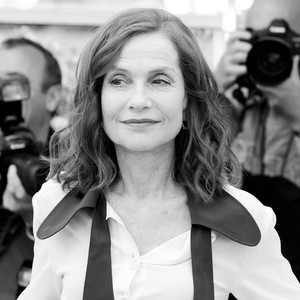
Isabelle Huppert is a French actress and producer. A collaborator with Claude Chabrol, Benoît Jacquot, and Michael Haneke, Huppert alternates between stage and screen, art-house cinema and mainstream films. She was introduced to the public by the Swiss director Claude Goretta in 1977 in the film The Lacemaker; her theatrical career has led her to work with renowned directors such as Robert Wilson, Claude Régy, Krzysztof Warlikowski, Jacques Lassalle, and Luc Bondy, and to interpret contemporary authors such as Yasmina Reza and Florian Zeller. Photo: JEP Celebrity Photos/Alamy Stock Photo.
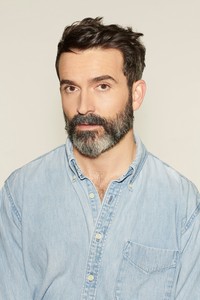
The Paris-based writer William Middleton is the author of Double Vision, a biography of the legendary art patrons and collectors Dominique and John de Menil, published in 2018 by Alfred A. Knopf. He has contributed to such publications as W, Vogue, Harper’s Bazaar, Architectural Digest, House & Garden, and Departures.
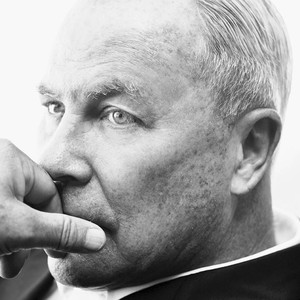
Robert Wilson’s productions have decisively shaped the look of theater and opera since the late 1960s. His signature use of light, his investigations into the structures of simple movements, and the classical rigor of his scene and furniture design have continuously articulated the force and originality of his vision. Wilson’s close ties and collaborations with leading artists, writers, and musicians continue to fascinate audiences worldwide.
William MiddletonSo I have to say that I’ve never seen a performance that seemed so physically and emotionally demanding. In its review of Mary Said What She Said, Le Monde pointed to the movement you make late in the piece, moving back and forth on a diagonal, maniacally, and wondered how you were able to achieve it. Do you feel that this piece is demanding? What’s it like to perform?
Isabelle HuppertYes, it’s very, very demanding but also very, very rewarding. It’s a long journey. Even now, having done it I don’t know how many times, I always feel at the beginning that I have to climb a big mountain and I never know exactly how it’s going to process. But Bob has orchestrated so many devices all along the performance: the lights, the space, the movements, the sound—they’re all wonderful partners so I never feel lonely. But yes, it’s something to achieve, the movements and the speed of the voice, with a lot of nuances, because sometimes it goes very slow and sometimes it goes very fast. But every time I’ve done it, it’s still so exciting.
WMSo tell us a little about the genesis of Mary Said What She Said: What attracted you both to the story?
Robert WilsonWell, I’d been thinking about doing it for a long time. At first I thought about maybe doing it as a larger production and then I decided to narrow it down to a single character. In the beginning, I’d thought to do it with Jeanne Moreau and made a video portrait of her as Mary Queen of Scots. As it turned out, I ultimately thought about Isabelle. The author Darryl Pinckney and I have worked together on six or seven productions, so we have a shorthand: he does his work and I do mine and then we see what it’s like together. That’s one thing I also like about working with Isabelle—we know each other, we trust each other, so we can work separately and then put our work together.
IHAnd we knew each other because Darryl had adapted [Virginia Woolf’s] Orlando [1928], which was my first encounter with Bob, the first time we worked together. That adaptation of Orlando was in 1992, over thirty years ago.
WMAnd what about the story of Mary Queen of Scots was interesting to you?
IHWell, who isn’t interested in Mary Stuart as a historical figure? But, with Bob, I never consider my work with him as involving the notion of characters. I never feel that I “play” Mary Stuart. I don’t believe in the notion of character, I don’t think it exists. In a work, you go through different layers or states: sorrow, joy, anger, this kind of thing. In this piece the audience gets the story of Mary Stuart—well, glimpses of the story. Even if Bob doesn’t have a classical narrative storyline, you get everything you need about a life like Mary Stuart’s: tragedy, adventure, multiple loves. The play is called Mary Said What She Said because Darryl Pinckney chose to focus the story through her relationship with her four lady’s maids, all of whom were named Mary: Mary Seton, Mary Livingston, Mary Beaton, and Mary Fleming. At the end, what’s most important is the sense of a destiny, a tragic destiny, of someone who happens to be a queen. With Bob’s genius you capture all of this without even being aware of what you capture.
RWAnd if you know something about the history, the piece is one thing, but if you don’t, it’s another. It’s not necessary to know the story of Mary Queen of Scots, but it adds something if you do. The work should be accessible on many levels, and one is that someone can just walk in from the street, not knowing anything, and experience something.
WMTell me a little about the rehearsal process.
RWI tend to think abstractly, putting together a work in an abstract form, and what’s unique about Isabelle is that she’s one of the few actresses I’ve worked with, in about sixty years of working in the theater, who can think abstractly. Sometimes I do the rehearsal myself. If I start at the back of the stage and I take twenty-five minutes to walk forward, can I hold the audience? No music, no text—how could I do that? Then I work with Isabelle. Often we first work without text. So forget about the text, forget about character, forget about interpretation. And in sixty years of working in the theater, I’ve never, ever once told an actor what to think.
IH[Laughing] Which is great, because I don’t think actors should think. I have two mantras: an actor shouldn’t have ideas and an actor shouldn’t think. What do you think, Bob?
RWYes, exactly, ideas are for—
IHFor you!
WMSo, rehearsals are about movement?
RWPhysicality. I give formal direction. Can this be quieter? Can this be louder? Can this be more interior? Can this be rougher? Can this be smoother? Can this be more exterior, then more interior, and can you change quickly? Or can you have a slow change, a slow dissolve? I give these formal directions and then it’s filled in, that’s up to Isabelle. On the one hand I’m giving very strict limits; on the other, I’m giving freedom. You can have 100 women dancing Giselle [1841], but why is there one that’s the most beautiful? They’re all doing the same steps choreographed in the nineteenth century, but it’s how you fill in the form. The form is only a frame to get you somewhere else. And that’s up to Isabelle.
IHWithin this shape and these indications, you go through all these various states—rage, sorrow, joy—but you feel a total freedom. It’s very strange to experience. You have so much more freedom than if you had a psychological pattern and all these notions of a specific character. For me, character is always like a prison, because you feel obliged to resemble a predetermined person. And acting is all about being yourself. I never feel as free as when I’m in a work with Bob. Bob talks about abstraction and shapes and movements, and there’s a great sense of precision, but he never tells me to be a certain way. It’s very exciting and inspiring and reassuring because he’s taking care of the frame, of things that I don’t have to worry about, but within these limitations I’m completely free—I can be myself.
RWSometimes I turn all the lights off and just run techs or listen to the sound, like a radio play. And if you’re listening to a radio, you have enormous freedom to imagine, “What does this room look like? What does the character look like?” And then sometimes I run it silent. If you see a silent movie, you have tremendous freedom to imagine the audio. Sometimes I work on them separately and then put them together and see what happens. My work is not like Merce Cunningham and John Cage, who worked on music scores separate from dance. Mine is not a collage. It’s structured so that what I see can reinforce what I hear without having to illustrate it, necessarily. But it’s not arbitrary either.
WMAs Isabelle mentioned, you’ve worked together for over thirty years. I’d like to know a little about how you began and what each of you saw in the other.
IHWe had a mutual friend, Alain Coblence, a lawyer. Alain wanted to take me to a concert at the Conservatoire in Paris. I was tired and didn’t want to go, but he insisted and said that we’d have dinner after with friends. So I went, and we had dinner with Pierre Bergé and Bob, just the four of us. At the time, Bob was doing Orlando in Berlin, with Jutta Lampe. So we started talking about it and all of a sudden Bob looked at me and said, “Do you want to do it in Paris?” It was out of nowhere. I said, “Yeah, okay, why not?” Of course I knew who Bob Wilson was but I never knew if he really knew who I was. And we started the production at the Théâtre Vidy in Lausanne and then did it at the Odéon theater in Paris. If I hadn’t gone out that evening, maybe it would never have begun. I love the idea that one of the most important encounters in my life started completely by chance.
WMAnd Bob, what was it that attracted you to Isabelle and her work?
RWWhat’s interesting about Isabelle is just who she is as a person. I think that was the initial attraction and it still is. I was just fascinated by Isabelle, her mind, her presence—the multifaceted elements of her.
IHThat may be what Bob found with me, the possibility to give access to this multiplicity of personas that you have in yourself, but that’s not only me—it’s anybody. Bob’s genius is to give me such a sense of possibility. I took it because I’m an actress and I’m almost voracious as an actress—I want to do as many things as possible. And he gave me this possibility because he has this idea that human beings are not any single definition. It’s like a life’s journey, going through all these different states—in the case of Mary Stuart, to death. You don’t focus on something narrow, on a story, you go much broader. And the stage gives you this possibility, this immensity, for exploring feelings.
WMI was hoping to talk a little about the two other pieces you did together, Orlando and Quartett [2006].
IHOrlando, again, was a really big journey because it was going from a little boy to a woman and through the centuries. It wasn’t only going to a certain point in your life—with Mary Stuart, to death; it was even more universal.
RWIt’s curious, I did Orlando in Germany and I did it in Paris with Isabelle and we traveled all over with it. Isabelle was equally strong as a boy at the court of Elizabeth I as she was as a woman in the mid-nineteenth going on to the twentieth century. And I loved her transition, it was just so easy, she just walked behind a—
IHThe tree, you remember.
RWShe came back and she was changed.
IHThe tree was in the middle of the stage and yes, there was a final transition, when I was putting on the dress. I always thought we should do it again—it might resonate even more now.
WMAnd Quartett, can you tell us about that?
RWHeiner Müller was the author, and Heiner said at the end of his life that I was his favorite director, the one whose direction of his work he preferred. Heiner can be very cruel, with texts that can be bloody. I render it another way, with a kind of beauty that can make the violence even more powerful. Also, what’s always important is what’s behind the words. Heiner is often played to be even more cruel, but there are moments that can be done very tender. It was a way of having Heaven and Hell be one world, not two—incorporating opposites.
I say to Isabelle that if you’re standing on the stage, the space in back of you is as important, or more important, as the space in front of you. If you’re only aware of the space in front, with the public, it’s flat. It’s the same with text. When I did The Black Rider [1990] with Tom Waits and William S. Burroughs, Burroughs said [in Burroughs’s voice] “That’s how the cookie crumbles . . . that’s how the potato mashes.” It wasn’t [regular voice] “That’s how the potato mashes.” I heard it in Sweden a few years ago, and they said [regular voice] “That’s how the cookie crumbles, that’s how the potato—” No [laughs], it’s not the same! It’s the irony, the space in back. Tom Waits says [in Waits’s voice] “Come along with the Black Rider, we’ll have a gay old time!” And “Take off your skin and dance around in your bones. I’m going to drink your blood like wine. We’ll have a gay old time.” It’s the irony, the space behind those texts, and that’s what’s brilliant about Isabelle too.
IHI was listening to Bob doing these little childish things, which is a very important dimension in his work. Of course there’s often a sense of the tragic, but there’s also something extremely childish, and it’s very important to have mental access to that dimension, otherwise you don’t get Bob’s work. There’s a sense of humor, yes, but more like something a child would do—make faces, or distort the text. I think you miss something as a spectator, and as an actor, if you don’t get this. It’s important to be in connection with this nonrational relationship to text and movement, an exploration of something dreamy, crazy, unconscious. Bob deals with all this in a way that has never really been done before and this is why, I think, he has been such an important director since he first arrived.
RWIt helps if you imagine a child in the room. How do you do Medea [431 BC] with an audience of children? Maybe she’s an angel of death. Maybe it’s not [growls]. So how do you do that? How do you perform King Lear [1606]? If you laugh a little at Shakespeare’s great tragedy, it’ll be more tragic. Baudelaire said, “Genius is childhood recovered at will.”
WMAesthetically, Bob, there seems to be a connection between your work and the Japanese theater, and with German Expressionism.
RWWhen I was quite young, I went to Japan on a Rockefeller Brothers Fund grant. I knew nothing about Japanese theater or the Japanese tradition, but I felt a very strong identity with what they were doing, the formality, especially with the Noh theater. I’d also studied architecture, and in my first week there, the great American architect Louis Kahn spoke and said, “Students, start with light.” One of the first things I do, not knowing anything yet about the production, is light the space. I think of people who were influenced by light—yes, the German Expressionists but I would also say Luchino Visconti, on stage and in film. I first did A Letter for Queen Victoria [1974] in Spoleto and Visconti came to the opening. After, he came backstage and said, “Oh, Mr. Wilson, your lighting is masterful.” I had tears. The next morning I went to watch his rehearsal. He was in the opera house, directing Manon Lescaut [1893], sitting in the back of the theater: “Put a little more yellow there. Oh, too much. Now we need a little more violet. Now put a little more red in the violet.” He was painting with light, and from that day on I realized that one could do the same, paint with light. For Einstein on the Beach [1976] I did drawings of the light for Philip Glass. From the very beginning, I’ve drawn the light: a vertical bar of light for the first scene, a horizontal bar for the next scene, circles of light for later. From that book of drawings Phil wrote the music. So light is not an afterthought, it’s an active participant.
WMHow do you see the difference, Isabelle, between being on stage and cinema?
IHThere are a million differences and in some ways it’s no different. Of course cinema is nothing like the abstract proposal of theater, in terms of space, a stage, and a limited time of two or three hours. But as far as I’m concerned, as an actress, it’s no different. A long time ago, the main difference was the necessity of projecting the voice, of being heard. That makes you act unnaturally, in an exaggerated way, which is very different from the realistic way of acting that moviemaking allows. In a production with Bob, we have microphones, so you have access to a very intimate voice. He re-creates exactly what cinema provides, access to something very intimate that the camera allows you to express. Through the sound, Bob even re-creates the feeling of a close-up. He puts the spectator in the situation of watching theater but also almost watching a film.
WMAre there other major projects that you both have this spring?
IHMajor like Mary, no. I’m so happy and excited to be able to bring it to New York.
RWIt has been over twenty years since I’ve had a new work in New York. I’m eighty-three. For my eightieth birthday I had five productions in Paris and an exhibition at the Louvre. But it’s been many, many years since I’ve had a production in New York.
IHWe just did Mary in Korea, and today I learned that we’re going to be taking it to Japan in October. It’s great—I’m so happy.
Isabelle Huppert is a French actress and producer. A collaborator with Claude Chabrol, Benoît Jacquot, and Michael Haneke, Huppert alternates between stage and screen, art-house cinema and mainstream films. She was introduced to the public by the Swiss director Claude Goretta in 1977 in the film The Lacemaker; her theatrical career has led her to work with renowned directors such as Robert Wilson, Claude Régy, Krzysztof Warlikowski, Jacques Lassalle, and Luc Bondy, and to interpret contemporary authors such as Yasmina Reza and Florian Zeller. Photo: JEP Celebrity Photos/Alamy Stock Photo.
The Paris-based writer William Middleton is the author of Double Vision, a biography of the legendary art patrons and collectors Dominique and John de Menil, published in 2018 by Alfred A. Knopf. He has contributed to such publications as W, Vogue, Harper’s Bazaar, Architectural Digest, House & Garden, and Departures.
Robert Wilson’s productions have decisively shaped the look of theater and opera since the late 1960s. His signature use of light, his investigations into the structures of simple movements, and the classical rigor of his scene and furniture design have continuously articulated the force and originality of his vision. Wilson’s close ties and collaborations with leading artists, writers, and musicians continue to fascinate audiences worldwide.