The International Studio & Curatorial Program (ISCP), currently based in East Williamsburg, Brooklyn, marked its thirtieth year in 2024. Here, Melinda Lang, ISCP’s director of programs and exhibitions, speaks with Gagosian director Sarah Jones about the history and ethos of the visual arts residency program, as well as its anniversary exhibition, Somewhere Inside: ISCP and the Studio, on view through March 7, 2025.
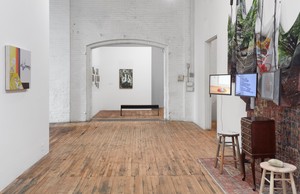
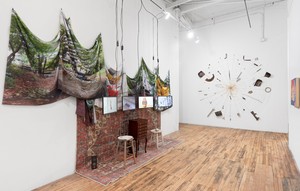
Installation view, Somewhere Inside: ISCP and the Studio, International Studio & Curatorial Program, New York, September 17, 2024–March 7, 2025, featuring (left to right) Daniel Guzmán, Lodger 1. (2022); Joiri Minaya, Containers (documentation of performance at Wave Hill) (2017) and Emergence I (2020); and Frank WANG Yefeng, The House of the Solitary (2020). Photo: Martin Parsekian
Installation view, Somewhere Inside: ISCP and the Studio, International Studio & Curatorial Program, New York, September 17, 2024–March 7, 2025, featuring (left to right) Daniel Guzmán, Lodger 1. (2022); Joiri Minaya, Containers (documentation of performance at Wave Hill) (2017) and Emergence I (2020); and Frank WANG Yefeng, The House of the Solitary (2020). Photo: Martin Parsekian
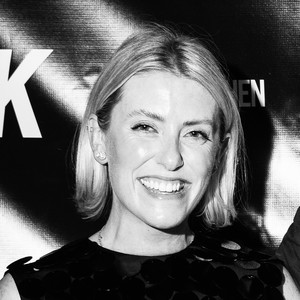
Sarah Jones joined Gagosian in 2011 and is director of public programs. She organizes performances, film screenings, artist talks, and strategic partnerships at the gallery. Jones sits on the board of the Kitchen and the International Studio & Curatorial Program (ISCP), and is part of Performance Space New York’s Visionary Circle. She is based in New York.
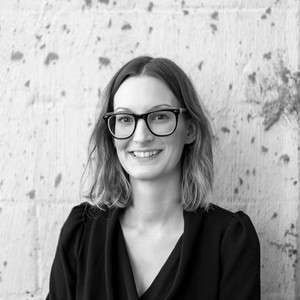
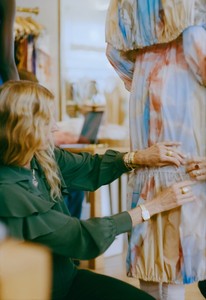
Melinda Lang is a curator and writer, and director of programs and exhibitions at the International Studio & Curatorial Program (ISCP). Previously, she worked at the Whitney Museum of American Art, New York, where she curated Andrea Carlson: Red Exit (2021), cocurated Toyin Ojih Odutola: To Wander Determined (2017–2018), and contributed to major exhibitions including Edward Hopper’s New York (2022); Mary Corse: A Survey in Light (2018); Fast Forward: Painting from the 1980s (2017); and Calder: Hypermobility (2017). Photo: Jinnifer Douglass
Sarah JonesYou joined ISCP only a year ago. One of the many things you’ve recently done is curate an exhibition to celebrate its thirtieth anniversary. This is a major undertaking for anyone, to create an exhibition that celebrates ISCP’s rich, thirty-year history. So just off the bat, where did you come up with the concept for the exhibition?
Melinda LangIt was an interesting and somewhat daunting challenge to start this role at ISCP, in November 2023, and be immediately tasked with organizing an anniversary exhibition, which I think for many curators, isn’t the most thrilling type of project. It’s kind of an impossible endeavor. How do you encapsulate the ethos of an organization through an exhibition?
I didn’t like the idea of including something like twenty or fifty alumni artists in the exhibition; there is no way to connect the incredibly wide-ranging practices of the artists and curators that have come to ISCP over the years. We have some two thousand alumni from more than one hundred countries. I also didn’t want to solicit submissions from alumni through an open call. To get around all of this, I tried to come up with a theme that reflected the spirit of ISCP. I asked myself, “What is the most fundamental part of ISCP?” I kept thinking about ISCP’s studio environment, the role of the artist’s studio in artmaking today, and the longtime struggle for artists to find affordable studio space in New York. Offering artists and curators a place to work, to think, to experiment is really the heart of ISCP; it’s been the lifeblood of the program for the past three decades. The studio became a natural point of departure for the exhibition. And I landed on a very focused exhibition of five artists—Martine Gutierrez, Daniel Guzmán, Joiri Minaya, Sophie Tottie, and Frank WANG Yefeng, who are all alumni of the program.
SJThe title of the show was taken from a quote by artist Bruce Nauman, musing on the studio as the site for creation and experimentation: “It’s always interested me how one does any work in the studio at all, what it’s supposed to be about, how you get things started or make any sense of the process. Even if the work is coming from somewhere inside, you can’t put your finger on the source.” Can you tell us more about the title?
MLI kept returning to Nauman’s playful and pointed statements about art while organizing the show. I’ve always been drawn to his practice as someone who has investigated the role of the artist and the studio in a humorous and inquisitive way. I love this quote. It comes from an interview in a 1982 Baltimore Museum of Art exhibition catalogue, and I especially love that last sentence you read. “Somewhere inside” evokes both the physical space of the studio, what’s happening in terms of artistic production, as well as interior or psychological space—the part of the artist’s mind where ideas germinate. You could even argue “the studio” is not a place but a state of mind.
The studio serves as a container and incubator and the studio’s contents—materials, imagery, ideas—form an archive that artists can tap into.
Melinda Lang
I was also researching and reflecting on the history of the artist’s studio. It has historically been discussed as this romanticized, isolated space for the lone, often white male artist. In the 1960s, as Conceptual art practices were emerging, the studio came into question. And this is when Nauman began challenging how we think about the studio and the role of the artist. Artmaking also became more overtly connected to everyday life and many people asked, “Is the studio even relevant anymore?” John Baldessari began his storied Post Studio class at CalArts in 1970 and a year later, Daniel Buren wrote an article attacking studio practice as an extension of the art market. Of course, the studio has persisted, evolved, and taken myriad forms. It can be a community setting, an exhibition or performance venue, a kitchen table or a laptop. Regardless of size or type of studio, artists thrive when they have a designated space to reflect, to explore, and to create.
I think the residency element is what made this project feel different from other shows or publications about the artist’s studio. ISCP is a studio community, it’s a place where you are surrounded by other artists, other curators, who are regularly in dialogue with one another about their practices and openly discussing what’s happening in the world around us. To me, that feels very special and more important than ever. And I think this context influences the show.
SJThe artists in the exhibition have distinct practices and have all spent time at ISCP during various moments over the past thirty years. How do these five artists support the exhibition’s thesis, the essence of ISCP, which is the studio?
MLI wanted to focus on how artists often approach the studio as a nourishing and exploratory space where they can develop and mine their own creative archive. The studio serves as a container and incubator and the studio’s contents—materials, imagery, ideas—form an archive that artists can tap into. The artists in this show, while coming from different practices and mediums, and slightly different generations, share this experience in the studio. The artworks in the show reveal different strategies for making use of one’s expanding archive.
SJRight.
MLAlso, when developing the show, I realized all the works hint at ideas of transformation and metamorphosis, topics closely tied to artistic production itself.
SJCould you share an example?
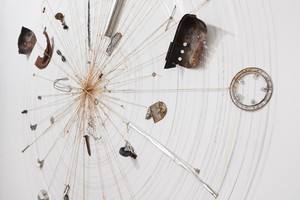
MLOf course. Sophie Tottie, one of ISCP’s very first residents when it opened in 1994, comes from Sweden and has an eco-conscious mindset about the studio. She avoids buying new materials and more recently has been recycling earlier work that takes up space in the studio or in art storage. Public Act (Cut Up) Single Grey (2007/2024) came from an installation that reflects on the meaning of disappearance. She’s very invested in larger questions around the systems that define our everyday lives, including the environmental impact of her studio practice. Another work by Tottie, The Tipping Point (New York) (2024), was made specifically for the show and is composed of dozens of discarded metal pieces found around ISCP and the surrounding East Williamsburg neighborhood—an area with many scrap-metal recycling yards. The metal items are installed directly on the wall and connected by twine to form a series of circles, like some kind of measuring device—as if pointing to the world’s climate precarity and its relationship to the artist’s studio practice.
SJSo, she’s reflecting on the physical processes of making art and its environmental impact.
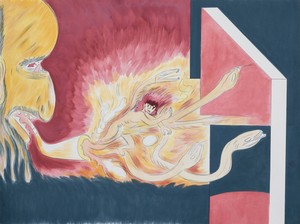
MLYes, and then in an entirely different vein, for Daniel Guzmán and Frank WANG Yefeng, the studio is a kind of vehicle for tapping into a world of wildly eclectic references and archetypes. Guzmán is based in Mexico and came to the program in 2000. He is represented in the show with two drawings, which belong to a series from 2022 to 2023 that features surreal characters synthesized from a variety of sources like pop culture, science fiction films, comic books, Aztec deities, music, and literature. They take part in a kind of mysterious creation myth connected to the history and culture of Mexico and the artist’s own life.
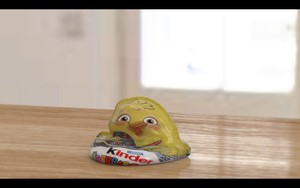
WANG was a resident in 2021 and 2024 and is from New York and Shanghai. He also uses his studio to imagine an invented world. In The House of the Solitary (2020), a video installation made during lockdown, he used three-dimensional animation to transform everyday objects from the studio into strange anthropomorphic characters. The stuff of the studio—a Kinder Egg, an espresso pot, a pack of cigarettes—gradually inflates and deflates as on-hold music from commercial airlines plays from speakers. The characters conjure an unsettling liminal state, one that many of us felt during the pandemic. It also suggests the kind of anxious energy that artists occasionally experience when searching for new subjects or ideas in the studio.
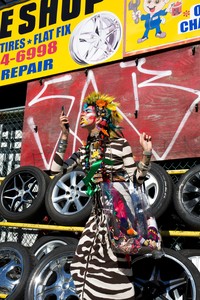
When New York–based artist Martine Gutierrez was at ISCP in 2017, she was busy making her Indigenous Woman publication, which was this amazing catalyst for her. She was the photographer, but also the model, designer, art director, editor, and publisher for this incredibly ambitious, fictional fashion magazine. She photographed herself as different personas in various costumes and hair accessories, and with props from her studio. The photograph in the show comes from this series and was captured near ISCP at a tire repair shop. It highlights her practice of dressing up in the studio and then walking around ISCP’s industrial neighborhood in search of places to photograph herself. While questioning conventions of beauty and identity, the work also speaks to this routine of moving fluidly between the studio and the city as a critical part of her creative process.
SJWe’ve talked about the studio as this kind of sacred space, this interior space, a quiet space for an artist—a retreat, perhaps. But at the same time, the output, the work that’s in the exhibition seems to really draw on the external world. Are these works perhaps a time capsule of what’s happening outside in a specific moment? Maybe there’s an interplay: bringing the outside world into these kinds of interior spaces?
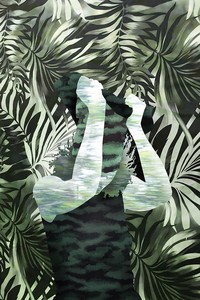
MLAbsolutely. For all the artists in the exhibition, there is a porous relationship between the studio and the outside world. To mention one more example, Joiri Minaya, who was at ISCP in 2021 and from 2022 to 2024, is interested in questioning contemporary and historical representations of the Dominican Republic, where she grew up. In her Containers series (2015–20) she highlights constructions of femininity and Caribbean identity. Inspired by poses she found in an image search for “Dominican women,” Minaya began sewing bodysuits that direct the wearer into these specific positions. For the show, Minaya arranged photo documentation from the performances and related scripts and diagrams in the format of a storyboard, a visual exercise that is integral to her studio process. Her sequencing of images alongside the texts invites viewers to reflect on gender, immigration, assimilation, and the persistence of colonial legacies. Minaya and the other artists in the show, like many artists, are creating work in the studio that grapples with the world around us. And because artists are not hiding away in the studio and making work in a vacuum, there is even more reason for artists to engage in dialogue and community in a residency setting.
SJThere are more and more artist residencies popping up every day around the country, around the world. What role does a residency play in an artist’s career?
MLResidencies offer artists many different types of creative opportunities and benefits to support growth, in addition to studio space. Above all, they create community and foster connections. At ISCP, artists and curators are surrounded by one another, and there are these organic moments of exchange, as well as opportunities for more formalized discussion. We often later hear that residents stay in touch and collaborate, or that their meetings with curators (who we invite to ISCP) have led to exhibition opportunities. ISCP was also established because it’s financially challenging to come to New York City as an artist. It’s extremely important to us that we create a supportive environment. The International Program at ISCP offers fully funded residency opportunities and the Ground Floor Residency Program for New York–based artists provides heavily subsidized studios. This is a dream come true for artists visiting or living in this city.
SJWhat does that look like in the work when those things are taken care of? How does that translate to the creative process—is there more opportunity for experimentation, is there more opportunity for failure?
MLWe stress to all our residents that there’s no pressure to produce a certain amount of work, there’s no pressure to exhibit, there’s no direct commercial connection to ISCP. It’s a very open environment. Certainly, we encourage them to experiment, whatever that looks like, and often artists are busy producing work for shows. I think this is great, of course, but I’m always trying to find ways to help residents create the space and time, in the safety of their studios, to try something new.
Installation view, Somewhere Inside: ISCP and the Studio, International Studio & Curatorial Program, New York, September 17, 2024–March 7, 2025, featuring (left to right) Frank WANG Yefeng, The House of the Solitary (2020); Sophie Tottie, The Tipping Point (New York) (2024); and Daniel Guzmán, El nacimiento del monstruo (2023). Photo: Martin Parsekian
SJISCP is one of the most comprehensive international visual arts residency programs. How many artists and curators come through the program each year, and from how many countries?
MLYes, our global reach is vast. In 2024, we had around one hundred artists and curators from nearly forty countries in residence. Our residencies are made possible through the support of about forty partnering organizations or sponsors—foundations, governments, academic institutions, collectors, and galleries. The selection process is competitive. We have thirty-five studios available, and if selected, we work with the artists and curators and their sponsors to determine the length of their residencies, anywhere from two or three months to a year. We have a small and ambitious team, led by Executive Director Susan Hapgood, and we’re always cultivating new relationships with organizations in other countries to support residencies. It’s a grassroots fundraising model and I think that inspires us to keep thinking of new kinds of residencies and new ways to bring in artists with diverse practices, from different places around the world.
SJLast summer, I saw ISCP’s archives presentation [Storage to Showcase: Selections from the ISCP Archives], which was organized by two of the current interns: Annabel Newman and Louis Pardo. I noted how ISCP is invested in also nurturing curatorial practices. Can you talk to me a bit about the importance of ISCP’s curatorial residencies?
MLYes, we’re one of the few residencies that supports curators. We have about ten curators in residence each year. It’s challenging for curators, especially institutional curators, to take a sabbatical or step away from their fulltime positions for a residency. Like artists, curators also need time, resources, and space to do their research, write, and develop their practices, and sometimes it’s very difficult to do this in a demanding museum job. I’m in the early stages of developing ideas to make residencies more accessible for curators and we’re working on ways to create more residency opportunities for curators. We also have an amazing network of curators—from emerging to prominent midcareer and established curators—who engage with our artist and curator residents. I invite curators to serve as visiting critics, to meet the residents for studio visits, to speak for public talks, and to serve as nominators and jurors in the selection process for residencies—in addition to curating some of our exhibitions. Our internships have also been a great training ground for aspiring curators. Now thirty years old, we are very proud to have an incredible roster of influential artist and curator alumni.
SJLooking forward, what do the next thirty years look like for ISCP, or even in the shorter term, what are some upcoming things you’re excited about?
MLFirst, I am excited to welcome more residents in the year ahead. We have initiated partnerships with organizations and foundations to support new residencies. This includes annual residencies for Indigenous artists and artists engaged in eco-feminist practices. I’m looking forward to shows I am curating early next year with artists Amy Bravo and Hellen Ascoli, and a thematic group show curated by TK Smith. I’m also developing a new open call for guest curators. We are in middle of a capital campaign to improve our facilities, including converting our freight elevator into a passenger elevator so we can improve accessibility in the building.
SJIt sounds like there is exciting programming and more community-building opportunities forthcoming at ISCP!
MLYes! ISCP has been a place where artists are inspired to explore different areas of their practices, challenge themselves, and take risks. This is integral to our mission. It’s been exciting to reflect on and celebrate these ideas during our thirtieth year, as we continue to think of new ways to support and champion artists.
Sarah Jones joined Gagosian in 2011 and is director of public programs. She organizes performances, film screenings, artist talks, and strategic partnerships at the gallery. Jones sits on the board of the Kitchen and the International Studio & Curatorial Program (ISCP), and is part of Performance Space New York’s Visionary Circle. She is based in New York.
Melinda Lang is a curator and writer, and director of programs and exhibitions at the International Studio & Curatorial Program (ISCP). Previously, she worked at the Whitney Museum of American Art, New York, where she curated Andrea Carlson: Red Exit (2021), cocurated Toyin Ojih Odutola: To Wander Determined (2017–2018), and contributed to major exhibitions including Edward Hopper’s New York (2022); Mary Corse: A Survey in Light (2018); Fast Forward: Painting from the 1980s (2017); and Calder: Hypermobility (2017). Photo: Jinnifer Douglass