Materialists are compelled by the things of the world. Usually such things are understood to be luxuries—cars, clothing, jewelry—objects they accumulate for the sake of worldly status. In artistic circles and leftist political ideologies, these sorts of materialists are often derided as the shallow kind of people you should avoid at all costs.
The philosopher Jane Bennett provides a more generous concept of materialism. For her, matter is everything—electricity, feelings, ideas—and each of these things is an embodiment of a “profoundly generic” vital force. This is not a mystical source of energy, like God, but the fundamental animating substance of the world. There is no intrinsic hierarchy: gold hums with the same vitality as carrion.
From this perspective, a materialist connects to the force through things, whether natural or artificial. Hoarders and artists are two examples of people who are so sensitive to things that they dedicate their lives to the power of thingness. Such people are not acquiring things for wealth, but because they find the truth of reality within the living presence of matter.
Neovitalists, new materialists, object-oriented ontologists—Bennett is part of a movement of philosophers rethinking our relationship to things. The implications of their ideas are vast, radically shifting the way we engage with the natural world.
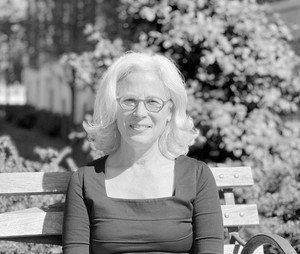
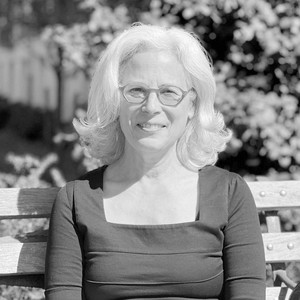
Bennett is a professor of political theory at Johns Hopkins and is the author of The Enchantment of Modern Life (2001), Vibrant Matter: A Political Ecology of Things (2009), and Influx and Efflux: Writing Up with Walt Whitman (2020). We corresponded by email in fall 2024 to produce the following exchange.
—Ross Simonini
Ross SimoniniAs you’ve developed your own philosophy over the years, how has it changed the way you experience the world?
Jane BennettA philosophy of vibrant matter is, among other things, a filter for perception. It directs attention toward—marks as notable—some happenings and some aspects of things rather than others. A philosophy is in that way a sensibility, a style of seeing and feeling and thinking, of selective sympathy.
Sensibilities evolve or dissolve on their own, as time passes and different atmospheres are inhaled. But a particular style of encounter can also be induced by more conscious practices or habits. My growing sense of the liveliness of things was cultivated by a habit of reading nineteenth-century nature writing, twenty-first-century ecological poetry and plant science, and Renaissance herbalists, and by a tendency to doodle (more on that later) and to walk along Baltimore’s alleys and patches of woods and trash-strewn streams.
Lately, the reading also includes Paul Klee’s notebooks (“there is a non-optical way of intimate physical contact . . . that reaches the eye . . . through the cosmic bond that descends from above”); Cicero on divination (frogs have “some faculty of premonition, clear enough of itself, but too dark for human comprehension”); Zhuangzi (on orienting toward the hinge of the Dao, “a state in which ‘this’ and ‘that’ no longer find their opposites”); Roger Caillois (“I felt myself beginning to resemble, not to resemble anything but just to resemble”); the poets Inger Christensen (“I always thought reality was something you became when you grew up”), Lia Purpura (“the despoiled and radiant now”), and Forrest Gander (“How to sustain attentiveness? How to keep the mind from dropping its needle into the worn grooves of association?”). These and other literary/literal exercises help to reveal how bodies and forces exceed their role as useful/harmful objects. They show nonhuman or non-exclusively-human things to be participants living alongside and inside human endeavoring; they direct attention to how things ingress into and alter us.
RSDo you often think through other people’s quotations?
JBYes, for sure. When I come across a good one, I write it down on one of the index cards I keep in my bag.
RSJoseph Beuys said, “Only the human ability to think is able to bring new causes into the world.” What do you think about this? To you, is it anthropocentric? Absurd?
JBAnthropocentric, yes, but not absurd. Because there are surely occasions when the ethical need is to prioritize people over other forms of being—even as I also affirm an expansive, multispecied understanding of what it is to be human, and even as I also affirm that there are many other-than-human agencies involved in “creativity.” I am here drawn toward Henri Bergson’s notion of “creative evolution,” i.e., the claim that the universe as such, and not only its human elements, is capable of a more-than-mechanical repetition that produces novelty, or that which is more than the sum of preexisting parts.
RSYou mentioned Renaissance herbalists. What have you learned from them?
JBI’ll talk about the strange and wonderful Paracelsus (1493–1541): herbalist, alchemist, experimental scientist, pagan/Christian. He teaches me to look closely at the physical shapes of things, and to better discern how the past gets inscribed in the lines of a body. Paracelsus was good at the patient, curious, nonjudgmental practice of what Walt Whitman called “doting.” He doted on plants in order to divine the divine signs he believed were implanted in them—hints from God concerning their potential uses to retain or restore human health. The Satyrion plant, for example, a kind of orchid, has roots resembling testicles, a resemblance that for Paracelsus indicated its medicinal use for men seeking virility. I don’t share his faith in a cosmos of divine hints or “signatures,” but I try to imitate his exquisite, sensuous attention to the lines and shapes of things.
Paracelsus also teaches about the value of focusing attention not only on already-formed shapes but also, and this is more difficult, on the energetic processes from which they emerge. Keep on the alert, in particular, to those very subtle moments inside a process when a vague potential is about to (maybe) become something more actual—when the seed is just about to sprout, or the democratic culture is on the cusp of transitioning to fascism. Paracelsus describes this as happening at the “hem” of the “matrix” of nature: the edge of the matrix folds over on itself to form the consistency needed for a “thing.”
RSIs your definition of vitality entirely about a thing’s capacity to produce effects in the world?
JBYes, more or less. I think there are vitalities and intensities that are not entirely reducible to the contexts in which (human) subjects set them, never entirely exhausted by the meanings they offer us.
RSI know your definition is not a kind of animism or pantheism, where there’s a nonmaterial presence behind the substance. Do you believe that everything is a kind of material?
JBYes, I do, but materiality in the sense not only of formed bodies but also of their protean potential precursors, such as effervescent energies and restless movements, some subtle in the extreme, which is why I am now trying to catch the drift of the Daoism of Zhuangzi.
RSErich Fromm talks about two modes of existing in the world: being and having. Our relationship to things in the world is usually having-based, but you also believe that people who are sensitive to objects can relate to things in a kind of being mode. Is that right?
JBYes, in a being mode, and also in a mode of sympathizing or trying to form productive alliances across always-porous bodies. Even stones can absorb new colors or microorganisms.
RSAre some things more alive than others? Are some artworks?
JBEverything has the potential to enliven and reveal its liveliness. In general I think it’s foolish, and falsifying, to offer a definite rank ordering, despite the fact that some such ranking seems endemic to human perception and to some extent survival. The force of one thing as received by another (including us) varies with every occasion, with every encounter—the elements composing that force are always multiple and in transit.
RSWhat art expresses your philosophy?
JBOne powerful such expression is Sophie Taeuber-Arp’s Dada heads (1920) and her marionettes and stage set for King Stag (1918). Puppets deploy anthropomorphism to nonanthropocentric effect.
RSWhat film does?
JBI am infected by Len Lye’s Free Radicals (1958–79; more on that later). I also can’t get over Wim Wenders’s Wings of Desire (1987).
RSAs a political philosopher, do you care about the fruit of action being grown from your philosophy?
JBI do care. I’m hoping to add an oomph of endeavor to more ecological ways of sensing and acting—with the hope that such a sensibility becomes a slightly more powerful lure within a nightmarish culture of endless growth, consumption, exploitation, extraction, waste, profit, etc. etc. A philosophy sensibility can’t yield “fruit” in the reliable way that trees (sometimes) do, but it can still be a subtle force vying and allying with billions of other influences.
It’s also a good idea to be somewhat skeptical about the dominant model of action that’s usually assumed within the question of a philosophy’s effectiveness. That model tends to imagine actors as standing outside the field of happenings, and entering into it by way of a decisive act, an assertive intervention whose effects will be obvious and macro level. Motivated in part by a longing for one fell swoop, that model associates what is most effective with what is most direct or overtly disruptive. Sometimes that works, but that image of efficacy tends to occlude other, less heroic models of acting. There are feminist, Daoist, and many other kinds of practice oriented instead to becoming attuned to the natural, political, economic, aesthetic ecologies in which we live, in order to foster a capacity to discern their potential turning points or nascent shifts in direction. The idea is to enact small but potent tweaks or amendments that inflect, from the inside out, the tenor, propensity, or trajectory of a process. And to do so in a way that’s unlikely to prompt an immediate counterreaction.
RSHave other philosophers ever changed your experience of the world in a way you wish they had not? Have they opened Pandora’s box for you? Or has the understanding of philosophy always been helpful?
JBInteresting question. I was a nice Italian American Catholic girl until I stumbled upon [Friedrich] Nietzsche, who opened a Pandora’s box of disquieting affects—new anxieties about violence, and more generally about mortal creatures’ prospects for happiness once god is dead. Do I regret that? No. That encounter opened the way for what came next, which was the course of my life. (Nietzsche is onto something with amor fati.) More generally, if I encounter a philosophy that doesn’t stick, or bores me, or is ethically or aesthetically repellent ([Jacques] Lacan? Ayn Rand?), I tend to just move on.
RSI’ve heard you describe doodling as an expression of the nonhuman. For you, does this relate to the way automatic drawing attempts to express the unconscious?
JBThe unconscious is but one way to acknowledge that there’s so much that happens to us, with us, around us, about which we are ignorant or only very dimly aware. Another way to nod to that point is to appreciate that we live on many planes at once—the conceptual and the spatial, the shaped and the vague, the static and the vibratory, the geological and the biographical, the everyday and the cosmic. Each plane intersects with or shades off into others; existence is an overrich mix of impressions, tempos, feelings, and moods. Life, as they say, is complicated. Or, as Klee puts it, “It is not easy to orient yourself in a whole that is made up of parts belonging to different dimensions.”
Doodles, as lines and shapes on their way to elsewhere (Klee speaks of lines “out for a walk”), mark and express the dim, unspoken, vibratory, or cosmic planes of human existence. There’s a peculiar experience of myself that comes to the fore while doodling—an “I” that is carried along by a creative process of influx and efflux that would not be the same without me and yet seems to carry on whether or not I am present. That’s a theme I find in and explore by way of Whitman’s poems, as in this passage from “Song of Myself”:
Sea of stretch’d ground-swells,
Sea breathing broad and convulsive breaths,
Sea of the brine of life and of unshovell’d yet always-ready graves,
Howler and scooper of storms, capricious and dainty sea,
I am integral with you, I too am of one phase and of all phases.
Partaker of influx and efflux I.
The nondeliberate aspect of doodles suggested to the Surrealists that doodles express an obscure region of the human psyche called the unconscious—what Carl Jung called the “unfathomable dark recesses of the conscious mind,” with its “wealth of subliminal perception.” The Surrealist Max Morise described doodles as “spontaneous images” prompted by “imperceptible undulations of the flux of thought.” Surrealist games of automatic drawing, such as the “exquisite corpse,” aim to unearth the secrets of this psychic substratum and to render more perceptible the undulations of human thought.
There’s no doubt that the figure of an inner unconscious realm has much explanatory and therapeutic power. But a Freudian model of it does not capture well the doodler’s sense of the presencing of a flux that exceeds intrapsyche and interpsyche relations, a vibrant matter that overflows the frame of human thought/mind and operates more broadly. The anthropocentrism of Surrealism makes it difficult to detect ahuman prompts from flora, breezes, atmospheres, fauna, etc. A psyche-centric account of doodling raises the question of whether doodling is an automatic process or a creative human act, but such an either/or insinuates that artistry is an exclusively human power, an idea fostered by a binary grammar of active subjects and (relatively) passive objects. And if, instead, bodies and forces of many different sorts are capable of the effort of impress-operations, then other questions concerning doodling come to the fore: How do doodles bear witness to outside forces that have seeped in, and to a distributive, conjoint quality of action? A messy swarm of outdoor elements activates a drawing process, which leans into the momentum of the strolling line, which taps the shoulder of the human doodler, who lends her arm to the pencil, which gives the nod to emergent shapes (with vice versas all around).
RSI know you’ve been writing about the newly published doodles of Franz Kafka. Why are these of particular interest?
JBLye’s four-minute experimental film Free Radicals, created by scratching lines directly on celluloid with a pointy stick, consists of mesmerizing, vibrating, wiggling lines that appear and disappear on a dark background. They dance to the music of the Bagirmi people of the southern Sahara. The film, says Lye, is a “vicarious evocation” of inexact energies already among us, energies that include but also exceed those emanating from human artists or audiences. The energies exposed are atmospheric, generic, cosmic, and usually unsensed. But the film dotes on them and pulls them within our radar of detection, even as they remain not fully defined or determinate. I think some of Kafka’s drawings do the same. I don’t mean his better-known stick figures or abstract depictions of human postures and moods. But rather the ones that are more like scribbles of apersonal lines and vectors—vital forces. These doodles express the apersonal movements or vitalities of our more-than-human world. They are apersonal, sparse line-vectors that are irreducible to their anthropocentric entanglements with Kafka’s individual/cultural biography. Through them comes through the generic vitality of matter.
RSIn your mind, can writing ever be a form of doodling? Or does language prevent us from doodling?
JBThe first Kafka doodle I came across was made from words—it was Odradek, the protagonist of Kafka’s three-paragraph story “The Cares of a Family Man.” Odradek is a small (mouse-sized?), spool-shaped, wooden, thread-tangled animate (non)creature, able to speak and laugh but mostly mute, scurrying but also lurking in the bourgeois household. Kafka’s impossible or absurdist description of Odradek goads the reader into trying to imagine its specific shape. It prompted me to try to draw it on paper. Because there’s a lack of fit between Odradek and the Euclidean space required for normal things to exist, you have to kind of just “let go” of that world, relax any strongly agentic effort, and go with the flow of the emergent process. Just doodle it.