Fiona Duncan interviews Susannah Cahalan, the author of The Acid Queen: The Psychedelic Life and Counterculture Rebellion of Rosemary Woodruff Leary.
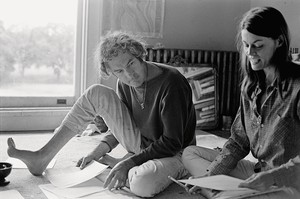
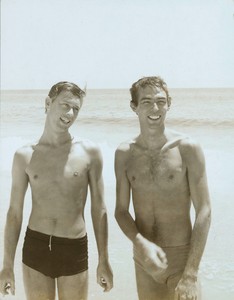
Rosemary Woodruff Leary, c. 1975, Tayrona Park, Colombia. Photo: John Schewel, used with permission
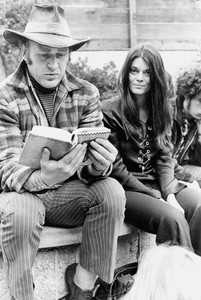
Rosemary Woodruff Leary, c. 1975, Tayrona Park, Colombia. Photo: John Schewel, used with permission
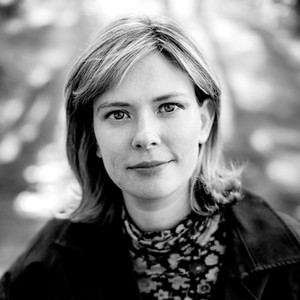
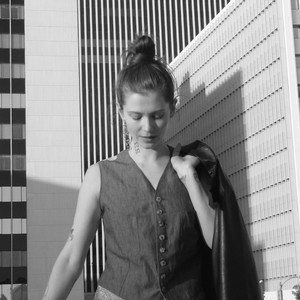
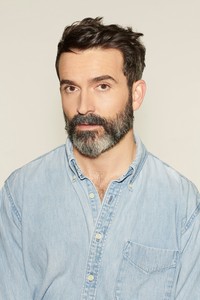
Susannah Cahalan is a journalist, public speaker, and New York Times best-selling author. Her first book, Brain on Fire: My Month of Madness (2012), has sold over a million copies and has been translated into over twenty languages. Her second book, The Great Pretender: The Undercover Mission That Changed Our Understanding of Madness, was shortlisted for the Royal Society’s 2020 Science Books Prize. She lives in New Jersey with her family.
Fiona Duncan is a Canadian-American author and organizer and the founder of the social literary practice Hard to Read. Duncan’s debut novel, Exquisite Mariposa, won a 2020 Lambda Award.
“My best lines all come from Rosemary,” the infamous LSD advocate Timothy Leary said of Rosemary Woodruff Leary, his ex-wife and partner, and the subject of a new biography by Susannah Cahalan. Once dubbed the “most dangerous man in America,” Leary, a former Harvard psychologist turned posterboy for acid, was associated with at least as many mantras as he had wives, his most famous slogan being “Turn on, tune in, drop out.” But it was Leary’s fourth wife—born Rose Marie Woodruff in 1935—who lived that catchphrase out, turning on to psychedelics and tantra as a two-time divorcée before she’d even met Leary, then tuning in to the politics of her day, collaborating with the Weather Underground and the Black Panthers on a jailbreak and finally becoming a fugitive and living underground for decades rather than rat on her radical peers. Leary chose to do just that: to stay out of prison and in the public eye, he collaborated with the FBI and probably the CIA, freeing himself up to dance at Studio 54 and market a self-help video game for the Apple II computer while the ex who dressed him, wrote for him, got him out of prison, and lent him authenticity in an era of sincerity was forgotten by history. Cahalan’s biography, The Acid Queen: The Psychedelic Life and Counterculture Rebellion of Rosemary Woodruff Leary, shows us what we’ve been missing. It’s an intimate recounting of the life of a woman beautiful enough to be street-cast as a model but disobedient enough to wiggle her way out of that opportunity, a woman who shared the ticket with Leary in his 1970 campaign for governor of California, knowing they’d lose to Republican incumbent Ronald Reagan, and a woman who read Wittgenstein for fun. Like many intelligent people, Rosemary had mixed feelings about fame and publicity. Her absence from history tells us more about the world than her ex’s presence ever could.
Fiona DuncanWhat’s your party line for the book? You know when you’re at a social gathering and you’re asked “What’s it about?”
Susannah CahalanThe elevator pitch? I would say it’s about a lost woman, a seeker, and the history of the counterculture—American history, really. It’s also about someone who was not traditionally seen as a main character. If you think about who the camera frames, Rosemary was often off to the side. With this project I’m able to fix the camera directly on her.
FDDo you have a favorite image of Rosemary?
SCSo many. There’s one from 1969, of Rosemary and Leary during their run for governor of California. A friend of mine had it framed for me. People forget that they ran as a unit [against Ronald Reagan]. There’s another one I love of Rosemary with the lawyer Michael Standard, whose wife, Bunny, gave me a bunch of letters. They’re an interesting couple. That was the problem with this book—
FDA lot had to be cut?
SCI had to condense. I wrote a whole chapter on Rosemary’s brother Gary’s tour in the Vietnam War that I had to cut. I pulled way back on Rosemary’s psychedelic experiences. My editor reined those in, like, “All right, we don’t need to have five pages on a trip when she went to lower Manhattan and flew like a seagull . . . ”
FDIt’s a tight edit. It’s good to leave people wanting more.
SCI had to condense one of my favorite characters, Oden Fong. He was adjacent to the Brotherhood of Eternal Love, the group of surfing drug dealers called the “Hippie Mafia” in Laguna Beach. His parents were very famous actors. Oden always felt like an outsider in Hollywood and when he dropped out and into the psychedelic scene, he was still an outsider as the only Asian man in this crew of white men. He told me about this lollipop that had about a thousand hits of Orange Sunshine. One lick and you’d be fucked up. He took a huge bite out of it and had as close to an OD as you can with acid in Joshua Tree. He claims that he died and came back and Jesus was there to help him. Now he’s a pastor.
FDWhat was your research journey like?
SCThe first place I went was the New York Public Library, which has the Rosemary Woodruff Leary papers. It was covid and the library was only open to researchers. That was a strange time, but it was amazing to have the New York Public Library almost all to myself. They’ve about twenty-three Bankers Boxes there of paper and audio archives. I got to hear Rosemary talk, just enveloped in her world.
FDWhat does her voice sound like?
SCShe almost has a transcontinental accent. Very graceful, soft-spoken, careful, and methodical. Pleasing, warm. She was very aware of her role, especially in her thirties when she was with Leary. It’s clear from her language that she was thinking about everything that was coming out of her mouth. I always think, if she was a muse, she’s created herself as a muse.
FDDid you conduct many interviews?
SCI connected with Rosemary’s brother, Gary, who gave me his full support. Then I interviewed John Schewel, Rosemary’s lover, who was able to fill in huge gaps in the narrative. I talked with him for hundreds of hours.
FDJohn was the younger man who revered Rosemary, right?
SCExactly, very attractive guy. He looks like Bob Dylan but tall, like a football-playing Bob Dylan. Finding people from Rosemary’s pre-Leary life was harder, so it was exciting when I found David Amram, a jazz musician and composer who knew her pretty well. I met her lawyer, Noel Tepper. He’s in his nineties now. We were able to go to Millbrook, an estate in upstate New York where Leary hosted a kind of acid commune, together. He took me around Poughkeepsie, where she was in jail. Oden took me around Laguna. I met a lot of people and traveled a lot, covering her Santa Cruz era, her Cape Cod era.
FDRosemary’s life was so cinematic. The Millbrook era—that’s like a Sofia Coppola movie.
Timothy Leary and Rosemary Woodruff Leary, Millbrook, New York, 1967. Photo: Alvis Upitis/Getty Images
SCOh my gosh, 100 percent. Millbrook is actually on the market right now for $65 million. The Hitchcock family still owns it. I got to interview Peggy Hitchcock before she died. She was the one who connected Leary with Millbrook, or the Hitchcock estate. Her brothers owned it. Peggy was Leary’s girlfriend before Rosemary. She’s an oil heiress who was super into psychedelics and the jazz scene.
FDOne of the most cinematic parts of Rosemary’s and Leary’s story is their jailbreak and escape. As fugitives they were everywhere. I kept asking myself, how did they afford it?
SCIn the first part of their life, when Leary was still an ex-Harvard scientist, they were funded by Peggy and other rich people, as well as making money on the college-lecture-tour circuit. They also hosted weekend retreats. Later their lives were funded in part by Brotherhood drug money. But it wasn’t like they had tons of money. They lived hand to mouth. Sometimes they were very poor. But then they would have this Porsche—
FDTwo Porsches. On the run, both Rosemary and Leary end up in their own yellow Porsche.
SCThe one Rosemary was in John got from his mom. His parents were wealthy. You know, like a lot of the Weather Underground people were very wealthy people.
FDYou make a note of that in your book.
SCRosemary had a wonderful line like “They could afford to live that close to the bone.” Which is a great—
FDShe didn’t come from an affluent background.
SCNo. And neither did Leary.
FDSomething they had in common, besides having the same rising and moon signs. Do you know Ann Rower’s book If You’re a Girl (1991)? She babysat Leary’s kids in the early 1960s. Ann calls him “King Leary” and “Teary Lim,” really funny. He doesn’t come across well from a twenty-first-century perspective. Without name-calling, you do a great job of showing Leary’s hypocrisies and failings while also entering into Rosemary’s desire for him. I understood and believed her desire.
SCI’m not interested in beating Leary up, even though there was a lot to beat him up about. Reading his own biography, it’s hard to come away with a positive feeling about him. I almost had to unlearn what I knew about how he treated his children and wives to understand why Rosemary would still love him. I really tried to understand.
FDI could feel her desire. There’s something about magic men, confidence men, tricksters? There’s that magnetism. But the relentless tricksters I’ve known have ended up really lonely.
SCYes, and I think in the end Leary was extremely lonely, even though he was surrounded by people. With this need to always shift, there’s no solid ground.
FDDid you look at other models for your book?
SCJanis Joplin has a wonderful biography that was helpful to me [Janis: Her Life and Music, by Holly George-Warren, 2019]. I looked at memoirs, Eve Babitz’s Eve’s Hollywood (1974) especially. Have you read T. C. Boyle’s Outside Looking In (2019)? It’s his fictional take on Leary at Harvard. There was [Françoise Gilot’s] Life with Picasso (1964) and [Jennifer Clement’s] Widow Basquiat (2000). The Silent Woman (1994), Janet Malcolm’s book about Sylvia Plath and Ted Hughes. Joyce Johnson’s Minor Characters (1983) was helpful with the Beat side and the concept of being outside the frame. But I couldn’t find many serious books about, let’s call them “hippie women,” or women from the counterculture. It was exciting to identify something that was missing.
FDIt has been missing. I went through a hippie, druggy phase. Alan Watts, Terence McKenna, Dennis Hopper, Ram Dass, Allen Ginsberg, William Burroughs. Men. In your book, you mention that Rosemary tried to convince Dennis Hopper and Peter Fonda to change their ending to Easy Rider (1969). How did she want it to end?
SCShe didn’t want them to die, which shows her idealism. She still thought the counterculture could lead somewhere positive, not to gunfire.
FDShe was sincere.
SCShe wasn’t a trickster or a contrarian. She was really about community and freedom of expression, freedom of movement, freedom to take in substances and to experiment with the self. She had such a kind way of dealing with the world.
Ken Kesey and Rosemary Woodruff Leary, San Francisco, 1970. Photo: Robert Altman/Michael Ochs Archive/Getty Images
FDAfter finishing your book, I thought, Oh, Rosemary actually fulfilled the mantra that Leary made so famous: “Turn on, tune in, drop out.” She was the real dropout. After all the sex and drugs, she leaves Leary and goes underground, becoming a fugitive. She refused to rat him or others out and so had to disappear. Whereas Leary went on to collaborate with the feds, saving his own ass so he could stay out of prison and in the public eye.
SCThere’s something really interesting there about ego death: Rosemary took it seriously. But she did still want to be known—she wrote for posterity, she kept an archive—so that’s not complete ego death either. What does ego death look like? It’s going to mean something different for some Silicon Valley guy versus a single mother.
FDThe ego gets a bad rap. It’s not bad, it’s just your social self. You might be able to kill one ego by doing psychedelics but a new one will be born. There’s no way out.
SCI think the most helpful quote from Rosemary is that she believes “in everything and nothing and it leaves me in a very comfortable place.” In the end she was no longer dogmatic. This flexibility of thought, believing in everything and nothing, is pretty amazing. It’s not a political-activist way of viewing the world but it’s an artistic way of viewing the world, maybe. What do you think?
FDI believe something similar. It’s also just a way to maintain sanity. What’s the line from The Crack-Up (1936)? [F. Scott] Fitzgerald? About believing in two opposite things at the same time?1
SCCognitive dissonance, which is what I’m exploring in my next book.
FDYou have to live with these ambiguities. It’s survival.
SCYeah! Survival. I think Rosemary was very fluid when she was young. Then she calcified for a period of time, while underground, only to become fluid again.
FDI mean, she incurred so many traumas. That’ll harden you. Then there was the paranoia of that era . . . COINTELPRO. We know Leary was an FBI informant but there are also conspiracies that he was CIA, like Harry Mathews maybe and Charles Manson maybe and Gloria Steinem. How did you deal with paranoia and conspiracy while writing this book?
SCI read [Tom O’Neill’s] Chaos [: Charles Manson, the CIA, and the Secret History of the Sixties, 2019]. It was amazing to read. There was stuff going on for sure—all the so-called leftist organizations had informants and people working undercover. Everyone studying psychedelics received money from the CIA through various shell companies and research organizations. I have the FBI files on Leary; they’re redacted all over the place. At a certain point, all I could do was hew to the facts that I had and hew to her narrative and perspective.
FDShe didn’t know everything, why should you? The book is true to her. Could you talk about your intimacy with Rosemary? How close did you get?
SCShe came to me in dreams twice. I wanted more, honestly. I have her mirror, which her lover John Schewel gave to me. I worked with her I Ching and with the Crowley deck, the same tarot she used. I did her yoga and breath work practice. I tracked down one of Rosemary’s astrologers and interviewed him. She didn’t make a move without looking at the astrology or her moon book. I compared our charts, Rosemary’s and mine. I tried to get into her mind. I’m always hesitant to talk about this because it sounds . . . I did all that I could on the Western side, the interviews, the realistic stuff, but I also did as much as I could on the esoteric side. There were mysteries I was trying to figure out.
FDI felt her, I cried. Given, I was on an airplane. But still, books never make me cry.
SCAt what point did you cry? I’m just curious.
FDIn the end. It was this feeling of resolution or justice for her.
SCThank you. I cried writing it, which was weird for me as well. I’ve only cried one other time while writing—that was about another Rosemary, actually, Rosemary Kennedy, in my second book [The Great Pretender: The Undercover Mission That Changed Our Understanding of Madness, 2019]. I also cried when writing about [Timothy Leary’s daughter] Susan Leary. Susan gets to me.
FDCould a documentary be made about Rosemary? Is there enough footage?
SCYou could definitely track down enough footage of her. You’d have to address the gaps. The gaps in her narrative are when Leary was not in her life. It was like she didn’t think documenting her life was important anymore. Those were the hardest parts for me. I relied on others to fill in the gaps. Even so, she remained mysterious, somewhat outside my grasp.
FDThose are big chunks of time. Interesting—so maybe Leary was her muse, actually.
SCOooh, I like that. She definitely put her brightness in him. She was comfortable with him shining and getting refracted glory from that. But obviously she wanted more.
FDRosemary had a way with words. “My body is a hammock for my soul today”: Lana [Del Rey] should steal that lyric. Leary, a famous sloganeer himself, admitted that “My best lines all come from Rosemary.” But when she tried to write her autobiography, it didn’t work. She couldn’t get it published. She was edited and reedited. Were you able to see the layers of edits in her archive, what other people thought it should be?
SCEveryone had their different perspectives. Initially you have John Schewel, who actually just wanted Rosemary to write. He became the hearth that she was for Leary. He got her a typewriter. They were doing the cut-up method. He wasn’t editing, more like promoting and pushing her to write. He told me that he was disappointed because she would edit her own story to save other people, so it was never fully authentic. I have her diaries, it was interesting to compare. Her diaries were much harsher and angrier—more wounded. Then you have the agents. I didn’t see their edits as much as I did the feedback from editors at publishing houses, which was very negative. Later you have David Phillips, a close friend who housed her in Cape Cod, who I think was valid in his critiques. He kept pushing her to make it the Rosemary story, the Woodruff story, not the Leary story. Sometimes you don’t feel her in the text, she becomes a detached observer. You want her to be more embodied, because she was so embodied as a person, very sensual. Later on, when Leary became her editor, he pushed her to be less negative in her recollections, which was obviously self-serving. I noticed people whose names weren’t signed editing out the essence of her on paper, which could be over the top, ornate, and flowery. I love that part of her. But they cut it out, anesthetized her, made it flat.
1 “The test of a first-rate intelligence is the ability to hold two opposed ideas in the mind at the same time, and still retain the ability to function.”
Susannah Cahalan is a journalist, public speaker, and New York Times best-selling author. Her first book, Brain on Fire: My Month of Madness (2012), has sold over a million copies and has been translated into over twenty languages. Her second book, The Great Pretender: The Undercover Mission That Changed Our Understanding of Madness, was shortlisted for the Royal Society’s 2020 Science Books Prize. She lives in New Jersey with her family.
Fiona Duncan is a Canadian-American author and organizer and the founder of the social literary practice Hard to Read. Duncan’s debut novel, Exquisite Mariposa, won a 2020 Lambda Award.