Summer 2025 Issue

Hans Ulrich Obrist’s Questionnaire:
Hélène Cixous

In this ongoing series, the curator Hans Ulrich Obrist has devised a set of thirty-seven questions that invite artists, authors, musicians, and other visionaries to address key elements of their lives and creative practices. Respondents select from the larger questionnaire and reply in as many or as few words as they desire. For the second installment of 2025, we are honored to present the philosopher and playwright Hélène Cixous.

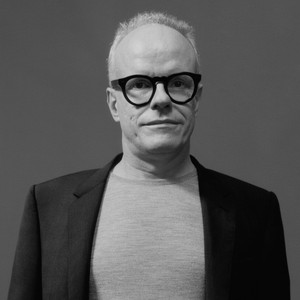
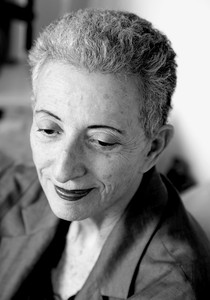
Black and white portrait of Hélène Cixous

Hélène Cixous. Photo: Sophie Bassouls

Hélène Cixous. Photo: Sophie Bassouls

Hans Ulrich ObristAre there any quotes you live by?

Hélène CixousNo, but what comes to mind is “Man kann doch nicht nicht-leben” [One cannot not-live]. That’s Kafka.

HUOAre there historical figures that you admire?

HCThe characters who are constantly present for me and whom I adore, whom I cherish, are always great writers. Like Kafka, Shakespeare, Montaigne. And then there are those who are like characters in a grand play. For example, I have been fascinated recently with the character of Victor Hugo, whom I don’t love as a poet. But from his birth until the end, he is the main character of the nineteenth century. It’s extraordinary. Or take Napoleon at Jena, with Hegel in a corner observing him.

HUOWhat was your first museum visit as a child?

HCIf you say “museum” to me, it conjures a very strong and fantastic image. It’s linked to my childhood in Algiers and to my father. There was a museum, but it’s as if it was in a fairytale. The museum was a very white building in the middle of a forest. There were forests in Algiers, and we lived on the heights, in an Arab neighborhood. And to reach the city, sometimes we walked down through the forest. One day on foot we crossed the forest and arrived at this building, like in an Oriental fable. And what I discovered was not so much the artworks hung on the walls, it was the museum itself that was an artwork, this white object in the green of the forest. But as in a German or Oriental fable, what remained with me was this place with a treasure, though we only went one time. But what stood in for a museum for me when I was young was something else. As a doctor, my father received a small salary, and he subscribed to a little art magazine. You can’t imagine how ugly it was! Bad paper, bad images. During the war there was nothing. There were none of the marvelous catalogues we have now. It was in black and white on awful yellow paper. But it enthralled me. I studied this magazine and I was in love with the images, the paintings, the silhouettes. Retrospectively I realize I didn’t have terribly good taste. For example, I had an infinite passion for Ingres. I looked at those bodies of women and I thought, “They are so beautiful!”

HUODo you have rituals?

HCThat depends on what you mean by rituals . . .

HUOWhat ought to change?

HCOne can’t give a single response, especially as things ought to change all the time. That’s to say across centuries and millennia. In the first place, things change, except we’re not always aware of it, we don’t realize it. Then I think the answers can only be concrete and local. The obvious question that arises is the question of politics. Every government is supposed to change something. For me, you know, I always tell myself: everything has changed, nothing has changed.

HUOWhat is time?

HCTime?! [laughs] Actually, I ask myself this question every day. And sometimes I say to myself, “Right here, I believe I sense time, I feel time.” But what it is I have not yet been able to say. First, because there isn’t “time,” there are incessant mutations, and maybe time is simply this kind of atmosphere that doesn’t have materiality and where we continuously encounter transformations of perception. It’s something I feel extremely strongly all the time. So for example with letters: you receive a letter, you read the letter, the next day you can reread it, but you’ve already read something else. But then, at least in my case, when it enters a universe where there is a population of letters, not one, but thirty, forty, fifty, two hundred letters, this no longer has a relation to the letter that arrived just now, because everything says different things in different ways. For me, that is the work of time. But what is time? Time is perhaps this kind of supernatural machine that metamorphizes without stopping, without stopping, without stopping, everything that happened once and then returns.

HUOWhat is your unrealized project?

HCIt’s a good question. I don’t think I have one. That probably means I only have a project when it’s achievable. That is to say, it’s a challenge. But I could say one thing: What’s not realized is the ultimate book. Because my whole life, I’ve told myself I must write the book that I haven’t yet written. And I used to think, it’s going to happen one of these days; it will end up happening. But, no it didn’t happen. Sometimes I think it won’t happen.

HUOWhat keeps artists coming back to the studio? What makes you come back to writing every day?

HCIt’s exactly the same for the writer as for the artist: it’s a workshop. What is the workshop? You take the boat, the magic boat. It’s a little like “The Hunter Gracchus” [1917], you know, in Kafka. You must take the boat to go where things will happen, things that you don’t yet know.

Question added by Joy Williams In what guise does your worst nightmare appear?

HCI can’t say that I have the worst nightmare, because then it would actually not be a nightmare, it would be reality. And reality offers hundreds, thousands, of nightmares, each one worse than the last. For example, I was reading in the newspaper the other day about a recently liberated prison in Damascus, Syria. The journalists give some details and say it’s the worst thing they’ve ever seen. And I ask myself a thousand questions. What’s the worst? The worst place of torture? Because I think of the prisons at the time of Lenin, Stalin: it was horrible, horrible. . . . Is it possible to say something is the worst thing in all of history?

HUOWhat achievements of yours are you especially proud of?

HCI think I’m never proud, it isn’t possible for me. I would like to be but it’s not given to me. I have the feeling of being relieved when I have carried, created, procreated a book, a text. I have the feeling that something has happened that could not happen, it’s the seventh day. But I rest only for it to begin again right away. I have a law, like it or not, that I must act, I must do. All the time, all the time, all the time. It’s very tiring. And when people come to accept the idea of death, it’s because they say to themselves, “Whew, it’s over! Enough effort!”

HUOWhat is the role of titles?

HCAh, that’s a complication, because when I write a book, it never has a title. For me, it’s torture, the fact that there must be a title. We’re not allowed to propose or present a text, an object, without one. I’ve always been fascinated by this title you see given to so many visual artworks, which is, Untitled. I think, That’s amazing! It’s called “Untitled”! But the problem is that as far as the publication of texts is concerned, they can’t be untitled. So I force myself to give titles, and I don’t like forcing myself, because it’s an artifice. To tell you the truth, for a very long time I asked for help: I asked Jacques Derrida, who was my reader, “What’s this called?” I asked him and he told me. Phew. What’s interesting is that he told me: “I would never do that, I would never accept receiving a title from someone else.” Now, because he’s not here, it’s as if I asked for them from a ghost. Because I have no titles myself.

HUOWhat have you forgotten?

HCIf I knew, I wouldn’t have forgotten. But what I can tell you is that there is a mysterious thing . . . it’s that I know that I forgot, but what? I forgot it.

HUOWhat is your advice to a young artist or writer?

HCI think of this often because I remember when I was very young, I had read of course Rilke’s Letters to a Young Poet [1903–08]. It makes me laugh now. I think one can’t give advice. One must never give advice. It means nothing at all. You can’t give advice except to yourself, and even so it makes no sense. My mother was always giving advice. And it was charming. It was naive. It was confident. It was her duty to give advice. But why give advice? Because we never follow advice, never. I told her “You’re making yourself suffer, and since your advice is never followed, it only causes you astonishment and indignation.” But she didn’t follow my advice.

Question added by Precious OkoyomonAny miracles lately?

HCThere are no miracles. For example, yes, a miracle would be if Ukraine were saved. And there are miracles by other means, that are part of the world of love. There is the miracle of love. Love is a miracle. It’s absolutely unexpected. It’s absolutely incalculable. It resembles death, only it’s on the side of life.
This interview has been translated from French.

Black and white portrait of Hélène Cixous

Hélène Cixous was born in 1937 in Algeria, then a French colony, into a multilingual Sephardic-Ashkenazi Algerian-German Jewish family. At the age of eighteen, she moved to metropolitan France to continue her studies. Primarily a writer of poetic fiction, having published nearly sixty full-length books of fiction, she is also a celebrated playwright and a prolific theorist and literary critic, author of “The Laugh of the Medusa” (1975) among many other essays. She has also worked closely on and with a range of visual artists. She has been a professor of literature and literary theory since the 1960s and was responsible for establishing the experimental University of Vincennes in 1968 and the first European doctoral program in women’s studies in 1974. Photo: Sophie Bassouls

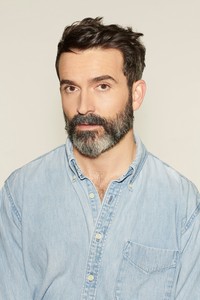
Black-and-white portrait of Hans Ulrich Obrist

Hans Ulrich Obrist is artistic director of the Serpentine, London. He was previously the curator of the Musée d’Art Moderne de la Ville de Paris. Since his first show, World Soup (The Kitchen Show), in 1991, he has curated more than 350 exhibitions. Photo: Tyler Mitchell

See all Articles

Gagosian quarterly weekend reads

Get the best of the Quarterly in your inbox twice a month.

By subscribing you agree to our Privacy Policy.

Derrick Adams: View Master

Derrick Adams: View Master

On April 16, the Institute of Contemporary Art, Boston, opened the first midcareer survey of Derrick Adams’s multidisciplinary practice. Covering over twenty years of work, the exhibition, titled View Master, brings together the artist’s painting, sculpture, collage, performance, and video, as well as a vibrant new commission created for the museum’s façade. Ahead of the opening, Adams met with Tessa Bachi Haas, cocurator of the survey, to discuss his formative experiences with television, the impact of his work in arts education on his practice, and the importance of taking a more complex, more joyful, and more expansive approach to Black American life and culture.

Engaging with the Past: An Interview with Jenny Saville

Engaging with the Past: An Interview with Jenny Saville

On March 28, a major exhibition of Jenny Saville’s work opened at Ca’ Pesaro–Galleria Internazionale d’Arte Moderna in Venice, bringing together nearly thirty paintings from the 1990s to the present. The exhibition is curated by Elisabetta Barisoni, head of the museums division at Venice’s Ca’ Pesaro, Museo Fortuny, and head of MUVE in Mestre. Saville’s monumental canvases are set in dialogue with the great Venetian artists of the past, creating a unique encounter between contemporary painting and the city’s artistic heritage. Here, the artist speaks with Stefania Ventra, professor with Ca’ Foscari University of Venice, about her early trips to Venice, the radicality of Titian’s painting, and depicting emotional truth.

A Tremendous Generosity: Jeff Koons on Marcel Duchamp

A Tremendous Generosity: Jeff Koons on Marcel Duchamp

Jeff Koons tells Alison McDonald about his appreciation for the pioneering artist and thinker Marcel Duchamp.

On Walter De Maria: Donna De Salvo and Lucy Raven

On Walter De Maria: Donna De Salvo and Lucy Raven

The Singular Experience at Gagosian’s Le Bourget gallery is the largest exhibition of Walter De Maria’s work in France in several decades. Organized by Donna De Salvo, senior adjunct curator at Dia Art Foundation, the exhibition marks the first time De Maria’s final sculpture, Truck Trilogy (2011–17), is being shown outside of the United States. Here, De Salvo speaks with artist Lucy Raven about her evolving kinship with De Maria and more.

Peter Hujar & Paul Thek

The Art of Biography
Peter Hujar & Paul Thek

Andrew Durbin’s dual biography, The Wonderful World That Almost Was: A Life of Peter Hujar and Paul Thek, published by Farrar, Straus and Giroux, tracks the convergences and divergences in the lives of the two artists, from their first meeting in Coral Cables, Florida, in 1956 through their generative romantic and creative partnership in New York, Italy, Fire Island, and beyond. Ahead of the release, Durbin met with the Quarterly’s Wyatt Allgeier to speak about the development of the project, the sublime noncompliance of these two artists, and the motifs of love, death, and rebirth that weave through the telling of their story.

Fashion and Art: Daniel Roseberry

Fashion and Art: Daniel Roseberry

Daniel Roseberry, the creative director of Schiaparelli, met with the Quarterly’s Derek C. Blasberg at the maison’s historic headquarters at 21 place Vendôme, Paris, following the Schiaparelli Fall/Winter 2026–27 ready-to-wear show. Since taking the helm in 2019, Roseberry has been credited with advancing the heritage of the house through unpredictable sculptural designs that carry Elsa Schiaparelli’s Surrealist spirit into a new century. The pair discuss the much-anticipated exhibition Schiaparelli: Fashion Becomes Art, now on view at the Victoria & Albert Museum, London, as well as Roseberry’s early exposures to art, his continued dedication to drawing, and the enduring legacy of Elsa Schiaparelli’s daring vision.

Helter Skelter: Arthur Jafa and Richard Prince

Helter Skelter: Arthur Jafa and Richard Prince

Helter Skelter—an exhibition at Fondazione Prada’s Venetian venue, Ca’ Corner della Regina—marks the first creative dialogue between two visionaries of American art, Arthur Jafa and Richard Prince. The show explores the grit, grift, violence, and ingenuity of American culture through more than fifty works, including photography, video, and large-scale installations that interrogate themes of race, gender, media, and politics. In the interview below, Nancy Spector, the exhibition’s curator, speaks about the shared motifs—from apocalyptic sunsets to a fascination with “monstrosity”—that led her to pair these artists for the first time.

Theaster Gates: Dave, All My Relations

Theaster Gates: Dave, All My Relations

A conversation between Theaster Gates and Jessica Bell Brown, with an introduction by Sydney Stutterheim.

An Eye on the Market: Trading Beauty

An Eye on the Market: Trading Beauty

Valentina Castellani speaks with the Quarterly’s Alison McDonald about her new book, Trading Beauty: Art Market Histories from the Altar to the Gallery. The illustrated survey traces the evolution of the Western art market from the medieval era to the present day.

Art Work: Sally Mann and Amor Towles

Art Work: Sally Mann and Amor Towles

Sally Mann joined novelist Amor Towles in a conversation about her widely celebrated new book, Art Work: On the Creative Life (2025), at an event hosted by the New School and the Strand in New York. Published by Abrams, Art Work is about the challenges and pleasures of the creative process. Its mix of illuminating stories, practical advice, and life lessons, illustrated throughout with photographs, letters, and journal entries, offers insights into Mann’s own experience of making art. Here, Mann and Towles speak about the writing process, historical ghosts, and fortunate mistakes.

Mary Weatherford and Mark Lee: Persephone

In Conversation
Mary Weatherford and Mark Lee: Persephone

Ahead of Persephone, an exhibition of new paintings by Mary Weatherford inside Hong Kong’s historic Pedder Building, the Quarterly’s Wyatt Allgeier met with Weatherford and the architect Mark Lee to talk about their collaboration. Here, they discuss how custom architectural interventions—from mirrored columns to strategic light play—transform the gallery, evoking Persephone’s mythic journey through the underworld and back into the light of spring.

The Future of the Past

The Future of the Past

Ashley Overbeek tells the story behind the Art and Antiquities Blockchain Consortium (AABC), cofounded by Susan de Menil. The story begins with a famous pair of Byzantine frescoes once hosted by the Menil Foundation in Houston, passes through the repatriation of a group of Bura funerary objects to Niger, and explores how new technologies are helping to resolve the world’s oldest cultural disputes.