The Frick Collection, New York, opened Gainsborough: The Fashion of Portraiture on February 12. The first exhibition devoted to the English artist’s portraiture ever held in New York, the show comprises more than two dozen paintings and explores the role of fashion in Gainsborough’s depictions, in terms both of the sitters’ clothes and of the larger context of class, labor, craft, and time. Aimee Ng, the Frick’s Peter Jay Sharp Chief Curator, has been working on the show for a decade; last fall she met with the Quarterly’s Derek C. Blasberg to talk about this historic project.
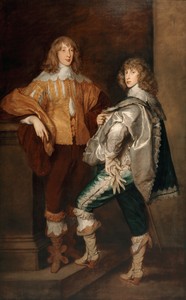
Thomas Gainsborough, Lords John and Bernard Stuart, after Anthony van Dyck, c. 1765, oil on canvas, 92 ½ × 57 ½ inches (235 × 146.1 cm), Saint Louis Art Museum
Thomas Gainsborough, Lords John and Bernard Stuart, after Anthony van Dyck, c. 1765, oil on canvas, 92 ½ × 57 ½ inches (235 × 146.1 cm), Saint Louis Art Museum
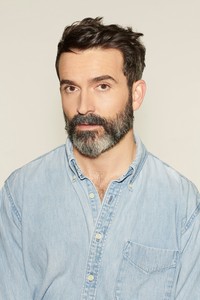
Derek C. Blasberg is a writer, fashion editor, and New York Times best-selling author. He has been with Gagosian since 2014, and is currently the executive editor of Gagosian Quarterly.
Aimee Ng currently serves as the Frick Collection’s Peter Jay Sharp Chief Curator and has been an instrumental member of the curatorial department at the Frick Collection since 2015. Before coming to the Frick, Ng held fellowships at the Morgan Library & Museum’s Drawing Institute, New York, and at the Center for Curatorial Leadership. Photo: Joseph Coscia Jr.
Derek C. BlasbergWhen I opened the catalogue, the first thing I saw was the miniature mannequins wearing the couture dresses.
Aimee NgIncredible, aren’t they? Before fashion magazines, they would send these mini fashion models—that’s how they circulated the latest trends. They even had diplomatic immunity during wartime.
DCBThe dolls did?
ANYes! The dolls could cross borders because it was that important to get these things to market.
DCBWill this show have other pieces of fashion ephemera?
ANNot this exhibition, but about halfway through, our cabinet gallery will display a series of fashion plates from the library’s collection. That opens on April 1. They’re among the earliest fashion plates still in existence, and we have probably the most extensive extant collection of this early volume, 1778 to 1787, all hand-colored from Paris.
DCBI didn’t know the Frick had these! Are they displayed often?
ANBecause they’re works on paper, they can’t be out all the time. But it’s a good way to think about how culture and trends were circulated in eighteenth-century fashion.
DCBDid this Thomas Gainsborough show start as a fashion show?
ANNo, it didn’t. To be honest, we sat down and thought, “We have seven Gainsborough paintings and two drawings, among other pieces—how is it that there’s never been a Gainsborough portrait show in New York City ever?” That was more than ten years ago, so I’ve been thinking about this for a long time.
DCBIn the past, when we’ve spoken to people who work in the art space about fashion, they almost seem . . . not apologetic, but there’s been a suggestion that fashion or style or the way people dress is secondary or less important as a cultural contribution. It’s the idea that art is of a higher aspiration. Working on a show like this, did you find any pushback around the concept of style as an artistic element?
ANNo, not at all! In fact, it’s a quality that has made people very interested in the show, because it’s so relatable. As someone who has studied historical European portraits, I can say that personal style is inextricable from self-identity in a painting or sculpture. Whether it’s an invention, whether it’s embellished, whether it’s exactly what you wore, you can’t take that away from the work. Of course a subject’s features are one thing, but so is their style. It’s not diminishing to value personal style, or the idea of fashion as important not only to the people depicted but also to the people who look at these over time.
DCBYou’re preaching to the choir here!
ANPaintings like Gainsborough’s are historical documents of what people wore in their era. To be clear, fashion is not just this sort of whimsical, frivolous thing; there’s a sense of understanding history and society through the clothes that made their way into paintings.
DCBWhat took ten years to produce the exhibition?
ANOf course a lot of stuff happened, including in the art world, around social justice and representation. That made it challenging to make Gainsborough and his ilk the primary focus at a time of reckoning, and rightfully so. But in time I pitched the show as the fashion of portraiture. I wanted to claim this artist, who was truly at the center of the fashion world, in a show that wasn’t only about what people wore. Fashion was about class, about social hierarchy. People understand fashion, and it becomes an avenue of access—people might find a way in and look at these pictures less as “rich white people” and more as figments in constructions of their era’s society. The show also includes the one Black figure whom Gainsborough painted.
DCBTell me more about that work, which I see is titled Ignatius Sancho and was completed in 1768.
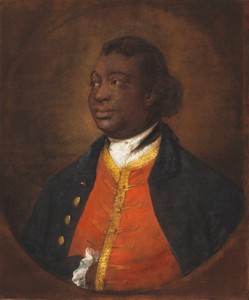
Thomas Gainsborough, Ignatius Sancho, 1768, oil on canvas, 29 × 24 ½ inches (73.7 × 62.2 cm), National Gallery of Canada, Ottawa
ANFashion is essential in this work because what Gainsborough chooses to paint Ignatius Sancho wearing is selective in terms of his identity. He’s a valet, he’s a servant—but he doesn’t get painted in his livery, he’s painted in the clothes of an independent gentleman, as the musical composer and writer that he was in his outside life. This picture shows how what sitters chose to picture themselves wearing was a construction of identity. It also speaks to how multiple our identities can be.
DCBDo we have any supporting texts on the painting?
ANWe know it was painted in Bath, where Sancho was working in the service of the Duke of Montagu. We know the painting entered the collection of the sitter’s family, which means it wasn’t put on the market as a sellable work. When Sancho died, it stayed with his daughter, and then stayed with the family until it was sold, eventually landing at the National Gallery of Canada, Ottawa, in 1907.
DCBDo we know why Gainsborough painted him?
ANWe know Gainsborough was terrible with money and we know that he would occasionally trade a painting for a service. Because we don’t have a receipt or a composition, it’s possible that he paid for music lessons from Sancho, who was a composer and a musician. Gainsborough had traded other works for lessons on the viola da gamba, and perhaps he did here too. On a valet’s salary, Sancho wouldn’t have been able to afford to commission a painting himself.
DCBThe fashion in the portrait tells a story.
ANThe other thing that interests me here, and this is why Gainsborough is an excellent conduit for looking at the whole moment, is how the word “fashion” meant different things than it does now.
DCBI love this. Tell me more.
ANNow, when we say “fashion,” we think Vogue and Harper’s Bazaar. We think specifically about the fashion business. Of course there are the archaic meanings of “fashion,” as in “to fashion something,” using the word as a verb—to make something. But in Samuel Johnson’s early dictionary of the English language, “fashion” means something specific: it’s a social rank, a hierarchy, a condition above the “vulgar” and below nobility. It’s below nobility, of course, because nobility is above everything, including fashion, but fashion is above the “vulgar.” That doesn’t apply to our world today; fashion doesn’t dictate where you live in the social hierarchy. But it was intriguing to think about a time when it most definitely did.
DCBTo have a painting by Gainsborough was fashionable, too.
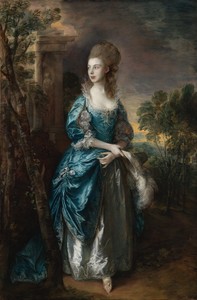
Thomas Gainsborough, The Hon. Frances Duncombe, c. 1776, oil on canvas, 92 ¼ × 61 ⅛ inches (234.3 × 155.3 cm), Frick Collection, New York. Photo: Joseph Coscia Jr.
ANYes, the show explores the idea that it’s not only important what you wear in the pictures, in terms of constructing identity, but that portraits themselves were part of a fashionable life. And yes, Gainsborough was a fashionable portraitist at this time—but not all the time. Artists would go in and out of style. There are many contemporary reports, including diary entries, of members of high society going around to artists’ showrooms as a morning activity. They’d want to see who was painting whom—Reynolds did you, that’s a particular class; Hoppner did you, that’s another group.
DCBThe first quote in the book is fantastic: “Fashion is gentility running away from vulgarity and afraid of being overtaken by it,” which is from James Northcote, a British painter who was a pupil of Joshua Reynolds’s.
ANGainsborough studied portraits from the previous century, notably those of Van Dyck. Time is significant to his work because class connects you to a more extended history. In England that means you didn’t come from nothing. In the aristocracy, in the peerage, the person with the highest rank—right now, among nonroyals it’s the Duke of Norfolk—is established by how old your title is. So we also think about how being able to attach yourself to this artistic lineage becomes very important—even if it’s fake!
DCBYou mean people would put old portraits on their walls and visually suggest ancestry, even if it was a stretch?
ANPrecisely. We think of Americans like Henry Clay Frick, who founded this museum’s collection, buying portraits of other people’s ancestors to put in the dining room to give an impression of lineage. That was happening in the seventeenth century too. People buy connections to history, and by being closer to the beginning, your class and your family are suddenly lifted.
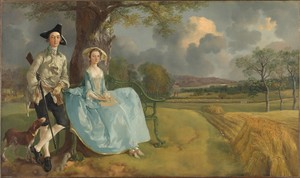
DCBWhat about a painting like Mr. and Mrs. Andrews [c. 1750], which includes not only the fashions of that era but also a vantage, a view over a landscape?
ANThe Andrews live at the National Gallery in London, and it’s a portrait not just of the couple—him with his rifle and his little dog—but of the land they own.
DCBThat’s a real fashion flex!
ANIt’s been incredible to dive into the fashions, the accessories—all the different forms of style in these images—the foundation of lifestyle.
DCBHas there been a show devoted to Gainsborough’s style before?
ANNo, though Gainsborough works appeared in a big exhibition about Georgian style at the Queen’s Gallery at Buckingham Palace in 2023. I should also mention that there are no dresses or actual pieces of clothing in this show. This is a painting show. It’s about both what people wore and the fact that sometimes the relationship between what they wore in their everyday life and what they appear to be wearing in their portraits is not at all related.
DCBYou’re saying that, if it were a fashion show, we’d see the dresses. Whereas here the concept is more about what the paintings of these fashions are.
ANThere’s the idea that you’d put on your best frock when you had your portrait painted, of course, or a frock that you wished were your best frock. It’s not necessarily true that all the outfits you see belonged to the sitters, or even that they existed at all.
DCBThe power of fashion!
ANThis is that power. There’s a quote I like from Lady Duff-Gordon, a fashion designer in the early twentieth century: “Put even the plainest woman into a beautiful dress and unconsciously she will try to live up to it.” It’s as if the designer has created a new personality for her client. Every movement reflects increased self-confidence, a new joy of living.
DCBThat’s like that great Marilyn Monroe line: “Give a girl the right shoes and she can conquer the world.”
ANGainsborough has greater power: his subject doesn’t even have to put the dress on. He could paint her in anything.
DCBThis show isn’t limited to women’s fashion, is it?
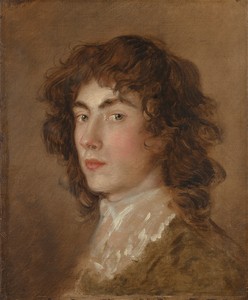
ANThere’s an incredible portrait of Gainsborough’s nephew, Gainsborough Dupont, who was named after the family surname. One thing that stands out to me is this incredible fluffy hair and collar, which was clearly copied from another style and another era.
Thomas Gainsborough, Gainsborough Dupont, c. 1770–72, oil on canvas, 18 × 14 ¾ inches (45.5 × 37.5 cm), Tate, London
DCBLook how the collar balances those scarlet tendrils framing his face!
ANThe Tate is loaning this work and we’re thrilled it’ll be in the show.
DCBHow is it being back in the Frick’s original building, after a few years at the Whitney’s old Marcel Breuer building during your construction and renovation project?
ANI’m so happy to be back. As much as I liked the experiment in the Breuer building for a while, I like working in the mansion. It makes me feel closer to the art.
DCBI know it’s a controversial opinion but I thought it was awesome to have the collection in a different context, at least temporarily.
ANI’ve seen them now in different iterations and they almost look like other pictures. The Fragonards, for example, when they came out of the Fragonard room and were put on the walls as paintings in the Breuer building, were a totally different experience from now, when you remember that they’re these three-dimensional things and all.
DCBThe Frick had such a brilliant and thoughtful rollout when it reopened. There was a line around the block! The garden was saved and the new restaurant feels considered.
ANWe’re all thrilled with how it worked out. The cafe is called Westmoreland after the Fricks’ private train car, which would take them to and from western Pennsylvania, and you get that feeling when you’re in it. The new murals give you the sense of being in it. There were so many moving parts [during the renovation], but everything comes back to the center and the identity of the Frick as a unique institution. You don’t walk in there and think you could be anywhere.
DCBThe Breuer building was a solution to a problem.
ANWe weren’t about looking for a modernist gallery space, but it just so happened that one was available that could accommodate us, and it just so happened that it was an architectural marvel as well.
DCBWas that a polarizing move?
ANIt wasn’t for everybody when it was announced. But there were many people, even the brutalism haters, who admitted to seeing the paintings very differently. For a short time it was an absolute advantage.
DCBAnd we knew it was going to come back here eventually.
Derek C. Blasberg is a writer, fashion editor, and New York Times best-selling author. He has been with Gagosian since 2014, and is currently the executive editor of Gagosian Quarterly.
Aimee Ng currently serves as the Frick Collection’s Peter Jay Sharp Chief Curator and has been an instrumental member of the curatorial department at the Frick Collection since 2015. Before coming to the Frick, Ng held fellowships at the Morgan Library & Museum’s Drawing Institute, New York, and at the Center for Curatorial Leadership. Photo: Joseph Coscia Jr.