February 18, 2026

A Window onto the World

Visual artist Lisha Bai fashions vibrant textile collages, often taking the form of geometric windowscapes. This season she collaborated with Hermès on an installation for their Madison Avenue boutique’s street-facing windows. Here, she speaks with the Quarterly’s Gillian Jakab about the evolution of the project, portals into the beyond, and the importance of pause.

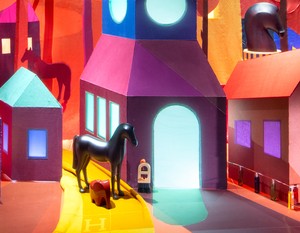
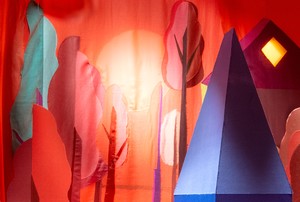
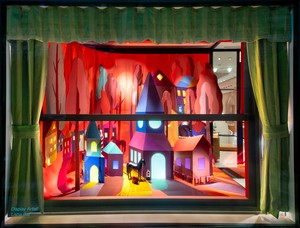
A window installation depicting a colorful village framed by olive green curtains

Lisha Bai’s window installation, Hermès Madison Avenue storefront, New York, 2026. Photo: © Skot Yobauje

Lisha Bai’s window installation, Hermès Madison Avenue storefront, New York, 2026. Photo: © Skot Yobauje

Gillian JakabI know you’ve worked with window motifs in the past, and now, looking at your Hermès installation, I’m seeing many windows—of different scales, colors, fabrics—inside the large one. What a fitting frame! I’m curious how you first approached this collaboration, and how it evolved.

Lisha BaiActually, the collaboration felt very fortuitous. I had just finished preparing for a show and was looking around my studio, playing with the scraps of fabric that had accumulated around me. That’s not typically how I approach my work. Normally, I start with a sketch, or at least a more clearly defined idea. But in this instance, I began assembling pieces more intuitively, letting color and form lead the way. It gradually evolved into what I started to perceive as a village of shapes framed by a window.

When Jesse Davis [head of Artist Windows at Hermès] got in touch and asked if I’d be interested in putting forward a proposal, I was deeply honored. Hermès is such an incredible brand that deeply values craft and it’s not often that somebody calls me up and says, “You do you in this amazing space and we’ll give you a team of people to help you realize your idea.” That invitation really shifted my perspective. I began to see the two-dimensional collage as something spatial, as an environment. I started thinking about how the scraps and shapes might translate into three-dimensional structures, specifically buildings and trees.

I like the idea of the work potentially making people pause, even briefly, to look at the light and the shadows. I hope it offers a quiet counterpoint to the pace and intensity of the city.

Lisha Bai

I also became very interested in the idea of a window within a window. That relationship felt central to the project, linking the work to the architecture of the storefront and heightening the viewer’s awareness of the act of looking itself. The Hermès theme for the season, “Venture Beyond,” also resonated with what I had already been exploring in the studio, particularly this sense of moving outward, from interior space toward an imagined landscape. It felt a bit as though the stars had aligned.

GJIt does feel like a portal into the beyond—like a magical fairytale village. Who do you imagine inhabiting the world you created?

LBI’ve spent so much time in the world of this space that I started to picture myself within it. I find myself wondering, Where am I in this? And having the horse appear as a character was really fun. It’s the first figure I’ve ever introduced into my work. I enjoy the shadow it casts and the way it speaks to the history of the brand.

Detail of Lisha Bai’s window installation, Hermès Madison Avenue storefront, New York, 2026. Photo: © Skot Yobauje

GJI’d love to hear more about your relationship to material.

LBIt’s always been central to my work. The window, as a form, comes out of my interest in the tension between illusion and materiality, and from the historical idea of painting as a window onto the world. I’m drawn to that paradox of something suggesting space or depth while still asserting itself as a physical object. Fabric is especially compelling to me because it carries both visual and tactile presence. It can evoke a sense of depth or dimension while still revealing its own physicality through texture, seams, and loose threads. Light became another way to explore that same tension. By combining actual illumination with shifts of color that imply light and shadow, the work lingers in that space between reality and representation.

GJYou’ve spoken about drawing inspiration from your background as a Korean American growing up in Alabama and the textile traditions you were exposed to.

LBI’ve always been drawn to bojagi, traditional Korean wrapping cloths, and to that piecework technique. I’ve also been really inspired by the quilts of Gee’s Bend. Both have this dynamic, mesmerizing use of pattern and color. In the Gee’s Bend quilts especially, there’s such a strong sense of movement. The colors and shapes feel almost animated, as if they’re pushing against the material itself. That energy has stayed with me. Even though my work is more representational, I think a lot about the rhythms of those traditions, particularly the way textiles, shapes, and colors come together. They’re a reminder of what textiles can do.

Detail of Lisha Bai’s window installation, Hermès Madison Avenue storefront, New York, 2026. Photo: © Skot Yobauje

GJPeople who know your work and know Hermès will visit the installation intentionally, but you’re also getting other New Yorkers just walking by on Madison Avenue. What do you hope passersby will take away from looking through the window?

LBI began to think of the installation almost as a kind of public artwork, which was exciting to me. Madison Avenue is such a highly trafficked area, and I like the idea of the work potentially making people pause, even briefly, to look at the light and the shadows. I hope it offers a quiet counterpoint to the pace and intensity of the city, something that might catch them slightly off guard. I’ve always been mesmerized by the way shadows from buildings or street signs overlap and fragment the surface of the sidewalk. In those moments, when I’m fully absorbed in looking, I feel very present. That sense of attention and stillness is something I hope the work might open up for others.

GJParticularly when everyone’s on their phones or intent on their destination, to have an unexpected encounter with the city, to have your attention captured, is very special.

LBAnd also at this time of year, in the dark days of winter, I wanted the installation to carry a sense of luminosity and warmth.
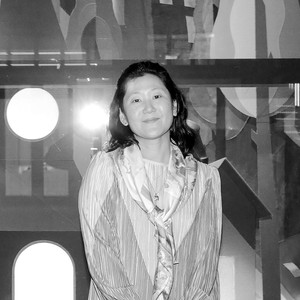
A portrait of Lisha Bai

Lisha Bai is a visual artist who constructs images of light and landscapes through materials such as textiles and sand. She lives and works in Brooklyn, New York. Her work has been exhibited at DC Moore, Deanna Evans Projects, Halsey McKay, Klaus von Nichtssagend, Fortnight Institute, and the National Academy of Art, and has appeared in Artforum and the New York Times. She holds a BFA from Washington University in St. Louis and an MFA from Yale School of Art. Photo: BFA

Black-and-white portrait of Gillian Jakab

Gillian Jakab is an editor of Gagosian Quarterly and has served as the dance editor of the Brooklyn Rail since 2016.

See all Articles

Gagosian quarterly weekend reads

Get the best of the Quarterly in your inbox twice a month.

By subscribing you agree to our Privacy Policy.

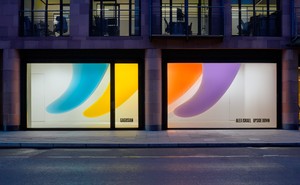
Alex Israel: Upside Down

Alex Israel: Upside Down

Ahead of Alex Israel’s exhibition of four new Fin sculptures at Gagosian, London, the artist spoke with Susan Casey, author of The Wave: In Pursuit of the Rogues, Freaks, and Giants of the Ocean (2010), about the ocean, surfing, and Los Angeles.

Derrick Adams: View Master

Derrick Adams: View Master

On April 16, the Institute of Contemporary Art, Boston, opened the first midcareer survey of Derrick Adams’s multidisciplinary practice. Covering over twenty years of work, the exhibition, titled View Master, brings together the artist’s painting, sculpture, collage, performance, and video, as well as a vibrant new commission created for the museum’s façade. Ahead of the opening, Adams met with Tessa Bachi Haas, cocurator of the survey, to discuss his formative experiences with television, the impact of his work in arts education on his practice, and the importance of taking a more complex, more joyful, and more expansive approach to Black American life and culture.

A Tremendous Generosity: Jeff Koons on Marcel Duchamp

A Tremendous Generosity: Jeff Koons on Marcel Duchamp

Jeff Koons tells Alison McDonald about his appreciation for the pioneering artist and thinker Marcel Duchamp.

On Walter De Maria: Donna De Salvo and Lucy Raven

On Walter De Maria: Donna De Salvo and Lucy Raven

The Singular Experience at Gagosian’s Le Bourget gallery is the largest exhibition of Walter De Maria’s work in France in several decades. Organized by Donna De Salvo, senior adjunct curator at Dia Art Foundation, the exhibition marks the first time De Maria’s final sculpture, Truck Trilogy (2011–17), is being shown outside of the United States. Here, De Salvo speaks with artist Lucy Raven about her evolving kinship with De Maria and more.

Ed Ruscha and Erling Kagge: Silence, Slowness, Exploration

Ed Ruscha and Erling Kagge: Silence, Slowness, Exploration

Ed Ruscha sits down with the author and explorer Erling Kagge to discuss existence.

Ulla Johnson: About the Heart

Ulla Johnson: About the Heart

Following the debut of her Fall/Winter 2026 collection at Dia Chelsea, New York, Ulla Johnson met with Sarah Godfrey to discuss her recent collaborations with the Helen Frankenthaler and Lee Krasner foundations, her upbringing in and dedication to New York City, and her nonhierarchical approach to collecting.

Peter Hujar & Paul Thek

The Art of Biography
Peter Hujar & Paul Thek

Andrew Durbin’s dual biography, The Wonderful World That Almost Was: A Life of Peter Hujar and Paul Thek, published by Farrar, Straus and Giroux, tracks the convergences and divergences in the lives of the two artists, from their first meeting in Coral Cables, Florida, in 1956 through their generative romantic and creative partnership in New York, Italy, Fire Island, and beyond. Ahead of the release, Durbin met with the Quarterly’s Wyatt Allgeier to speak about the development of the project, the sublime noncompliance of these two artists, and the motifs of love, death, and rebirth that weave through the telling of their story.

Engaging with the Past: An Interview with Jenny Saville

Engaging with the Past: An Interview with Jenny Saville

On March 28, a major exhibition of Jenny Saville’s work opened at Ca’ Pesaro–Galleria Internazionale d’Arte Moderna in Venice, bringing together nearly thirty paintings from the 1990s to the present. The exhibition is curated by Elisabetta Barisoni, head of the museums division at Venice’s Ca’ Pesaro, Museo Fortuny, and head of MUVE in Mestre. Saville’s monumental canvases are set in dialogue with the great Venetian artists of the past, creating a unique encounter between contemporary painting and the city’s artistic heritage. Here, the artist speaks with Stefania Ventra, professor with Ca’ Foscari University of Venice, about her early trips to Venice, the radicality of Titian’s painting, and depicting emotional truth.

Fashion and Art: Daniel Roseberry

Fashion and Art: Daniel Roseberry

Daniel Roseberry, the creative director of Schiaparelli, met with the Quarterly’s Derek C. Blasberg at the maison’s historic headquarters at 21 place Vendôme, Paris, following the Schiaparelli Fall/Winter 2026–27 ready-to-wear show. Since taking the helm in 2019, Roseberry has been credited with advancing the heritage of the house through unpredictable sculptural designs that carry Elsa Schiaparelli’s Surrealist spirit into a new century. The pair discuss the much-anticipated exhibition Schiaparelli: Fashion Becomes Art, now on view at the Victoria & Albert Museum, London, as well as Roseberry’s early exposures to art, his continued dedication to drawing, and the enduring legacy of Elsa Schiaparelli’s daring vision.

Helter Skelter: Arthur Jafa and Richard Prince

Helter Skelter: Arthur Jafa and Richard Prince

Helter Skelter—an exhibition at Fondazione Prada’s Venetian venue, Ca’ Corner della Regina—marks the first creative dialogue between two visionaries of American art, Arthur Jafa and Richard Prince. The show explores the grit, grift, violence, and ingenuity of American culture through more than fifty works, including photography, video, and large-scale installations that interrogate themes of race, gender, media, and politics. In the interview below, Nancy Spector, the exhibition’s curator, speaks about the shared motifs—from apocalyptic sunsets to a fascination with “monstrosity”—that led her to pair these artists for the first time.

Theaster Gates: Dave, All My Relations

Theaster Gates: Dave, All My Relations

A conversation between Theaster Gates and Jessica Bell Brown, with an introduction by Sydney Stutterheim.

An Eye on the Market: Trading Beauty

An Eye on the Market: Trading Beauty

Valentina Castellani speaks with the Quarterly’s Alison McDonald about her new book, Trading Beauty: Art Market Histories from the Altar to the Gallery. The illustrated survey traces the evolution of the Western art market from the medieval era to the present day.