Carlo RattiIt’s often said that architecture is our third skin, fashion—the clothes we wear—being our second skin and our biological one being the first. What do you think?
Edoardo ZegnaThat’s interesting. I don’t know if you work only on the third skin and we work only on the second skin. Clearly we dress people, but actually I hope we go way beyond the second skin: We literally touch the first skin and maybe figuratively the third. Why does one buy one brand versus another? It’s not a matter of going around naked or dressed; fashion helps people build layers of themselves, a story through clothing. It goes way beyond the product. But that said, I like this analogy of the second and third skins.
CRI was thinking about it when curating the Venice Architecture Biennale: The blending of natural and artificial is a bit like the blending of different skins. The three skins is a simple way to look at it. There’s also perhaps the planetary skin, which is an interface between the human and everything around. When we design a building or a public space or a master plan for a city, we consider if it’s accessible or if only a few can get a piece of it. In your work, how do you reconcile that?
EZWhen you buy a piece of our clothing, it expands you. But as you say, they’re not for everybody. Somebody once said, “The best things in the world are free. The second-best things in the world are expensive.” I like that. And I think the vision of my great-grandfather started with, How can I make the most luxurious things in the world accessible to the most people? But in many ways you’re right that the products of my industry can be labeled as things not everybody can touch.
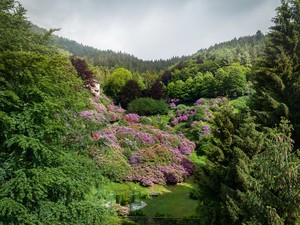
For me, as the fourth generation of a family and a brand, the one thing I want to be remembered for is something that’s actually very accessible to everybody: That’s Oasi Zegna, this amazing hundred-square-kilometer natural territory in the Italian Alps that my great-grandfather had the vision to plant and protect in 1930. What makes me so proud of this place is that he didn’t do all of this for fame, for money, for ego; he did it because it felt right. And I think in today’s world this is such a luxurious sentiment. So, on your point about touching people: My hope, probably one of my big missions, is to ensure that people can have access to the style of life that is Zegna on a wider spectrum. Does that make sense, Carlo?
CRYes, you have different contact points. In architecture that works in a similar way; you can design for everybody in public space, but you’ve also got different ways to engage with it.
Something else I was thinking about, having been to Oasi Zegna, is the particular experience of the purity, the fresh air, the snow during the winter. Where your grandfather was, this place in the Alps, is very close to formative places where I’ve spent time. And there’s this thing that we look at a lot in our work, it’s an old question by the French philosopher Paul Ricœur about the relationship between unique places and the problem of universalities, the fact that some things tend to replicate across the whole planet. I just did a project in Berlin for COP30 [the 30th Conference of the Parties to the United Nations Framework Convention on Climate Change] in the middle of the Amazon, and you end up absorbing the climate, people’s input, and blending it into the project. So your project is always mediating between a universal idea and then the local condition. How does that play out for you? In your case with Zegna, is it the same in Japan and on Fifth Avenue, New York? How does this tension work between what is universal and what is specific to a place?
EZOne needs to be careful as a brand not to localize too much, because then you risk losing yourself and the main reason somebody wants to associate with you. That doesn’t mean that one shouldn’t be looking at local cultures and traditions to put inside the full package. I mean, we’re talking about psychology almost: The essence of desirability stems from having a very clear idea of who you are, and then people really recognize you and your difference. So this is why I challenge my design team. Ultimately, to be really desirable is not to do what everybody else is doing, or adapting too much of what specific cultures are doing; it’s quite frankly the opposite. What is the new shoe we should be doing? It’s a shoe that has nothing to do with a trend that is actually out there. How can I establish my own island in the ocean rather than trying to do it in a busy city where everybody is?
So as a consequence, I think this idea of Oasi Zegna is probably my biggest mission, because in many ways it’s a distillation of who we are. It stems from asking, How can we get the best natural fibers in the world and make a garment uncomplicated? By the way, I think this applies to you in the same way. Ultimately the hardest thing in your work is not to add but to remove, right? I think that applies to design as a whole: Everybody can add, the hard thing is to remove. Removal is the real mastery. Metaphorically the idea is, How do I throw down my facade so people want to enter? And when you’re inside the shop, how do I metaphorically open the windows into my world? So yeah, that’s how I’d answer the local/global question. It’s important to incorporate some local approaches, but the best feeling I could hope for is if you enter one of our stores, you feel you’ve walked into another world—not like anywhere else.
CRI also wanted to ask about sustainability. At the Venice Architecture Biennale we focused a lot on circularity: where materials come from, how you have an ethical supply chain, and, at the end, how you can reuse things. To give you an example, at every Biennale you have a lot of plasterboard that eventually goes to landfill. This year we decided to do everything with chipboard, which is made from old furniture, and then at the end of the Biennale we shredded it and turned it into new chipboard. I like the idea that the Venice Biennale will keep on living in people’s kitchens. I think this is similar to your approach: In some parts of the fashion industry there have been issues with the procurement and supply chain and so on, but it seems to me that you’re different because of your origin as Zegna, you actually have to control the chain, and that makes a big difference versus some of the more opaque subcontracting systems.
EZRight. Let’s start with the source. I’ve always been quite mind-blown about how picky we are when we go to a supermarket and look at what’s organic and what’s not, where our food comes from, and so forth, and then we enter a clothing shop and we just assume that everything’s fine. So I’ve always liked the idea of knowing what you’re wearing, right? It’s this idea of traceability that you underlined.
CRWhen you were speaking, I thought it was funny because banks nowadays have the saying KYC, Know Your Customer; you can do KYC, Know Your Cashmere [laughter].
EZExactly. I’d love to know what sheep the wool comes from! Traceability has become all fancy and trendy, but it’s something we’ve always done. We’ve created the labels Oasi Lino [linen], Oasi Cashmere—everything in that bucket with Oasi in front is 100 percent traceable.
The second thing: Let’s say for a suit we have a piece of fabric in a rectangle. The interesting fact we discovered, ten years or so ago, was that about 30 percent of the material gets discarded as you cut out the shape of the garment. Why are we discarding this 30 percent of a rectangle made from the best natural fibers in the world? We said we shouldn’t, right? So we’re now taking that discarded fabric and repurposing it under the initiative #UseTheExisting. This has formed a small subset of the collection, but we’re very proud of it. It actually costs us a fortune to make, but it’s not more expensive on the price tag at the end. The traceability aspect, and the optimization of not wasting material, reflect our value system.
Then what you’re touching on is, What do we do with the rest? So listen, we’re not one of the fast fashion companies that are just manufacturing and then going on sale. We don’t discount our products—in many ways we’re creating products that are quintessentially forever. The idea is not to have seasons; we could be wearing the same amount of clothing while traveling to China in August as on November 1. Yes, it has to be warmer or less warm, but it’s about a garment that’s uncomplicated. We have a life cycle for a product that’s way longer than any other company.
Clothing that doesn’t sell or becomes obsolete is dead stock. There are still companies that don’t treat dead stock well, but for us it’s a priority. We don’t burn it, we repurpose it: It can go into filling mattresses, or the insides of puffer jackets, and so forth. I go to this idea of, How do you want to educate your kids, and how can you be consistent in your way of life across everything you do? And that goes back to your first question about first skin, second skin, third skin. I want anybody to be able to expand their style of life through us. And as obvious as it is, it’s fascinating how a piece of clothing outlasts a human—that clothing is probably worn by more than one person in its life cycle. How many memories, how many stories, does that piece of clothing hold?
CRI’d like to hear about Zegna’s recent evolution. COVID has been a big accelerator in fashion, and we’ve also seen that in the architecture space. I think you were already changing before COVID in terms of the way people work—the fact that people stopped wearing ties to work, for example. The way people dress has changed. Edward Glaeser and I did an op-ed in the New York Times about the “Playground City.” It was about New York post-COVID and the fact that cities are really changing their primordial function. Now we work more flexibly and we spend more time at home or in third places. We have a more relaxed way of living, and somehow it seems to me that you’ve been one of the most successful brands to jump on that and to see how you dress in this new “Playground City,” or whatever you want to call it. This has occupied us over many building projects, in Singapore and other parts of the world. Do you see the changes continuing to happen, or are we entering a more static phase? Can we think through how we will work, live, and hence dress in five years?
EZChurchill supposedly said once long ago, Don’t let a good crisis go to waste. COVID and these changes have allowed us to be less product focused and more story focused. We have so many stories in our company, and telling these stories becomes pivotal to building new collections. It comes back to the word “uncomplicated.” You have to listen to what real people want and create a product for that—solve function first and add the aesthetic second. Learning from your world about industrial design processes has really helped us cut through this.
CRWhen you want to design a jacket together, let me know. I’m tired of garment bags, but there’s a trade-off of garment bags or wrinkles. So what about creating something you can just throw into your trolley and it comes out perfectly?
EZI’m developing exactly that! That’s too funny.
CRThis idea of essentiality, this idea of simplicity, is a common thread through our work. This year my architecture firm designed the Olympic torch for the next Olympics; it’s called “Essential,” and we wanted to make the flame the protagonist. Usually in the Olympic-torch design, there’s redundancy, almost like a car-design exercise in which you keep adding. We did the opposite—for the first time, we did the minimum, and actually got a lot of prizes and great reviews. It was announced and now it’s about to start running.
Another common thread: working with the Alps. Reyner Banham, a famous radical architect of the 1960s, had this idea of the bubble, the minimum needed to mediate between us and the outside, and thinking along those lines we just presented a bivouac, a shelter designed for the Alps; Oasi Zegna is in the Alps, and it’s where Zegna’s first woolen mill is, in Trivero. Usually when we design something for the Alps, for alpine architecture, for extreme environments like Antarctica, we really need to focus on what’s essential and go back to the basics. It seems to me that in fashion, too, you’ve learned from extreme environments.
EZYes, a pocket in the mountain needs to be in the right place, because otherwise it can be deadly. Pushing a product to the extreme of its use means that it has gone through the most rigorous tests in the world in many ways. It’s like when you buy a watch and they tell you it can resist 10,000 meters below water—it’s not like you’re going to test it, but you know that watch is indestructible. You know you’re not just wearing a watch that shows you the time, you’re wearing a world record, an abstract layer of the untouchable.
CRAn environment like the mountains urges you to be ethical, in architecture and fashion, to think clearly about what matters and what doesn’t.