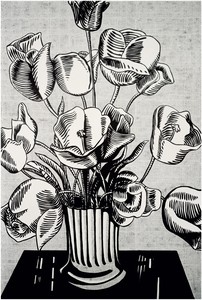
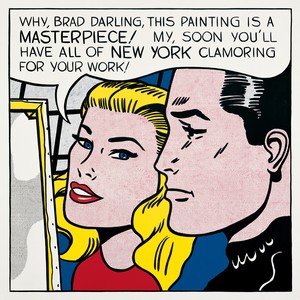
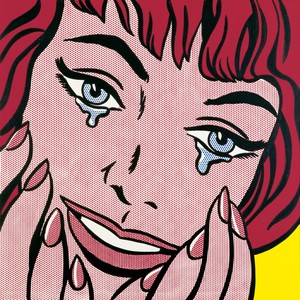
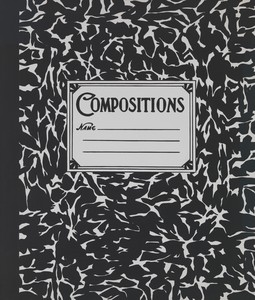
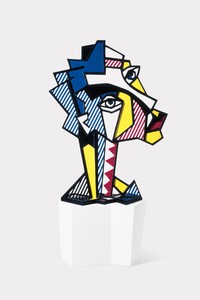
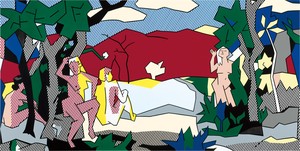
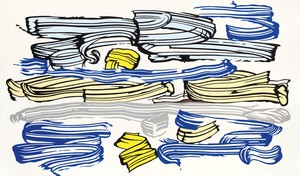
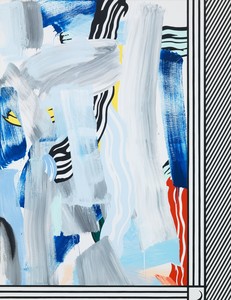
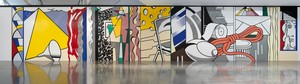
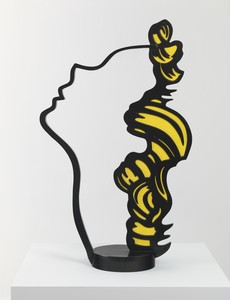
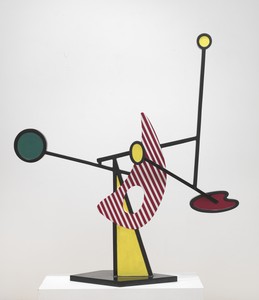
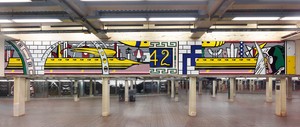
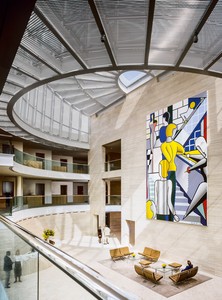
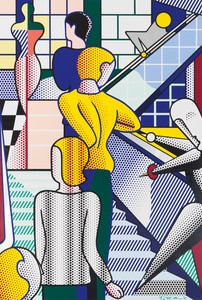
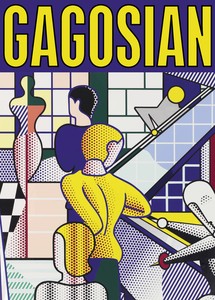
Pop Art looks out into the world. It doesn’t look like a painting of something, it looks like the thing itself.
—Roy Lichtenstein
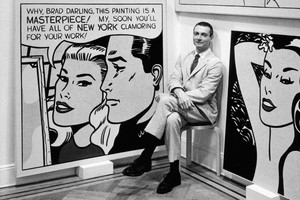
Roy Fox Lichtenstein’s (1923–1997) high-impact, iconic paintings have become synonymous with Pop art—a movement he helped originate—and his merging of mechanical reproduction and hand drawing has become central to the critical understanding of the movement.
Born in New York, Lichtenstein developed an interest in drawing, science, and jazz music at a young age. He attended Ohio State University (1940–42), before being drafted into the Army (1943–45). Supported by the G.I. Bill following the war, Lichtenstein resumed his art studies at the School of Fine and Applied Arts at Ohio State and graduated with an MFA in 1949. He stayed in Ohio for the next eight years, working first as a teacher and later as an industrial draftsman and furniture designer, among other part-time roles. Lichtenstein then accepted an assistant professorship in industrial design at the State University of New York, Oswego, which led to a teaching position at Douglass College at Rutgers University, New Jersey.
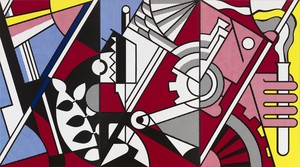
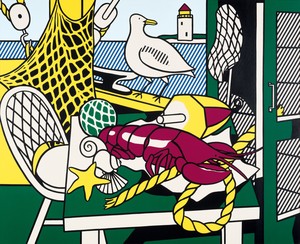
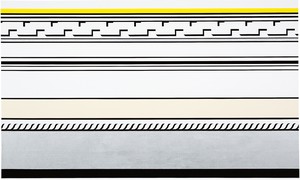
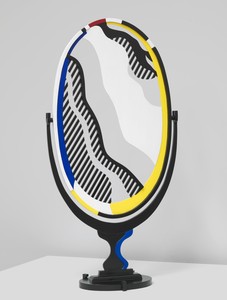
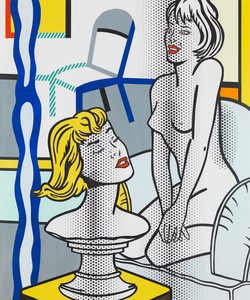
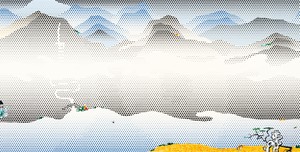
In 1961 Lichtenstein painted one of his first Pop paintings, Look Mickey. This work, in its use of cartoon characters and deliberate imitation of the Benday dot commercial printing process, marked a major turning point in his career. Lichtenstein had his first solo show with Leo Castelli in early 1962—which sold out before the opening—and another in 1963. After this commercial success with Castelli, he resigned from Rutgers in 1964 and moved back to New York to concentrate exclusively on his art. Into the next decade, he depicted stylized landscapes, consumer-product packaging, romantic scenarios, war scenes and explosions, adaptations of paintings by famous artists, parodies of Abstract Expressionism, and geometric elements from Art Deco design. Despite their immense variation in subject matter, all these works underline the contradictions of representing three dimensions on a flat surface.
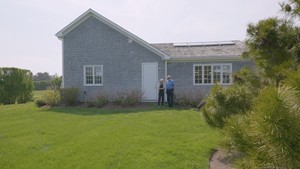
The late 1960s saw Lichtenstein’s first museum surveys: in 1967 the Pasadena Art Museum, California, initiated a traveling retrospective; in 1968 the Stedelijk Museum, Amsterdam, presented his first European retrospective; and in 1969 he had his first New York retrospective, at the Solomon R. Guggenheim Museum. He began living in Southampton, New York, in 1968, and in 1984 he acquired a studio loft in Manhattan; thereafter he would split his time between Southampton and Manhattan.