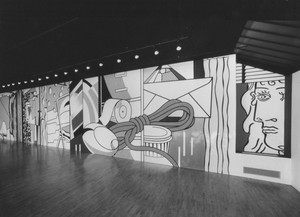
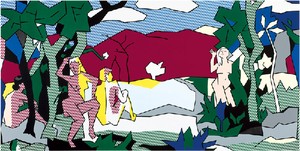
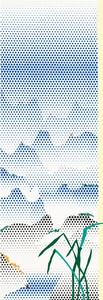
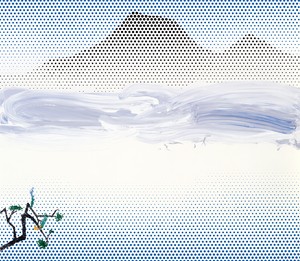
Works Exhibited

About

Pop Art looks out into the world. It doesn’t look like a painting of something, it looks like the thing itself.
—Roy Lichtenstein

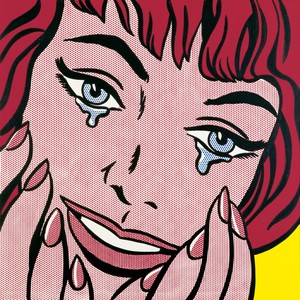
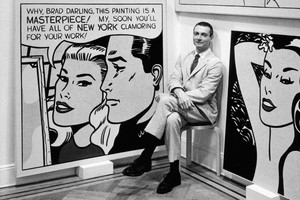
Roy Fox Lichtenstein’s (1923–1997) high-impact, iconic paintings have become synonymous with Pop art—a movement he helped originate—and his merging of mechanical reproduction and hand drawing has become central to the critical understanding of the movement.

Born in New York, Lichtenstein developed an interest in drawing, science, and jazz music at a young age. He attended Ohio State University (1940–42), before being drafted into the Army (1943–45). Supported by the G.I. Bill following the war, Lichtenstein resumed his art studies at the School of Fine and Applied Arts at Ohio State and graduated with an MFA in 1949. He stayed in Ohio for the next eight years, working first as a teacher and later as an industrial draftsman and furniture designer, among other part-time roles. Lichtenstein then accepted an assistant professorship in industrial design at the State University of New York, Oswego, which led to a teaching position at Douglass College at Rutgers University, New Jersey.

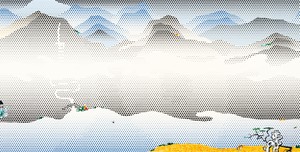
In 1961 Lichtenstein painted one of his first Pop paintings, Look Mickey. This work, in its use of cartoon characters and deliberate imitation of the Benday dot commercial printing process, marked a major turning point in his career. Lichtenstein had his first solo show with Leo Castelli in early 1962—which sold out before the opening—and another in 1963. After this commercial success with Castelli, he resigned from Rutgers in 1964 and moved back to New York to concentrate exclusively on his art. Into the next decade, he depicted stylized landscapes, consumer-product packaging, romantic scenarios, war scenes and explosions, adaptations of paintings by famous artists, parodies of Abstract Expressionism, and geometric elements from Art Deco design. Despite their immense variation in subject matter, all these works underline the contradictions of representing three dimensions on a flat surface.

The late 1960s saw Lichtenstein’s first museum surveys: in 1967 the Pasadena Art Museum, California, initiated a traveling retrospective; in 1968 the Stedelijk Museum, Amsterdam, presented his first European retrospective; and in 1969 he had his first New York retrospective, at the Solomon R. Guggenheim Museum. He began living in Southampton, New York, in 1968, and in 1984 he acquired a studio loft in Manhattan; thereafter he would split his time between Southampton and Manhattan.
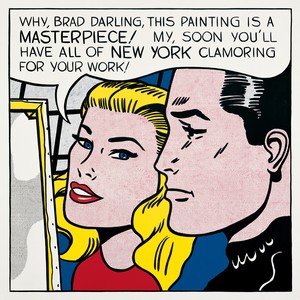
#RoyLichtenstein
Roy Lichtenstein’s New York Boyhood

Roy Lichtenstein’s New York Boyhood

Avis Berman’s biography of Roy Lichtenstein, Becoming Roy Lichtenstein: The Path to Pop, will be published this fall by Abbeville Press, aligning with a major retrospective at the Whitney Museum of American Art, New York, in October. For the Quarterly she has adapted part of her text to focus on the artist’s formative experiences in New York in the 1920s and ’30s.
Roy

Roy

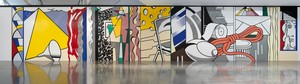
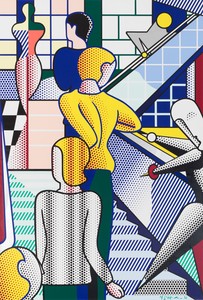
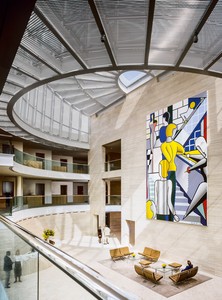
Michael Ovitz, cofounder of Creative Artists Agency (CAA), looks back to 1989, the year he and the architect I. M. Pei commissioned Roy Lichtenstein to create the Bauhaus Stairway Mural for the then new CAA Building in Los Angeles. Through the experience of working with Lichtenstein, Ovitz formed a meaningful friendship with the artist.

Bauhaus Stairway Mural

Bauhaus Stairway Mural

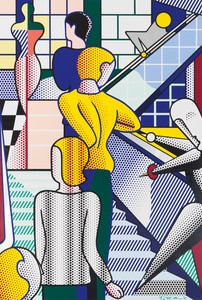
Alice Godwin and Alison McDonald explore the history of Roy Lichtenstein’s mural of 1989, contextualizing the work among the artist’s other mural projects and reaching back to its inspiration: the Bauhaus Stairway painting of 1932 by the German artist Oskar Schlemmer.

Gagosian Quarterly Summer 2024

Now available
Gagosian Quarterly Summer 2024

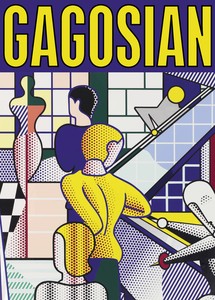
The Summer 2024 issue of Gagosian Quarterly is now available, featuring a detail of Roy Lichtenstein’s Bauhaus Stairway Mural (1989) on the cover.

Irving Blum and Dorothy Lichtenstein

In Conversation
Irving Blum and Dorothy Lichtenstein

In celebration of the centenary of Roy Lichtenstein’s birth, Irving Blum and Dorothy Lichtenstein sat down to discuss the artist’s life and legacy, and the exhibition Lichtenstein Remembered curated by Blum at Gagosian, New York.

Daniel Belasco and Scott Rothkopf on Roy Lichtenstein

In Conversation
Daniel Belasco and Scott Rothkopf on Roy Lichtenstein

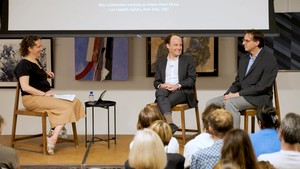
Gagosian and the Art Students League of New York hosted a conversation on Roy Lichtenstein with Daniel Belasco, executive director of the Al Held Foundation, and Scott Rothkopf, senior deputy director and chief curator of the Whitney Museum of American Art, New York. Organized in celebration of the centenary of the artist’s birth and moderated by Alison McDonald, chief creative officer at Gagosian, the discussion highlights multiple perspectives on Lichtenstein’s decades-long career, during which he helped originate the Pop art movement. The talk coincides with Lichtenstein Remembered, curated by Irving Blum and on view at Gagosian, New York, through October 21.

Roy and Irving

Roy and Irving

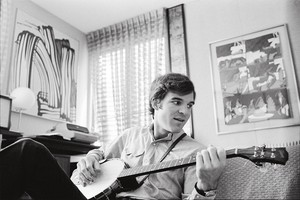
Actor and art collector Steve Martin reflects on the friendship and professional partnership between Roy Lichtenstein and art dealer Irving Blum.

Donald Marron

Donald Marron

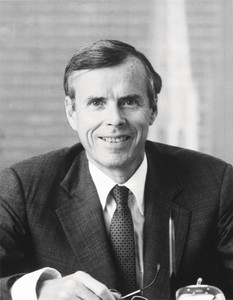
Jacoba Urist profiles the legendary collector.

The Art History of Presidential Campaign Posters

The Art History of Presidential Campaign Posters

Against the backdrop of the 2020 US presidential election, historian Hal Wert takes us through the artistic and political evolution of American campaign posters, from their origin in 1844 to the present. In an interview with Quarterly editor Gillian Jakab, Wert highlights an array of landmark posters and the artists who made them.

Dorothy Lichtenstein

In Conversation
Dorothy Lichtenstein

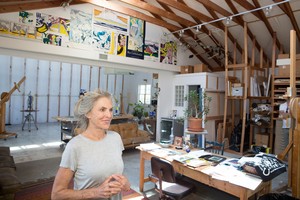
Dorothy Lichtenstein sits down with Derek Blasberg to discuss the changes underway at the Lichtenstein Foundation, life in the 1960s, and what brought her to—and kept her in—the Hamptons.

Gagosian Quarterly Fall 2019

Now available
Gagosian Quarterly Fall 2019

The Fall 2019 issue of Gagosian Quarterly is now available, featuring a detail from Sinking (2019) by Nathaniel Mary Quinn on its cover.

Visions of the Self: Jenny Saville on Rembrandt

Visions of the Self: Jenny Saville on Rembrandt

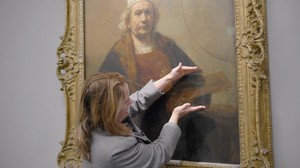
Jenny Saville reveals the process behind her new self-portrait, painted in response to Rembrandt’s masterpiece Self-Portrait with Two Circles.

Press

Request more information about
Roy Lichtenstein

Front of Roy Lichtenstein: Painting with Scattered Brushstrokes Tote Bag

Roy Lichtenstein: Painting with Scattered Brushstrokes Tote Bag

$30
Cover of the Gagosian Quarterly: Summer 2024 Issue featuring artwork by Roy Lichtenstein

Gagosian Quarterly: Summer 2024 Issue

$20
Front of Lichtenstein Remembered poster

Lichtenstein Remembered

$20
Cover of the book Lichtenstein Remembered

Lichtenstein Remembered

$100
Front of Roy Lichtenstein: Profile Head Enamel Pin

Roy Lichtenstein: Profile Head Enamel Pin

$20
Front of Roy Lichtenstein: Cup and Saucer I Tote Bag

Roy Lichtenstein: Cup and Saucer I Tote Bag

$35
Front of Roy Lichtenstein: Coup de Chapeau I Tote Bag

Roy Lichtenstein: Coup de Chapeau I Tote Bag

$35
Cover of the Roy Lichtenstein 1993 rare book with dust jacket

Roy Lichtenstein

$1,500
Cover of the rare book Roy Lichtenstein

Roy Lichtenstein

$1,500