Richard Serra: Steve Reich’s “Music for Pieces of Wood”
In this video, musical ensemble Sō Percussion performs Steve Reich’s “Music for Pieces of Wood” inside the exhibition Richard Serra: Running Arcs (For John Cage), 1992, at Gagosian, New York.
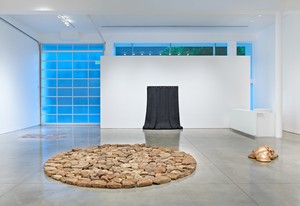
Installation view
Photo: Douglas M. Parker Studio
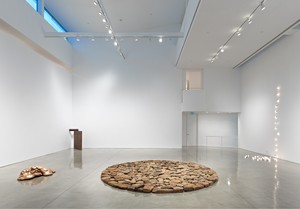
Installation view
Photo: Douglas M. Parker Studio
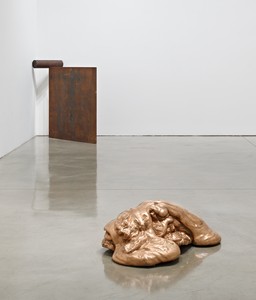
Installation view
Photo: Douglas M. Parker Studio
Installation view
Photo: Douglas M. Parker Studio
Installation view
Photo: Douglas M. Parker Studio
Installation view
Photo: Benjamin Lee Ritchie Handler
Installation view
Photo: Douglas M. Parker Studio
Installation view
Photo: Douglas M. Parker Studio
Installation view
Photo: Douglas M. Parker Studio
Installation view
Photo: Douglas M. Parker Studio
Installation view
Photo: Douglas M. Parker Studio
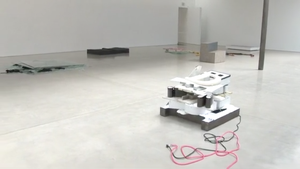
Installation video
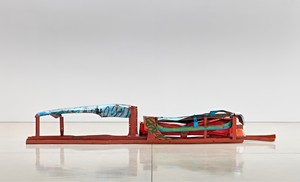
John Chamberlain
Gondola Walt Whitman, 1981
Painted and chrome-plated steel, 24 × 20 × 162 inches (61 × 50.8 × 411.5 cm)
© Fairweather & Fairweather LTD/Artists Rights Society (ARS), New York. Photo: Douglas M. Parker Studio
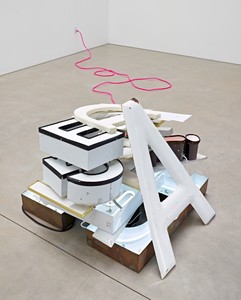
Jack Pierson
Everything You Ever Wanted, 2012
Plastic, wood, neon, and metal, 37 ½ × 45 × 36 inches (95.2 × 114.3 × 91.4 cm)
Photo: Douglas M. Parker Studio
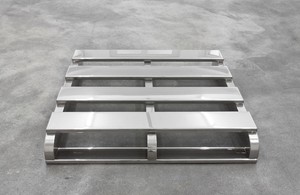
Robert Therrien
No title (Pallet), 2007
Steel with copper and nickel, 6 ¼ × 40 × 40 inches (15.9 × 101.6 × 101.6 cm)
© Robert Therrien/Artists Rights Society (ARS), New York
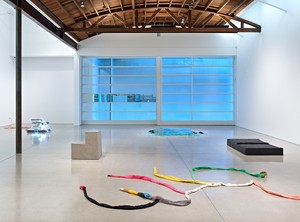
Gagosian is pleased to present The Floor Show: Gravity and Materials, a group exhibition of floor-based sculpture organized in collaboration with curator Richard D. Marshall. The Floor Show explores the variety of ways contemporary artists have expanded the possibility of the sculptural medium by removing it from the once-compulsory pedestal.
In Andy Warhol’s painting Dance Diagram (1962), he renders an appropriated diagram for ballroom dance steps on canvas. By installing the painting on the floor rather than the wall, Warhol transforms it into an interactive sculptural object that prefaces his stacked Brillo Boxes. From this early moment, the show bears witness to the ways in which placement on the floor has augured a wealth of thematic elaborations—addressing the effects of gravity, horizontality, randomness, and the physical qualities of materials.
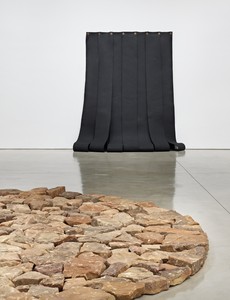
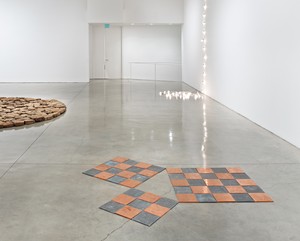
Carl Andre, Robert Morris, Richard Serra, and Robert Therrien have focused on materials and their interaction with the floor, taking advantage of their rigidity, flexibility, color, and texture. The precariously balanced steel components of Serra’s plinth-less sculpture Malmo Roll (1984) afford the piece a visceral thrill, highlighting the inherent strength and beauty of its medium. In Morris’s Untitled (1976), strips of gray felt, hung from the wall, spill onto the floor—thus showcasing the biomorphic textural response of the material’s weight and folds to the force of gravity. Andre’s The Void Enclosed by Lead and Copper Squares of Three, Four, and Five (1998) is composed of equally proportioned unfinished lead and copper squares, its careful placement on the floor creating an ideal perspective for viewing the literal illustration of the geometric principle Pythagorean triple. Therrien’s No title (Pallet) (1997) is shaped like an industrial sleeping pallet, occupying its rightful place on the floor; however, its striking reflective surface transforms this familiar and banal shape into an object of beauty.
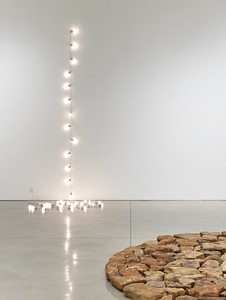
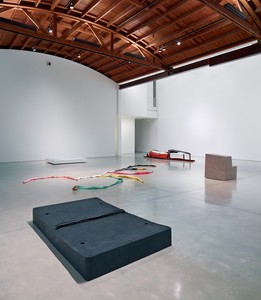
The younger generation of artists exhibited has continued to utilize the floor as the support for their work, but they often instill subjective and emotional content not explored by their predecessors. Rachel Whiteread’s Black Bed (1991)—a cast polyurethane sculpture of a black mattress lying directly on the floor—startles with its disquieting intimacy and seeming reality. Felix Gonzalez-Torres’s UNTITLED (SUMMER) (1993), which consists of a string of lights piled on the floor, creates an object of memory and loss—reinforced by the light bulb’s allusion to personal relationships, and their inexplicable tendency to burn out at different times. In Mike Kelley’s Crooked Body (1993), an assemblage of stuffed children’s toys is sewn together and strewn haphazardly on the floor to reference the internal despair and longing felt when an object of seeming adoration is quickly discarded. Tom Sachs’s 4' x 8' Sheet of Plywood (2011) consists of perfectly square sheets of laminated plywood stacked on the floor. The physical labor represented by the stack is a sacred and integral part of his process; for Sachs, the plywood stack itself becomes an object of devotion.
In this video, musical ensemble Sō Percussion performs Steve Reich’s “Music for Pieces of Wood” inside the exhibition Richard Serra: Running Arcs (For John Cage), 1992, at Gagosian, New York.

Tracking works by Chris Burden, Bruce Nauman, Maria Nordman, and Eric Orr as outliers and outcroppings of the California Light and Space movement, Michael Auping argues that darkness—the absence of light and space—is a key element of the aesthetic.

The Fall 2025 issue of Gagosian Quarterly is now available, featuring Andy Warhol’s Blue Liz as Cleopatra (1962) on the cover.

Carlos Valladares tracks the artist’s engagements with Hollywood glamour, thinking through the ways in which the star system and its marketing engine informed his work.

From her Judenplatz Holocaust Memorial in Vienna to her casting of George Orwell’s World War II office at the BBC, Rachel Whiteread has long engaged with the emotional and historical complexities of addressing deeply troubling moments in human history through art. This month, Whiteread will debut a new work for the inaugural exhibition at the Goodwood Art Foundation in Sussex, England.

For the first time ever, the Robert Therrien Estate presents a collaborative exhibition in the artist’s Los Angeles studio. Sculptor Isabelle Albuquerque kicks off a series of shows that place noteworthy voices in dialogue with Therrien’s practice. Here, Albuquerque speaks with Dean Anes and Paul Cherwick from the estate about the collaboration.

Curator Michael Auping reflects on his time spent with John Chamberlain in Sarasota, Florida.

As American identity once again comes into question during a politically charged election cycle, the Quarterly revisits the motif of the American flag in art. Here, John B. Ravenal contextualizes Robert Lazzarini’s new wall-based flag sculptures and elucidates the tensions they lay bare in the symbol of our nation.
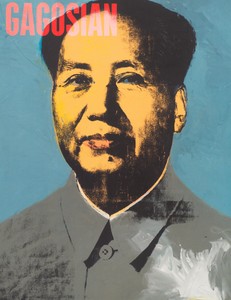
The Fall 2024 issue of Gagosian Quarterly is now available, featuring Andy Warhol’s Mao (1972) on the cover.

Jessica Beck examines Andy Warhol’s return to painting in the 1970s, focusing on the artist’s Mao series.
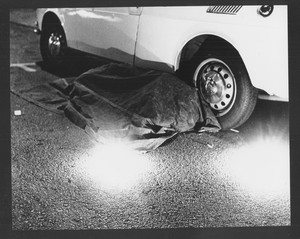
Sydney Stutterheim has published Artist, Audience, Accomplice: Ethics and Authorship in Art of the 1970s and 1980s (Duke University Press, 2024), a survey of performance art and related practices that involve, in various manners, the figure of the accomplice. To celebrate the publication, the Quarterly is publishing an excerpt that examines Chris Burden’s Deadman (1972).
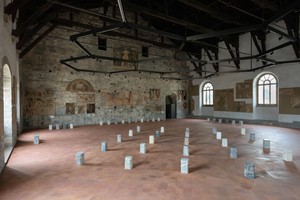
An installation by Rachel Whiteread in the Palazzo della Ragione, Bergamo, Italy, commissioned by Galleria d’Arte Moderna e Contemporanea di Bergamo and cocurated by Lorenzo Giusti and Sara Fumagalli, opened in June of 2023 and ran into the fall. Conceived in relation to the city, the architecture of the site, and the history of the region, it comprised sixty sculptures made with local types of stone. Fumagalli writes on the exhibition and architect Luca Cipelletti speaks with Whiteread.
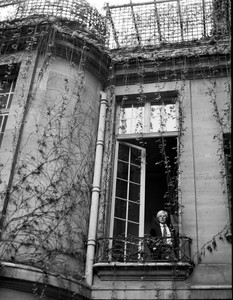
Andy Warhol’s Insiders at the Gagosian Shop in London’s historic Burlington Arcade is a group exhibition and shop takeover that feature works by Warhol and portraits of the artist by friends and collaborators including photographers Ronnie Cutrone, Michael Halsband, Christopher Makos, and Billy Name. To celebrate the occasion, Makos met with Gagosian director Jessica Beck to speak about his friendship with Warhol and the joy of the unexpected.
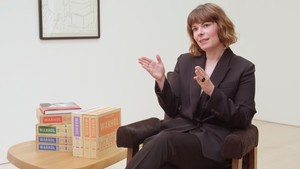
In this video, Jessica Beck, director at Gagosian, Beverly Hills, sits down to discuss the three early paintings by Andy Warhol from 1963 featured in the exhibition Andy Warhol: Silver Screen, at Gagosian in Paris.
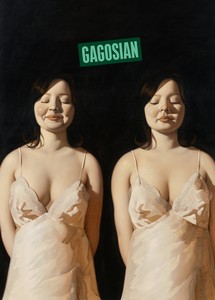
The Winter 2022 issue of Gagosian Quarterly is now available, featuring Anna Weyant’s Two Eileens (2022) on its cover.
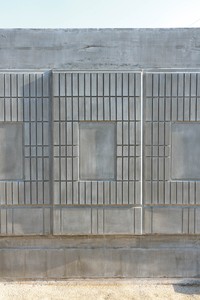
On the occasion of the unveiling of her latest Shy Sculpture, in Kunisaki, Japan, Rachel Whiteread joined curator and art historian Fumio Nanjo for a conversation about this ongoing series.They address the origins of these sculptures and the details of each project.
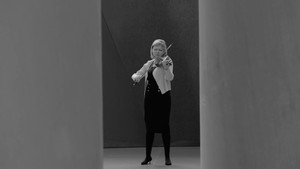
Violinist Alina Ibragimova performs Bach’s Sonata for Solo Violin No. 1 in G Major: Adagio (BWV 1001, c. 1720) from within Richard Serra’s sculpture Transmitter (2020) at Gagosian, Le Bourget. Organized by Bold Tendencies, a nonprofit organization that commissions artists to produce site-specific projects and present performances, in collaboration with Gagosian, this recorded performance took place on May 8, 2022 before a live concert of Olivier Messiaen’s Quatuor pour la fin du temps (Quartet for the End of Time, 1941).
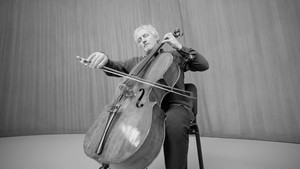
Cellist Mario Brunello performs Bach’s Cello Suite No. 1 in G Major: Prelude (BWV 1007, c. 1717–23) within Richard Serra’s sculpture Transmitter (2020) at Gagosian, Le Bourget. Organized by Bold Tendencies—a nonprofit that commissions artists to produce site-specific projects and present performances—in collaboration with Gagosian, this recorded performance took place on May 8, 2022, before a live concert of Olivier Messiaen’s Quatuor pour la fin du temps (Quartet for the End of Time, 1941).

Join Gagosian to celebrate the publication of Poetic Practical: The Unrealized Work of Chris Burden with a conversation between American Artist, Yayoi Shionoiri, and Sydney Stutterheim presented at the Kitchen, New York. Considering the book’s sustained examination of sixty-seven projects that remained incomplete at the time of Burden’s death in 2015, the trio discuss the various ways that an artist’s work and legacy live on beyond their lifetime.
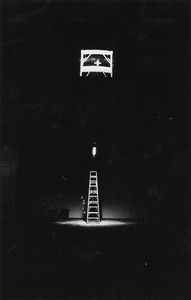
Michael Auping tells the Quarterly’s Alison McDonald about the preparations for a performance by Chris Burden at the Newport Harbor Art Museum in Southern California in 1974—and the event’s abrupt cancellation—providing a glimpse into the mindset of a young, aggressive, and ambitious artist in the early stages of his career.