Henry Moore: Monumental Nature
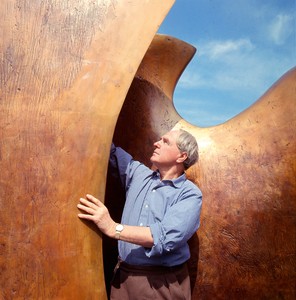
Laura Bruni writes about a major exhibition celebrating the work of the British sculptor Henry Moore at the Royal Botanic Gardens, Kew, London.
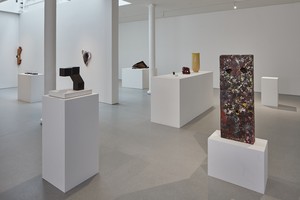
Installation view
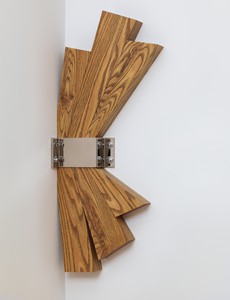
Richard Artschwager
Corner, 1992
Paint, wood, Formica, and chrome, 36 × 14 ¼ × 4 ½ inches (91.4 × 36.2 × 11.4 cm), edition of 30
© 2017 Richard Artschwager/Artists Rights Society (ARS), New York
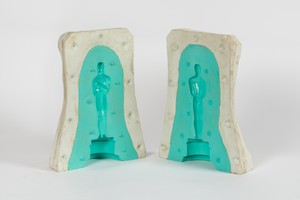
Alex Israel
Casting, 2015
Acrylic on bronze, in 2 parts, 16 × 12 × 5 ¾ inches (40.6 × 30.5 × 14.6 cm), edition of 8
© Alex Israel. Photo: Josh White
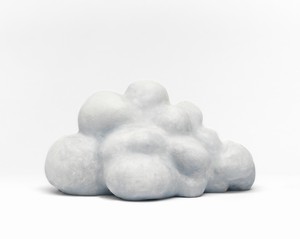
Urs Fischer
Low Lying Cloud, 2016
Cast bronze, acrylic primer, chalk gesso, rabbit skin glue, and oil paint, 8 ¼ × 15 ¼ × 7 ½ inches (21 × 38.7 × 19.1 cm), edition of 2
© Urs Fischer. Photo: Mats Nordman
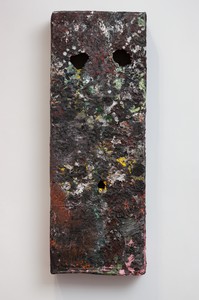
Mark Grotjahn
Untitled (Moss on Rock Heavy Texture Mask M16.d), 2012
Painted bronze, 43 ½ × 16 × 5 ¼ inches (110.5 × 40.6 × 13.3 cm)
© Mark Grotjahn
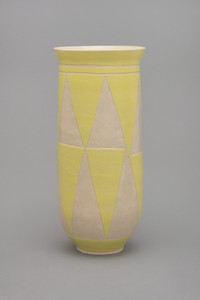
Shio Kusaka
(carved 116), 2016
Stoneware, 23 × 10 × 10 inches (58.4 × 25.4 × 25.4 cm)
© Shio Kusaka. Photo: Brian Forrest
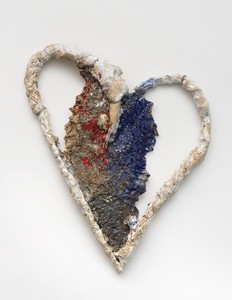
Sterling Ruby
HEART (RWB. 86), 2017
Ceramic, 24 ¼ × 19 ½ × 3 inches (61.6 × 49.5 × 7.6 cm)
© Sterling Ruby Studio
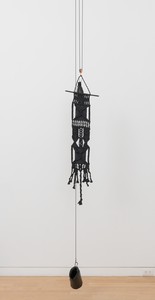
Tatiana Trouvé
Equivalence, 2015 (detail)
Patinated bronze, metal, and copper, dimensions variable, edition of 3
© Tatiana Trouvé. Photo: Rob McKeever
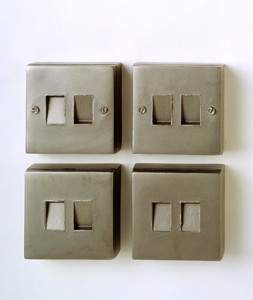
Rachel Whiteread
Untitled (On/Off), 2001
Stainless steel, 4 parts, 2 ⅝ × 2 ⅝ × 1 ⅛ inches (6.5 × 6.5 × 2.7 cm), edition of 6
© Rachel Whiteread
Gagosian is pleased to present Close at Hand, an exhibition of modern and contemporary sculpture.
Focusing on intimate gesture and free experimentation, Close at Hand reveals a breadth of formal, conceptual, and material approaches to sculpture, including assemblages, ceramics, and found objects. The exhibition presents varied embodiments of energy, motion, and time—both material and immaterial—within the purview of the human body.
Formalist oppositions between art and object are played out in sculptures by Anthony Caro and Tony Smith. In Table Piece Z-82 ‘Clarinet’ (1982), Caro orchestrates rusted and varnished metal components into a greater abstract whole, while in Mistake (1963), Smith proposes a singular geometric form, which abandons representational clues in order to consider the classic minimalist construct of spectacle and viewer.
Exploration of new materials can be seen in the making strange of common objects through a shift in their perceived properties. With Corner (1992), Richard Artschwager creates a cartoonish illusion that three planks of wood-patterned Formica, cinched tightly with a metal bracket, are exploding from a corner of the room. Rachel Whiteread’s Untitled (On / Off) (2001) a cast light-switch bank in stainless steel, further blurs the line between reality and representation, while Tatiana Trouvé’s Equivalences (2014), bronze cast refuse such as water bottles, cans, and scraps of cardboard are suspended in perfect balance from thin wire cables.
Gestural aspects of the sculptural process are captured in the surfaces of works by John Chamberlain and Franz West. Lucio Fontana’s Concetto Spaziale Cratere (1968) is a hand-formed porcelain sculpture with a jagged aperture that reveals its white interior, as if it has been shot through by one of Chris Burden’s Gold Bullets (2003), taxonomically arranged in two vitrines nearby.
Laura Bruni writes about a major exhibition celebrating the work of the British sculptor Henry Moore at the Royal Botanic Gardens, Kew, London.
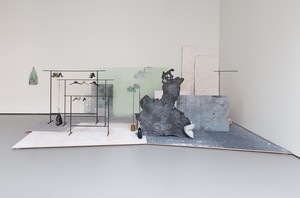
The Palazzo Grassi – Pinault Collection in Venice opened Tatiana Trouvé: The Strange Life of Things this past April. Conceived in close collaboration with the artist, the exhibition’s venue served as a key starting point for the creation of new sculptures, large-scale drawings, and site-specific installations, all presented in dialogue with bodies of work from the past decade. A catalogue was published alongside the exhibition, and here we share Neville Wakefield’s essay on Trouvé’s radical forms of cartography.

Tracking works by Chris Burden, Bruce Nauman, Maria Nordman, and Eric Orr as outliers and outcroppings of the California Light and Space movement, Michael Auping argues that darkness—the absence of light and space—is a key element of the aesthetic.

Karen Wong charts the journey of Alexander Calder’s Quatre lances (1964) from its intended site at the Fondation Maeght, Saint-Paul-de-Vence, France, to the Centennial Hall in Monaco, and now to its permanent home in a new single-artwork museum designed by Renzo Piano at the Nouveau Musée National de Monaco. Wong examines the sculpture’s interaction with architecture and environment as part of a larger story of the artist’s relationship with architects.

From her Judenplatz Holocaust Memorial in Vienna to her casting of George Orwell’s World War II office at the BBC, Rachel Whiteread has long engaged with the emotional and historical complexities of addressing deeply troubling moments in human history through art. This month, Whiteread will debut a new work for the inaugural exhibition at the Goodwood Art Foundation in Sussex, England.

Sam Wasson brings his deep knowledge of cinema, Hollywood, and film noir to Alex Israel’s new paintings of Los Angeles.

Curator Michael Auping reflects on his time spent with John Chamberlain in Sarasota, Florida.

Gagosian and Sadie Coles HQ hosted a conversation between Urs Fischer and film curator and writer Róisín Tapponi about fearless creativity and the artist’s most recent monograph, Urs Fischer: Monumental Sculpture.

As American identity once again comes into question during a politically charged election cycle, the Quarterly revisits the motif of the American flag in art. Here, John B. Ravenal contextualizes Robert Lazzarini’s new wall-based flag sculptures and elucidates the tensions they lay bare in the symbol of our nation.
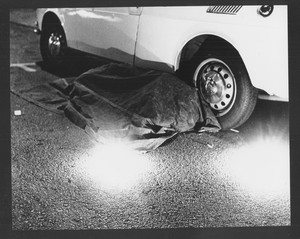
Sydney Stutterheim has published Artist, Audience, Accomplice: Ethics and Authorship in Art of the 1970s and 1980s (Duke University Press, 2024), a survey of performance art and related practices that involve, in various manners, the figure of the accomplice. To celebrate the publication, the Quarterly is publishing an excerpt that examines Chris Burden’s Deadman (1972).
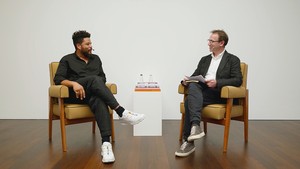
In conjunction with Franz West: Papier, the gallery’s presentation of paper-based works by Franz West at Frieze Masters 2023, artist Oscar Murillo and arts writer, critic, and broadcaster Ben Luke sit down to discuss Murillo’s collaboration in selecting the works on view, as well as his personal experiences meeting the late artist in London.
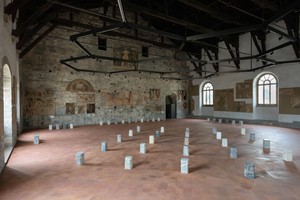
An installation by Rachel Whiteread in the Palazzo della Ragione, Bergamo, Italy, commissioned by Galleria d’Arte Moderna e Contemporanea di Bergamo and cocurated by Lorenzo Giusti and Sara Fumagalli, opened in June of 2023 and ran into the fall. Conceived in relation to the city, the architecture of the site, and the history of the region, it comprised sixty sculptures made with local types of stone. Fumagalli writes on the exhibition and architect Luca Cipelletti speaks with Whiteread.
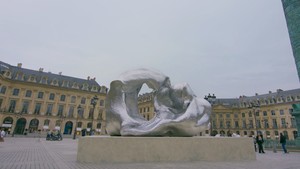
In this video, Urs Fischer elaborates on the creative process behind his public installation Wave, at Place Vendôme, Paris.
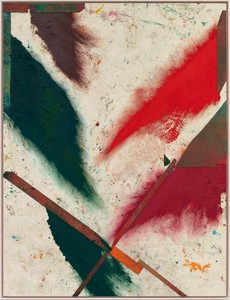
Ester Coen meditates on the dynamism of Sterling Ruby’s recent projects, tracing parallels between these works and the histories of Futurism, Constructivism, and the avant-garde.
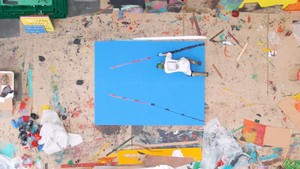
Join Sterling Ruby in his Los Angeles studio as he works on new abstract paintings ahead of his exhibition TURBINES at Gagosian in New York.
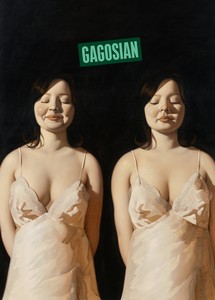
The Winter 2022 issue of Gagosian Quarterly is now available, featuring Anna Weyant’s Two Eileens (2022) on its cover.
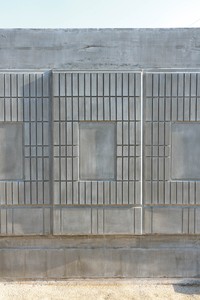
On the occasion of the unveiling of her latest Shy Sculpture, in Kunisaki, Japan, Rachel Whiteread joined curator and art historian Fumio Nanjo for a conversation about this ongoing series.They address the origins of these sculptures and the details of each project.
Urs Fischer sits down with his friend the author and artist Eric Sanders to address the perfect viewer, the effects of marketing, and the limits of human understanding.
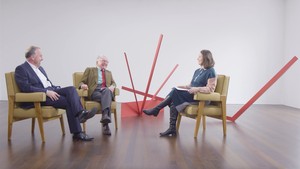
Join Chloe Barter, John Kasmin, and Paul Moorhouse as they discuss the work and legacy of Anthony Caro. Their conversation took place in conjunction with the exhibition Caro and North American Painters, which included sculptures by Anthony Caro from the 1960s and 1970s, shown together with contemporaneous paintings by his friends and peers.
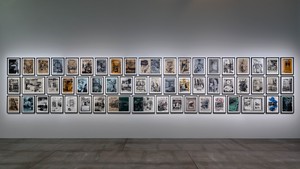
In this video, Tatiana Trouvé provides an overview of her latest installation, presented at the Centre Pompidou, Paris. The exhibition, whose title translates to The Great Atlas of Disorientation, includes a selection of drawings and sculptures that create fantastical landscapes where reality engages in infinite exchanges with its doubles.