
Game Changer
Beatrice Wood
Salomé Gómez-Upegui honors Beatrice Wood, the “Mama of Dada,” an underappreciated trailblazer within the movement who went on to become a brilliant ceramist.
Spring 2020 Issue
Cullen Swinson pays homage to the founder of the Duke Ellington School of the Arts, Washington, DC, and explores the intersections of her engagements as an educator, art collector, philanthropist, and civil rights activist.
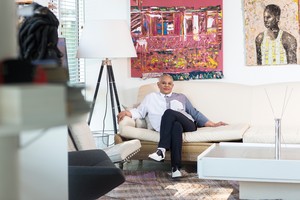
Peggy Cooper Cafritz in her home, Washington, DC, 2015. Photo: April Greer for the Washington Post/Getty Images
Peggy Cooper Cafritz in her home, Washington, DC, 2015. Photo: April Greer for the Washington Post/Getty Images
Peggy Cooper Cafritz believed that “the absence of equity diminishes beauty.” The much beloved cofounder of Washington’s Duke Ellington School of the Arts grew up in Mobile, Alabama, in the 1950s and ’60s, and what she described in her diaries as “the relentless search for beauty” was rooted in her memories as a Black child of the segregated South, diminished by the constant racism that defined the boundaries of her world. As a child, Cafritz had difficulty seeing beauty in herself; as an adult, she cofounded one of the nation’s premier schools of the arts, a school that has produced some of the nation’s most successful Black artists across all disciplines—from world-renowned mezzo-soprano Denyce Graves through artist Hank Willis Thomas, Emmy Award–winning comedian/actor Dave Chappelle, and celebrated writer/journalist Adam Serwer to critically acclaimed actors Corey Hawkins and Samira Wiley, to name a few. Not only that, she amassed one of the largest and most important private collections of works by artists of color in the world, in a game-changing approach to collecting art that was rooted in finding beauty where the larger society often reduces or ignores it.
Cafritz traced the lack of equity faced by Black artists dealing with the larger (and still largely white) art world to the system of American chattel slavery, which sought to strip newly arrived African enslaved people of every vestige of self-identity and self-determination, from language to religion to cultural expression. In effect, the system sought to erase the psychological underpinnings, the fixed points of self-understanding, that are the starting point for any meaningful artistic expression. Couple that with the idea that Blacks were considered incapable of reaching the heights that white artists could achieve—a notion at one time reinforced by a legally segregated society, and later by the habits and social practices of a white elite wittingly or unwittingly dedicated to preserving the status quo—and what results is an art world in which Black artists must struggle for significant presence. In short, many white critics, collectors, museums, and gallerists—and, too often, even white artists—cannot see Black art due to the legacy of slavery and racism in American society. For Cafritz, the lack of a significant and recognized Black presence in the arts was due not to a lack of talent but to historical racial and political injustice.
Cafritz believed that authentic black art was a palliative against the psychologically crippling effects of both historical and contemporary racism, and that great black art actually has the potential to restore and even cure not only black people but the nation itself of the disfiguring effects of racism.
Cullen Swinson
Cafritz sought to correct this injustice by seeking out, supporting, and nurturing Black artists, especially those at the beginning of their careers, or at critical junctures in them. Artists such as Thomas, Titus Kaphar, and Kara Walker, who challenge the stereotypes associated with people of color, were of particular interest to her. The work of these artists reflects Cafritz’s belief that Black artists are a part of the legacy of self-affirmation, of insisting “I am human,” going back to the original slave narratives that use the first-person voice, saying “I am” or “I was born.” Cafritz believed that authentic Black art was a palliative against the psychologically crippling effects of both historical and contemporary racism, and that great Black art actually has the potential to restore and even cure not only Black people but the nation itself of the disfiguring effects of racism. She also knew, however, that if such a cure was to be effected, old institutions (galleries and museums) had to change and new institutions to be erected.
Cafritz sought to change the institutions of the art world as both activist and participant. Early in her career, she would often visit galleries and museums and ask to see works by Black artists. Most often there were none; she asked the question because she wanted dealers and curators to think about why that was so. She also established relationships with established Black artists including Sam Gilliam, Lloyd McNeill, and Lou Stovall, and formed friendships with some of the few gallerists who did promote Black artists, such as Jack Shainman and Claude Simard. She later met many other artists and art dealers, curators and art historians, including Jack Tilton, Betsy Broun, David Ross, and Will Villalongo. It was Ross, then the director of New York’s Whitney Museum of American Art, who asked Cafritz to join that museum’s acquisitions committee for painting and sculpture, on which she served for nine years. Broun was the director of the Smithsonian American Art Museum and Renwick Gallery, in Washington, DC, where she amassed the largest collection of African American art in the world; after Cafritz cofounded the Duke Ellington School of the Arts, she was also a key ally, making certain that the school’s students were participants in the museum and its programs.
The Duke Ellington School of the Arts was born from the partnership of Cafritz and the celebrated choreographer Mike Malone, who together, in 1968, founded Workshops for Careers in the Arts to develop arts programs in association with George Washington University, Washington, DC. The school grew out of that enterprise, and has become a model institution, not only producing successful artists in Washington but inspiring other cities to invest in underserved children and create equity, so that all children can find the beauty that a young Peggy Cooper Cafritz could not find in herself through the authentic, permanent beauty of their own art.
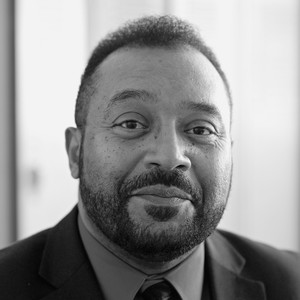
Cullen Swinson was recruited by Peggy Cooper Cafritz to the Duke Ellington School of the Arts in 1998. He currently serves as the school’s Chair of English Studies, previously having served as Ellington’s first Dean of Humanities and Director of Academics and having taught creative writing and dance history at the school. Swinson holds a Master of Arts in Humanities from Georgetown University. He is also a visual artist and an amateur cellist. A painting by Swinson that was owned by Cafritz was lost in the fire that tragically destroyed much of her collection in 2009.
Salomé Gómez-Upegui honors Beatrice Wood, the “Mama of Dada,” an underappreciated trailblazer within the movement who went on to become a brilliant ceramist.

Amie Corry celebrates Poly Styrene, the genre-bending, heterodox lead singer of the pioneering punk band X-Ray Spex.

Gillian Pistell celebrates the life and work of Kay Bearman, a pivotal force in the cultural life of midcentury New York.

Curator Richard Calvocoressi remembers the extraordinary talent of Frank Auerbach.

Scott Rothkopf, Alice Pratt Brown Director of the Whitney Museum of American Art, New York, remembers his friend, Dorothy Lichtenstein.

Mark Francis remembers his late friend, the indefatigable and radical curator Kasper König.

Curator and author Peter Galassi, coeditor of the recent collection Ulf Linde: Essays from a Lifetime in the Arts (König, 2023), reflects on the life and work of the Swedish art critic and museum director.
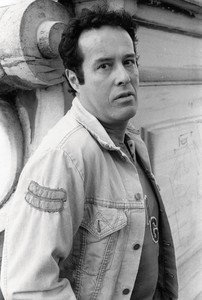
William Breeze pays homage to his friend the filmmaker and author Kenneth Anger, reflecting on his revolutionary work in color, Magick, and spirituality.

Scholar Wendy Jeffers is working on a comprehensive biography of Dorothy Miller, the groundbreaking curator who joined the Museum of Modern Art in its early years, building, over the course of decades, an innovative and remarkable program promoting contemporary American artists. Here, Jeffers recounts some key moments from this extraordinary life.

Michael Slenske pays tribute to the life and work of artist Ashley Bickerton.
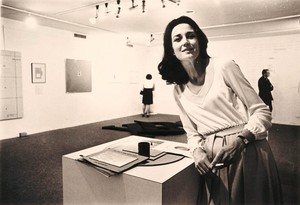
Charles Stuckey reflects on the unparalleled life and career of the gallerist, patron, and curator Virginia Dwan, enumerating key moments from a lifetime dedicated to artists and their visions.
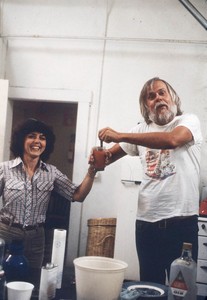
Michael Auping pays tribute to the late bicoastal curator, admiring her contributions to the proliferation of Conceptual art.