
Game Changer
Beatrice Wood
Salomé Gómez-Upegui honors Beatrice Wood, the “Mama of Dada,” an underappreciated trailblazer within the movement who went on to become a brilliant ceramist.
Spring 2025 Issue
Curator Richard Calvocoressi remembers the extraordinary talent of Frank Auerbach.
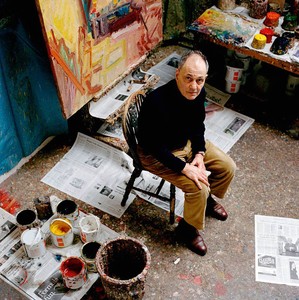
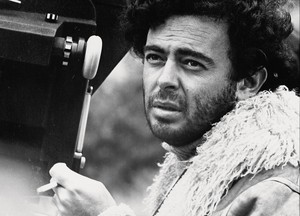
Frank Auerbach, London, c. 2000. Photo: Eamonn McCabe/Popperfoto via Getty Images
Frank Auerbach, London, c. 2000. Photo: Eamonn McCabe/Popperfoto via Getty Images
London after World War II was home to an exceptional group of figurative painters, including Francis Bacon, Lucian Freud, Leon Kossoff, Michael Andrews, Frank Auerbach, and R. B. Kitaj. Of an older generation, Bacon was their unacknowledged leader and inspiration, having burst onto the London gallery scene in 1945 with his savage triptych Three Studies for Figures at the Base of a Crucifixion. Half a century later, in 1995, I curated an exhibition in Edinburgh of all six of the above-named artists. Bacon had died three years earlier but the other five were alive and at the peak of their creative powers when I started working on the show, although Andrews, sadly, died of cancer a few days before the opening.
The show was entitled From London, after a painting by Kitaj from 1975, and the catalogue featured as its frontispiece John Deakin’s famous photograph of four of the artists—Bacon, Freud, Andrews, and Auerbach—at a table in the Soho restaurant Wheeler’s in 1963. This was the spur for an exhibition I curated at Gagosian, London, in the autumn of 2022, Friends and Relations, consisting of forty-three paintings by all four artists, from a 1941 portrait by Freud of his patron Peter Watson to a 2021 self-portrait by Auerbach. Deakin’s photo included a fifth man, Timothy Behrens, who was represented in the show by one of Freud’s portraits of him. Younger than the others (Bacon was nearly thirty years older), Behrens had only recently graduated from the Slade School of Fine Art and was painted by Andrews as well as Freud.
When I interviewed Auerbach in the summer of 2022—he was then the only one of the four still alive—he told me he had been painting self-portraits because he had had to cancel his sitters during the covid crisis. In their liberties with color and form, and their poignant evocation of old age combined with irrepressible life, these portraits were perhaps the most personal and radical things he had ever painted. In 1995, in an exhibition called Working after the Masters at the National Gallery in London, he showed paintings and drawings inspired by works in that museum’s collection. In a note in the catalogue, his close friend Lucian Freud wrote,
It is the architecture that gives his paintings such authority. They dominate their given space: the space always the size of the idea, while the composition is as right as walking down the street. The mastery of these compositions is such that in spite of their often precarious balance, like a waiter pretending to slip while carrying a huge pile of plates, the structure never falters. It is the viewer who has to hold tight.
The weather changes, so does the light. The times of day and night are recorded, the mood is one of high-spirited drama. In fact his work is brimming with information conveyed with an underlying delicacy and humour that puts me in mind of the last days of Socrates.1
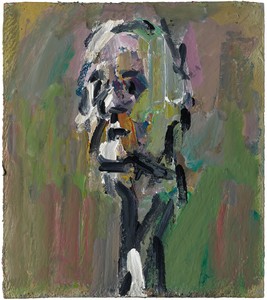
Frank Auerbach, Self Portrait III, 2021, acrylic on board, 23 ¾ × 21 inches (60.3 × 53.3 cm) © Frank Auerbach, courtesy Geoffrey Parton. Photo: Prudence Cuming Associates Ltd.
Auerbach’s commitment to art—to his family of regular sitters, and to the endlessly changing north London landscape—was absolute. Yet he was generous with his time to those who had questions about his painting, or who just wanted to hear him reminisce, in the precise, articulate, and witty manner that he had, about the follies of life in the Soho of the 1950s and ’60s. Tall, good-looking, with lively eyes, a commanding voice, and a winning smile, he was easy to imagine onstage, as he had been in his youth. London has lost an illustrious inhabitant and the world an exceptional artist.
1 Lucian Freud, “Frank Auerbach’s Paintings,” in Colin Wiggins, Frank Auerbach and the National Gallery: Working after the Masters, exh. cat. (London: National Gallery Publications, 1995), p. 5.
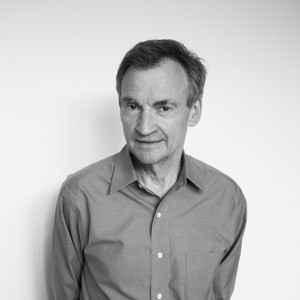
Richard Calvocoressi is a scholar and art historian. He has served as a curator at the Tate, London, director of the Scottish National Gallery of Modern Art, Edinburgh, and director of the Henry Moore Foundation. He joined Gagosian in 2015. Calvocoressi’s Georg Baselitz was published by Thames and Hudson in May 2021.
Salomé Gómez-Upegui honors Beatrice Wood, the “Mama of Dada,” an underappreciated trailblazer within the movement who went on to become a brilliant ceramist.

Amie Corry celebrates Poly Styrene, the genre-bending, heterodox lead singer of the pioneering punk band X-Ray Spex.

Gillian Pistell celebrates the life and work of Kay Bearman, a pivotal force in the cultural life of midcentury New York.

Scott Rothkopf, Alice Pratt Brown Director of the Whitney Museum of American Art, New York, remembers his friend, Dorothy Lichtenstein.

Mark Francis remembers his late friend, the indefatigable and radical curator Kasper König.

Curator and author Peter Galassi, coeditor of the recent collection Ulf Linde: Essays from a Lifetime in the Arts (König, 2023), reflects on the life and work of the Swedish art critic and museum director.
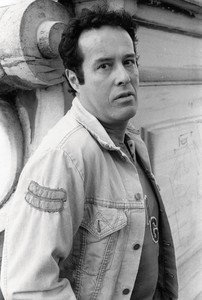
William Breeze pays homage to his friend the filmmaker and author Kenneth Anger, reflecting on his revolutionary work in color, Magick, and spirituality.
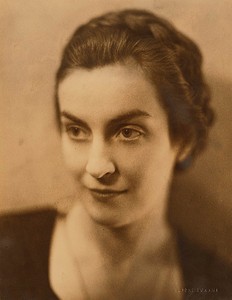
Scholar Wendy Jeffers is working on a comprehensive biography of Dorothy Miller, the groundbreaking curator who joined the Museum of Modern Art in its early years, building, over the course of decades, an innovative and remarkable program promoting contemporary American artists. Here, Jeffers recounts some key moments from this extraordinary life.
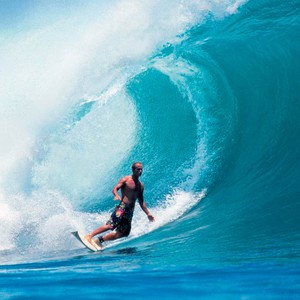
Michael Slenske pays tribute to the life and work of artist Ashley Bickerton.
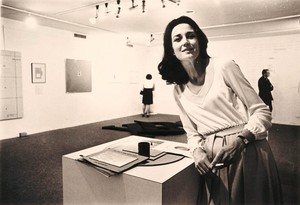
Charles Stuckey reflects on the unparalleled life and career of the gallerist, patron, and curator Virginia Dwan, enumerating key moments from a lifetime dedicated to artists and their visions.
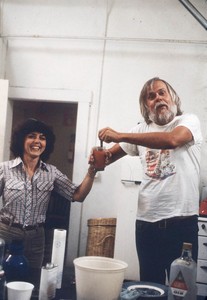
Michael Auping pays tribute to the late bicoastal curator, admiring her contributions to the proliferation of Conceptual art.
Carlos Valladares celebrates the visionary Brazilian director.