
Game Changer
Poly Styrene
Amie Corry celebrates Poly Styrene, the genre-bending, heterodox lead singer of the pioneering punk band X-Ray Spex.
Spring 2026 Issue
Salomé Gómez-Upegui honors Beatrice Wood, the “Mama of Dada,” an underappreciated trailblazer within the movement who went on to become a brilliant ceramist.
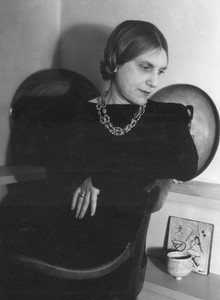
Beatrice Wood with her ceramics at America House (now Museum of Arts & Design), New York, 1947. Photo: courtesy Beatrice Wood Center for the Arts/Happy Valley Foundation
Beatrice Wood with her ceramics at America House (now Museum of Arts & Design), New York, 1947. Photo: courtesy Beatrice Wood Center for the Arts/Happy Valley Foundation
“I was born radical,” Beatrice Wood wrote in her aptly titled autobiography I Shock Myself (1985). “Even when I was a little girl I had a feeling of antagonism toward my mother. My family used to look at me and say, ‘She doesn’t belong to us.’”1
Completely unbothered by the matter of not belonging, Wood—who would go on to become a defining figure in New York’s Dada scene and, years later, an acclaimed ceramist—was just nineteen when she scandalized her affluent family by announcing her plan to become an artist and lead a bohemian life in Paris. An unfathomable ambition for a woman coming of age at the turn of the twentieth century. In 1912 she moved to France and studied briefly at the prestigious Académie Julian, but her plans were cut short by the onset of World War I. Forced to return to New York, she immersed herself in the city’s vibrant theater scene and performed more than sixty roles, using the pseudonym “Mademoiselle Patricia” to protect her family’s reputation, until an unexpected encounter with a Frenchman changed the trajectory of her life.
Wood met Marcel Duchamp in 1916 while visiting the avant-garde composer Edgard Varèse, who was in St. Vincent’s Hospital, New York, with a broken leg. She and Duchamp immediately became friends and shortly afterward Duchamp introduced her to the French author Henri-Pierre Roché. Wood had love affairs with both men, but beyond that, the three formed a profound friendship that shaped New York Dada and led to their cofounding of the ephemeral but foundational Dadaist journal The Blind Man. Together they were part of the inner circle of the renowned collectors Louise and Walter Arensberg, who remained important to Wood throughout her life. Duchamp and Roché “loved me in a paternal sort of way. . . . They were not interested in the theater; they wanted me to concentrate on art. The three of us were something like un amour à trois; it was a divine experience in friendship,” Wood wrote in I Shock Myself.2 The trio’s relationship is believed to have inspired François Truffaut’s acclaimed French New Wave film Jules et Jim (1962).
Encouraged by Duchamp, Wood began to make humorous and often autobiographical drawings. When Duchamp caused outrage with Fountain at the first exhibition of the Society of Independent Artists in New York in 1917 (largely considered the debut of New York Dada), Wood caused commotion with her piece Un peu d’eau dans du savon (A little water in some soap), a drawing of a woman’s naked torso with a real piece of soap, shaped like a shell, placed between her legs.
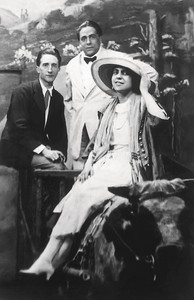
Marcel Duchamp, Francis Picabia, and Beatrice Wood, Coney Island, Brooklyn, 1917. Gift of Jacqueline, Paul, and Peter Matisse in memory of their mother Alexina Duchamp. Photo: Philadelphia Museum of Art/Art Resource, New York
Despite the undeniable influence of Duchamp on Wood’s thought, the Mama of Dada—as she came to be known after the release of a 1993 documentary with that title, recounting her role in the movement—remained her own authority. Intent on pursuing acting and eager to distance herself from her controlling mother (who was known to threaten suicide when Wood spoke of going abroad or pursuing an artistic career), she traveled to Montreal in 1918 to work in the city’s French theater. Once there, seeking further escape from her mother’s grip, she impulsively entered a tumultuous marriage with the theater manager Paul Renson that later ended in annulment.
Back in New York City at the start of the 1920s, Wood engaged in yet another torrid love affair, this time with the British actor and director Reginald Pole. Though the relationship resulted in heartbreak, Pole introduced her to Dr. Annie Besant, a leading figure in the Theosophical Society (which Wood joined in 1923), and to the Indian spiritual teacher Jiddu Krishnamurti. This exposure to Eastern philosophy played a pivotal role in shaping Wood’s worldview.
In 1928, seeking to rebuild her life, Wood moved to Los Angeles, where the Arensbergs had relocated years earlier and with whom she grew closer than ever. She also became an increasingly devout follower of Krishnamurti. During a trip to Holland to hear him speak, she fell in love with a set of lusterware plates she bought in an antique shop, and once again her life took an unexpected turn. Back in LA, determined yet unable to find a teapot to match her beloved plates, Wood enrolled spontaneously in a ceramics course at Hollywood High School. At the onset of her forties, and relying on pure experimentation, she began studying the medium to which she would devote the next six decades of her life. As was customary for Wood, this new path was deeply shaped by the relationships she cultivated, most notably with the renowned Austrian-American ceramists Gertrud and Otto Natzler, who broadened her throwing and glazing techniques.
In 1948, Wood moved to Ojai, to a house across the street from Krishnamurti. She would continue to live and work in this town until the age of 104, just one year before her passing, in 1998. Today, the home and studio she built in Ojai is open to the public as the Beatrice Wood Center for the Arts. It was there that she began creating the works for which she would become most celebrated: one-of-a-kind vessels with iridescent surfaces, achieved unconventionally with in-glaze rather than overglaze lusters—luster glazes applied before firing the ceramics rather than after, as was customary among most ceramists.
Wood ultimately arrived at a style defined by improvisation and combining her many interests, including folk art, modernism, jewelry, and mysticism. She created dazzling bowls, plates, and chalices adorned with handcrafted details, playful fish sculptures (alluding to her astrological sign, Pisces), and figurative works that echoed her Dada-era drawings. Very early in her foray into ceramics, Wood received wholesale orders from prestigious department stores such as Bullocks Wilshire and Neiman Marcus. And as she dove deeper into the medium, her pieces were exhibited widely at institutions across the United States, including the Los Angeles County Museum of Art, the Phoenix Art Museum, and the Delaware Art Museum.
Well into her eighties and nineties, Wood produced some of her best work, garnering the attention of influential art dealers such as Dada expert Francis Naumann and ceramics scholar Garth Clark. Although she garnered significant recognition during the final decades of her life, the market for her work declined sharply after her passing. Still, this would likely have mattered little to Wood, whose guiding philosophy was shaped far more by joie de vivre than by accolades. At the age of ninety-nine, in an interview for the Smithsonian’s Archives of American Art, she reflected, “I don’t make pottery to make money. I don’t make pottery to have exhibitions. I make pottery because I enjoy it.”3
1 Beatrice Wood, I Shock Myself: The Autobiography of Beatrice Wood, ed. Lindsay Smith, 1985 (reprint ed. San Francisco: Chronicle Books, 2006), p. 4.
2 Ibid., p. 25.
3 Wood, in Paul Karlstrom, “Oral history interview with Beatrice Wood, 1992 March 2,” Archives of American Art, Smithsonian Institution. Available online at https://www.aaa.si.edu/collections/interviews/oral-history-interview-beatrice-wood-11853 (accessed December 19, 2025).
Salomé Gómez-Upegui is a Colombian-American writer and creative consultant based in Miami. She writes about art, gender, social justice, and climate change for a wide range of publications, and is the author of the book Feminista Por Accidente (2021).
Amie Corry celebrates Poly Styrene, the genre-bending, heterodox lead singer of the pioneering punk band X-Ray Spex.

Gillian Pistell celebrates the life and work of Kay Bearman, a pivotal force in the cultural life of midcentury New York.

Curator Richard Calvocoressi remembers the extraordinary talent of Frank Auerbach.

Scott Rothkopf, Alice Pratt Brown Director of the Whitney Museum of American Art, New York, remembers his friend, Dorothy Lichtenstein.

Mark Francis remembers his late friend, the indefatigable and radical curator Kasper König.

Curator and author Peter Galassi, coeditor of the recent collection Ulf Linde: Essays from a Lifetime in the Arts (König, 2023), reflects on the life and work of the Swedish art critic and museum director.
William Breeze pays homage to his friend the filmmaker and author Kenneth Anger, reflecting on his revolutionary work in color, Magick, and spirituality.
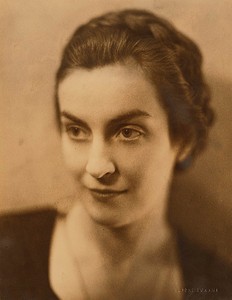
Scholar Wendy Jeffers is working on a comprehensive biography of Dorothy Miller, the groundbreaking curator who joined the Museum of Modern Art in its early years, building, over the course of decades, an innovative and remarkable program promoting contemporary American artists. Here, Jeffers recounts some key moments from this extraordinary life.

Michael Slenske pays tribute to the life and work of artist Ashley Bickerton.
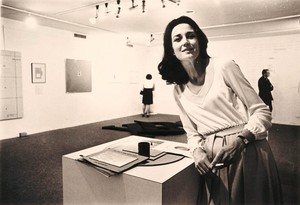
Charles Stuckey reflects on the unparalleled life and career of the gallerist, patron, and curator Virginia Dwan, enumerating key moments from a lifetime dedicated to artists and their visions.
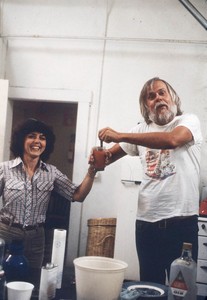
Michael Auping pays tribute to the late bicoastal curator, admiring her contributions to the proliferation of Conceptual art.
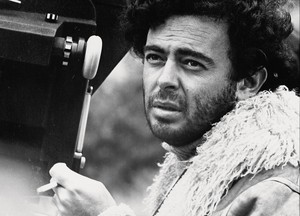
Carlos Valladares celebrates the visionary Brazilian director.