Game Changer
Jacques-Henri Lartigue
Christian House celebrates the generation-spanning and formally inventive photographs of Jacques-Henri Lartigue.
Fall 2024 Issue
Curator and author Peter Galassi, coeditor of the recent collection Ulf Linde: Essays from a Lifetime in the Arts (König, 2023), reflects on the life and work of the Swedish art critic and museum director.
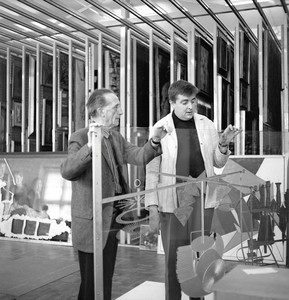
Marcel Duchamp and Ulf Linde working on the replica of Large Glass, Moderna Museet, Stockholm, 1961. Photo: © Lütfi Özkök. Alexina and Marcel Duchamp Papers, Philadelphia Museum of Art Archives
Marcel Duchamp and Ulf Linde working on the replica of Large Glass, Moderna Museet, Stockholm, 1961. Photo: © Lütfi Özkök. Alexina and Marcel Duchamp Papers, Philadelphia Museum of Art Archives
Pontus Hultén, the young director of Stockholm’s Moderna Museet, was eager to include Marcel Duchamp’s Bride Stripped Bare by Her Bachelors, Even (The Large Glass) (1915–23) in his first major exhibition, Rörelse i konsten (Movement in art), in 1961.1 The work had shattered in transit years earlier and was too fragile to leave the Philadelphia Museum of Art, but Duchamp had approved the making of a full-scale replica. The task fell to a brilliant young critic who shared Hultén’s enthusiasm for Duchamp’s work: Ulf Linde.
Linde had made his name in his early twenties playing vibraphone for Sweden’s leading jazz bands, but he was just starting out as an art writer. (He quit jazz because he couldn’t tolerate touring.) If he seems an unlikely candidate to make the first replica of one of the most challenging works of modern art, consider the arrangements for the five-day visit of Marcel and his wife Teeny Duchamp to Stockholm shortly before the exhibition closed. They stayed in a room that Linde used for writing, down the hall from the two-room apartment he shared with his wife on the outskirts of central Stockholm. “One bed was fine,” Linde recalled, “but the other was a rickety cot. Duchamp looked at it and said that his own wasn’t much better.” After dropping their bags, the visitors accompanied Linde to the museum, where the artist saw Linde’s replica and was momentarily stunned: “It’s amusing,” he said, “but I never thought of the Glass as not being broken.”2
Duchamp and Linde together completed the last major element of the work, and their friendship continued by mail after Duchamp left Stockholm. For a gallery exhibition in the city in April 1963, Linde commissioned replicas of several of Duchamp’s readymades, three of which would reappear later that year in Walter Hopps’s landmark Duchamp retrospective at the Pasadena Art Museum, California.3 The others were shown in 1964 at Arturo Schwarz’s gallery in Milan, which issued editions based on Linde’s prototypes. In short, the young Swede played a key role in the flowering of Duchamp’s career in the years before his death, in 1968.4 Linde went on to collaborate with the curator Jean Clair on the major Duchamp exhibition that was one of the shows with which the Centre Pompidou, Paris opened its doors, in 1977. In 1991–92, again at Hultén’s request, he led the making of a second replica of the Glass, though thanks to his distaste for airplanes and boats he never crossed the Atlantic to see the original. Both replicas are in the collection of Moderna Museet.
I was a Duchamp fan in my youth, so I had heard of Ulf Linde—vaguely. Then I fell in love with a Swede (we’re married now) and I began to learn a bit about the culture. I was flabbergasted to discover the scope of Linde’s very substantial achievements and writings, quite apart from his involvement with Duchamp.
In 1963 and 1964, for example, Linde was instrumental in organizing Önskemuseet (The Museum of Our Wishes), which brought to Moderna Museet the core of its outstanding modern collection, including works by Francis Bacon, Giacomo Balla, Giorgio de Chirico, Salvador Dalí, Vasily Kandinsky, Ernst Ludwig Kirchner, René Magritte, Piet Mondrian, Joan Miró, Meret Oppenheim, Pablo Picasso, Jackson Pollock, and Robert Rauschenberg, among others.5 Beginning in 1977, he spent two very busy decades as director of Stockholm’s Thielska Galleriet, thoroughly reinvigorating that great collection of Nordic art circa 1900. Also in 1977, Linde was elected to Svenska Akademien (the Swedish academy), becoming one of the few members in the history of that august body whose principal field of expertise was the visual arts.
Linde published prodigiously throughout his career but the vast bulk of his considerable output was until recently available only in Swedish—effectively invisible to most readers outside Scandinavia. In 2012, my partner, Kerstin Lind Bonnier, and I set out to edit and translate an anthology spanning Linde’s writings. He enthusiastically approved the project before he died, in October 2013, and his widow, Nina Öhman, continued in the same spirit. Thanks to the publishers Walther and Franz König, Ulf Linde: Essays from a Lifetime in the Arts appeared last year, with an indispensable introduction by Olle Granath, former director of both Moderna Museet and Sweden’s Nationalmuseum.6
Linde agreed with Osip Mandelstam that every work of art is a message in a bottle. Whoever finds the bottle is the addressee, charged only to respond. Always concrete and personal, Linde’s responses were free of any system, forever open to improvised interpretation. The anthology ranges from essays on individual artists (continental leaders such as Alberto Giacometti, Henri Matisse, and Francis Picabia, as well as Swedes who ought to be better known abroad) to idiosyncratic speculative texts (such as “The General and Unique in Art,” which quotes Mandelstam). It concludes with “Hodgepodge,” a compact but expansive and original exploration of the magic of drawing.
Linde was an erudite autodidact, at home in German, French, and English as well as Swedish, and in mathematics and philosophy as well as art history. He was a passionate advocate of the art that he loved, and he clung with equal tenacity to his blind spots: the entire medium of photography and the broad stream of art since the 1960s that has responded to our ubiquitous media culture, beginning with the work of Andy Warhol. Few in Sweden today remember Är allting konst? (Is everything art?), a compilation of earnest manifestos by Hultén, Linde, and twenty-seven others that appeared in 1963. But if the fierce disputes of Linde’s youth have faded, the originality, wit, and game-changing clarity of his best writings are as powerful as ever—and available now to readers of English around the world.
1 On Pontus Hultén see, e.g., Wyatt Allgeier, “Game Changer: Pontus Hultén,” Gagosian Quarterly, Summer 2020.
2 In 1986 Linde published an extensive account of his work on the replica, Duchamp’s visit to Stockholm, and their subsequent involvements. See n. 6.
3 The exhibition, titled Marcel Duchamp, took place at Galerie Burén, Stockholm, April 26–June 30, 1963. Bokförlaget Faethon, Stockholm, is planning to publish a facsimile edition of the elegant catalogue, designed by Linde, with a historical introduction by Paul B. Franklin.
4 Beyond Linde’s own account of his relationship with Duchamp, the essentials are provided in Franklin’s contributions to the last number of the scholarly journal published by the Association pour l’Étude de Marcel Duchamp, Paris, especially Franklin’s extensive interview with Linde (pp. 10–43) and “Exposing Duchamp in Sweden” (pp. 94–141). See Étant donné Marcel Duchamp no. 11, Marcel Duchamp en Suède: Ulf Linde, Pontus Hultén & Friends (2016).
5 See Önskemuseet/The Museum of Our Wishes/Notre musée tel qu’il devrait être/Museum unserer Wünsche, exh. cat. (Stockholm: Moderna Museet, 1963), with texts by Gerard Bonnier, K. G. [Pontus] Hultén, and Linde. Despite the multilingual title, the text is in Swedish only. Linde’s brief summaries of Fauvism, Cubism, and other “isms” soon became a popular reference in Sweden.
6 Ulf Linde, Essays from a Lifetime in the Arts, ed. and trans. Kerstin Lind Bonnier and Peter Galassi, introduction by Olle Granath (Cologne: Verlag der Buchhandlung Walther und Franz König, 2023); distributed in the United States by D.A.P. The book includes the two key sections of Linde’s Marcel Duchamp (Stockholm: Rabén & Sjögren, 1986): “Marcel Duchamp: Journal” (Linde’s account of his relationship with Duchamp; pp. 138–177), and “Marcel Duchamp: Un philosophe” (pp. 178–207).
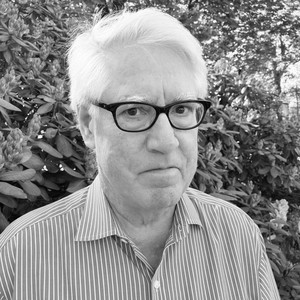
Peter Galassi is a scholar and curator whose principal fields are photography and nineteenth-century French art. From 1991 to 2011 he was chief curator of photography at the Museum of Modern Art, New York, having earlier worked there as a curatorial intern (1974–75), associate curator (1981–86), and curator (1986–91).
Christian House celebrates the generation-spanning and formally inventive photographs of Jacques-Henri Lartigue.

Salomé Gómez-Upegui honors Beatrice Wood, the “Mama of Dada,” an underappreciated trailblazer within the movement who went on to become a brilliant ceramist.

Amie Corry celebrates Poly Styrene, the genre-bending, heterodox lead singer of the pioneering punk band X-Ray Spex.

Gillian Pistell celebrates the life and work of Kay Bearman, a pivotal force in the cultural life of midcentury New York.

Curator Richard Calvocoressi remembers the extraordinary talent of Frank Auerbach.

Scott Rothkopf, Alice Pratt Brown Director of the Whitney Museum of American Art, New York, remembers his friend, Dorothy Lichtenstein.

Mark Francis remembers his late friend, the indefatigable and radical curator Kasper König.
William Breeze pays homage to his friend the filmmaker and author Kenneth Anger, reflecting on his revolutionary work in color, Magick, and spirituality.
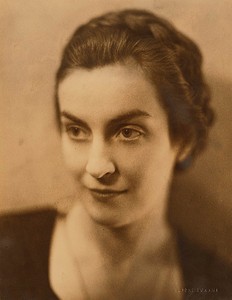
Scholar Wendy Jeffers is working on a comprehensive biography of Dorothy Miller, the groundbreaking curator who joined the Museum of Modern Art in its early years, building, over the course of decades, an innovative and remarkable program promoting contemporary American artists. Here, Jeffers recounts some key moments from this extraordinary life.

Michael Slenske pays tribute to the life and work of artist Ashley Bickerton.
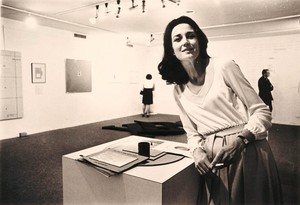
Charles Stuckey reflects on the unparalleled life and career of the gallerist, patron, and curator Virginia Dwan, enumerating key moments from a lifetime dedicated to artists and their visions.
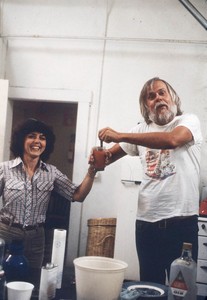
Michael Auping pays tribute to the late bicoastal curator, admiring her contributions to the proliferation of Conceptual art.