December 7, 2022

Fashion and Art:
Madonna’s Sex
and Saint Laurent Rive Droite

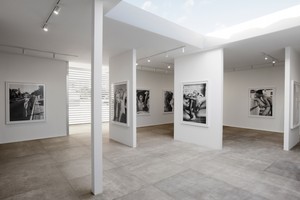
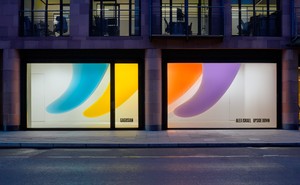
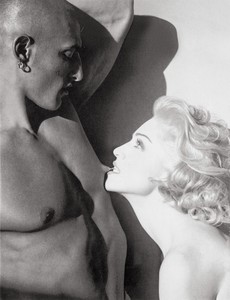
This year’s edition of Art Basel Miami Beach brought Saint Laurent to America for a special exhibition curated by creative director Anthony Vaccarello celebrating the thirtieth anniversary of the publication of Madonna’s groundbreaking book, Sex (1992). Staged on the Miami beachfront, the ephemeral exhibition was presented on the occasion of the reissue of Sex by Rive Droite and Callaway, New York, and featured large-format prints of Steven Meisel’s iconic photographs from the book, as well as unpublished images from the original photo shoots. Rennie McDougall reflects on the momentous impact of the publication, tracing Madonna’s ongoing influence on and provocation of popular culture.

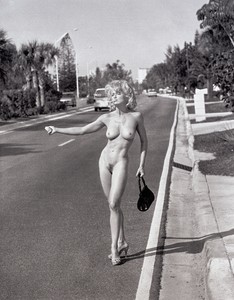
Photograph from Sex (1992) by Madonna. Photo: Steven Meisel, courtesy Saint Laurent

Photograph from Sex (1992) by Madonna. Photo: Steven Meisel, courtesy Saint Laurent

Photograph from Sex (1992) by Madonna. Photo: Steven Meisel, courtesy Saint Laurent

A funny fact about Madonna, which I heard from a poorly translated interview read aloud by comedy duo French and Saunders, is that Sex, her 1992 photography book, was, in Hungary, retitled Slut. The book, like Madonna herself, has always courted misunderstanding.

Originally packaged in an opaque Mylar bag that read “ADULTS ONLY,” Sex sold 150,000 copies on its first day and spent weeks on the New York Times bestseller listDespite the hype (most notably, and incorrectly, that the book showed Madonna having sex with a dog), Madonna and photographer Steven Meisel’s book trafficked less in shock than some hoped for. “If everyone yawned,” Madonna told an interview before publication, “I’d say hooray. That means something happened.” Critics who’d been titillated by the potential scandal scrambled for new ways to discredit the book. A New York Times review bemoaned the inclusion of queer sex—“some of us actually like the opposite sex,” it read, as if the vaults aren’t full to bursting with art depicting heterosexual fantasies.

What critics surely knew, but failed to outmaneuver, was that their mocking reactions only fortified Madonna’s position: a woman publicly scolded for owning her desires. Today she has become so accustomed to this combative stance that she has at times rebuffed even her advocates—Lady Gaga and Camille Paglia, for two—claiming to be the lone sexually empowered woman in a hostile industry, attacked on all sides. It’s a powerful (and highly marketable) position to claim, as well as an unfortunately limiting one. Sex, however, was Madonna’s most astute performance in this regard, her greatest middle-fingering.

Gagosian quarterly weekend reads

Get the best of the Quarterly in your inbox twice a month.

By subscribing you agree to our Privacy Policy.

Photograph from Sex (1992) by Madonna. Photo: Steven Meisel, courtesy Saint Laurent

What remains interesting about the photographs in Sex is not the sex—as far as erotica goes, the images are tame by today’s standards (nothing you can’t see in a David LaChapelle photograph or the opening credits of a Ryan Murphy series). Many depict sexual practices that were then considered highly subversive: homosexuality, bisexuality, S&M. The key word is “depict.” Madonna playfully teases the viewer—her mouth may come close to performing anilingus on a man, but her lips are clearly planted on the man’s inside cheek.

Despite her exhibitionism, Madonna was no poser. In 1989, she included an insert with her album Like a Prayer titled “The Facts about AIDS,” becoming one of the first high-profile figures to break media silence and use her platform to educate the public about the disease. In that light, Sex is a gift to those abandoned communities, to queer people who had for many years come to think of their sexual proclivities as dangerous and shameful. Those only capable of appraising the shock value (or lack of it) in the images failed to see the joy depicted in Sex. There is wry humor in the best photographs, like the famous shot of Madonna—full-platinum Marilyn hair, cigarette balanced on lip—naked and hailing a cab in the middle of an LA street (Carrie Bradshaw would never).

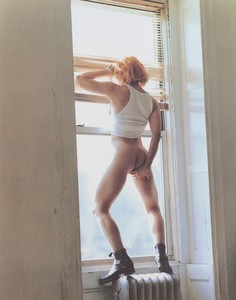
Photograph from Sex (1992) by Madonna. Photo: Steven Meisel, courtesy Saint Laurent

In another, Madonna stands on an apartment radiator, her back turned, facing out a window wearing black leather boots and a men’s white tank, one hand clasped around her bare buttocks, deliberately commingling binary roles—butch and femme, subject and voyeur, an exhibitionist with her back turned. These androgynies seem less daring today, until one remembers that there are people currently trying to ban queer books all over the country. In every image, Madonna still challenges the viewer to reverse all accepted power hierarchies—to acknowledge that, fully exposed, she retains her power.

Exterior of Saint Laurent exhibition space, Miami Beach, Florida, 2022

Interior of Saint Laurent exhibition space, featuring prints from Sex (1992) by Madonna, Miami Beach, Florida, 2022

To celebrate the thirtieth anniversary of this remarkable book, Saint Laurent presented a selection of Steven Meisel’s photographs from Sex at Art Basel Miami Beach, while Saint Laurent Rive Droite, alongside Callaway, New York, published a limited-edition reprint of the book of 800 copies. This reissue will be sold, with proceeds benefiting Madonna’s Raising Malawi charity, via an auction in the upcoming months.

Photos: courtesy Saint Laurent

Black-and-white portrait of Rennie McDougall

Rennie McDougall is a writer based in Brooklyn. His work has appeared in the Brooklyn Rail, frieze.com, Guernica, T Magazine, the Village Voice, and other publications. He received an Anthony Burgess Prize for Arts Journalism in 2018. His first book will be published by Abrams Press in 2026.

See all Articles

Francis Bacon: Reinventing Realism

Francis Bacon: Reinventing Realism

Francis Bacon lived and worked in Paris for a decade starting in the mid-1970s. The city and the art he encountered there provided a profound backdrop for his austere late style, which often brings together smooth, colorful backgrounds, spare architectural signifiers, and sculptural human forms. Here, three striking paintings from that period are considered by Sebastian Smee.

Divine Emanations: Nymphs, Poets, and the Painter’s Palette

Divine Emanations: Nymphs, Poets, and the Painter’s Palette

Janne Sirén considers Anselm Kiefer’s new paintings, the subject of an exhibition at Gagosian, New York, entitled Seal My Ears Shut and I Shall Hear You Still.

Giuseppe Penone: The Reflection of Bronze

Giuseppe Penone: The Reflection of Bronze

Adam D. Weinberg has been working with Giuseppe Penone on an exhibition of the artist’s new sculptures, The Reflection of Bronze, that opens at Gagosian, New York, on April 22. The works explore the character and possibilities of bronze. Here, Weinberg considers Penone’s enduring engagement with the alloy and addresses the conceptual underpinnings of the exhibition’s three-room structure.

Henry Moore: Monumental Nature

Henry Moore: Monumental Nature

Laura Bruni writes about a major exhibition celebrating the work of the British sculptor Henry Moore at the Royal Botanic Gardens, Kew, London.

A Revolution in Jewels: Pomellato at Palais de Tokyo

A Revolution in Jewels: Pomellato at Palais de Tokyo

The exhibition Pomellato, Le Joaillier Révolutionnaire opened at Palais de Tokyo, Paris, on June 24. The Italian jewelry house’s trailblazing advertising campaigns—created by some of the most consequential names in photography—act as the narrative arc of the exhibition, curated by Alba Cappellieri. Here, Sarah Godfrey tracks Pomellato’s history, speaks with Cappellieri about what drew her to this project, and examines some of the key photographs from the show.

Georg Baselitz and the Possibilities of Print

Georg Baselitz and the Possibilities of Print

On the occasion of Baselitz: AVANTI! at the Museo Novecento in Florence, Italy, Holly EJ Black considers the roots and reverberations of Georg Baselitz’s printmaking.

As You Wish: Part Two

As You Wish: Part Two

Helen Oyeyemi continues her four-part story cycle with the second installment, “At the Auspicious Hour.”

Portrait of the Artist as a Young Choreographer: Emily Coates Dances Early Balanchine

Portrait of the Artist as a Young Choreographer: Emily Coates Dances Early Balanchine

Mark Franko considers how Emily Coates resurrects the spirit of George Balanchine’s American beginnings through archival research, spoken dialogue, and movement in her performance Tell Me Where It Comes From.

Savor “The Moment”

Savor “The Moment”

Carlos Valladares wades through the discourse around the musician and actress Charli XCX’s mockumentary, guiding us through its myriad references, from the Spice Girls to Andy Warhol.

Tradition and Innovation: The 2026 Loewe Foundation Craft Prize

Tradition and Innovation: The 2026 Loewe Foundation Craft Prize

The Loewe Foundation Craft Prize celebrates its ninth edition with an exhibition at the National Gallery Singapore.

Donald Judd: Patiently Constructed

Donald Judd: Patiently Constructed

From the perspectives of their respective fields, three international cultural figures—artist and designer Ronan Bouroullec, fashion visionary Michèle Lamy, and chef and restaurateur Enrique Olvera—reflect on Donald Judd’s work in furniture, the subject of recent exhibitions in South Korea and Japan.

The Many Shades of Elaine Kraf

The Many Shades of Elaine Kraf

As part of a growing posthumous appreciation of the feminist writer Elaine Kraf, her previously unpublished novel Memory House was released by the Modern Library. Here, Alana Pockros explores Kraf’s iterative worlds.