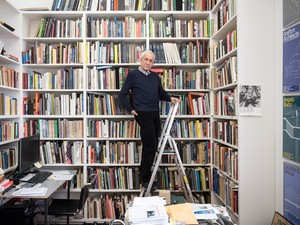
Historian and critic Julian Rose’s new book Building Culture: Sixteen Architects on How Museums Are Shaping the Future of Art, Architecture, and Public Space (Princeton Architectural Press, 2024) tracks evolutions and developments within the field of architecture through a series of in-depth interviews with the architects behind some of the most celebrated and innovative museums of the last fifty years. In celebration of this achievement, we share an excerpt from the author’s introduction to the book.
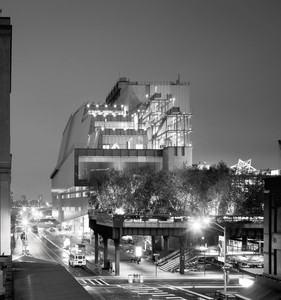
Renzo Piano Building Workshop, Whitney Museum of American Art, New York, 2015. Photo: Nic Lehoux, courtesy Renzo Piano Building Workshop Architects
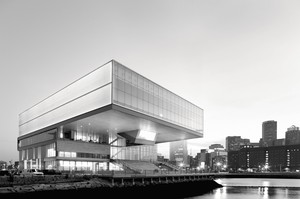
Renzo Piano Building Workshop, Whitney Museum of American Art, New York, 2015. Photo: Nic Lehoux, courtesy Renzo Piano Building Workshop Architects
Julian Rose is a historian and critic of art and architecture. From 2012 to 2018 he was a senior editor at Artforum, and he regularly contributes to a wide range of publications. His book Building Culture explores the architecture of contemporary art museums and was released this month by Princeton Architectural Press.
What is it, exactly, that architects do? The intuitively obvious answer—that they make buildings—doesn’t withstand more than a few moments of reflection. The real business of putting buildings together, after all, falls to contractors, laborers, and practitioners of the various construction trades; an entire economic sector, the construction industry, has arisen to provide this service. Architects, meanwhile, work at a remove, their efforts mediated by the various forms of representation—models, drawings, renderings—that are the actual products of their occupation. So is their contribution a higher-order one, requiring us to take a step back for it to come into focus? Architects make plans, architects design things. Perhaps, then, it is their thinking that shapes the built environment; perhaps they are the ones responsible for the texture of our cities and the character of our interventions in the landscape.
But this idea, too, collapses under scrutiny. Today, most cities and landscapes are shaped by forces much larger than the vision of an architect—by politics, by the real estate market, above all, by the imperatives of industrial and economic development. In this broader domain, architects vie with clients, investors, regulators, bureaucrats, project managers, technical consultants, and a host of other interested parties, while countless construction projects around the globe proceed without any input from architects at all. When architects are involved, their ineffable contributions tend to be concentrated at the top end of the market, where they can add a signature flourish to a building whose underlying parameters have already been mostly dictated by more concrete constraints or more heavily vested interests. The real answer, then, seems to be that today’s architects are creators of exceptional spaces in an all-too-literal sense: narrow specialists engaged primarily in high-profile projects, routinely enlisted for place making and brand building but largely alienated from the physical fabric of everyday life.
Their arrival at this point has not been sudden; it is rooted in architecture’s tangled relationship to modernity as it has unfolded across more than a century. Modern architecture promised to draw out the best from the revolutionary forces of modernity—the radical technological innovations, the rapid growth of new cities, the reshuffling of entrenched social orders—to build a better world from the ground up. In doing so, it simultaneously promised to ameliorate many of modernity’s worst aspects—the urban poverty, the environmental devastation, the social alienation—claiming the power to engender social progress through spatial means. But this brave new world failed to materialize, while the forces of modernization only accelerated, continually reshaping physical reality—along with its underlying social, economic, and political systems—in ways that rendered architecture’s inefficacy ever more apparent.
Prescient observers have long understood this trajectory. Manfredo Tafuri was among the twentieth century’s most precise elucidators of the relationship between buildings and the societies that produce them. Over fifty years ago, in his book Architecture and Utopia, Tafuri set out to write a comprehensive study of the relationship between modern architecture and modern economic systems, undertaking what he called “the precise identification of those tasks which capitalist development has taken away from architecture.” He concluded that by the final decades of the twentieth century, architecture had been reduced “to form without utopia; in the best cases, to sublime uselessness.”
At first glance, the art museum would seem to be the apotheosis of this progression. Of all the new buildings constructed around the world in recent decades, museums have tended to be the most iconic, designed by the most celebrated architects. One of the primary functions of a new museum building is, in a sense, to simply look new and exciting, generating interest and gaining attention through expressive architecture and aesthetic innovation. And so the museum has earned a reputation as the most sculptural of buildings, a place for architects—unhindered by the practical constraints that might bog down more pedestrian building types—to give their creativity full reign. Tafuri was no optimist, but it seems unlikely that even he could have predicted the extent to which this particular brand of sublime uselessness would be smoothly instrumentalized by the ascendant and globalized capitalism of the late twentieth and early twenty-first centuries, with museums regularly conscripted to drive urban regeneration, attract tourism, and stimulate economic growth.
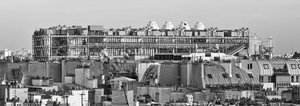
And yet the core premise of this book is that art museums are significant for an entirely different reason: rather than being symptomatic of the plight of architects today, these buildings offer one of the few remaining opportunities for architects to realize the full potential of their calling. Over more than half a century, the sixteen architects interviewed here have designed dozens of museums across five continents. These include any number of undeniably paradigm-shifting projects: among them Renzo Piano’s Pompidou Centre in Paris, completed in 1977, which radically reinvented the social function of the museum in the wake of the upheavals of May 1968; Frank Gehry’s Guggenheim Museum in Bilbao, completed in 1997, which catalyzed such a dramatic regeneration of its urban context that the eponymous “Bilbao effect” was coined to describe the transformative economic potential of high-profile architecture for new cultural institutions; Kazuyo Sejima’s 21st Century Museum of Contemporary Art in Kanazawa, completed in 2004, which deployed pioneering techniques of glass construction to explore new immersive effects, rethinking how museum architecture might shape the experience of art in the new century; and David Adjaye’s Museum of West African Art, currently under construction in Benin City, which not only breaks with the historical legacy of the European museum but also seeks to actively undo it, reimagining the art museum as a vital piece of cultural infrastructure in a post-colonial society.
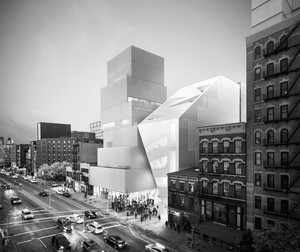
Shohei Shigematsu/OMA, rendering of the New Museum of Contemporary Art expansion, New York, anticipated completion 2025. Image: courtesy OMA/bloomimages.de
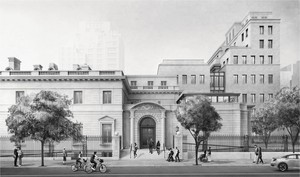
Selldorf Architects, rendering of Frick Collection renovation and expansion, New York, anticipated completion 2024. Image: courtesy Selldorf Architects
Several of the sixteen architects included in this book were already working when Tafuri delivered his bleak diagnosis; a few had their first museum projects underway. All have wrestled, in one way or another, with the conditions he identified. Many were taught or mentored by the generation of pioneering modernists who had dreamed first of using architecture to catalyze social change in the cataclysmic decades leading up to the Second World War, then of rebuilding a better world through architecture in the era after. They came of age acutely aware of the vacuum left by the failure of those aspirations—the loss of purpose that followed from modern architecture’s inability to deliver on its promises. Even those who began their practices later, at the turn of the twenty-first century, were deeply affected by the subsequent failure of any definitive version of a postmodern architecture to take root, by the field’s ongoing inability to produce a cohesive movement that offered a body of thought about not just how architecture should look but also the role it should play in society. And all acknowledge grappling with the increasing commercial pressures on their work, their struggles to create meaningful architecture in the face of the economic forces that are more and more brazenly dictating the patterns of growth and development. Yet all, too, describe museums as a vital exception to these conditions. Each of them has made museum design a cornerstone of their practice, and each describes crucial ways in which the museum occupies an anomalous status in the field of contemporary architecture, offering opportunities for reflection and experimentation not viable in other areas of their work.
What makes these buildings so different from others today? Collectively, the conversations in Building Culture present one fundamental answer, profound in its simplicity: the museum cannot be optimized. At its most banal, this means merely that there is no one “best” way to design an art museum. But, more specifically, it means that the art museum does not present a problem that can be “solved” in terms of the parameters that developers are so fond of. Both the real estate market and the construction industry prioritize efficiency, seeking to eliminate risk, minimize costs, and maximize returns. This, in turn, overwhelmingly incentivizes predetermined, standardized solutions that benefit from economies of scale. Particularly on large projects, architects—and, for that matter, contractors, engineers, and the host of other consultants involved in today’s complex construction projects—speak less of “design” or even “construction” than of the “building procurement process,” a neologism encompassing the multinational supply chains, worldwide networks of labor and material, and dozens of specialized subfields that must be properly administered to produce a building in the current global economy. An architect planning, say, a new office tower or apartment complex might, in consultation with a developer and a contractor, weigh labor costs in the local market against availability and shipping costs of primary structural materials. The architect checks these against basic programmatic requirements such as the maximum buildable area or the minimum allowable floor-to-floor height. Then they factor in a few client preferences that might be tailored to a specific market—perhaps luxury finishes in the lobby or an iconic silhouette on the skyline. Finally, the results of this calculus are crystallized into a physical configuration that is not so much designed—in the sense that it is the result of creative deliberation on the nature of the project, the opportunities it presents, or the needs it might serve—as optimized, in the sense that it provides the greatest quantity of the most profitable space possible in a given context. No wonder, then, that, as several architects lament in these interviews, buildings and cities tend to look the same around the world today. Contemporary architecture, like most products of globalization, is shaped far more by the process of its origin than by the place of its destination, reflecting the general conditions under which it is produced rather than the specific context in which it will be experienced.
The more voices that seek to shape the future of museums, the more complex the conversations about their design and purpose, the more centrally important the role of the architect becomes.
Julian Rose
Museums certainly enjoy a privileged status within this ecology of development; usually big-budget, high-status buildings, they are not subject to the same ruthless value engineering as typical architectural projects. But the crucial distinction between museums and other buildings is not one of degree but of kind. It is not simply that more money tends to be available for museum architecture, but that museum architecture creates value in a fundamentally different way. A museum succeeds according to a nebulous convergence of prestige, cultural capital, and soft power; its purpose is not easily reducible to the blunt dollars-per-square-foot commodification of space that drives most architectural production. This irreducibility, in turn, leaves the door open to an almost infinite variety of architectural propositions. The essential program of a museum is, after all, deceptively simple: it is a place for visitors to encounter works of art. But what is the best way to encounter a work of art?
Each of the architects interviewed in Building Culture has a different answer. In fact, not only does each have a different vision of what an art museum should be, each has also invented a different method to create it. One works primarily in plan because they insist on the primary importance of circulation, arguing that it is the visitor’s trajectory through the museum that sets the tone of their experience. A second prefers to work in section, arguing that the varied proportions of the gallery spaces in relation to the works they contain are all-important. Another eschews drawings altogether for physical models, believing that the ethereal interactions between sunlight and natural materials are what produce a superlative exhibition space. Yet another contends that encounters with works of art are meaningful only when framed by other forms of activation and engagement, emphasizing the role played in their design process by conversations with members of the various communities a museum will serve.
Inevitably, no matter which approach is chosen, finite resources must be allocated and tough decisions must be made. These decisions are inherently subjective, based on the architect’s consideration of a shifting cloud of variables that ranges from the building’s context to its collection, its intended audience to its mission and identity. These are not decisions that can be guided by objective metrics like floor area ratio, and one architect’s solution for a museum in a given context cannot be easily compared to another’s somewhere else. This form of decision making prioritizes the expertise of the architect because it demands solutions that are resolutely architectural.
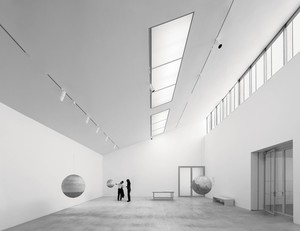
Museums are by no means the most complex buildings confronting architects today—airports, hospitals, and any number of urban infrastructure projects come to mind—but their complexity is surely the most deeply architectural, in the sense that it plays out at human scale, in terms of space and material, light and movement, in the densely intricate choreography of physical encounters between bodies and works of art. Here, the success of a design might hinge on the way sunlight glances off a vaulted ceiling; how a well-placed corner first obscures, then reveals, an adjacent room; the subtle resonance that emerges between a gallery’s stone floor and the materiality of the artifacts within; or in a delicate interweaving of circulation and exhibition space, subtly reminding viewers that their visit to the museum is both an aesthetic and a social experience.
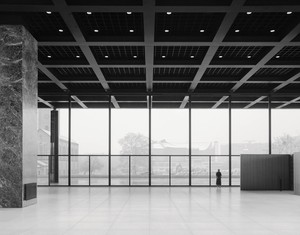
David Chipperfield Architects, Neue Nationalgalerie refurbishment, Berlin, 2021. Photo: Simon Menges, courtesy David Chipperfield Architects and Ludwig Mies van der Rohe/VG Bild-Kunst, Bonn 2021
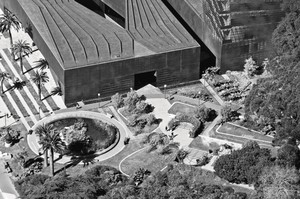
Hood Design Studio, de Young Museum, San Francisco, 2005. Photo: courtesy Hood Design Studio
It bears emphasis that none of this has much to do with the Tafurian caricature of the architect-as-sculptor, the monumental form maker whose main role is to serve as a kind of urban decorator, even if that version of architectural authorship has long been associated with museum design. The working processes described in this book are intensely collaborative and profoundly synthetic. They are rooted in the architects’ broad base of technical and cultural knowledge, which allows them to engage meaningfully with the full range of participants in the long and complex process of conceiving and constructing a new museum, from artists to engineers, contractors to curators; they highlight the architects’ ability to consolidate a vast array of inputs and constraints into a singular solution. Ultimately, the conversations unfolding in these pages reveal less about the creative genius of the architect than about the stubborn agency of architecture itself, its ability to articulate material and spatial configurations that frame our perceptions, shape our interactions, and establish the horizons of our experience.
This is a mode of architectural authorship much better suited to the twenty-first century. By now it is clear that the Bilbao effect was not just an economic and cultural phenomenon, but also a historical one. It was rooted not only in the shift from industrial to postindustrial economies in developed nations, but also in an emergent post–Cold War world order dominated by a new Europe and an apparently unchallenged United States, and it was underpinned by certain glib and boosterish assumptions about the nature of both culture and political power as well as the relationship between them. A quarter of the way through the twenty-first century, these assumptions have been challenged by both a global recession and a global pandemic, as well as a host of other political and environmental crises. These shifts have led to shrinking budgets for culture as well as soul searching within many institutions now reevaluating their roles in society. In some circles, rumblings have begun about a “post-Bilbao” era, as extravagant architecture has come to seem troubling—at best, quietly complicit, uncritically serving to reinforce existing power structures; at worst, actively exclusive, serving to intimidate and alienate broad swaths of the public.
And yet, as this volume amply demonstrates, the pace of museum construction has continued to accelerate worldwide. Part of the explanation for the continued growth of museums is simply that these rumblings come mainly from the regions where the Bilbao effect originated and has now run its course; its transformative magic is still fervently sought by other nations in other regions in other phases of economic and political development. (Tellingly, Gehry’s next Guggenheim franchise is under construction in Abu Dhabi, set to open twenty-eight years after his building in Bilbao.)
David Chipperfield Architects, Turner Contemporary, Margate, England, 2011. Photo: Simon Menges, courtesy David Chipperfield Architects
But even in areas where monumental architecture is no longer quite the thing, museums continue to renovate, expand, and rebuild at a brisk pace. The reason is twofold. On the one hand, new buildings remain the most efficient way for institutions to extract wealth from their donors. The twenty-first century has seen a massive redistribution of wealth across the globe, creating a turbocharged donor class. Museum directors and development offices know that the surest way to draw large sums from deep pockets is to offer a building or a wing or a new gallery to which a prospective patron can affix their name. Meanwhile, as museums become more closely intertwined with financial networks and so more corporate in their operations, they become more beholden to capitalist mantras like grow or die. Nor is the flow of benefits from donors to museums unidirectional. As the global art market surges in sync with the increased concentration of wealth in the hands of major collectors, there is a constant threat that booms will swell into bubbles and investment will teeter into speculation, particularly for contemporary art that does not yet have an established historical pedigree. But by hanging an artwork on its walls, a museum offers tangible proof of its worth. In return for investment from art collectors, then, museums stabilize the value of the very goods their patrons collect, serving as something like the central banks of the art market.
On the other hand, as more and more museums come under political pressure from various constituencies—artists, activists, the public, even their own staffs—to expand, reorganize, and reframe their collections in order to present new narratives about culture and history, these reconfigurations will inevitably create new spatial requirements for their galleries. Similarly, as museums increasingly seek to engage new audiences in new ways, they will inevitably require new physical spaces for this expanded social programming.
Although these various economic and cultural forces all drive growth, they do so in sometimes violently contradictory ways. Yet paradoxically, the more voices that seek to shape the future of museums, the more complex the conversations about their design and purpose, the more centrally important the role of the architect becomes. It is the architect who is responsible for mediating among the many different stakeholders in a given museum, and ultimately it is the architect who must translate their manifold and occasionally opposed ideas into a coherent physical form.
Even in a post-Bilbao era, architecture seems likely to remain central to the evolving identity of the art museum because important questions about who and what these buildings are for will always require architectural answers. The art museum, in other words, is grounded in the two alchemical translations, recursive and omnidirectional, that lie at the heart of architectural praxis: from the conceptual to the actual—the instantiation of ideas and aspirations in concrete form—and from the spatial to the social—the complex feedback between the physical configuration of a building and the modes of inhabitation and interaction that unfold within it.
Julian Rose is a historian and critic of art and architecture. From 2012 to 2018 he was a senior editor at Artforum, and he regularly contributes to a wide range of publications. His book Building Culture explores the architecture of contemporary art museums and was released this month by Princeton Architectural Press.