Breakfast at Recoin
On the corner of a small, curved street, steps away from the wide boulevard Beaumarchais and the Marais, is Recoin. As its name suggests—recoin translates to “a quiet, dark corner”—the all-day restaurant feels like a tucked-away secret. Open from 9am until past midnight, it operates as a coffee and breakfast spot in the morning, has a terrific lunch menu for €24, and becomes a wine bar in the evening, always serving seasonal fare. A Parisian friend who loves to eat out brought me there in 2022, just after it had opened, and I was immediately charmed by the space: tall windows that allow plenty of daylight to filter through, dark wooden tables simply adorned with glass vases and market flowers, a beautiful blue-tiled floor. Two years later, I happened to be staying in an apartment a short walk from Recoin and I returned day after day in the mornings. It’s quiet and secluded, and as you take a table by the window and sip on a coffee (perhaps with a book), you’ll feel the restaurant waking as you do—food deliveries coming through and the chef prepping in the narrow kitchen. Regulars stop by and stand at the bar, downing an espresso before being on their way. You can order a croissant, but my preference is the œuf à la coque et mouillettes (aka eggs and soldiers; mouiller means “to wet or dip”). You’ll be given a soft-boiled egg, a small mound of fleur de sel, and generously buttered long strips of baguette. The bread isn’t toasted—it’s fresh enough that you’ll welcome the slight chew of crust—while the yolk is runny and the white around it barely set. Because I’m never ravenous first thing in the day, and there’s so much more I’ll want to eat later, I appreciate the single egg.
Coffee (and a pastry) break at Dreamin’ Man
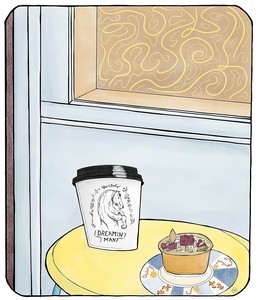
A ten-minute walk north from Recoin is my favorite coffee shop in Paris. It’s so small you might not see it if customers weren’t spilling out onto the street, as they often do, crouching around stools and tiny round tables. (There are three tables inside.) With its low ceiling, wooden floors, and crumbling exposed plaster on the walls, entering Dreamin’ Man feels like stepping into a cave. There’s something so cozy and welcoming about the space: the whirring of coffee being ground, a case overflowing with freshly baked pastries, and an eclectic assortment of books and trinkets. Behind the counter, you’ll usually find owner and coffee wizard Yuichiro Sugiyama and his partner, Yui Matsuzaki, who bakes some of the best pastries in Paris. The coffee and sweet treats are served on ceramics from France and Japan, reminding me of my Japanese mother’s kitchen. Although tourists wander in and out—because Sugiyama’s coffee is truly excellent, you’ll slowly sip on his concoction as though it’s liquid gold—this is also decidedly a neighborhood spot, with friends streaming in, saying hello, and perching at a narrow counter that feels more like a shelf than a place to sit. Once you’ve ordered a coffee, let’s hope you’ve saved room for one of Yui’s pastries. She makes them daily with ingredients from the market. I still dream of her rhubarb almond tart from when I was last there in the spring. Toasted almond shards, a thick piece of roasted rhubarb on top, frangipane and rhubarb jam hidden inside—all of it held by a golden pastry shell.
Lunch at Pontochoux
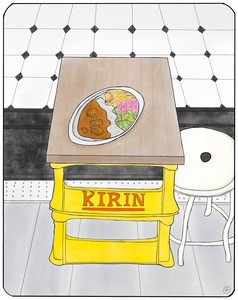
Now we cross over into the Marais for Japanese curry, or karē raisu, at Pontochoux, playfully named after the phonetic spelling of its address, rue du Pont aux Choux. A bowl of Japanese curry with rice is my ultimate comfort food, and I hope it can also be yours. I love this one because it’s fragrant and nourishing and not too heavy. It’s just the right amount of food to fill your stomach and leave a sliver of space for dessert (more on that below). Order the curry with seasonal vegetables and karaage (fried chicken). It arrives in a silver oval plate: a velvety aromatic curry with its mild heat, a few pieces of lightly battered fried chicken, sweet potato, pickled eggplant, radishes . . . all on a bed of Japanese rice, each grain glistening. This is another pocket-size space; if the weather allows, take one of the little tables outside. Once you’ve cleaned the plate with your spoon, hop over next door to the sister coffee shop, Pontochoux Café, for an exquisite treat prepared by pastry chef Akira Takahashi. These are the most elegant preparations I’ve seen in a while, and they will leave you wanting more, as a lunch dessert should. Depending on your appetite, you could take a financier to go, or sit on a bench by the floor-to-ceiling windows for a plated dessert, such as the hojicha panna cotta, which is served in a coupe. It certainly deserves its own little pedestal. The roasted green tea custard bathes in kuromitsu (black sugar syrup) and is dusted with kinako (soybean powder).
Two afternoon treats:
Tarte au citron (lemon tart) at Sébastien Gaudard
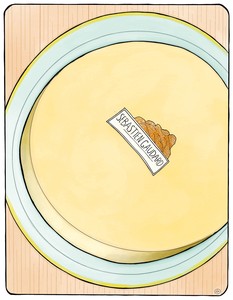
I have a confession: I don’t like lemon desserts. Often, they’re cloyingly sweet or too tart and acidic for my taste. You can imagine how skeptical I was before my first bite of Sébastien Gaudard’s iconic lemon tart. I stand corrected, and maybe I shouldn’t be surprised, as he trained with the legendary Pierre Hermé at Fauchon. The tart is exceptional, an exercise in restraint and simplicity. The lemon cream filling achieves a divine balance of sweet and tart. It’s so smooth it dissolves on your tongue, while the buttery pâte sablée is perfectly crisp, not the slightest bit damp. A thin layer of transparent glaze protects the lemon cream and lends a beautiful mirror shine—thank God there’s no meringue. In the middle, just a small cluster of candied citrus peel. With good reason, I call this the one and only tarte au citron.
Chou vanille at Mamiche
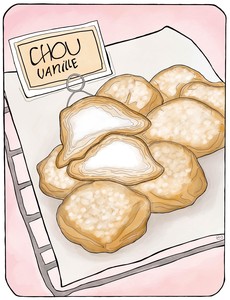
Mamiche’s chou vanille (vanilla cream puff) is the ultimate to-go snack. Earlier this year, the woman-owned bakery raised its price from €1 to €1.50 to reflect the increase in cost of its ingredients, but it’s still a tremendous bargain considering its generous size and how darn delicious it is. (They’ve kept the baguette at €1.) The chou pastry is darkly burnished and flecked with crunchy sugar pearls that have melted onto its surface. Inside you’ll find vanilla whipped cream. And there’s a lot of cream, enough to coat your mouth with every bite. You will eat the entire chou on the street, licking cream from your fingers and wondering whether you should stand in line again for more. The answer is yes.
Dinner at Amarante
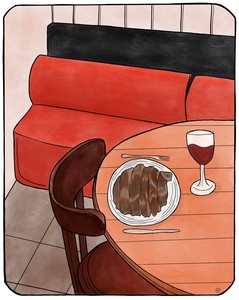
This is a restaurant you share with your closest friends and hope they’ll go right away because you cannot wait to talk to them about it, just as when you’ve fallen in love with a book or movie. It was first recommended to me by a dear friend who discovered it via her chef friend who swears that Amarante is his favorite spot in Paris. I had strict orders from my friend to get the cervelle de veau (calf brain; “don’t think about it too much,” she said, “it’s so soft inside and crisp on the outside”), the bœuf de Charolles AOP with mashed potatoes (€99 steak for two; “ridiculously expensive, but worth every penny”), the fermented chocolate dessert (“trust me, the best dessert ever”), and a glass of red wine (“there’s only one and it’s great”). My first time at Amarante, I did exactly as my friend said, and in my subsequent visits, although I’ve tried other dishes, I always order the steak and potatoes and a dessert.
Picture a nondescript restaurant awning on a sleepy street in the 12th arrondissement, not far from Bastille, so dimly lit you might miss it if you didn’t know where you were going. Inside, you’ll find ten tables—no tablecloths, nothing fancy, one server, and one chef in a small but very clean kitchen in the back. There’s only one seating for lunch or dinner (twenty-one covers), so you’ll enjoy a leisurely meal, no one will press you to leave, and you’ll be grateful for this as most of the dishes are laced with fat, the portions not for the faint of heart. There’s a nostalgic quality about the menu—lots of meats and potatoes, not many vegetables—that makes me wish I could bring my father. With his penchant for salted butter, offal, and rich foods from a childhood spent in Brittany, I know he would love it.
The chef, Christophe Philippe, spins dish after dish of the most delectable food. Sometimes he wanders out of the kitchen. His life’s passion is cooking—he’s been doing it professionally since the age of fourteen, and he radiates a relaxed vibe, seems genuinely content in the restaurant. One can taste it in the food. Pleasure in the ingredients, carefully chosen from the market; pleasure in the preparation, everything cooked to perfection. You will think the steak is almost too rare, but trust the chef, because every bite will astound you with deep flavor. (It’s dry aged for at least sixty days and comes from a butcher in Bourgogne-Franche-Comté.) The mashed potatoes don’t look like much but close your eyes and their natural sweetness, rounded out by butter and salt, will have you scraping the bowl. I like to order a seasonal vegetable: beefsteak tomatoes, white asparagus, shelled peas. . . . Often the vegetable is sliced or simply dressed with a house-made sauce, allowing the ingredient to shine. Because Philippe really understands ingredients—one notices this reverence in how each one is considered. It is perhaps most obvious with the desserts. All of them are “not too sweet,” which is all I ever desire from a dessert. And indeed, I’ve tried the fondant 100-percent cacao (a warm chocolate cake made with fermented fèves that has the texture of mousse), the vanilla ice cream (flecked with vanilla bean, churned for a minute), and the citron (a lemon cream, very acidic, with a caramelized top). Somehow, like a magician, he adds just enough sugar to coax out the ingredients’ essence. Although the fondant is 100-percent cacao, there’s no bitterness, just a lovely, smooth richness, and the faintest hint of sweetness as you dive in for another spoonful.
When you finally rouse yourself from the table and stumble out into the dark street, you will be flooded by a strange and familiar warmth. This is not typical restaurant food—it is stepping into a chef’s home and being fed a part of their soul.