“That’s where they make white dishes for stupid rich people,” said a musician friend, waving dismissively at Paris’s Chinatown in the 13th arrondissement as he drove me and my boyfriend, Malcolm McLaren, away from the squat in Ivry Sur Seine where his studio was. I quietly smiled. I was one of those stupid people. He was talking about the new ceramic company Astier de Villatte, though I didn’t know they were new at the time—I wasn’t sure if it was an old brand that had been revitalized, or one recently launched. There was something enigmatic about the ceramics. They seemed antique with a whiff of the flea market, yet despite the old-fashioned medallions, scallops, and pompoms, the rather stark, almost blank pieces had an odd contemporariness. And they definitely had soul, and a human touch. Whatever it was, I was utterly crazy about them. By 2003, I’d acquired more than a few pieces and treasured each one.
Astier de Villatte started in 1996, and by 2000 had opened their first shop on rue St. Honoré at a site which was formerly Biennais, the official orfèvrerie of Napoleon. Cofounder Benoît Astier de Villatte has the perfect way of describing their world: “a past that never existed.”
The pieces are utterly simple—elegance in austerity. Yet they are not quite minimalist thanks to the little bits of decoration, even unexpected splashes of color. They remind me of the original Paris shops of designer Martin Margiela, where everything was painted in a crude matte white or covered in plain white muslin. Maybe it’s the imperfect milkiness of the white glaze that somehow tricks you into thinking it’s matte that (to me) invokes Margiela. The pieces aren’t cheap, but once you know how they’re made, the price is abundantly justified. I love gazing at them, holding them, and of course using them. They give me endless pleasure. As John Keats put it: “A thing of beauty is a joy forever.”
I think of Keats every morning when I drink my coffee from one of their cups. There are two that I rotate. One is the plainest, simplest ceramic cup called the Marguerite (daisy) chocolate cup, which sits on its saucer, Daisy. Both are delicate, chaste, ghostly white with rounded, flounced edges as a nod to their namesake. There’s an organic irregularity—the surface is not perfectly smooth, and at times the dark, nearly black, appropriately named terre noire clay peeps through from under its cloak of white. The other is a mug—also very simple, with the faintest line of gold around the top rim, but where the handle should be is a thick, dull-gold ring to pass a finger through, studded with the reddest of passionate red hearts iced in gold and white along the edges like a frilly valentine. This one is called Heart Cup Ring.
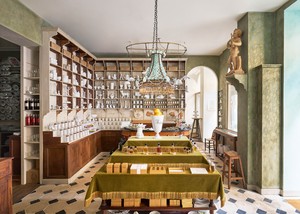
Over the years, I’ve seen Astier de Villatte go from their first exquisite boutique on rue St. Honoré to a second jewel box, a former bookshop on rue de Tournon, near the Luxembourg Gardens with a stained-glass window by Pierre Carron. They’ve hosted delightful events amid the bric-a-brac at the Clignancourt flea market and at their romantic salon, the last home of the playwright Molière, on the eponymous rue Molière near the Palais Royal. Everything they do is of the utmost taste, mixing old and new and sometimes new that appears old (hence my initial confusion). Nothing is ever flashy, and everything is always executed to the highest standards, following Coco Chanel’s ideal of pauvreté de luxe—discreet luxury of quality and elegance. Nearly everything they produce is made by the hands of artisans. This extends from the ceramics to the fragrances, incense and candles, notebooks, and even their own guidebook to Paris, Ma Vie à Paris, full of all their secret Parisian addresses (recently released in its fourth edition) and printed by letterpress in their own letterpress workshop.
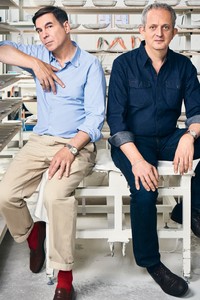
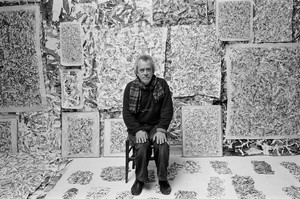
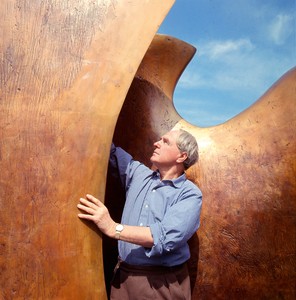
Astier de Villatte was founded by two artists with intertwined pasts: Ivan Pericoli and Benoît Astier de Villatte, the latter born Benoît Carron but subsequently took his mother’s name. Benoît was born in Rome, the third of five children, and spent the first few years of his life there. His father, Pierre Carron, was an artist in residence along with the sculptor Georges Jeanclos when the Villa Medici was under the directorship of Balthus. When they returned to France, Carron and Jeanclos both ended up teaching at the École des Beaux-Arts in Paris. Benoît eventually studied there, especially under Jeanclos.
Ivan Pericoli left Italy for Paris at the age of thirteen, when his mother died, to live with his father. Through classmates, he got to know Benoît and his siblings, and some years later he entered the École des Beaux-Arts with the goal of becoming a painter. He also studied under Jeanclos and became closer to Benoît when Pierre Carron took him under his wing. Carron liked the Italian connection, as did his wife, and the two more or less adopted Ivan into their large family.
In a natural, messy, organic way, Ivan and Benoît, their friends, and the other Carron siblings all studied and experimented on projects together using the facilities of the Beaux-Arts and Pierre Carron’s kiln. Jeanclos taught them sculpture, and the estampage technique using terre noire collected from the banks of the Seine, which would become the invaluable raw material for the Astier de Villatte ceramics. They eventually formed a kind of loose collective, making furniture and, to complement those pieces, ceramics. The furniture proved difficult to sell, but the ceramics quickly became successful. A few pieces in a shop window led to an article in Marie Claire, which encouraged them to exhibit at the new design fair Maison&Objet—and they were off. Ivan was having success as a painter but found he had no time to paint, he was so busy running the business. At the time, the late 1990s, artists in France generally disapproved of commerce, but Ivan decided to commit to it, investing the money he had inherited from his mother, and continuing primarily with Benoît. Members of Benoît’s family are still involved in the company, including Alexandre Carron, who oversees production.
The atelier, in the 13th arrondissement, is a rare and inspiring place to visit, as it is so human. Benoît and Ivan create the designs, jointly or individually (“There is no ego in ceramics,” remarks Ivan), and create the molds. Then the designs are handed over to the craftspeople who make each piece, from the beginning to the firing stage, and stamp it with their initials along with the Astier de Villatte mark. Their initial training takes six months. I wanted to join in as, one day in the atelier, I watched each artisan flatten a ball of dark clay with a rolling pin, just like a pie crust, then drape it over a mold, carefully pressing the clay into it—estampage. They then release the clay from the mold by injecting air. The more complicated designs can involve several elements in separate molds that are stuck together. Once the piece is complete, it leaves the hands of the original artisan and is left to dry naturally. This can take anywhere from two days to two weeks, depending on the design. Because each artisan has a different touch, each piece is unique. (This explains why one plate I bought after an initial set was thicker than the others.)
Once the piece is completely dry, it is sanded and scored by hand, then dusted and fired in the kiln. It is now called bisque. The bisque is sanded and dusted and dipped in a vat of the special white glaze, which dries overnight. The next morning it is examined for imperfections, which are corrected in a process called gommage. The glazed piece is fired, and any items that need to be waterproof are filled with water and tested overnight. If any decorative decals are to be affixed or if painting is necessary, it is done at this stage, and the piece is fired again. Different paints—for example, metallics versus regular colors—require different firing temperatures, and thus may call for multiple passes of painting and firing. The last stage is poncage, the sanding away of any imperfections.
Some three thousand pieces are made a week, of which only two thousand survive. Once I learned all this, I understood why I had instinctively loved them at first sight. They are created by artists, more for the purposes of art than commerce. Ivan and Benoît give their artisans one instruction: “Make a beautiful objet d’art!”
I was intrigued to learn that most of the craftspeople—there are more than eighty of them—are Tibetans. The signs are in French and Tibetan! It all started with one Tibetan monk who came to work for them, and over the years, more and more of his friends joined. Benoît and Ivan have a special interest in Tibet, and Astier de Villatte also produces divine incense. It is all made by artisans on Japan’s Awaji Island, under the supervision of an incense master. In 2015, Astier de Villatte’s dedication to preserving artisans and artisanal work led them to acquire SAIG, the last linotype printing press in France.
Besides their passion for artisanship, Astier de Villatte values collaborations with friends like decoupagist and designer John Derian, one of their champions from the moment he discovered them at the Maison&Objet show. Bringing things full circle, since 2013 they have collaborated with Balthus’s widow, Setsuko Klossowska de Rola, who has her own studio within the workshop. (She recalls meeting baby Benoît at the Villa Medici.) Astier de Villatte also produces a lamp designed by Balthus during his time at the Villa Medici, and published in 2018 a reprint edition of Balthus’s book Mitsou (1921). Another collaborator is Serena Carone, who designed the heart mug I love so much; the artist Eva Jospin, a family friend who helped out at their Maison&Objet booth when she was a student; and Lou Doillon, their first collaborator who was not a friend or acquaintance. They discovered Doillon’s drawings, which decorate some of the ceramics, on her Instagram account.
Astier de Villatte now operates a shop in Seoul with partners, and will open another this fall in Tokyo. And just this past spring, the firm returned to its Italian roots and opened its first international flagship in Milan’s Brera district during Salone [del Mobile Milano]. This shop sells not only furniture and decorative household objects by John Derian, Anke Drechsel, and Diane De Clercq, but gourmet delicacies like Poilâne biscuits and wild honey. It also features a gallery space, whose inaugural exhibition is by Eva Jospin. To commemorate their long friendship, Eva chose to include a portrait of herself as a ten-year-old child painted by Pierre Carron.
This Milan shop looks like an elaboration of the Parisian Astier de Villatte universe and sounds absolutely magical. I can’t wait to go! But in the meantime, there is always Paris.