
Game Changer
Beatrice Wood
Salomé Gómez-Upegui honors Beatrice Wood, the “Mama of Dada,” an underappreciated trailblazer within the movement who went on to become a brilliant ceramist.
Summer 2026 Issue
Christian House celebrates the generation-spanning and formally inventive photographs of Jacques-Henri Lartigue.
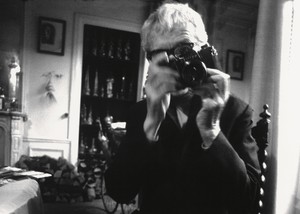
Jacques-Henri Lartigue, 1970. Photo: Douglas Kirkland/Corbis via Getty Images
Jacques-Henri Lartigue, 1970. Photo: Douglas Kirkland/Corbis via Getty Images
For the ten-year-old Jacques-Henri Lartigue, even taking a bath was a photo opportunity. This privileged and curious boy took his camera everywhere, from the beaches of Biarritz to the slopes of Saint Moritz. He took it to the car rallies, ice rinks, aerodromes, and ski jumps of fin de siècle France. And in 1904, he set his camera on a board laid across his bathtub, set the aperture and focus, and took a portrait of himself soaking in the suds, his little face emerging out of the water like a frog. His mother released the shutter.
In his youth, Lartigue captured the dawn of the twentieth century as a time of japes and escapades and the innocent pursuit of the new. But for more than fifty years this joyous body of work languished in a bundle of family albums. His story is one of luxury and obscurity, of a buried vision and a late resurrection.
Lartigue was born in 1894, into an haute bourgeoisie bubble. His father, Henri, was a successful banker—and enthusiastic balloonist—who gave his sons a cosseted life of fun, access, and opportunity. “I have plenty of money,” said Henri, “my children should learn how to spend it.” Jacques was given a chunky wooden plate camera when he was seven, and a catalogue of models followed—Gaumont Block-Notes, Kodak Brownie, Klapp Takyr—each more advanced than the last. The boy was provided with a darkroom, developing chemicals, and a steady stream of subjects drawn from the comings and goings at their hôtel particulier in Paris.
Lartigue’s oeuvre strikes an elegiac echo of lost times. When his talent emerged, between the dawn of the twentieth century and the cataclysm of World War I, it was intuitive and largely unseen outside his circle. Lartigue had four pillars of interest: speed, travel, family, and society. Sometimes all four elements overlapped in a single frame. “The subject always finds me,” he noted. “I am only the spectator. I don’t run after it.” With his tennis-player’s eye, he mastered the art of the instantané, the image of action frozen in motion. At his family’s estate in the Auvergne, he took pictures of family members, guests, and servants as they somersaulted into swimming pools, fell off go-karts, and leapt over chairs. When his older brother, Zissou, built a homemade glider, using sheets borrowed from the mansion’s laundry room, Jacques was on hand to capture the moment the wind lifted him off the ground.
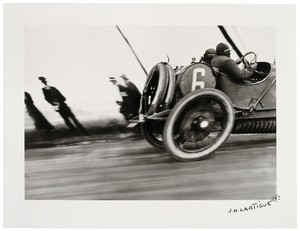
Jacques-Henri Lartigue, Grand prix of the Automobil Club of France, June 26, 1912, gelatin silver print, printed 1983, 9 ½ × 11 ¾ inches (24 × 30 cm), Musée d’Orsay, Paris © Ministère de la Culture (France), MAP-AAJHL. Photo: RMN-Grand Palais/Art Resource, New York
Lartigue’s most famous photographs show the world shifting up a gear. Coming of age in the first decade of the century, he witnessed many of its spectacles: the pioneering flights of Louis Blériot, competitors hurtling down the avenues of Picardy during the French Grand Prix, and the sky-high drama of the first Coupe Aéronautique Gordon Bennett gas-balloon race. But his work is also interesting for what it doesn’t show. The belle epoque was not belle for everyone: Lartigue’s photographs do not show the colonial subjects who bankrolled the period’s joie de vivre. This is a photographic microclimate. The Lartigue household included a valet, cook, butler, tutor, and private secretary, all of whom were expected to goof around for the young man’s camera.
Photography has always fallen foul of snobbery—the term “snapshot” hints at the flippant—but Lartigue’s understanding of composition and momentum could rival the Futurists at their easels. “He contrived nothing,” wrote Cecil Beaton of Lartigue. “It is his utter straightforwardness that gives his work an abiding quality.”1 (No one could spike a compliment quite like Beaton.)
War brought an end to the idyll. Many of his subjects—aviators, divers, drivers, tobogganists—were destined for the trenches. Lartigue spent the war as a military chauffeur in Paris, but friends and cousins died at the front.
In later life, Lartigue developed a diverse and successful artistic practice that included writing, commercial illustration for couture houses, and oil painting (he studied at the Académie Julian and exhibited at the Galerie Georges Petit in Paris). Recognition as a photographer, his great obsession, remained modest, however, although he took set pictures for film directors such as Robert Bresson and François Truffaut, and had pictures disseminated by the Rapho press agency. “He probably decided to become a painter because at this time the photo-reporter didn’t exist,” Marion Perceval, director of Donation Lartigue, observes of Lartigue’s early days behind the camera. “Becoming a professional photographer meant to have a studio and make traditional portraits.”
“I want to stop time,” he said. “As a boy I already had a passion for preserving the fleeting images of life.” The good life, that is.
It was the Americans who eventually recognized his genius and brought him to an international audience. In 1963 the photography curator John Szarkowski championed him with a solo exhibition at the Museum of Modern Art, New York, and in 1970 the photographer Richard Avedon edited his monograph Diary of a Century. Unearthing Lartigue’s work was “like reading Proust for the first time,” Avedon would recall.2
The discovery of this uniquely talented amateur set a precedent for the unearthing of other obscure figures, such as the Chicago nanny-cum-street-photographer Vivian Maier. And his fame has only increased in the years since, with the publication of Louise Baring’s excellent survey Lartigue: The Boy and the Belle Époque (2020) and several retrospective shows. This summer sees his midcentury color photographs celebrated in Jacques Henri Lartigue: Life in Colour, at the MK Gallery in Milton Keynes, England.
Lartigue took some 280,000 pictures, starting in the time of Claude Monet and ending in the era of Madonna. He died in 1986, aged ninety-two. In his dotage, snowy-haired but still impish, he welcomed journalists to his home on the French Riviera, where he recollected the dazzling deeds of a blessed age. “I want to stop time,” he said. “As a boy I already had a passion for preserving the fleeting images of life.” The good life, that is.
1 Cecil Beaton, quoted in Peter B. Flint, “Lartigue Is Dead; Photographer, 92,” New York Times, September 13, 1986.
2 Richard Avedon, letter to Jacques-Henri Lartigue, March 15, 1963. Often quoted, including in Philip Gefter, “In Portraits by Others, a Look That Caught Avedon’s Eye,” New York Times, August 27, 2006.
Jacques Henri Lartigue: Life in Colour, MK Gallery, Milton Keynes, England, June 20–October 4, 2026

Christian House worked as a proposals writer at Sotheby’s for a decade before a period as an obituarist for the Telegraph. He now writes on visual arts, literature, and history for publications such as the Financial Times, Canvas, and CNN Style.
Salomé Gómez-Upegui honors Beatrice Wood, the “Mama of Dada,” an underappreciated trailblazer within the movement who went on to become a brilliant ceramist.

Amie Corry celebrates Poly Styrene, the genre-bending, heterodox lead singer of the pioneering punk band X-Ray Spex.

Gillian Pistell celebrates the life and work of Kay Bearman, a pivotal force in the cultural life of midcentury New York.

Curator Richard Calvocoressi remembers the extraordinary talent of Frank Auerbach.

Scott Rothkopf, Alice Pratt Brown Director of the Whitney Museum of American Art, New York, remembers his friend, Dorothy Lichtenstein.

Mark Francis remembers his late friend, the indefatigable and radical curator Kasper König.

Curator and author Peter Galassi, coeditor of the recent collection Ulf Linde: Essays from a Lifetime in the Arts (König, 2023), reflects on the life and work of the Swedish art critic and museum director.
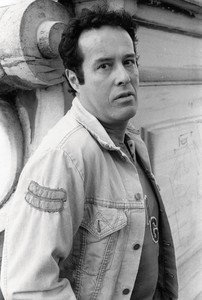
William Breeze pays homage to his friend the filmmaker and author Kenneth Anger, reflecting on his revolutionary work in color, Magick, and spirituality.
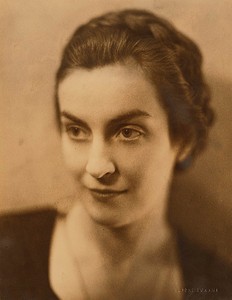
Scholar Wendy Jeffers is working on a comprehensive biography of Dorothy Miller, the groundbreaking curator who joined the Museum of Modern Art in its early years, building, over the course of decades, an innovative and remarkable program promoting contemporary American artists. Here, Jeffers recounts some key moments from this extraordinary life.

Michael Slenske pays tribute to the life and work of artist Ashley Bickerton.
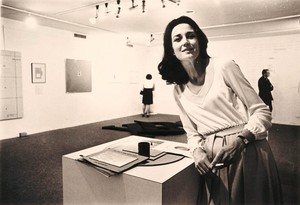
Charles Stuckey reflects on the unparalleled life and career of the gallerist, patron, and curator Virginia Dwan, enumerating key moments from a lifetime dedicated to artists and their visions.
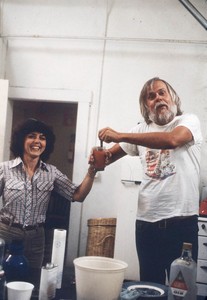
Michael Auping pays tribute to the late bicoastal curator, admiring her contributions to the proliferation of Conceptual art.