Yve-Alain Bois explores what made the late critic David Sylvester unique. Originally issued as the preface to an anthology of essays by Sylvester, published in French under the title L’Art à bras-le-corps (Strasbourg: L’Atelier contemporain, 2021), Bois’s text appears here for the first time in English, in a translation by Nicholas Huckle.
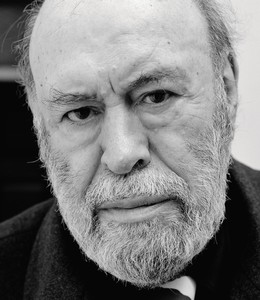
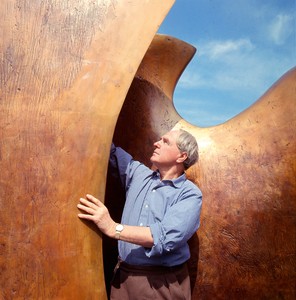
David Sylvester, 2000. Photo: Eamonn McCabe/Popperfoto via Getty Images
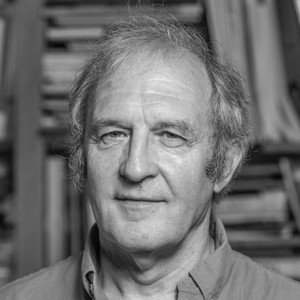
David Sylvester, 2000. Photo: Eamonn McCabe/Popperfoto via Getty Images
Yve-Alain Bois is a professor of art history in the School of Historical Studies at the Institute for Advanced Study in Princeton, New Jersey. He has curated many exhibitions, including the 1994–95 retrospective of Piet Mondrian in The Hague, Washington, DC, and New York; Matisse and Picasso: A Gentle Rivalry, at the Kimbell Art Museum, Fort Worth (1998); Ellsworth Kelly: The Early Drawings, 1948–1955, at the Harvard University Art Museums (1999); Ellsworth Kelly: Tablet, at the Drawing Center, New York (2002); and Picasso Harlequin (2008), at the Complesso del Vittoriano, Rome. He is an editor of the journal October.
There exists no more accurate portrait of David Sylvester than the profile of the ideal critic in Barnett Newman’s homage to Baudelaire. Citing the French poet, whose opinion was that criticism should be “partial, passionate, and political,” Newman wrote:
I believe it is Baudelaire’s notion that good art criticism has to have all three qualities, and all at the same time. We know it is possible to be partial without being passionate; or political, in the best sense of the term, without being either partial or passionate. But if one is truly passionate, one is all three. One cannot be passionate without being specific about the object of one’s passion, so that one is automatically partial. And true passion, by its very nature, by its sheer existence, is a political threat against the philistine and the bourgeois. Let’s face it: “scientific,” didactic criticism, in itself, and practiced for itself, is fundamentally a bourgeois activity.1
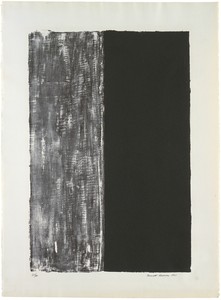
In this vehement polemic, Newman’s bête noire is what he calls “scientific” criticism, with its “descriptive methodology,” and his real target is the formalism practiced by Clement Greenberg and his disciples, an approach to art that was enjoying its highest point of fame and influence at the time.2 Newman makes a caricature of it: he objects to its analytical coldness, its “objective” and “impartial” desire to see an artwork as the answer to a formal problem and to give it a grade, good or otherwise, as if it were a grammar exercise. He sees formalism’s descriptive technique as the inescapable root cause of its coldness. But things are not as clear-cut as they might appear, on the one hand because, as evidenced by the entire work of Leo Steinberg, there is no reason why a description cannot be “partial, passionate, and political,” and on the other because Baudelaire himself took a decidedly formalist approach when it suited him.3 The same is true of Sylvester, we might add, and no doubt Newman would not have appreciated Sylvester’s long discussion, written in 1994, of one of the artist’s first lithographs, a commentary more Catholic than the pope in answering the exam question “Find the formal problem that the artist is trying to solve, and say whether or not he succeeds.”4
Still, this piece of Sylvester’s is an exception—long, formal analyses are rare in his prolific writings. He preferred trenchant condensations and lapidary utterances, often using comparisons incomprehensible to anyone but himself (he was liberal with praise in his review of the 1994–96 Mondrian retrospective, but he quite baffled the organizers, one of them myself, when he likened Mondrian’s Cubist tree of 1913 in the Tate Gallery to Michelangelo’s late drawings for the Crucifixion).5 And yet, when you look more closely, this exception that I have just mentioned, along with all those of the same type, obey a cardinal rule in Sylvester, namely, to express in the most convincing way possible (and therefore necessarily with passion) the effect on him of the works he wrote about. In the essay in question, Sylvester wonders why—having received Newman’s lithograph as a gift in 1970 and having it on a wall in his apartment for twenty years, during which it had not moved him—it suddenly started to speak to him.
The resulting obsession—what is it in me that responds to this work, and why?—brings us back to Baudelaire as Newman saw him, that is, as a critic who understands that “each work of art produces its own unique sensation and requires a unique response.”6 Further on, Newman adds, “Baudelaire didn’t care about being right. He cared only about being himself. The ‘scientific’ critic lives in constant fear that he will make a mistake.”7 Baudelaire’s ideas about art were often run-of-the-mill, lifted from Stendhal or the Abbé Du Bos; indeed, a great many of his sweeping judgments and enthusiasms no longer had many supporters at the time of Newman’s writing. But, Newman asks, “After all, what are we celebrating?” and he replies to his own rhetorical question: Baudelaire’s “enormous courage to be passionate about everything that interested him, the things he saw, the things he thought about, the things he felt.”8
The right to make mistakes is something that Sylvester stands up for implicitly—it’s the price of passion. He was remarkably explicit, on the other hand, about his numerous errors of judgment. His autobiographical text “Curriculum vitae” is also intended as an ironic self-criticism in which he lists many of his blunders and sudden changes of perspective. One of these about-turns, as a matter of fact, concerns Newman. Sylvester had come to Jackson Pollock late—even though, as early as 1950, he had invented the concept of “Afocalism” in relation to Paul Klee, an idea that as he saw it should have allowed him immediate entry to the American painter’s allover interlacing. Still, although he does not say so explicitly, the concept did in fact bring him to take that step in 1958 (see in particular the last page of his first essay on Pollock).9 Once the move was made, however, he had no trouble appreciating the other Abstract Expressionists, whom he was delighted to interview for the BBC at the time of his first trip to New York, in 1960. Or almost all of them—no Pollock, of course (already deceased), or Rothko (who refused to be recorded), or Newman, because, as Sylvester notes, “I was too dense at first to appreciate his importance.”10 A footnote in his first long piece on Newman, “The Ugly Duckling,” makes clear that his conversion would have taken still longer but for the injunctions of Alex Lieberman.11 Once the conversion happened though, it was radical and irrevocable. Of the period following 1970, Sylvester told Nick Serota that it was then that he “decided that Newman was the greatest artist of the postwar period.”12 The passionate critic is someone who decides and states clearly. But that critic will also condemn if necessary, not sparing even his friends.
Sylvester’s exhibition reviews were incendiary when negative. Serota mentions that his relations with the critic were tense during the whole year preceding the exhibition they planned together at Tate Modern, Looking at Modern Art, Sylvester’s last curatorial act.13 Serota points out that this was because Sylvester had written a thoroughly damning review of his novel display of the collection of Tate Britain.14 Another particularly cruel example is Sylvester’s swift dismissal of Margit Rowell’s installation of the Brancusi retrospective at the Centre Pompidou in 1995. Rowell too was a long-standing friend of his, and to make matters worse, Sylvester went on to heap high praise on Ann Temkin, the curator of the American version of the exhibition, which took place soon after in Philadelphia.15 As for his enemies, it would be futile to list them!16 That said, whether laudatory or condemnatory, his impassioned and partial judgments were always reasoned and always in accord with his own fundamental principle: “to understand and to make understood why I love or detest something.” He was authoritative—many of the exhibitions he organized are legendary, for both their content and their installation. (I will never forget Dada and Surrealism Reviewed, which he produced with Dawn Adès at the Hayward Gallery in 1978, and whose chronological divisions were based entirely on the small journals circulated by those movements, with a room for each one; the points of convergence and divergence between Dada and Surrealism had never been better articulated.) He spoke with authority, but always without a safety net, and there was something very generous about the way he laid himself bare.
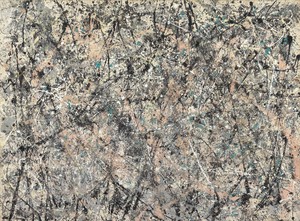
One of his major peeves was the nefarious effect of electric lighting on painting, always crushing it. It would be hard to find a review of his, certainly from the last twenty years of his life, that did not include a plea for natural light. (This is also a topic that he and I discussed at length.) A particularly touching example comes to mind. He was rather on the fence in his review of the big Pollock retrospective of 1998–99, as much for the installation at the Museum of Modern Art in New York as for the staging in London at Tate, but he much preferred the latter because of its natural light.17 (He also liked to award grades and pick prizewinners, an annoying practice, he thought, when it involved individual works—which according to him have no “programme,” to use Newman’s word—but justified when it came to exhibitions, which do have one, namely that of properly showcasing the works).18 He had been particularly vocal in his writing on Number 1, 1950, protesting the idiotic title, Lavender Mist, that Greenberg had inflicted upon it. But returning to see the exhibition late one afternoon, and marveling at how much richer the painting (and also Mural and others) appeared to him than on his first visit, he realized his error: it was because the light was now totally natural (on the first occasion, a small amount of electric light had been added). He immediately decided to write a postscript, explaining the particular advantages of the weakening light at the end of the day, and describing in great detail the effect it had on certain paintings. This was not to correct an error and be ultimately right, but rather to share this surplus of pleasure and to enjoin his readers to go and see the exhibition on the days when the museum stayed open late (the museum had promised not to switch on the electric spotlights before 7pm), and to do so at the very time when the daylight was expiring.
Like Steinberg, Sylvester was allergic to theory, insisting on the entirely empirical nature of his work. And yet, also like Steinberg, he did engage with a certain philosophy in his writing. The difference between the two critics is that Sylvester was quite open about having consciously absorbed that philosophy, i.e., phenomenology. In “Curriculum Vitae,” for example, he reveals how much his piece on Klee and “Afocalism” had benefited from his discussions with Maurice Merleau-Ponty, and the quotations he includes from his own 1951 lecture “Towards a New Realism” seem to come straight from the pen of the eminent philosopher. Indeed, I think it was his “phenomenologism” more than his empiricism (or his resistance to theory) that allowed him to talk with artists so often on equal footing, obtaining interviews that almost always stand among the best they gave. Surreptitiously, and with extreme kindness and reserve, he pushed them to their limits, bringing them to understand, through his questions, things about their art that they had never articulated before. Again, the most telling case is Newman. Reading over the transcript of his interview with Sylvester for the BBC in 1965, Newman found that the way he had responded on Mondrian had been too general. Since it would have been too complicated to redo the whole interview, he asked the show’s presenter, the painter Harold Cohen, to add a few lines (he sent him an outline) to Cohen’s introduction to the broadcast. I don’t think the revision was included—at least it wasn’t when the interview was first published19 —and it wasn’t until the publication of Newman’s Selected Writings and Interviews (1990) that the two paragraphs that Newman had wanted Cohen to insert were to see the light of day.20 They represent perhaps the best explanation of how Newman’s artistic endeavor differed completely from that of the Dutch painter. It was, no doubt, only after speaking with Sylvester that Newman had come to really fathom the difference (up to that point, indeed even in the same interview, he had offered nothing but old clichés).21 At the same time, these hindsight-enhanced additions allow us to see why Newman was to become a hero for the adherents of Minimalism, a movement that Sylvester, speaking of himself in “Curriculum Vitae,” described as “made for him.”22
Passionate, partial—but where is the political? I have never read the famous exchanges between Sylvester and his early adversary, the insufferable John Berger, and I probably never shall, having no interest in their debate. The one time that Sylvester uses the term “political” in his autobiographical essay, he gives it a very Baudelairean slant. Speaking about how he acquired the skill of “writing against the clock” during the ’50s by having to dash off short reviews of ball games and movies, he notes: “In contrast with sports writing, film criticism was more than just an opportunity to write about a domain that obsessed me; it was political. It is the one branch of writing I have embarked on with a sense of mission.” He goes on to argue that films intentionally produced as works of art were exceptions, and that apart from them, movies should be judged only in terms of “entertainment,” explaining further, “I believed that the cult of the director among film critics was a distortion of the culture of the movies. Films were about stars: people went to the cinema to see stars. . . . In short, I believed that films were artefacts made in Hollywood and that other films, while they might be more intelligent and more moving, were not the real thing.”23
A populist position, therefore, and thus political, but diametrically opposed to the famous “cult of the director.” Sylvester defended it gamely, even though he knew it to be “to some degree absurd.”24 Let us say that this too echoes the Baudelairean ideal as conceived of by Newman. The latter was not so convinced by the poet’s fascination with the watercolors of Constantin Guys, but he admired him for his resolutely antiestablishment stance, and for his preoccupation with “fashion and with fashion plates, with the identification of modern life with the street, with an interest in the dandy, the courtesan, the crowd, the bizarre, and the herd,” adding (although he himself thought Pop art trivial), “Were Baudelaire alive today, I suppose he would be today’s greatest critic of Pop art.”25 Sylvester was perhaps not the greatest critic of Pop art, but he was surely one its most attentive commentators.
1 Barnett Newman, “For Impassioned Criticism,” in Barnett Newman: Selected Writings and Interviews, ed. John P. O’Neill (New York: Alfred A. Knopf, 1990), pp. 130–36. The essay is a revised version of a talk that Newman gave at the conference “Baudelaire critique d’art” that took place in Paris in January 1968.
2 Newman does not mention Clement Greenberg by name, but in the context of the time, anyone remotely familiar with his subject would have seen that Albert Barnes and “the Bloomsbury set” (long-standing enemies of Newman’s whom he provides here as examples of what he calls “hypocriticism”) were convenient stand-ins for Greenberg, allowing him to attack the critic indirectly. Newman writes, for example, “They don’t even care whether you like their favorites. You must like them for the ‘right’ reasons—that is, their reasons,” and this directly echoes Greenberg’s extremely arrogant words: “Modernism . . . has not lowered . . . the standing of Leonardo, Raphael, Titian, Rubens, Rembrandt, or Watteau. What Modernism has shown is that, though the past did appreciate these masters justly, it often gave wrong or irrelevant reasons for doing so.” Greenberg, “Modernist Painting,” 1960, in The Collected Essays and Criticism, vol. 4, Modernism with a Vengeance, ed. John O’Brian (Chicago and London: University of Chicago Press, 1993), p. 92. Toward the end of the 1950s, Greenberg had been one of the few critics to support Newman, although they fell out badly soon after. Perhaps Newman avoids mentioning Greenberg in his essay because he would have been obliged to say that Greenberg had liked his own work for the “wrong reasons,” and would thus have been making himself guilty of the same error of which he was accusing the “hypocritical” formalists.
3 In his 1863 essay on Delacroix, Baudelaire wrote, “A well-drawn figure fills you with a pleasure that is quite alien to the theme. Voluptuous or terrible, this figure owes its charm solely to the arabesque it describes in space. The limbs of a flayed martyr, the body of a swooning nymph, if they are skillfully drawn, connote a type of pleasure in which the theme plays no part, and if you believe otherwise, I shall be forced to think that you are an executioner or a rake.” Leo Steinberg quotes this passage as part of his acerbic attack on Greenberg (but also on Barnes and the Bloomsbury group, as represented by Roger Fry), the first version of which was a talk he gave at the Museum of Modern Art in March 1968, and thus three months after Newman’s lecture, with which it had numerous points in common. See Steinberg, “Other Criteria,” in Other Criteria: Confrontations with Twentieth-Century Art (Chicago and London: University of Chicago Press, 1972), p. 64.
4 David Sylvester writes, “It was one of [Newman’s] great strengths that his works asked fundamental questions about whatever medium he worked in, asked what were its first principles and requirements. So it was as if, making prints for the first time, working for the first time on a surface that was not going to be the surface of the actual work, he started thinking about the first principles of filling a surface, and proceeded to do exercises exemplifying them upon this unfamiliar surface, the lithographic stone.¶ Perhaps he started with the thought that it would be a good idea to separate the dimensions of the image from the dimensions of the surface. Why not do the obvious and draw a rectangle within that of the sheet? Next, why not articulate this inner rectangle by simply dividing it into two with a line, which might as well be a vertical line? Ought the line to bisect the rectangle? It would be more interesting if it didn’t, but the asymmetry should be close enough to symmetry to suggest that that had been a possibility. Next, how to distinguish between the two halves? Since the sheet was going to be white, why not begin with its opposite, black? And then why not use the other half to mediate between white and black—not just to mediate but to show the transition between them by having them intermingle, in such a way as to leave no doubt that the white had been the ground, the black the additive? And so as to convey the sense of a process? ¶ Perhaps the attribution to the work of such a programme helps to explain its air of improvised inevitability. Perhaps, too, the thought of that programme gives a meaning to its minimalism, implying that it is not only an exemplar but a sort of allegory of the principle of less is more. That is speculation. What I know is that when I stand and look at it the whole of art is there.” Sylvester, About Modern Art (London: Chatto and Windus, 1996), p. 398. All the same, we should note that this text is atypical in that it claims to assign a “programme” to the work in question, and in doing so opposes Sylvester’s own firmly antiprogrammatic principle. His use of the word “speculation” here may well be ironic.
5 Sylvester, “Mondrian—II, 1996,” in About Modern Art, pp. 432–36. The exhibition was coorganized by the National Gallery of Art, Washington, DC; the Haags Gemeentemuseum, The Hague; and the Museum of Modern Art, New York.
11 Sylvester, “Newman—I, 1986,” in About Modern Art, p. 331.
12 Sylvester, quoted in Nicholas Serota, “The Making of an Exhibition,” in Looking at Modern Art: In Memory of David Sylvester, exh. cat. (London: Tate Publishing, 2002), p. 9.
13 Sylvester, who was dying of cancer and no longer mobile, did not participate in the exhibition’s installation. Right from the beginning, in fact, Serota had thought of the show as a memorial, a posthumous homage to Sylvester’s eye and curatorial acumen; the critic knew he would not get to see it. During the last two months of Sylvester’s life, by fax, long telephone calls, and in-person meetings, the two friends discussed which works to include, in which of the show’s three rooms each should go, and next to which other works. They were still making small changes only five days before Sylvester’s passing, on June 19, 2001. Based on Serota’s moving testimony of the critic’s exacting installation practice (ibid., 7), one can safely surmise that many others would have occurred in situ had Sylvester lived long enough to hang the show himself. The exhibition ran at Tate Modern from January 17 to March 24, 2002.
14 Sylvester, “Mayhem at Millbank,” London Review of Books, May 18, 2000, pp. 19–20.
15 The original text that appeared in The New York Review of Books on April 4, 1996, was slightly modified for its inclusion in About Modern Art, but the barbed comments are still there.
16 For those who like invective, see Sylvester’s insulting review of the scandalously inept (but highly successful) exhibition American Art in the 20th Century, organized in 1993 by Norman Rosenthal and Christos Joachimides at the Royal Academy of Arts, London. The review’s laconic title was exquisitely eloquent: “Hanging Offense,” London Review of Books, October 21, 1993, pp. 10–11.
17 See Sylvester, “Pollock—II, 1999,” in About Modern Art, pp. 477–91.
18 My first meeting with Sylvester goes back to the winter of 1994 and a lecture on Piet Mondrian that I gave at the Courtauld Institute of Art, London, a few days before the opening of the Dutch staging of the retrospective of his work. At the cocktail party (or was it a tea?) that followed my lecture, Sylvester surprised me, after saying a few kind words about my talk, by asking me point blank what in my opinion were the ten best works of art of the twentieth century. I would have sent him packing had it not been for the fact that I had shortly before been alerted to his identity. My curiosity got the better of my annoyance and I went along with his game, discovering some time later that I had passed the test.
20 Barnett Newman: Selected Writings and Interviews, p. 254. Strangely, when Sylvester reprinted his interview with Newman for his collection Interviews with American Artists, published in 2001, he did not try to incorporate the artist’s suggested additions (although he did add some passages from the original transcript that had been left out of the 1972 publication of the interview, and that were also missing from the version included in Selected Writings and Interviews). In contrast, deferring to the low opinion that Newman had expressed about his (Newman’s) remarks on Mondrian as they had appeared on the radio and then in print, Sylvester removed all reference to the Dutch painter.
21 For more on this point, see my review of Selected Writings and Interviews, “Artist as Critic,” Art in America, April 1991, pp. 37–41.
Yve-Alain Bois is a professor of art history in the School of Historical Studies at the Institute for Advanced Study in Princeton, New Jersey. He has curated many exhibitions, including the 1994–95 retrospective of Piet Mondrian in The Hague, Washington, DC, and New York; Matisse and Picasso: A Gentle Rivalry, at the Kimbell Art Museum, Fort Worth (1998); Ellsworth Kelly: The Early Drawings, 1948–1955, at the Harvard University Art Museums (1999); Ellsworth Kelly: Tablet, at the Drawing Center, New York (2002); and Picasso Harlequin (2008), at the Complesso del Vittoriano, Rome. He is an editor of the journal October.