Carlos Valladares writes on the British director’s unconventional methods and piercing character studies, including those in his latest film, Hard Truths (2024).
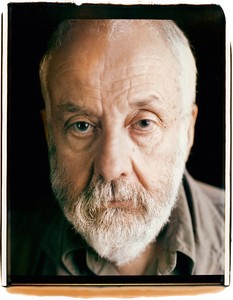
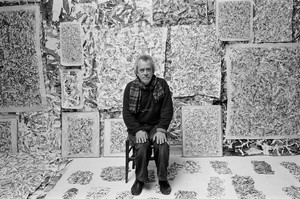
Mike Leigh. Photo: Myrna Suárez
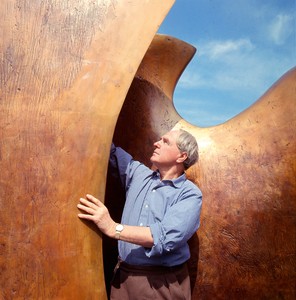
Mike Leigh. Photo: Myrna Suárez
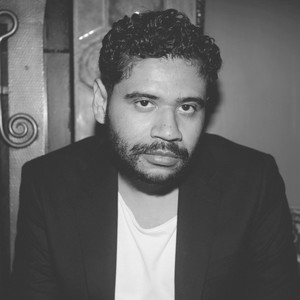
Carlos Valladares is a writer and critic from Los Angeles. He studied film at Stanford University and began his PhD in History of Art and Film & Media Studies at Yale University in fall 2019. He contributes regularly to Art in America, n+1, and Frieze. He lives in New York. Photo: Jade Sacker
Film directors, like your favorite schoolteachers, cultivate. They do not hector, or, tyrannizing for the sake of tyranny, thrash their actors’ open palms with a wooden rule. Instead, they listen to a roving class (the cast and crew); they create a new reality, in collaboration with the class, using the raw materials of physical experience; and, having built the sturdiest playground, they let the students arrive at the (temporary) answers to all their burning soul questions. The best directors and teachers cultivate the desire to know, feel, and act in others. And this idea is enchantingly realized in the British director Mike Leigh’s 2008 feature Happy-Go-Lucky. Here, the cheery, wheeze-laughed schoolteacher Poppy (Sally Hawkins), the quintessential Leigh avatar, squawks around a classroom with twenty giddy children, flapping their arms-turned-wings, all crowned with papier-mâché bird beaks, all coming alive to each other’s elastic bodies-in-play. This to Poppy is the purpose of school: to access the inner child, so as not only to know how to act in life but also to prepare oneself for its hard truths.
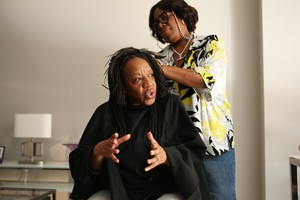
Best to go to Leigh’s latest film to know those Hard Truths (2024). In this visit to two striving middle-class Black families in post-covid Britain, two starkly different sisters clash. Michele Austin is Chantelle, a lower-middle-class hairdresser with two joy-filled daughters (Sophia Brown and Ani Nelson) whose talents are underappreciated in majority-white bourgeois office spaces. This doesn’t bog the family down in misery, nor does the absence of a classic father figure (Chantelle has raised her daughters by herself) suggest a doomed family. They get along well. But a hostile, even smothering resentment, both on the surface and unspoken, is the only mood allowed to reign in the sad family of Chantelle’s fairly solidly middle-class sister (Marianne Jean-Baptiste), who bears the high-ironic name of Pansy. She does have a husband, Curtley (David Webber), who spends his days silent, mending leaks in the pipes of expensive London flats. Both avoid their adult son, Moses (Tuwaine Barrett), who eats in his bed, plays video games, and avoids relationships with the world. Pansy berates grocery clerks, dentists, and sofa saleswomen with the fury of an avenging nihilist saint: “Cheerful, grinning people: can’t stand ’em.” Yet her sainthood is predicated upon her rejecting all acolytes.
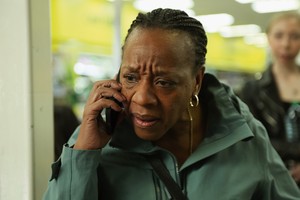
The fates of Chantelle and Pansy, so easy to segregate and compartmentalize as siblings who don’t quite get along like they used to, converge one mid-March afternoon. The families celebrate Mother’s Day together, and Moses, for the first time in his life, gifts mother Pansy a bunch of flowers. Jean-Baptiste’s extraordinary reaction is haunting and should be studied for ages: she titters, then laughs, then hysterically guffaws, then wheezes, then cries, then openly weeps, all in the same unbroken tsunami of feeling. The awful truth is clear: this current iteration of civilization has disenchanted us so much from the squirming muck of love that we are confused when love asserts itself, especially in its limp but genuine form as a grocery-store bouquet.
Pansy’s laughing/crying face, as distinctive as Francis Bacon’s or Edvard Munch’s screams, could be the face of the struggle in all Leigh’s films: How do I love? Where do I put my love? What happens when this love is rejected, unheard, shouted into a modern void defined by class struggle, Thatcherite neoliberalism, drifting friendships, angry siblings, and a fluctuating weight?
Still from Hard Truths (2024), directed by Mike Leigh. Photo: courtesy Bleecker Street
Poppy and Pansy are not necessarily dialectical negations of each other, but they do present a sliver of English life and its possible routes. These two people exist in society, and sooner or later they must confront each other’s realities. It’s the only way out of this mess.
Born in 1943 in the Broughton area of Salford, Lancashire, Leigh is the son of a Jewish doctor. As he notes, he matured as “a middle-class kid right in the middle of a working-class area,”1 and “from the earliest, I grew up with a consciousness of the existence of class. I think that is an important aspect of what it is I naturally keep saying and looking at.”2 One event stands out in his cinematic imaginary: the funeral of his grandfather when Leigh was twelve. “There was thick snow, the place was crammed with Jews, some guys were struggling downstairs with the coffin.”3 The funeral was the first time he could remember consciously thinking, “This would make a great film,” perhaps not unlike the funeral procession that concludes Yasujirō Ozu’s End of Summer (1961).
Leigh claims that it was with “utter astonishment” that he received a scholarship to study at London’s prestigious Royal Academy of Dramatic Art (RADA), which he described as “an extremely sterile experience.”4 He was more taken with the theatrical scene beyond RADA: Joan Littlewood’s experiments with popular theater in East London, as well as the linguistic and existential innovations of Harold Pinter (the young Leigh directed a production of The Caretaker (1960)) and Samuel Beckett (the young Leigh devoured his novels). These writers shifted the very idea of space, silence, and action in theater. Leigh’s discovery of “art-house” cinema—the non-English-language work of Jean Renoir, Yasujirō Ozu, Satyajit Ray, François Truffaut, and many others—also expanded his ideas of how he could see the England around him with palpable immediacy, through artistic methods radically different from those that surrounded him and were encouraged as the dominant, only way to “do” art.
Leigh’s epiphany came during a life-drawing class in the mid-1960s at London’s Camberwell School of Arts and Crafts, when he realized that cinema and theater could be so much more than what they were. Because the cast and crew of a film relied so heavily on the prefab screenplays generated by studio systems, their work was not based on fresh, raw, lived reality in the way an artist draws from a nude body.5 Since then, Leigh has never started a film or play with a full script. Rather, as Paul Clements writes in The Improvised Play: The Work of Mike Leigh, a revealing 1983 study of Leigh’s theater and BBC-TV films, “the actors invent characters, the characters are put together in improvised situations and out of the material thus created comes, after two and a half months or so, a finished piece of drama.”
First the actors are asked to make a list of people they know. The list cannot include family members, and the people the actors choose must be near their own age and gender identity. Over a period of days, even weeks, Leigh and each actor discuss the people on the list thoroughly, with the actor describing each person they’ve chosen with idiosyncratic, specific detail, in a rambling and relaxed atmosphere. After a while, a person is chosen for the actor to “imitate” and base their performance on for the first few weeks. Through individual behavioral work, talking out the character’s biography, and individual improvisational techniques, a fully-formed character—not at all the original imitated person, let alone the actor—emerges.7 From there, Leigh (as “deviser”/writer) brings the group together, placing characters in situational relationships with each other, teasing out the plot while being careful not to reveal to the actor any parts of the narrative that don’t concern the actor’s character, so that the actor only knows what their character knows. Over time, a network of relationships develops, ultimately forming the basis of the work’s narrative. Heading into shooting, Leigh writes only a bare continuity script with no dialogue and only the vaguest of stage directions. The film is “written” through improvised rehearsals on set; the actors, though, are so intimately aware of their characters that it’s as if they’ve written the scenes already, since they will only arrive on the set if they possess full knowledge—not of the situation, but of how their character would react in it. The film is thus a continuously spontaneous, regenerative surprise to its director, its cast, its crew, and its audience.
Leigh’s method comes out of a particularly 1960s theatrical idea called “devising.” But, as he wrote in a 2012 foreword to a helpful manual on devising drama games, “devising” has been an element of classic theater from Sophocles to Shakespeare:
Far from being an anomaly invented in the Swinging Sixties, so-called “devised theatre” is as old as society itself. Millennia before the birth of the formal literary “script,” we can be sure that folk got on their feet and made things up. . . . A play in performance is an organic, visceral, three-dimensional thing. It isn’t, by definition, the reading out of a text. So it is entirely logical to create live theatre directly. The currency, the medium, is people: physical action in time and space—not merely words on a page.8
I can’t here piece together all the various elements that go into the Leigh method; that would require months of reading texts by, on, and with Leigh, as well as compiling his wisdom from TV interviews, old pieces of print journalism, and Q&As with him on YouTube.9 But it is instructive to hear from the actors themselves on the Leigh process. On working on Hard Truths, Jean-Baptiste has said, “What I realize working with Mike is that, God, I really trust him to take care of me. To make sure I’m not going too far. It was wonderful.”10 This is the experience of most actors working with Leigh. For Austin, the director upsets stereotypical expectations of actors, particularly in the portrayal of Black families: “We are so used to seeing films with Black families [where] there’s trauma, there’s miscarriages of justice—all that triggering stuff that we see. And this film, basically, is just about families experiencing stuff. It’s so rare, sadly, for us to be seen like that.”11 Webber adds, “We brought a cultural thing to the film, like we knew what was in our cupboards, we brought our own products. But it wasn’t about that. Which was the beauty. We didn’t feel like we were ‘representing,’ we were just being.”12 Lesley Manville, who has worked with Leigh eight times in film, once on the stage, and once in radio, explains best why actors love working with him: “It makes you feel intelligent, gifted, talented, empowered. It’s the most fulfilling work you could ever hope to do as an actor.”13 Brenda Blethyn, who won the Best Actress award at Cannes for her powerhouse performance as Cynthia Purley, the bereft and heartbreakingly sweet single mother in Secrets & Lies (1996), knows the challenge of Leigh’s method—and, simultaneously, the joy—all too well:
It’s very difficult work. As an actor, you create an entire person. It’s so much more rewarding at the end of it. Working with Mike Leigh, he gives you a greater arena to be more daring, to delve deeper into the character. And you’ve also got the time to do it, because it’s done chronologically. You find a starting point with Mike in the early stages of working, and then you create an entire character from infancy to childhood to the present time. . . . It’s so liberating, because the actor is only responsible for one person: the person that they’re creating. You don’t have to be interesting, or funny, or entertaining. You just have to be truthful to that one person.14
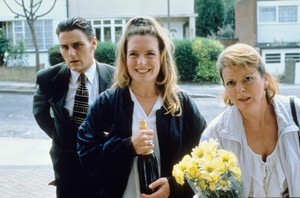
Still from Secrets & Lies (1996), directed by Mike Leigh. Photo: Bridgeman Images
When trying to answer the thorny question we pose of cinema in 2025, “Where do we go from here?,” we can be sure that the Leigh method demonstrates one concrete step in a tangible, fresh-yet-ancient direction. Cinema is a collaborative art form. We forget this. It makes no sense to assume that a screenplay, fresh written and sprung Athena-style from one’s head in order to impose set characters on actors, is the only way of making films. Nor does it make sense to rely solely on the hierarchy of producer at the top, director beneath, actors in front of the cameras, and crew way far behind. The idea of genius, singular and all-encompassing, is tiresome and self-centered. To reach for the epic is to stitch together varying, contradicting voices, all telling the same story. A film comes alive through a combination of plan, contingency, diverted possibilities, and accident. Leigh and company know this well.
Leigh’s films are generous wells from which we can endlessly draw, weeping convulsively and laughing hysterically in the same breath. On rewatching them, we can see more clearly how he and his actors manage their terrifying feats through a perfect synchronization of improvisation, performance, score, and angle. Technique, though, ultimately becomes irrelevant. You cannot quantify either the overflow or the absence of love in a family, the lens through which we first crudely understand politics and the world around us. We must begin, first, to understand the world from which we came, how we are conditioned to prefer this lifestyle over that, which family members we try to model ourselves upon, which we must feel the gratuitous need to destroy, and why our struggle to transcend the role we are given must always be continuous, crazed, incomplete.
There are calmer, more canonical, less splashy films, to be sure. You have your Yasujirō Ozu, your Robert Bresson, your Andrei Tarkovsky, your Ingmar Bergman, your Jean-Luc Godard. They all carry the weight of distance, the visual and sonic markers of a Style. Leigh’s style is determined entirely by people in their instability. He is not afraid of run-on feelings and declarations pitched at a loud scale, and he understands how lighter but no less painful understandings of one’s tragicomic society rest on such instability. Jean-Baptiste, Austin, Barrett, Webber, Brown, Nelson—all the actors/characters in Hard Truths become avatars for my own family, just as I see my mother in Blethyn’s volcanic, otherworldly performance in Secrets & Lies. Here, my own crude subjectivity mixes with a world of adoptions, furniture, and wedding photographs.
In this way Leigh ruthlessly understands the conditions that form someone “like” me, though he has not known me. He does not need to. I myself don’t know what I will feel next, I don’t know what the next outburst will be, despite suspecting how the story of my life will play out. And this, surely, is the mark of—if not that hackneyed word “genius”—then surely the sensation of commitment, a fidelity to the reality of an unruly situation. Like Ozu, Leigh has always been within me. This realization, in part, has led to my weeping, sobbing, crying when watching his work. And, of course, the laughter. Since levity, too, is part of the grand keyboard, which others will try desperately to monopolize in the name of static gravity. Elizabeth Bishop once wondered what it was to be “grim without groaning.” Watching Leigh’s films, we come to know the terrible price of a smile.
1 Mike Leigh, quoted in Paul Clements, The Improvised Play: The Work of Mike Leigh (London: Methuen, 1983), p. 7.
3 Leigh, in Mike Leigh on Mike Leigh, ed. Amy Raphael, 2008 (reprint ed. London: Faber and Faber, 2020), p. 1.
4 Leigh, quoted in Clements, The Improvised Play, p. 7.
5 Leigh’s epiphany is worth quoting in full. “A year or so after I’d left RADA and done a bit of acting, I enrolled in the foundation course at Camberwell Art School. One day I was in the life-drawing class. . . . Twenty or so of us sat quietly drawing the model—a real naked woman sitting on a chair. Bright sunlight beamed through the generous Victorian windows. There was total concentration; you could have heard a pin drop. I looked around and—ping!—it all came to me in a clairvoyant flash. This was what it was all about. This was what we had never experienced as drama students. Everybody was totally absorbed in making an organic discovery of something real, something meaningful to them. We were each investigating a unique personal experience. We were looking at the world and we were being creative. And I thought, ‘Why can’t rehearsals be like this? Why should they be unfocused, undisciplined affairs where people read newspapers in the corner of the room and take no notice of the work? This is a group of individuals each doing his or her own thing, yet this is more of an organic ensemble than many a rehearsal, because here each student is centred and secure, and not made insecure by other people’s insecurities. Why should actors only practise interpretive service skills? Can’t they be artists in their own right? And why, for that matter, should directing be an interpretive job? And why should writing and directing be forced to be separate skills? And couldn’t writing and rehearsing be one and the same process, involving the actor in a truly creative way?’ And a million thoughts. . . . It just suddenly all became clear at that moment.” Leigh, in Mike Leigh on Mike Leigh, p. 17.
7 Leigh has famously never divulged these techniques exactly, declaring them “trade secrets.”
8 Leigh, foreword, in Jessica Swale, Drama Games for Devising (London: Nick Hern Books, 2012), p. ix.
9 The three best: Clements, The Improvised Play; Mike Leigh on Mike Leigh, Raphael’s book-length series of interviews with Leigh; and Michael Coveney, The World according to Mike Leigh (London: HarperCollins, 1995), written as Leigh embarked on his film Secrets & Lies (1996).
10 Marianne Jean-Baptiste, in “Mike Leigh, Marianne Jean-Baptiste & Tuwaine Barrett on Hard Truths | NYFF62,” Film at Lincoln Center YouTube channel, October 10 2024. Available online at https://youtu.be/v1XwSNX2cTM?si=8kZE0YkVPr4xles4 (accessed February 26, 2025).
11 Michele Austin, in “The Cast of Hard Truths Discuss Lessons They Learned from Director Mike Leigh | Variety Studio at TIFF 2024,” Dailymotion, published by Variety, n.d. Available online at www.dailymotion.com/video/x959zxa (accessed February 26, 2025).
13 Lesley Manville, in Mike Leigh on Mike Leigh, p. xviii.
14 Brenda Blethyn, in Charlie Rose, “Mike Leigh and Cast Interview on Secrets and Lies (1996),” YouTube, n.d. Available online at https://youtu.be/L7IR6y8FHHo?si=3p_H4pPLdGsUqVFG (accessed February 26, 2025).
Carlos Valladares is a writer and critic from Los Angeles. He studied film at Stanford University and began his PhD in History of Art and Film & Media Studies at Yale University in fall 2019. He contributes regularly to Art in America, n+1, and Frieze. He lives in New York. Photo: Jade Sacker