Winter 2025 Issue

Richard Diebenkorn

An upcoming exhibition of Richard Diebenkorn’s paintings and works on paper at Gagosian, New York, kicks off the gallery’s representation of his foundation. The exhibition’s curator, Jasper Sharp, considers an untitled work on paper by the artist from c. 1970–88.

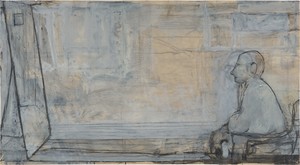
Richard Diebenkorn, Untitled, c. 1970–88, gouache and charcoal on joined paper, 14 × 25 ½ inches (35.6 × 64.8 cm) © 2025 Richard Diebenkorn Foundation/Artists Rights Society (ARS), New York

Richard Diebenkorn, Untitled, c. 1970–88, gouache and charcoal on joined paper, 14 × 25 ½ inches (35.6 × 64.8 cm) © 2025 Richard Diebenkorn Foundation/Artists Rights Society (ARS), New York

Richard Diebenkorn, Untitled, c. 1970–88, gouache and charcoal on joined paper, 14 × 25 ½ inches (35.6 × 64.8 cm) © 2025 Richard Diebenkorn Foundation/Artists Rights Society (ARS), New York

As 1970 began, Richard Diebenkorn could not have known that he was approaching the summit of his mature period as a painter. In 1966, already established as one of the leading American artists of his generation, he had moved with his wife, Phyllis, from Berkeley to Santa Monica to take up a position on the faculty of the University of California, Los Angeles. There—first in his cramped studio above an appliance store, and later in a large studio space—he painted the first large-scale canvases in the Ocean Park series that would represent his enduring artistic legacy. By the late 1960s, he turned away from the figurative style that had defined the last decade of his work to make an almost total commitment to abstraction.

Like many of Diebenkorn’s other drawings and works on paper in this era, Untitled (c. 1970–88) is composed with charcoal and gouache that he diluted with water to produce an atmospheric, dappled effect on the work’s surface. That surface is made up of three sheets of paper pasted together, a technique that Diebenkorn often used as a way to test different compositional structures. And in a manner typical of his Ocean Park studies, the work is traversed by a scaffold of hand-drawn lines, vertical, horizontal, and diagonal, many of them covered with a pale coat of paint. There is barely a square inch that does not appear to have been revised or reworked, creating a palimpsest of pentimenti that contributes to the air of uncertainty.

When a picture is right and complete there is a cumulative thrill in the sequential encounters with the parts until the work is completely (or as completely as possible) experienced.

Richard Diebenkorn

And yet, at the same time, Untitled stands alone within the group as the only work that retains an unequivocal figurative presence: a lone figure leaning forward in an armchair to contemplate an empty canvas on the other side of the room. The depiction bears little resemblance to Diebenkorn himself; rather, it could represent any painter who ever picked up a brush. It draws on a lineage of charged studio self-portraits leading back to Rembrandt, albeit with its own distinctly Beckettian character.

The date of c. 1970–88 ascribed to the work bookends virtually the entire two-decade span of the Ocean Park series and leaves unclear which elements were completed in which year. What is known is that the work remained pinned to the wall of Diebenkorn’s studio until his death, in 1993, a simple, essential reminder of the task at hand.
Richard Diebenkorn, Gagosian, 980 Madison Avenue, November 8–December 20, 2025

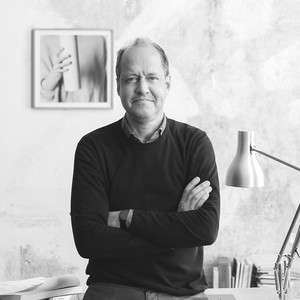
Black and white photo of Jasper Sharp

Jasper Sharp is a British curator and writer based in Austria. Having begun his career at the Peggy Guggenheim Collection in Venice, he later served as the curator for modern and contemporary art at the Kunsthistorisches Museum, Vienna. Photo: Nuno Filipe Olivera

See all Articles

Gagosian quarterly weekend reads

Get the best of the Quarterly in your inbox twice a month.

By subscribing you agree to our Privacy Policy.

Alex Israel: Upside Down

Alex Israel: Upside Down

Ahead of Alex Israel’s exhibition of four new Fin sculptures at Gagosian, London, the artist spoke with Susan Casey, author of The Wave: In Pursuit of the Rogues, Freaks, and Giants of the Ocean (2010), about the ocean, surfing, and Los Angeles.

Simon Hantaï: The Paradox of the “last studio”

Simon Hantaï: The Paradox of the “last studio”

On July 9, Simon Hantaï: the last studio opens at Gagosian, Gstaad. Curated by Anne Baldassari, the show comprises sixteen of the artist’s dernier atelier (last studio) paintings of 1982–85. The exhibition is accompanied by an illustrated catalogue, copublished by Gagosian and Skira, which features an essay by Baldassari and an extensive portfolio of previously unpublished photographs by Édouard Boubat. Here, we share the introductory chapter from the publication.

Giuseppe Penone: The Reflection of Bronze

Giuseppe Penone: The Reflection of Bronze

Adam D. Weinberg has been working with Giuseppe Penone on an exhibition of the artist’s new sculptures, The Reflection of Bronze, that opens at Gagosian, New York, on April 22. The works explore the character and possibilities of bronze. Here, Weinberg considers Penone’s enduring engagement with the alloy and addresses the conceptual underpinnings of the exhibition’s three-room structure.

Henry Moore: Monumental Nature

Henry Moore: Monumental Nature

Laura Bruni writes about a major exhibition celebrating the work of the British sculptor Henry Moore at the Royal Botanic Gardens, Kew, London.

Georg Baselitz and the Possibilities of Print

Georg Baselitz and the Possibilities of Print

On the occasion of Baselitz: AVANTI! at the Museo Novecento in Florence, Italy, Holly EJ Black considers the roots and reverberations of Georg Baselitz’s printmaking.

Portrait of the Artist as a Young Choreographer: Emily Coates Dances Early Balanchine

Portrait of the Artist as a Young Choreographer: Emily Coates Dances Early Balanchine

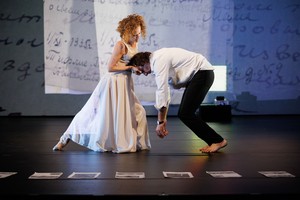
Mark Franko considers how Emily Coates resurrects the spirit of George Balanchine’s American beginnings through archival research, spoken dialogue, and movement in her performance Tell Me Where It Comes From.

Savor “The Moment”

Savor “The Moment”

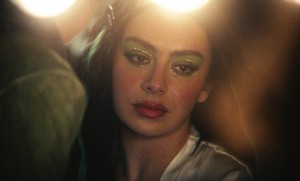
Carlos Valladares wades through the discourse around the musician and actress Charli XCX’s mockumentary, guiding us through its myriad references, from the Spice Girls to Andy Warhol.

Donald Judd: Patiently Constructed

Donald Judd: Patiently Constructed

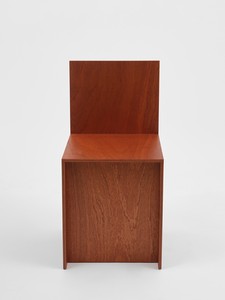
From the perspectives of their respective fields, three international cultural figures—artist and designer Ronan Bouroullec, fashion visionary Michèle Lamy, and chef and restaurateur Enrique Olvera—reflect on Donald Judd’s work in furniture, the subject of recent exhibitions in South Korea and Japan.

Divine Emanations: Nymphs, Poets, and the Painter’s Palette

Divine Emanations: Nymphs, Poets, and the Painter’s Palette

Janne Sirén considers Anselm Kiefer’s new paintings, the subject of an exhibition at Gagosian, New York, entitled Seal My Ears Shut and I Shall Hear You Still.

Francesca Woodman: Brushing with Infinity

Francesca Woodman: Brushing with Infinity

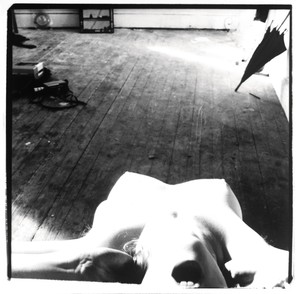
On the occasion of the exhibition Francesca Woodman: Lately I Find a Sliver of Mirror Is Simply to Slice an Eyelid at Gagosian, Rome, Alyce Mahon explores the artist’s engagements and affinities with Surrealism, from the writings of André Breton to the photographs of Hans Bellmer. Mahon focuses on the time Woodman spent in Rome while she was a student at the Rhode Island School of Design.

Francis Bacon: Reinventing Realism

Francis Bacon: Reinventing Realism

Francis Bacon lived and worked in Paris for a decade starting in the mid-1970s. The city and the art he encountered there provided a profound backdrop for his austere late style, which often brings together smooth, colorful backgrounds, spare architectural signifiers, and sculptural human forms. Here, three striking paintings from that period are considered by Sebastian Smee.

Ellen Gallagher: Submergent Visions

Ellen Gallagher: Submergent Visions

Sharad Chari reflects on a recent visit to Ellen Gallagher’s studio in Rotterdam, Netherlands, thinking through the artist’s intertextual interrogation of the oceanic and the ways in which her practice is informed by a wider Black intellectual and artistic world, an abiding interest in Herman Melville’s Moby-Dick, and the imperatives that surround this studio by the Port of Rotterdam.