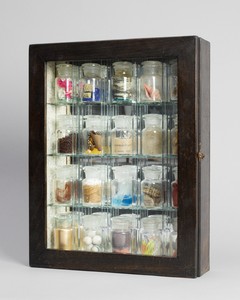
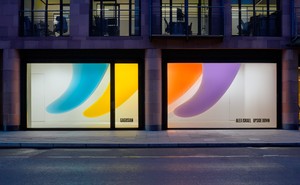
Filmmaker Wes Anderson and curator Jasper Sharp are collaborating on an exhibition for Gagosian, Paris, that will re-create the legendary studio of Joseph Cornell at 37-08 Utopia Parkway, Flushing, New York. Opening in December of this year, it will present hundreds of objects and curiosities from the artist’s own collection together with a selection of his remarkable shadow boxes. Sharp and Sarah Lea cocurated the 2015–16 survey exhibition Joseph Cornell: Wanderlust (Royal Academy of Arts, London, and Kunsthistorisches Museum, Vienna); here, Sharp introduces the Gagosian project while Lea discusses the myriad visitors to the artist’s home and studio.
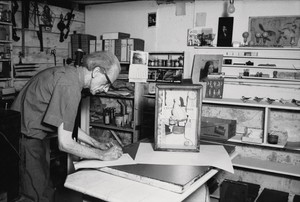
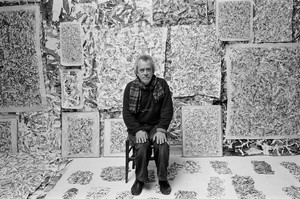
Joseph Cornell in his studio, Queens, New York, 1967. Photo: David Gahr/Getty Images
Joseph Cornell in his studio, Queens, New York, 1967. Photo: David Gahr/Getty Images
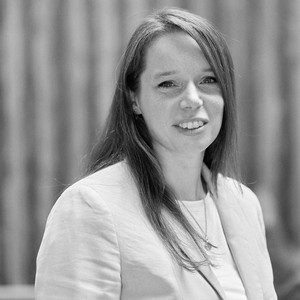
Sarah Lea is an independent art historian, curator, and writer on modern and contemporary art. She curated award-winning exhibitions at the Royal Academy of Arts, London, for over ten years, including Joseph Cornell: Wanderlust (2015), Tacita Dean: Landscape (2018), Klimt/Schiele (2018), and Helene Schjerfbeck (2019).
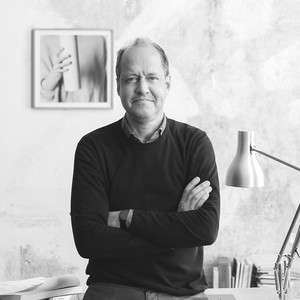
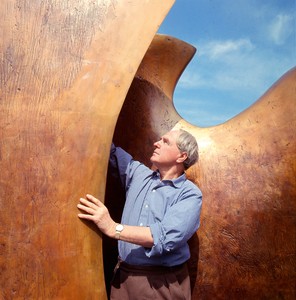
Jasper Sharp is a British curator and writer based in Austria. Having begun his career at the Peggy Guggenheim Collection in Venice, he later served as the curator for modern and contemporary art at the Kunsthistorisches Museum, Vienna. Photo: Nuno Filipe Olivera
Joseph Cornell could not draw, paint, or sculpt and received no formal artistic education. Following the early death of his father, he worked a string of blue-collar jobs to support his mother and disabled brother. He never set foot outside the United States, and other than his schooling, in Massachusetts, and a few childhood holidays, he rarely ventured beyond the five boroughs of New York City. And yet, working at night in the basement of the family home, far from the glare of public attention, he put together one of the most extraordinary and original bodies of work of any artist in the twentieth century. His collages, films, assemblages, and remarkable shadow boxes have had a deep and lasting influence on generations of artists, from Jasper Johns, Yayoi Kusama, Sol LeWitt, Robert Rauschenberg, Betye Saar, Carolee Schneemann, and Andy Warhol to many still working today.
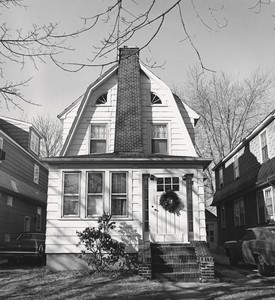
The family home in Flushing, Queens, was purchased in 1929 with the help of a small inheritance. A modest Dutch Colonial wood-frame building with sash windows and a tin door, it was one in a row of four identical houses that still stand today. Out back, next to a single-car garage, was a small yard in which Cornell’s mother planted a quince tree purchased as a sapling from Bloomingdale’s. For the artist, who lived in the house until his death, in 1972, its address must have seemed preordained: 37-08 Utopia Parkway.
Following his decision, at the age of thirty-seven, to dedicate himself full-time to making art, Cornell converted the house’s basement into a studio, setting up a workbench, several tables and cabinets, and a series of shelves on which he stored piles of whitewashed shoeboxes and biscuit tins. Scruffily labeled with a brush and midnight-blue paint, these containers held the findings of his forays through the bookstores and antique shops of Manhattan and dime stores in his local neighborhood: postcards, prints and engravings, cuttings from magazines, watch parts, cotton reels, driftwood, thimbles, corks, bells, compasses, curtain rings, wine glasses, plastic shells, marbles, rubber balls, feathers, birds’ nests, clay soap-bubble pipes, and much more. Referred to as his “spare parts department,” these were the raw materials that would become his art. Stacked on almost every available surface were thousands of books, scientific manuals, celestial charts, Baedeker travel guides, copies of National Geographic, maps, photographs, films, and musical records, along with dozens of his own artworks, some finished and others still in progress.
In December 2025, Gagosian will open an exhibition at its street-level storefront gallery on rue de Castiglione in Paris. In collaboration with the filmmaker Wes Anderson, a long-time admirer of the artist’s work, it will re-create the basement studio of Joseph Cornell using dozens of objects that he collected and stored at Utopia Parkway. The location itself could not be more fitting: Paris was a place Cornell dreamed of his entire life. On one of the first occasions that he met Marcel Duchamp, a kindred spirit with whom he would become close friends, the two men talked at length about the city, winding their way from the place de l’Opéra, through the Musée du Louvre, to the lobbies of the grand hotels. Only at the end of the conversation did Cornell mention that he had never in fact visited the city, an admission that left Duchamp speechless.
—Jasper Sharp
Between Worlds: Visitors to 37-08 Utopia Parkway By Sarah Lea
In 1929, the Cornell family moved to 37-08 Utopia Parkway, Flushing, Queens. The Dutch look of this modest house, identical to its neighbors, might have appealed to Cornell’s interest in his seafaring Dutch ancestors. The twenty-five-year-old family breadwinner was not yet an artist but a textile salesman, as well as an ambulatory collector of impressions of New York City: cinemas, museums, galleries, stores, ballets, and theater and planetarium shows, experiences that he would recount to his younger brother, Robert, who lived with cerebral palsy that limited his mobility. Joseph willingly made his brother’s happiness his daily concern until Robert died, at the age of fifty-four, in 1965. Following Joseph’s “healing” from a long-standing stomach ailment in 1925, both brothers converted to Christian Science, against the disapproval of their mother, Helen. Founded in 1875 by Mary Baker Eddy, the religion held that the material world was illusory and that “Spirit, the synonym of Mind, Soul or God, is the only real substance.”1 A recognition of Cornell’s spiritual outlook is central to understanding his artistic motivations and his relationships.
Visitors to Cornell in the house on Utopia Parkway were a tiny proportion of the people he was in contact with across America and beyond, to say nothing of the figures of the past with whom he communed. Yet a tracing of just a few of the many living, breathing visitors to Cornell’s home over his forty-year career reveals an artist not so removed from the currents of his own time. The small selection of friends and acquaintances discussed here register his considerable influence across the many worlds he inhabited.
Cornell began making art and socializing in the orbit of the Julien Levy Gallery in 1932. Aware of the conflict between organized religion and Surrealism, a movement in which Levy specialized, Cornell expertly compartmentalized his life, dividing time between home, working as an attendant in a Christian Science reading room, temporary jobs, and spending time with new artist friends such as Lee Miller. A shared fascination with childhood and the realm of the mind formed the basis of Cornell’s closest friendships in this milieu. His bond with Dorothea Tanning was strong: “Sometimes at Julien’s,” she would write, “there was Joseph Cornell. Gaunt, pearl-pale, and surprised, he usually sat just a little apart, as I did.”2 In the mid-1940s, Tanning and Max Ernst visited Utopia Parkway together with two other couples. The men were given books by the nineteenth-century poet Gérard de Nerval and instructed to wait on the porch while Cornell showed the women his completed box constructions, which he’d stored in the garage. Tanning later wrote to Cornell from Arizona, “Our letters are far more the real barometer of our feelings than when we speak.”3 This was true of many of Cornell’s most enduring relationships, yet the idea that he disliked company is erroneous.
In 1942, the Chilean painter Matta accepted the rare invitation of an overnight stay on Utopia Parkway. Cornell greeted him by showing him the refrigerator, packed with cake and ice cream. Matta later moved to Italy, and their correspondence reveals his warmth and empathy with Cornell’s hopes of reaching transcendence through creativity: “Caro, caro Jojo,” he wrote in 1947,
your letter give me such an immense pleasure that you could not imagine, you could not even make one of your boxes about how good it feels to be your friend. How are you, your mother, Robert, please give them my love. My life in Italy is very quite [quiet]. I work very much and I have discovered that like an apple tree is there to give apples a man is alive to give himself a soul, but a very real soul, that is to awake in oneself the highest sense of life, such a sense of life that death could not destroy.4
Before leaving for Europe, Matta introduced Cornell to Robert Motherwell, and the two artists became fellow Americans amid the group of émigrés around Levy, both passionate about Stéphane Mallarmé and French Symbolist poetry. Although Cornell complained that Motherwell didn’t visit enough, the art dealer and photographer Patricia Faure recalled being part of a group he brought on a studio visit. She remembered a cutout of an old master painting, possibly by Botticelli, hanging from a tree in the garden, and Helen scolding him for the “schnubols everywhere”—the trimmings of paper left behind after cutting collages on the kitchen table.5
For Motherwell—who regarded himself as one of the true intellectual artists of his generation—and for Cornell too, Marcel Duchamp was a guiding light. Having met once in 1933, Duchamp and Cornell regularly spent time together after the French artist moved to the United States in 1942. Cornell helped to make editions of the Boîte-en-Valise (1935–66), a miniature museum of Duchamp’s work, and Duchamp advised the dealer and collector Peggy Guggenheim to buy works by Cornell. He once gave Cornell a spontaneous personal readymade: a printed glue-packaging box adapted to read “gimme strength.”6 Marcel and his wife, Teeny, visited Utopia Parkway on several occasions in the 1950s. Cornell would make tea and set up his projector to screen “very old movies” for the couple; he was the proudly knowledgeable collector of a significant number of films made between 1900 and 1923, some extremely rare. They also spent time looking closely at Cornell’s box constructions together and discussing the associations they evoked. In 1958, the couple acquired a blue Sand Fountain (c. 1953) to add to Pharmacy (1943), which Teeny owned following her divorce from the art dealer Pierre Matisse. Notably, both works share titles with works by Duchamp.
Cornell’s bottling of mystical cures in Pharmacy may have been a call for preservation and healing, concerned as he was about human and cultural loss in war-ravaged Europe. The terrors taking place there paradoxically brought exciting new arrivals to New York. When Cornell learned that the renowned Austrian dancer and painter Tilly Losch had made repeat visits to Through the Big End of the Opera Glass: Marcel Duchamp, Yves Tanguy, Joseph Cornell, an exhibition at the Levy gallery in 1943, he hand-delivered to her hotel a collage letter on the robin’s-egg-blue paper he reserved for special epistles. On a reciprocal visit to Utopia Parkway, Losch offered to hand-color a print of Viennese dancers in Cornell’s collection.
Opera and ballet, historic and modern, were burning passions for Cornell. In 1940, during his lunch breaks from a day job at the Traphagen Commercial Textile Studio (a department of a fashion school), he watched the acclaimed Russian ballerina Tamara Toumanova rehearse at the 51st Street Theatre before being introduced to her by the painter and set and costume designer Pavel Tchelitchew. Toumanova had seen Cornell’s work at Levy’s gallery and described Taglioni’s Jewel Casket (1940)—dedicated to the acclaimed nineteenth-century dancer Marie Taglioni—as “otherworldly.” During brief backstage encounters she gave him fragments of costumes, which Cornell repurposed in some of the two dozen constructions he made in homage to Toumanova, often referring to Tchaikovsky’s ballet Swan Lake (1875–76). Decades later, in 1967, when Cornell received not one but two major retrospectives, Toumanova sent a telegram to Utopia Parkway from Beverly Hills: “Dear Friend, no words to express my happiness seeing your great art in Life magazine.”7 Cornell’s relationships exceeded fandom: Allegra Kent, a principal dancer at the New York City Ballet who was initially alarmed by Cornell’s affections, renewed their friendship in 1969, visiting Utopia Parkway for companionship during the breakup of her marriage and citing Cornell as the one person she knew she could trust.
Cornell’s involvement with ballet extended to graphic design work for Dance Index, a journal established by Lincoln Kirstein (later a cofounder of the New York City Ballet) in 1942. Kirstein said of Cornell, “His taste and erudition are a constant source of amazement.”8 Cornell found himself among a circle of neo-Romantics connected to the Levy and Hugo galleries that included Tchelitchew, George Balanchine, Tennessee Williams, and the novelist Donald Windham, who became a trusted friend of the family, visiting Utopia Parkway and developing a friendship with Robert, at times assisting with his care by helping him shave.
Connected to this group were the film critic Parker Tyler and the writer Charles Henri Ford, editors of the Surrealist magazine View. In 1939, before the two men met, Ford wrote to Cornell to propose a collaborative volume of poems and collages; although flattered, Cornell replied by highlighting the obstacle of his “total lack of interest in psycho-analysis and the current preoccupation with sex.”9 Cornell’s prudishness did not prevent lasting bonds with these talented intellectuals, who independently shared a profound respect for his knowledge of nineteenth-century literature, music, and dance; as Ford summarized, “We thought of him as a monk.”10 Indeed, in 1943 Cornell collaborated with Ford on the “Americana Fantastica” issue of View, in the process beginning another literary friendship, with the poet Marianne Moore. So moved was Moore when she saw the tower-shaped calligram from Cornell’s dossier The Crystal Cage (Portrait of Berenice) reproduced in the journal that she contacted him with a response to the complex, expanding web of iconography in this ongoing project. Cornell replied that her words were “the only concrete reaction I’ve had so far, and they satisfy and affect me profoundly.”11 He visited Moore in Brooklyn and invited her to Utopia Parkway; she received a detailed tour of the basement studio, seemingly a privilege reserved for those he deemed genuinely receptive to his art. Once again it was primarily in their letters that Cornell’s and Moore’s kindred spirits communed, in exchanges of creative critique that spanned almost two decades.
In contrast to the ever-expanding iconography of The Crystal Cage, a near-monastic aesthetic was embodied in Cornell’s late-1949 installation Aviary at the Egan Gallery, hailed by the artist and writer Mina Loy as “the purest enticement of the abstract into the objective.”12 Charles Egan was a regular visitor to Utopia Parkway who recounted stories of time spent with Cornell to a young Robert Rauschenberg and the burgeoning Abstract Expressionists. Cornell warmed most to those who understood the importance of his family life. Jack Tworkov visited Utopia Parkway several times, bringing his daughters—who, curious about how Cornell conjured his mysterious creations, became his pen pals.
As Rauschenberg reenergized assemblage, Cornell ventured into new territory in film, engaging assistants to shoot new footage as opposed to splicing found film.13 Cornell made nine films with Rudy Burckhardt, including Aviary (1954), which transforms Union Square Park into a vast birdcage. The containment of Utopia Parkway must be understood in counterpoint to Cornell’s love of Manhattan as an expanse of possibilities. The films often feature young women navigating the city. The actresses Cornell cast were avatars of the “fées,” “teeners,” and “faces seen but once” he recorded in his diary, sometimes experienced as fleeting apparitions of long-gone dancers such as Fanny Cerrito, or, as Lynda Hartigan has explored, representing “types” he identified with: the anonymous, the vulnerable, the innocent.14 Through these fictitious, sometimes androgynous protagonists Cornell vicariously replicated his own wanderings; his goal was to re-create for the film’s audience an equivalent experience of the creative, generative act of walking, people-watching, and imaginative “journeying,” but he remained dissatisfied with the results.
Cornell regularly rode the Third Avenue elevated train between Queens and Manhattan—a precious, richly associative liminal space between home and the world. In 1955, the imminent demolition of the line spurred his collaboration with the filmmaker Stan Brakhage (recommended to him by Parker), resulting in the film Gnir Rednow. Brakhage became a regular at Utopia Parkway, filming around the neighborhood under Cornell’s supervision to create works such as Centuries of June (1955), titled after a poem by Emily Dickinson, one of Cornell’s most constant inspirations throughout the 1950s. Brakhage recalled breaks spent in the back yard: “Three sardines, crackers and glass of pink lemonade was a typical lunch.”15 One day, a little girl carried a box construction across the lawn, requesting another, as she had bored of it; Cornell went to the garage to select a replacement. This was more than just a charming concession: Cornell viewed children as a valid, even ideal audience for his art, which he hoped would resonate beyond the gallery-going public.
The family was part of a community of neighbors: One taught Cornell carpentry, others helped with garden and household tasks, or played chess with Robert. Recollections recorded on the blog “With Hidden Noise” reveal Cornell as a respected yet complex figure.16 As the prices of his work rose steadily from the 1950s onward, he faced security concerns and at the same time resented monetary worth as a mark of value. Increasingly suspicious of art dealers, collectors, and curators, he was noncommittal when planning exhibitions and even blocked sales, preferring to make gifts of his boxes, or to offer them to friends “in sanctuary” (on extended loan). Simultaneously, gaining access to the Utopia Parkway house, especially the studio, became a rite of passage for art-world insiders. The Fluxus artist Yoko Ono was able to acquire ten collages (but not a box) in an exchange part financial, part a permission for Cornell to kiss her on the cheek. Some, less than scrupulous, used underhanded ploys to exploit the artist’s weaknesses. For others, especially girls and young women who, disturbingly, were brought to Flushing by adults in the hopes of gaining Cornell’s trust and being allowed to buy his work, the experience of visiting the house was terrifying.
Beginning around 1960, a series of art and literature students acted as studio assistants for Cornell: They might sort source materials, cook, or read to Robert. While one of these students, Trudy Goodman, found “intellectual friendship” in Cornell, another, Pat Johanson, found his fondness for her threatening.17 She remembered him throwing seed onto the kitchen table in midwinter for the birds to fly in through the open window, and commented, “He lived all those tableaux that appear in his boxes. All of them.”18 Indeed, he viewed the stars framed by a window or the garden fence, and transported himself to the imagined hotels of a lost Europe while listening to music.
Cornell’s sought-after status cut both ways, providing benefits as well as problems. At some time in the early 1960s he let his friend Ford know of his interest in meeting Andy Warhol; an opportunity arose at short notice on June 25, 1963, when Cornell agreed to receive Ford, Warhol, Robert Indiana, and James Rosenquist. These guests were offered the full tour of the house, garage, and basement studio, but Indiana recalled that the boxes “were wrapped in newspaper to protect them”; perhaps Cornell’s apparent openness was sometimes a smoke screen.19 The group took tea on the front porch with Helen, who was delighted to meet Warhol; he returned another time, buying a collage. Earlier in the year, Burckhardt had introduced Cornell to Walter De Maria and Robert Whitman, young artists determined to challenge the commodity system of art. During their visit, Cornell agreed to let them show some of his films at a space in Greenwich Village, but didn’t attend the screening. Gradually, he was traveling into the city less often, and more people were visiting Utopia Parkway.
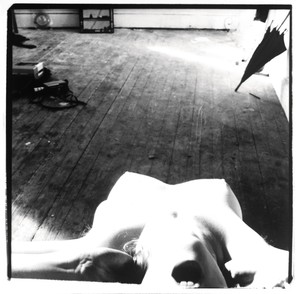
As the 1960s progressed, Cornell’s focus returned to collage, now filled with saturated color images. This more immediate, quicker medium became a forum to explore erotic imagery, with the female nude a prominent motif. It was in this context that by 1964, the year of Schneemann’s Meat Joy and Kusama’s Body Festivals, Cornell counted both artists among his intimate friends. Whether his stated wish to learn to draw or his burgeoning sexual desire was the motivating factor for the nude photographs of Schneemann that he kept in his collection, or for Kusama posing naked for him to draw, is known only to Cornell, and possibly not even to him. Schneemann identified him as someone interested in the feminine while the female was for him taboo, threatening even.20 Kusama recalled their relationship as passionately romantic but ultimately platonic. Anecdotes of Cornell’s aged mother pouring water over the kissing couple lend a comic tone to what, for him, was a momentous step toward a physical relationship (he remained celibate, believing that intercourse would reduce his creativity). Early in both artists’ careers, he tried to support them, sometimes financially, for example by buying watercolors by Kusama. He also gave money away to various people. He conceptualized these kinds of exchanges as part of a web of reciprocal “gifts” and mutual support, but the boundaries of sincerity were often unstable (he once paid the bail of someone who stole art from the garage).
Cornell’s life was irrevocably altered in January 1965, when Robert left Utopia Parkway to join Helen, who now lived in Westhampton. There he quickly contracted pneumonia and died in his sleep on February 26. Helen died the following year. After these devastating losses, Cornell suffered from despondency and insomnia. There were periods of “not seeing people”—in his grief, perhaps his only recourse against the pressure of social contact. There were also days when, if he chose, he could take his pick from willing visitors. In this period Cornell sought solace with many female friends from many walks of life, who in turn inspired his work.
Among the most prominent of these women was the writer Susan Sontag. Cornell first noticed her on television in 1964, discussing the state of education, an influential public figure whose essay “Notes on Camp” was then receiving much attention. The following year he began to read her work, including her book Against Interpretation (1966). Sontag’s personal life struck a chord with him: A single mother, she, like Cornell, had lost her father when young. In late 1965 the artist wrote her a fan letter, enclosing a copy of his 1933 film scenario Monsieur Phot (Seen through the Stereoscope), which recounts the struggles of a photographer to convey the vitality of his experiences through still images. The correspondence that followed initiated a six-month obsession. Sontag visited Utopia Parkway several times; Cornell played Jacques Brel records for her as she looked through the studio, and encouraged her to select items from the dossiers to keep. She described him as “a delicate, complicated person whose imagination worked in a special way. One went there to see his world.”21 When Cornell’s enchantment suddenly faded, he asked for the two box constructions he had also given Sontag back, and she returned them.
As Cornell’s exhibitions and accolades rolled on, Utopia Parkway remained filled with Robert’s absence and the artist’s thoughts turned to his own legacy. When Martin Friedman, director of the Walker Art Center, Minneapolis, came to the house in 1967, Cornell placed the gift his visitor had brought—an elaborate chocolate patisserie—into a fridge already stacked with four similar cakes, never to reappear during the visit. Cornell delayed addressing the main subject: Friedman’s request for the long-term loan of box constructions to the Walker. Instead the two discussed other topics for several hours, with Cornell asking advice on “unimpeachably ethical” people who might serve as trustees of a future foundation to care for his works after his death. A few months later, on hearing of the sudden death of Ad Reinhardt, Cornell rang Friedman in a panic, requesting he “give sanctuary” to eleven box constructions and three collages, six of which are now in the Walker’s permanent collection.22
As Gill Crawshaw’s recent research has revealed, the British artist Audrey Barker’s visit to Utopia Parkway in 1966 inspired her to make a series of assemblages exhibited at the Lisson Gallery, London, in 1967.23 Barker’s boxes featured titles in braille including the word “touch,” as well as olfactory elements. How her connection with Cornell came about is unclear, but one of the many charities he supported was the New York Institute for the Education of the Blind. Barker went on to become a champion of artists with disabilities across the United Kingdom from her base in Cumbria, where she was at the center of a network of artists and went on to create pioneering multisensory installations.
The two cases—single meetings with ripple effects beyond Cornell’s lifetime—manifest the economy of kindness and reciprocity to which Cornell aspired. In his later years he interacted with local art schools, colleges, universities, and charities. Right to the end of his life, his efforts to engage with new communities and to sustain longstanding friendships with a truly remarkable range of people reveal his home as the nerve center of a mission to communicate. As Windham, whose 1972 novel Tanaquil features a veiled portrait of his friend, would remember, at 37-08 Utopia Parkway “the art was absolutely unseparated from the daily life.”24
This article draws extensively on Deborah Solomon’s Utopia Parkway: The Life and Work of Joseph Cornell (New York: Farrar, Straus and Giroux, 1997).
1 Mary Baker Eddy, Science and Health with Key to the Scriptures (1875), quoted here from Richard Vine, “Eterniday: Cornell’s Christian Science ‘Metaphysique,’” in Lynda Roscoe Hartigan, Vine, and Robert Lehrman, Joseph Cornell: Shadowplay Eterniday (London: Thames & Hudson, 2003), p. 39.
2 Dorothea Tanning, Between Lives: An Artist and Her World (New York: W. W. Norton, 2001), p. 87.
5 Patricia Faure, in Susan Ehrlich, “Oral history interview with Patricia Faure,” 2004, Archives of American Art, Smithsonian Institution, Washington, DC. Available online at www.aaa.si.edu/collections/interviews/oral-history-interview-patricia-faure-11894 (accessed August 31, 2025). An unsent draft of a letter from Cornell to Robert Motherwell reads, “When I have made by a conservative estimate 15–20 trips to your various addresses without getting a single reciprocation in my direction should I be thought of as the ‘shy’ one? My brother is not difficult to approach nor my mother, the bridge-playing type of matron distasteful to you.” The draft was probably written following an incident in 1949 when Motherwell invited Cornell to screen his films at the informal art school Subjects of the Artist; without prior discussion he asked Cornell to say a few impromptu words about the films. Unprepared, Cornell declined and was hurt by the impression that he was uncooperative. See Solomon, Utopia Parkway, pp. 220–21.
6 This readymade is the jewel in the crown of Cornell’s Duchamp Dossier box (c. 1942–53).
11 Cornell, letter to Marianne Moore, March 23, 1943, quoted in ibid., p. 165.
12 Mina Loy, quoted in Carolyn Burke, Becoming Modern: The Life of Mina Loy (New York: Farrar, Straus and Giroux, 1996), p. 418. Quoted here from the website “Mina Loy: Navigating the Avant-Garde,” online at https://mina-loy.com/biography/joseph-cornell/ (accessed August 31, 2025).
13 Robert Rauschenberg acknowledged his debt to Cornell: “The only difference is . . . [h]e packed objects away, and I was unpacking them.” Quoted in Solomon, Utopia Parkway, p. 237.
14 See Hartigan, “Musings on Joseph Cornell’s Alchemy of the Mind,” in Joseph Cornell: Wanderlust, exh. cat. (London: Royal Academy of Arts, 2015), pp. 8–69.
15 Stan Brakhage, quoted in Solomon, Utopia Parkway, pp. 230–31.
18 Pat Johanson, quoted in ibid., pp. 273–74. Another important assistant was Larry Jordan, who lived at Utopia Parkway for a month in 1965; the pair had met in 1955 and corresponded regularly about their passion for film. Jordan filmed the studio and, without Cornell’s permission, recorded the only film footage of Cornell in his garden, seen from the attic window. See ibid., pp. 309–10.
24 Donald Windham, in an edited transcript of audio interviews prepared for the exhibition Joseph Cornell, Whitechapel Art Gallery, London, 1981, Whitechapel Art Gallery archive.
Sarah Lea is an independent art historian, curator, and writer on modern and contemporary art. She curated award-winning exhibitions at the Royal Academy of Arts, London, for over ten years, including Joseph Cornell: Wanderlust (2015), Tacita Dean: Landscape (2018), Klimt/Schiele (2018), and Helene Schjerfbeck (2019).
Jasper Sharp is a British curator and writer based in Austria. Having begun his career at the Peggy Guggenheim Collection in Venice, he later served as the curator for modern and contemporary art at the Kunsthistorisches Museum, Vienna. Photo: Nuno Filipe Olivera