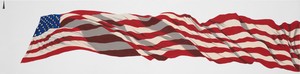
Flags
Gillian Pistell writes on the loaded symbol of the American flag in the work of postwar and contemporary artists.
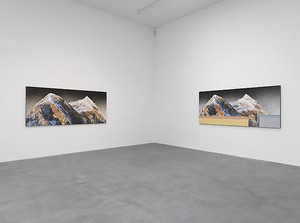
Ed Ruscha: Paintings
Installation view
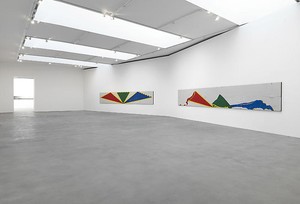
Ed Ruscha: Paintings
Installation view
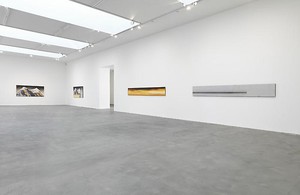
Ed Ruscha: Paintings
Installation view
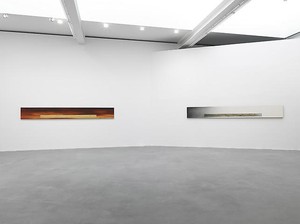
Ed Ruscha: Paintings
Installation view
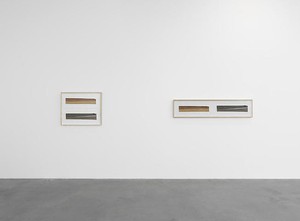
Ed Ruscha: Paintings
Installation view
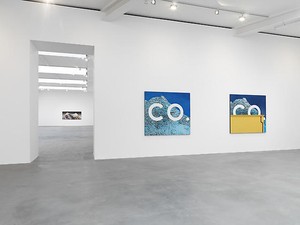
Ed Ruscha: Paintings
Installation view
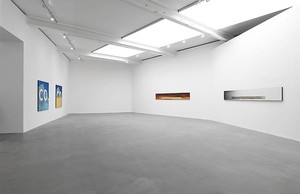
Ed Ruscha: Paintings
Installation view
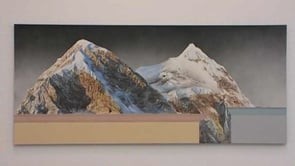
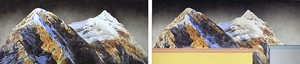
Ed Ruscha
Higher Standards, Lower Prices, 2007
Acrylic on canvas, Diptych: 48 × 220 inches overall (122 × 558.8 cm)
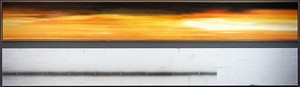
Ed Ruscha
The Nineties/The 2000's, 1980/2007
Oil and acrylic on canvas, Diptych: 20 × 159 inches each (51 × 404 cm)
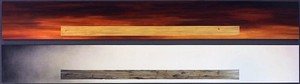
Ed Ruscha
Plank/Plank in Decline, 1979/2007
Oil and acrylic on canvas, 20 × 159 inches each (51 × 404 cm)
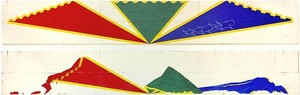
Ed Ruscha
Azteca/Azteca in Decline, 2007
Acrylic on canvas, 48 × 330 inches each (122 × 838 cm)
You take one painting as a kind of question and then the answer to that would be, they’re look-alikes. They begin to look like one another and they do not look like one another, because they have to, or they’re not going to be a proper answer. And then, when you look at them, they’re no longer interpreted in a philosophical sense—or an apocalyptical sense. If you give the viewer something to compare, you don’t have to interpret.
—Ed Ruscha
Gagosian is pleased to present five pairs of paintings by Ed Ruscha.
From Course of Empire—the exhibition for the United States Pavilion at the 51st Biennale di Venezia (2005), which traveled to the Whitney Museum of American Art in New York—to photographic books such as Then and Now (2005), Ruscha has structured certain bodies of work as comparative studies. Revisiting sites, buildings, and views of Los Angeles that had formed the bases for previous works, he documented the effects of time in a manner that was both empirical and metaphorically charged. Ruscha describes this process as one of “waste and retrieval.” Continuing in this vein of investigation, in the current exhibition he pairs one painting with another version of the same subject to create finely nuanced exercises in perception and memory.
Similar in subject and form, each pair of related works reveals through close observation differences both subtle and dramatic. The effects of the passing of time or of visible decay, movement, and corrosion are at the core of these paintings, which reflect on how things are transformed by nature or culture, from a plank of wood that has decomposed over time to a picturesque view of a mountain range that has been disrupted by the construction of a building.
Gillian Pistell writes on the loaded symbol of the American flag in the work of postwar and contemporary artists.
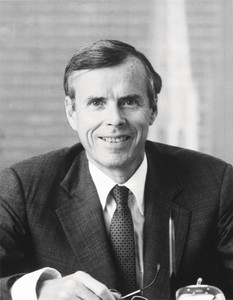
Jacoba Urist profiles the legendary collector.
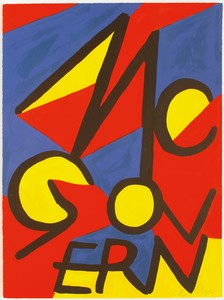
Against the backdrop of the 2020 US presidential election, historian Hal Wert takes us through the artistic and political evolution of American campaign posters, from their origin in 1844 to the present. In an interview with Quarterly editor Gillian Jakab, Wert highlights an array of landmark posters and the artists who made them.
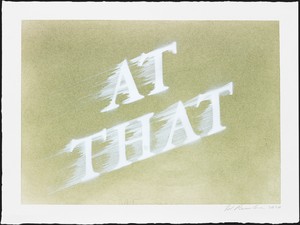
Lisa Turvey examines the range of effects conveyed by the blurred phrases in recent drawings by the artist, detailing the ways these words in motion evoke the experience of the current moment.
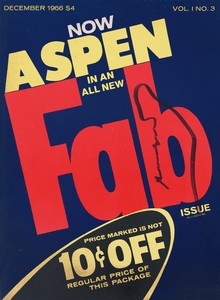
Gwen Allen recounts her discovery of cutting-edge artists’ magazines from the 1960s and 1970s and explores the roots and implications of these singular publications.
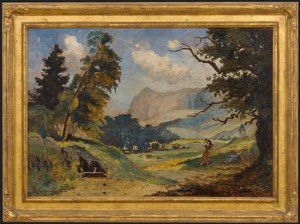
Ed Ruscha tells Viet-Nu Nguyen and Leta Grzan how he first encountered Louis Michel Eilshemius’s paintings, which of the artist’s aesthetic innovations captured his imagination, and how his own work relates to and differs from that of this “Neglected Marvel.”
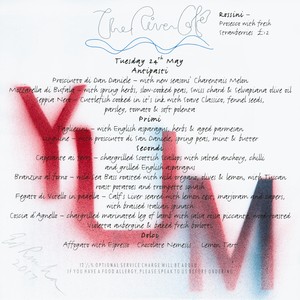
London’s River Café, a culinary mecca perched on a bend in the River Thames, celebrated its thirtieth anniversary in 2018. To celebrate this milestone and the publication of her cookbook River Café London, cofounder Ruth Rogers sat down with Derek Blasberg to discuss the famed restaurant’s allure.
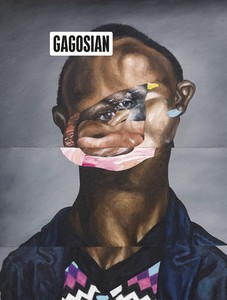
The Fall 2019 issue of Gagosian Quarterly is now available, featuring a detail from Sinking (2019) by Nathaniel Mary Quinn on its cover.
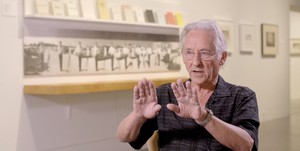
In conjunction with his exhibition VERY at Louisiana Museum of Modern Art in Humlebæk, Denmark, Ed Ruscha sat down with Kasper Bech Dyg to discuss his work.
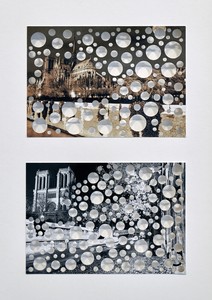
An exhibition at Gagosian, Paris, is raising funds to aid in the reconstruction of the Cathédrale Notre-Dame de Paris following the devastating fire of April 2019. Gagosian directors Serena Cattaneo Adorno and Jean-Olivier Després spoke to Jennifer Knox White about the generous response of artists and others, and what the restoration of this iconic structure means across the world.
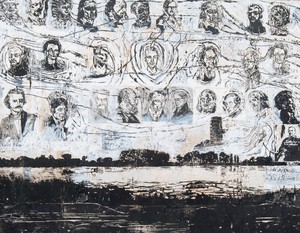
An exhibition at the Broad in Los Angeles prompts James Lawrence to examine how artists give shape and meaning to the passage of time, and how the passage of time shapes our evolving accounts of art.
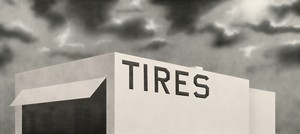
Ed Ruscha sat down with Tom McCarthy and Elizabeth Kornhauser, curator at the Metropolitan Museum of Art, to discuss the nineteenth-century artist Thomas Cole, whose Course of Empire paintings inspired a series of works by Ruscha more than a century later.
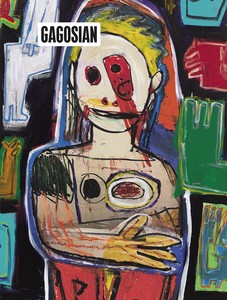
The Winter 2018 issue of Gagosian Quarterly is now available. Our cover this issue comes from High Times, a new body of work by Richard Prince.
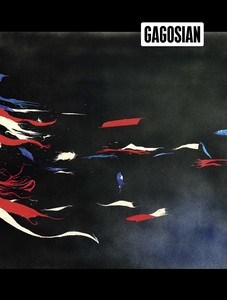
The Spring 2018 Gagosian Quarterly with a cover by Ed Ruscha is now available for order.
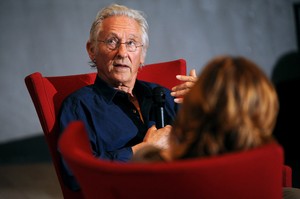
Ed Ruscha sat down with JoAnne Northrup of the Nevada Museum of Art to discuss the exhibition Unsettled, which the two co-curated.
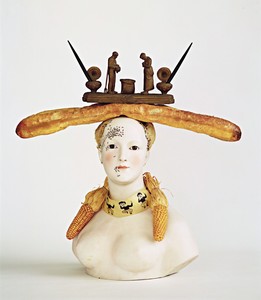
Mary Ann Caws and Charles Stuckey discuss the presence of food and the dining table in the history of modern art.
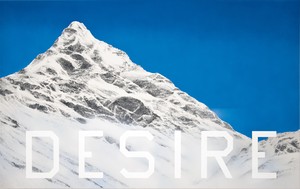
Diana Widmaier Picasso, curator of the exhibition Desire, reflects on the history of eroticism in art.
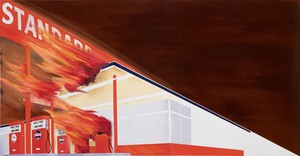
Ed Ruscha’s Burning Gas Station (1965–66) was a game changer. Text by Larry Gagosian.
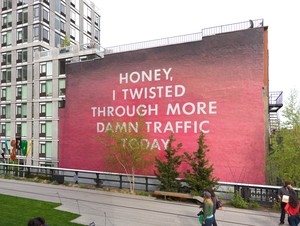
The High Line Art Program’s Cecilia Alemani discusses Ed Ruscha’s mural.


