The investor and philanthropist discusses the future of the Berggruen Institute with Derek Blasberg.
Photo by Jay L. Clendenin
Photo by Jay L. Clendenin
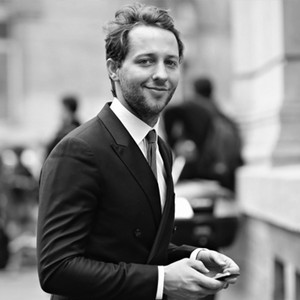
Derek C. Blasberg is a writer, fashion editor, and New York Times best-selling author. He has been with Gagosian since 2014, and is currently the executive editor of Gagosian Quarterly.
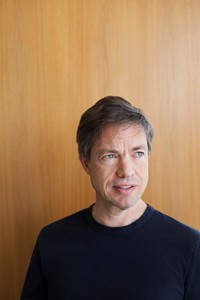
Nicolas Berggruen was born in Paris, went to boarding school in Switzerland, attended university in New York, and began his investing career in London. What followed was a legendary career in finance and a life spent primarily in hotel suites and airplanes around the world. A half-decade ago, Berggruen shifted his career ambitions, dedicating himself to the Berggruen Institute, “an independent, nonpartisan think tank which develops ideas to shape political and social institutions.” He also had a son and a daughter via surrogate and decided to base himself in Los Angeles. Derek Blasberg sat down with the philanthropist to talk about the goals of the Institute as well as its new permanent home in Southern California, a 450-acre campus designed by architects Herzog & de Meuron.
Derek BlasbergAt the Institute’s foundation, what are its ideals and goals?
Nicolas BerggruenVery simply, I want to speak to the ideals behind the political systems that have the most influence on our lives. We humans have developed political systems and structures that have shaped who we are. If we want a degree of influence, we need to come up with new ways of thinking in regards to political systems and the concepts behind them. Which are the most impactful? The most informative? These concepts are difficult and they are long term, but I feel that we can make a difference. That’s why the Institute was founded. Just to give you an idea, it’s just the framework and background. Where are you from, what’s your background?
DBI was born in St. Louis, Missouri, and my family is mostly of German descent. Like you!
NBThat’s what I thought. So let’s look at that: if you’d grownup in Germany, your life would have been totally different had you grown up in East Germany or West Germany. I’m saying this to illustrate how political systems really do make a difference. The other thing is what’s behind those political systems, the ideas that shape them and that we should be conscious of.
DBYou mean the actual people, or the ideologies?
NBGood question. In most cases we’re talking about single thinkers. They are even named after those people: Christianity is named after one man, Confucianism after Confucius, Marxism after another man. Again, ideas shape who we are and the political systems we grew up in and live in. They define our lives. So the Institute is totally devoted to studying political systems, comparing them, coming up with structural political ideas, meeting informants, and then looking at cultures and ideas in general—but not just from a Western standpoint. From the beginning we have been working on a new world of ideas, not just St. Louis traditions or Paris traditions, which is where I grew up, but also places from Japan all the way to Turkey. We have been very interested in other cultures.
We will build a center, a modern-day secular monastery, as a place for people to work, think, convene, and also live.
Nicolas Berggruen
DBHave you always been interested in other cultures or is this political awareness something you realized more in adulthood?
NBWhen I was a teenager I was a voracious reader and I loved politics and history and became obsessed with the world of ideas. I read way over my head, lots of philosophy, but I also read about political systems. They were French-focused at the time, but when I was lucky enough to start traveling the world I saw there were other ways of thinking, and that got me even more fascinated. The idea of truth was what I sought. If you travel and get exposed to different cultures, you see that the idea of truth, or of how to organize a society or live a good life, is not a single monopoly. It is not a law. It is fluid.
DBSo let’s briefly talk about your travels. What do you think have been honest or truthful places that you have visited? Would you say that the United States is on that list?
NBWell, each country has its own version of truth and honesty. They all have a local version of what constitutes truth and rings true. It changes, there are bad ways and good ways, but again I feel very strongly that you have to respect local cultures. This has actually been a problem for America: we feel that we have the truth and we need to export the truth. When America invaded Iraq, the idea was, “We have a good system here, Iraq should adopt it too.” Obviously it didn’t work, because their idea of truth—good or bad—is so far from ours; there was no chance we could just invade another country and convert it in terms of our culture. The most successful empires have resembled the British Empire and the Ottoman Empire, which always respected local cultures. To go back to your question, I think some countries may in theory be better run than others but I’m not sure that there is one truth.
DBWhy did you leave the investment space and the companies you created to focus on the mission of the Berggruen Institute?
NBIn my case it’s very personal. First, I came back to my roots, the politics and philosophy that I thought about as a teenager, which I just found so much more interesting. Second, there are more interesting people. Someone like Larry Gagosian, when he built a business, was creating a world and interacting with amazingly creative people. My version of business was much more financial and not very interesting. If you build a Google, fine, that’s fascinating. But what I was doing was not that interesting. What I’m doing now is much more interesting and much more valuable.
DBYou’re building a business of intelligence.
NBI’m trying to help to create a world that fosters intelligence. I think intelligence is very valuable, very necessary, and we are going to need it in the future.
Photo by Nathanael Turner
DBEarlier this year you announced that you were going to open up a new campus in Los Angeles. Tell me about that.
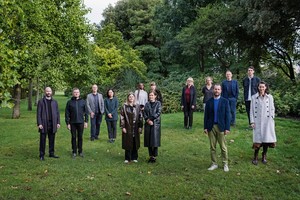
NBWe found the most incredible plot of land—450 acres near the Getty Center. It’s basically two mountains, it has the most incredible view and it’s incredibly peaceful. We will build a center, a modern-day secular monastery, as a place for people to work, think, convene, and also live. In that sense it’s going to be quite unique. We selected Herzog & de Meuron as the architects and they have put together plans that are nearly final. They are doing the master plan and the main building, and then we asked a couple of other architects to help on some small pavilions.
DBWhat are some of the activities that you hope to conduct there?
NBIt will be the work of the Institute itself, work in the sense of ideas, and also of political reform but purely on the idea side. Thinkers will be able to meet there, live there. There will be conferences and workshops.
DBWill you have a permanent faculty?
NBA small permanent faculty, yes. We currently have fellows from different universities and we’ll look to supporting people from other places around the world. Today we have fellows at places like Stanford, Harvard, and NYU, but equally importantly at Tsinghua and Beijing, the two leading universities in China, and also at Oxford and in India. My theory is we’ll never have a monopoly of good people and ideas, nobody ever does. So, the opposite: we want to empower people wherever they are and wherever they want to be, and do it across cultures and across disciplines. If we said we were only going to work with people on the hill in LA, we would limit ourselves way too much.
DBCan I ask why you chose Los Angeles as the place to center the Institute? Is it the weather?
NBExactly! No, it happened naturally for me, and it’s quite personal. I grew up in Paris, then lived forever in London and New York, what I call traditional city environments. LA is sort of the opposite. I was drawn to it because it’s a very free and open place, physically but also mentally, which I find quite extraordinary. Even though it’s not a real city, you have all the elements of a real city if you want them. You’ve got interesting and creative people in every field possible, but they’re not concentrated, as in an urban environment. So I started spending time here, and started spending time with some professors from UCLA in philosophy and political science. Then it happened naturally: I met more people that I liked, I started working on California reform, which we did, and brought in a few more people and one thing led to the next.
DBWhen you were younger were you aware of something like the Berggruen Institute that you’re modeling this after, or did you think this is something that the modern world is newly in need of?
NBThe world definitely needs to invest more in the concept of ideas. Politics as usual hasn’t done so much in the U.S. or anywhere else. When I was a kid we didn’t have something in a formal way like this, or at least I didn’t know about it. But I think the Institute is the result of outside factors in the world.
The idea of truth was what I sought. If you travel and get exposed to different cultures, you see the idea of truth, or of how to organize a society to live a good life, is not a single monopoly. It is not a law. It is fluid.
Nicolas Berggruen
DBYou’ve been a collector of contemporary art for along time. What is it about the world of contemporary art that you find attractive or compelling?
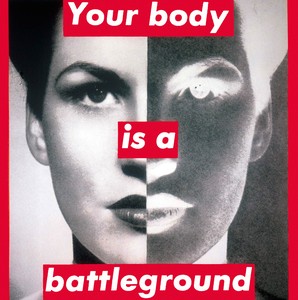
NBI just love art for every reason possible. One, it’s beautiful; two, it’s stimulating; three, it’s alive. Contemporary art by definition is alive. The nice thing is, I was lucky to grow up in an environment where there was art around me, and then wherever I would travel I would always go see whatever the culture produced, in great art museums but also in churches or temples, whatever there was in terms of art to be seen. Life continues through art. The most permanent thing that any culture produces is art.
DBSo my next question is, What are the parallels between the worlds of art and politics?
NBThey are related in that when a culture expresses itself in political systems and political life, it is mirrored by the art that is produced, and has been throughout history. You’ve always had a relationship between power and art, in every way, from the pyramids through Greece, Roman times, China, Renaissance Italy, and continuing today. The relationship between culture, power, and art is close.
DBDo you think the world would be a better place if more of us were artists?
NBWell, you can’t have a world of just artists! I think the world is going to change, and this is coming. I think one of the challenges we’re going to have is traditional occupations are going to diminish, there are going to be fewer of them, and people are going to work less in traditional ways. There’s going to be more space for artistic endeavors, more space for artists, and in that sense I think there will be more artists. I don’t know if the world needs more artists, but there will be more artists.
Derek C. Blasberg is a writer, fashion editor, and New York Times best-selling author. He has been with Gagosian since 2014, and is currently the executive editor of Gagosian Quarterly.