Ed Ruscha and Erling Kagge: Silence, Slowness, Exploration
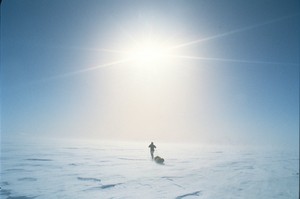
Ed Ruscha sits down with the author and explorer Erling Kagge to discuss existence.
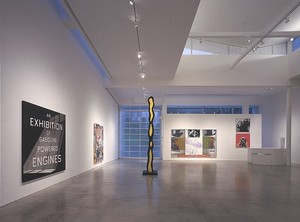
LEO CASTELLI: AN EXHIBITION IN HONOR OF HIS GALLERY AND ARTISTS
Installation view
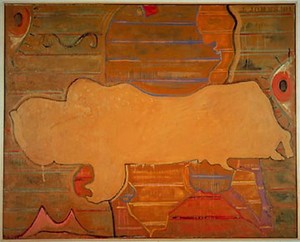
Jasper Johns
Untitled, 1991
Encaustic and sand on canvas, 48 × 60 inches (121.9 × 152.4 cm)
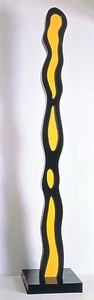
Roy Lichtenstein
Endless Drip, 1995
Fabricated and painted aluminum, 142 ¼ × 13 ½ × 4 ½ inches (361.3 × 34.3 × 11.4 cm), edition of 3
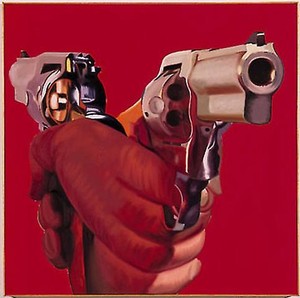
James Rosenquist
Personal Differences, 1996
Oil on canvas, 48 × 48 inches (121.9 × 121.9 cm)
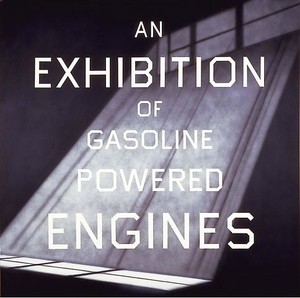
Ed Ruscha
An Exhibition of Gasoline Powered Engines, 1993
Acrylic on canvas, 84 × 84 inches (213.4 × 213.4 cm)
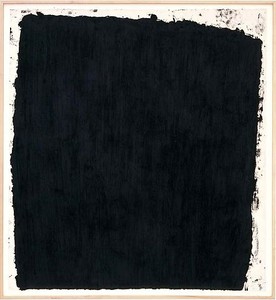
Richard Serra
Duane Street, 1996
Paintstick on paper, 54 × 52 inches (137.2 × 132.1 cm)
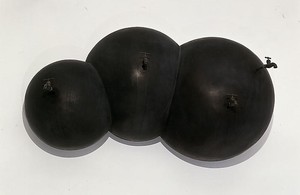
Robert Therrien
No Title (black cloud with faucets), 1996
Enamel on hand-formed plastic, 68 × 124 × 47 inches (172.7 × 315 × 119.4 cm)
Photo by Douglas M. Parker Studio
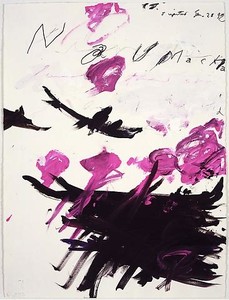
Cy Twombly
Naumackia, 1992
Tempera and pencil on paper, 30 × 22 inches (76.2 × 55.9 cm)
Continuing the inauguration of the new Gagosian in Beverly Hills, this major exhibition will bring together new and recent painting and sculpture, as well as historical examples, by artists fostered and represented by Leo Castelli.
From the opening of his first gallery in Paris in 1935, just prior to the outbreak of World War II, to the establishment of his celebrated New York gallery in 1957, Leo Castelli has achieved in his profession the greatest possible influence, discernment, and creativity. The landscape of postwar art in America might have been different from what it is, were it not for his insight and encouragement.
The artists who will be included in this tribute are Hanne Darboven, Jasper Johns, Ellsworth Kelly, Joseph Kosuth, Roy Lichtenstein, Bruce Nauman, Robert Rauschenberg, James Rosenquist, Ed Ruscha, David Salle, Richard Serra, Frank Stella, Robert Therrien, Cy Twombly, Andy Warhol, and Lawrence Weiner.
Ed Ruscha sits down with the author and explorer Erling Kagge to discuss existence.
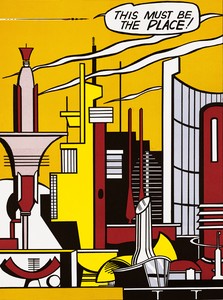
Avis Berman’s biography of Roy Lichtenstein, Becoming Roy Lichtenstein: The Path to Pop, will be published this fall by Abbeville Press, aligning with a major retrospective at the Whitney Museum of American Art, New York, in October. For the Quarterly she has adapted part of her text to focus on the artist’s formative experiences in New York in the 1920s and ’30s.

On January 22, Gagosian, in partnership with Castelli Gallery, opened an exhibition of historic works by Jasper Johns at the 980 Madison Avenue gallery in New York. A survey of the crosshatch paintings and drawings that dominated his practice from 1973 to 1983, the presentation united works that have rarely been seen with loans from sources including distinguished American museums. The exhibition commemorates the fiftieth anniversary of this body of work’s debut at Castelli Gallery in 1976. Here, Larry Gagosian speaks with the Quarterly’s Alison McDonald about the impetus for this project, his memories of seeing the exhibition in 1976, and the enduring impact of these paintings on artists and collectors.

In this video, musical ensemble Sō Percussion performs Steve Reich’s “Music for Pieces of Wood” inside the exhibition Richard Serra: Running Arcs (For John Cage), 1992, at Gagosian, New York.
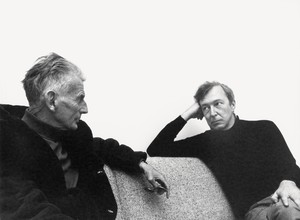
Nearly fifty years ago, Samuel Beckett and Jasper Johns met in Paris and began a collaboration on what would become Foirades/Fizzles, a deluxe limited-edition artist’s book published by Petersburg Press in 1976. Now, on the occasion of the Jasper Johns retrospective at the Philadelphia Museum of Art and New York’s Whitney Museum of American Art, Gagosian Quarterly looks back to the genesis of this project with a conversation between independent researcher Anthony Atlas and Gagosian director Bob Monk. Their discussion focuses on the creative encounter between the artist and the writer and on how the book and related works became a generative source in Johns’s art.

The Fall 2025 issue of Gagosian Quarterly is now available, featuring Andy Warhol’s Blue Liz as Cleopatra (1962) on the cover.

Carlos Valladares tracks the artist’s engagements with Hollywood glamour, thinking through the ways in which the star system and its marketing engine informed his work.

The Spring 2025 issue of Gagosian Quarterly is now available, featuring Cy Twombly’s Paesaggio (1986) on the cover.

Jenny Saville reflects on Cy Twombly’s poetic engagement with the world, with time and tension, and with growth in this excerpt from her Marion Barthelme Lecture, presented at the Menil Collection, Houston, in 2024.

For the first time ever, the Robert Therrien Estate presents a collaborative exhibition in the artist’s Los Angeles studio. Sculptor Isabelle Albuquerque kicks off a series of shows that place noteworthy voices in dialogue with Therrien’s practice. Here, Albuquerque speaks with Dean Anes and Paul Cherwick from the estate about the collaboration.

In the second part of a two-part essay, art historian John B. Ravenal considers Jasper Johns’s continued engagement with the motif of woodgrain.

As American identity once again comes into question during a politically charged election cycle, the Quarterly revisits the motif of the American flag in art. Here, John B. Ravenal contextualizes Robert Lazzarini’s new wall-based flag sculptures and elucidates the tensions they lay bare in the symbol of our nation.

In the first part of a two-part essay, art historian John B. Ravenal considers Jasper Johns’s continued engagement with the motif of woodgrain.
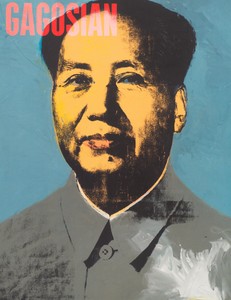
The Fall 2024 issue of Gagosian Quarterly is now available, featuring Andy Warhol’s Mao (1972) on the cover.

Jessica Beck examines Andy Warhol’s return to painting in the 1970s, focusing on the artist’s Mao series.
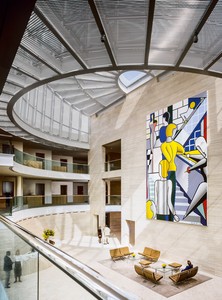
Michael Ovitz, cofounder of Creative Artists Agency (CAA), looks back to 1989, the year he and the architect I. M. Pei commissioned Roy Lichtenstein to create the Bauhaus Stairway Mural for the then new CAA Building in Los Angeles. Through the experience of working with Lichtenstein, Ovitz formed a meaningful friendship with the artist.
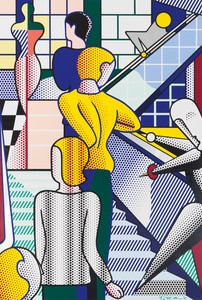
Alice Godwin and Alison McDonald explore the history of Roy Lichtenstein’s mural of 1989, contextualizing the work among the artist’s other mural projects and reaching back to its inspiration: the Bauhaus Stairway painting of 1932 by the German artist Oskar Schlemmer.
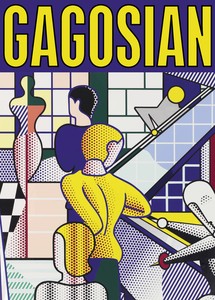
The Summer 2024 issue of Gagosian Quarterly is now available, featuring a detail of Roy Lichtenstein’s Bauhaus Stairway Mural (1989) on the cover.
In celebration of the centenary of Roy Lichtenstein’s birth, Irving Blum and Dorothy Lichtenstein sat down to discuss the artist’s life and legacy, and the exhibition Lichtenstein Remembered curated by Blum at Gagosian, New York.
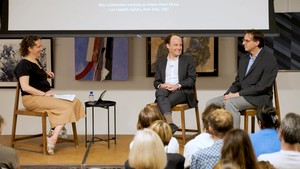
Gagosian and the Art Students League of New York hosted a conversation on Roy Lichtenstein with Daniel Belasco, executive director of the Al Held Foundation, and Scott Rothkopf, senior deputy director and chief curator of the Whitney Museum of American Art, New York. Organized in celebration of the centenary of the artist’s birth and moderated by Alison McDonald, chief creative officer at Gagosian, the discussion highlights multiple perspectives on Lichtenstein’s decades-long career, during which he helped originate the Pop art movement. The talk coincides with Lichtenstein Remembered, curated by Irving Blum and on view at Gagosian, New York, through October 21.