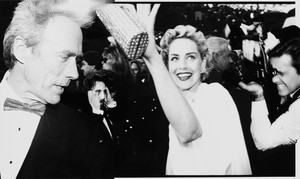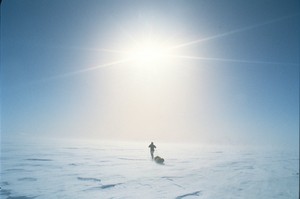
Ed Ruscha and Erling Kagge: Silence, Slowness, Exploration
Ed Ruscha sits down with the author and explorer Erling Kagge to discuss existence.
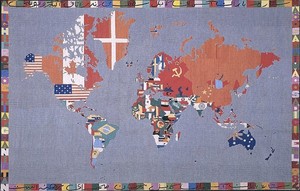
Alighiero E Boetti
Mappa, 1984
Embroidery, 44 ¼ × 69 ¾ inches (112.4 × 177.x cm)
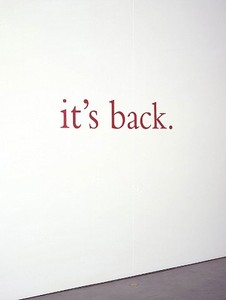
Douglas Gordon
it's back., 2002
Red vinyl letters on wall, 12 × 57 ½ inches (30.5 × 146 cm)
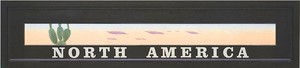
Neil Jenney
North America, 1978–90
Acrylic on panel, 25 × 113 inches (63.5 × 287 cm)
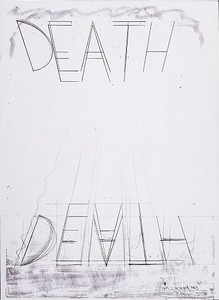
Bruce Nauman
Eat Death, 1973
Lithograph on Arjomari paper, 42 ½ × 31 ⅛ inches (108 × 79.1 cm)
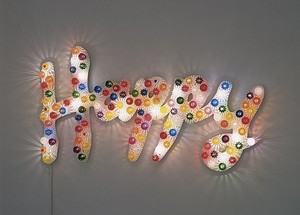
Tim Noble & Sue Webster
Happy, 1996
Mixed media, 42 × 74 × 4 inches (106.7 × 188 × 10.2 cm), edition of 3
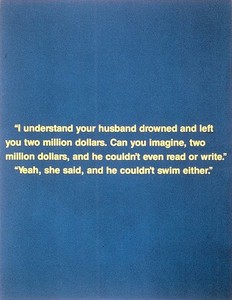
Richard Prince
Can You Imagine, 1989
Acrylic and silkscreen ink on canvas, 75 × 48 inches (190.5 × 121.9 cm)
Gagosian is pleased to present Summer Reading, a group exhibition that brings together artists who use text in various and interesting ways.
The exhibition includes work by Alighiero Boetti, Peter Davies, Gilbert & George, Douglas Gordon, Neil Jenney, Larry Johnson, Sarah Morris, Bruce Nauman, Tim Noble & Sue Webster, Richard Prince, and Ed Ruscha.
Ed Ruscha sits down with the author and explorer Erling Kagge to discuss existence.
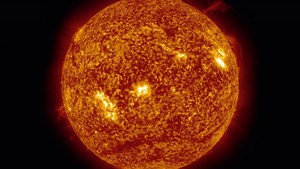
Helter Skelter—an exhibition at Fondazione Prada’s Venetian venue, Ca’ Corner della Regina—marks the first creative dialogue between two visionaries of American art, Arthur Jafa and Richard Prince. The show explores the grit, grift, violence, and ingenuity of American culture through more than fifty works, including photography, video, and large-scale installations that interrogate themes of race, gender, media, and politics. In the interview below, Nancy Spector, the exhibition’s curator, speaks about the shared motifs—from apocalyptic sunsets to a fascination with “monstrosity”—that led her to pair these artists for the first time.

Sydney Stutterheim traces the linkages and affinities between the work of Richard Prince and that of Bob Dylan. Using Prince’s Untitled (Dylan) as a starting point, she considers the artist’s enduring interest in questions of originality and authorship, as well as his sustained relationship with the worlds of American music and counterculture.
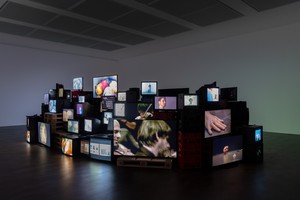
On the occasion of Douglas Gordon: All I need is a little bit of everything, an exhibition in London, curator Adam Szymczyk recounts his experiences with Gordon’s work across nearly three decades, noting the continuities and evolutions.
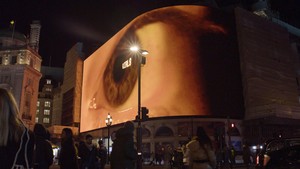
Douglas Gordon took over the Piccadilly Lights advertising screen in London’s Piccadilly Circus, as well as a global network of screens in cities including Berlin, Melbourne, Milan, New York, and Seoul, nightly for three minutes at 20:22 (8:22pm) throughout December 2022, with his new film, if when why what (2018–22). The project was presented by the Cultural Institute of Radical Contemporary Art (CIRCA) in conjunction with the exhibition Douglas Gordon: Neon Ark at Gagosian, Davies Street, London.
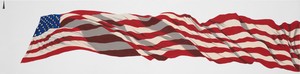
Gillian Pistell writes on the loaded symbol of the American flag in the work of postwar and contemporary artists.
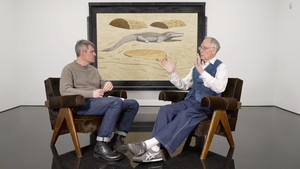
On the occasion of Neil Jenney: AMERICAN REALISM TODAY, the artist sat down with Gagosian curator Michael Cary to discuss paintings from Jenney’s recent series Modern Africa (2015–)—a subseries of the New Good Paintings (2015–)—and the preceding series, Good Paintings (1971–2015).
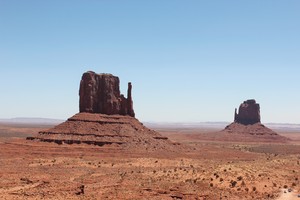
The second installment of Picture Books, an imprint organized by Emma Cline and Gagosian, presents author Percival Everett’s novella Grand Canyon, Inc. alongside Untitled (Original Cowboy), a photograph by Richard Prince. In celebration of the publication, Everett met with author Brandon Taylor to discuss the novella, the role of history in the writing process, and the similarity in methodologies for science and literature.
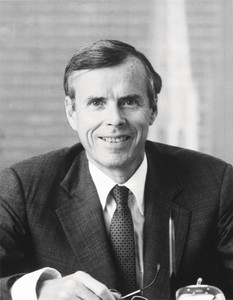
Jacoba Urist profiles the legendary collector.
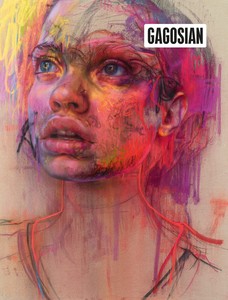
The Winter 2020 issue of Gagosian Quarterly is now available, featuring Jenny Saville’s Prism (2020) on its cover.
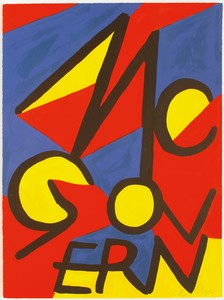
Against the backdrop of the 2020 US presidential election, historian Hal Wert takes us through the artistic and political evolution of American campaign posters, from their origin in 1844 to the present. In an interview with Quarterly editor Gillian Jakab, Wert highlights an array of landmark posters and the artists who made them.
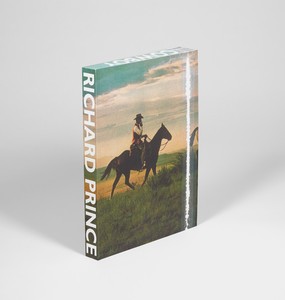
On the occasion of the publication of Richard Prince: Cowboy, a major monograph on the artist’s preoccupation with the mythic American West, Lucy Sante tracks the archetype through mass media, advertising, and the art of Richard Prince to illuminate the cowboy’s enduring appeal.
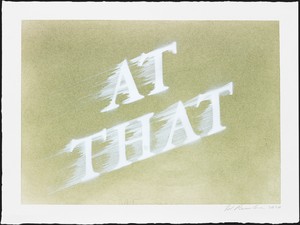
Lisa Turvey examines the range of effects conveyed by the blurred phrases in recent drawings by the artist, detailing the ways these words in motion evoke the experience of the current moment.
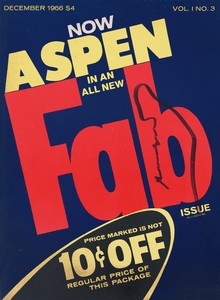
Gwen Allen recounts her discovery of cutting-edge artists’ magazines from the 1960s and 1970s and explores the roots and implications of these singular publications.
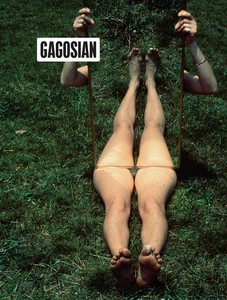
The Summer 2020 issue of Gagosian Quarterly is now available, featuring Joan Jonas’s Mirror Piece 1 (1969) on its cover.
Natasha Stagg on influencers, the loss of the it-girl, and the “promotional life.”
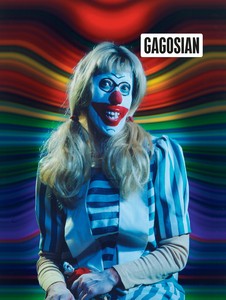
The Spring 2020 issue of Gagosian Quarterly is now available, featuring Cindy Sherman’s Untitled #412 (2003) on its cover.
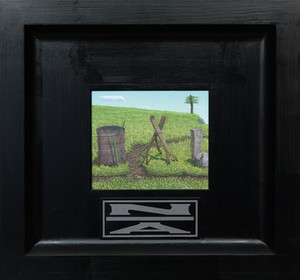
The artist speaks with Douglas Dreishpoon about his career, his conception of the term “realism,” and why one must discover one’s own rules.
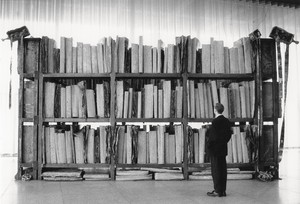
James Lawrence explores how contemporary artists have grappled with the subject of the library.
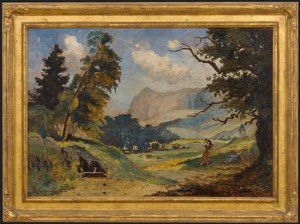
Ed Ruscha tells Viet-Nu Nguyen and Leta Grzan how he first encountered Louis Michel Eilshemius’s paintings, which of the artist’s aesthetic innovations captured his imagination, and how his own work relates to and differs from that of this “Neglected Marvel.”