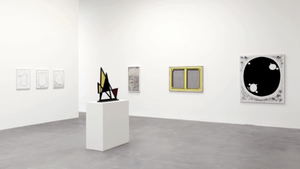
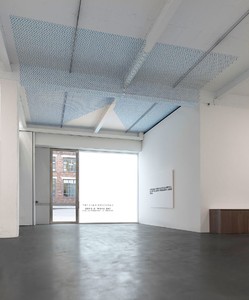
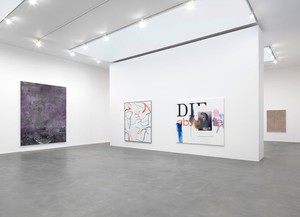
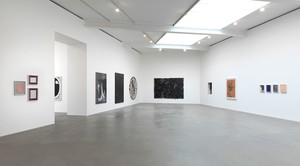
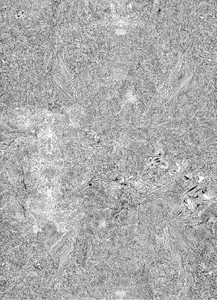

Installation Views

Works Exhibited

About

There it is. I have shown it to you. It has been done. It is being done. And because it can be done, it will be done.
—Kirk Varnedoe, Pictures of Nothing

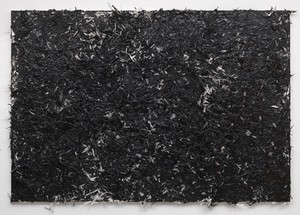
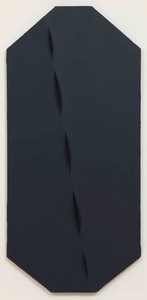
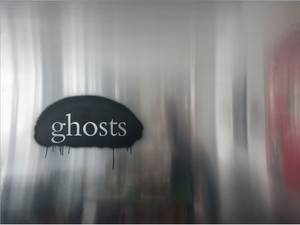
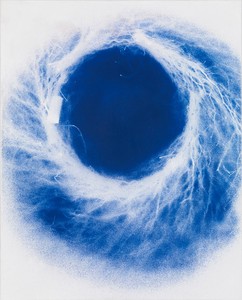
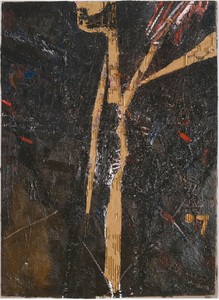
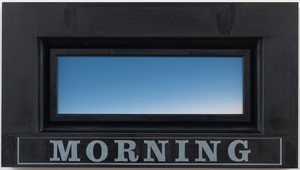
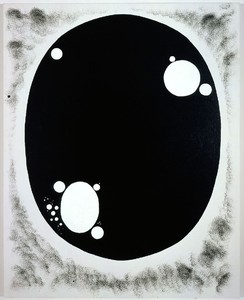
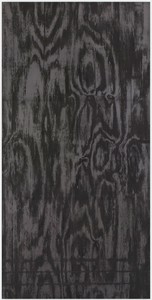
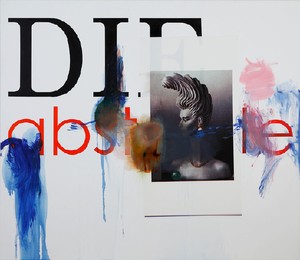
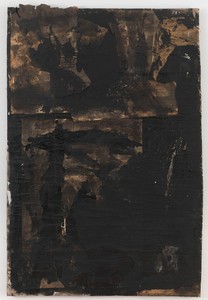
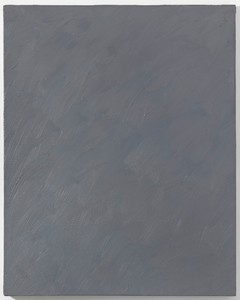
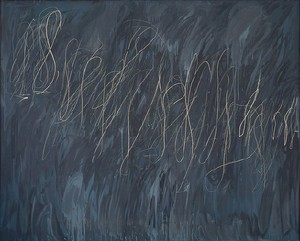
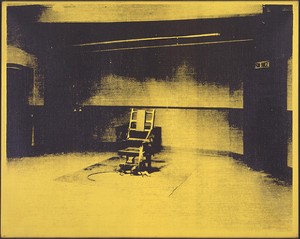
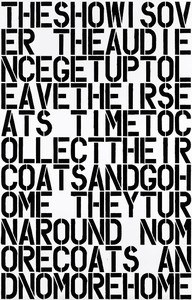
“The show is over.” Or is it? This exhibition is about abstraction and the end of painting, often proposed but never concluded. Christopher Wool’s statement in paintings, drawings, and billboards, taken from Vasily Rozanov’s nineteenth-century definition of nihilism, contains sufficient irony to suggest that painting itself, the spectacle that surrounds it, and the ultimate questions it poses about life and death, are never quite over.

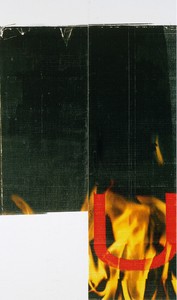
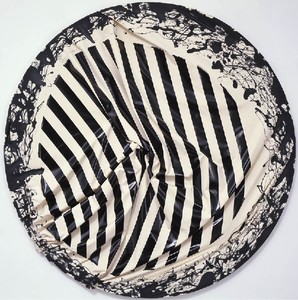
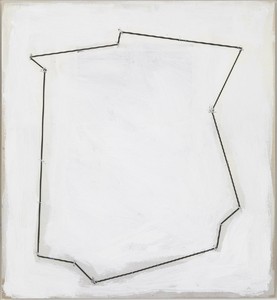
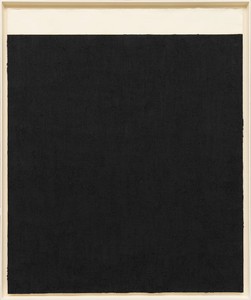
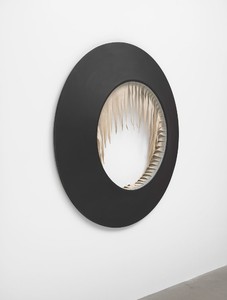
The negation of painting emerged in Europe after World War II in Francis Picabia’s last paintings, Lucio Fontana’s punctured and slashed Concetto spaziale paintings, Yves Klein’s Fire-Color works, and Piero Manzoni’s quest for neutral materiality in the Achromes. When first exhibited in 1953, Robert Rauschenberg’s White Paintings—monochromatic panel paintings—were unprecedented in their deceptive blankness. These works anticipated diverse interpretations of the neutral picture plane. Gerhard Richter’s paintings of the 1970s, in shades of gray, project a removed, indifferent power. Richard Serra’s Left Corner Horizontal (1977), a dense black expanse of oilstick on linen, produces a physical and spatial void that appears impenetrable.

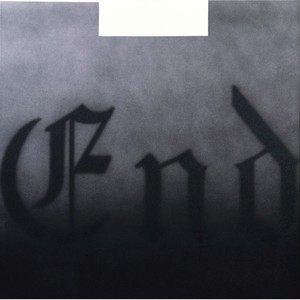
A shared spirit of negation is evident in the anarchic actions that fueled the urban punk movement, epitomized by Steven Parrino’s physical attacks on the canvas and Kim Gordon’s evanescent wreaths. In Parrino’s Untitled (1992), the anarchist symbol is sprayed in black engine enamel on white vellum. Ed Ruscha’s hermetic painted wordplay reaches cinematic finality with The End paintings, begun in the early 1980s. The silhouettes of Hourglass #4 (1987) and End (1993) are set against gray-spectrum horizons that evoke transitions of time and space.

Helter Skelter: Arthur Jafa and Richard Prince

Helter Skelter: Arthur Jafa and Richard Prince

Helter Skelter—an exhibition at Fondazione Prada’s Venetian venue, Ca’ Corner della Regina—marks the first creative dialogue between two visionaries of American art, Arthur Jafa and Richard Prince. The show explores the grit, grift, violence, and ingenuity of American culture through more than fifty works, including photography, video, and large-scale installations that interrogate themes of race, gender, media, and politics. In the interview below, Nancy Spector, the exhibition’s curator, speaks about the shared motifs—from apocalyptic sunsets to a fascination with “monstrosity”—that led her to pair these artists for the first time.
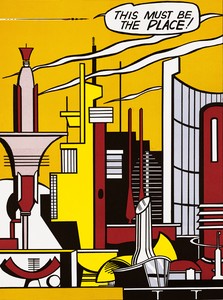
Roy Lichtenstein’s New York Boyhood

Roy Lichtenstein’s New York Boyhood

Avis Berman’s biography of Roy Lichtenstein, Becoming Roy Lichtenstein: The Path to Pop, will be published this fall by Abbeville Press, aligning with a major retrospective at the Whitney Museum of American Art, New York, in October. For the Quarterly she has adapted part of her text to focus on the artist’s formative experiences in New York in the 1920s and ’30s.

Richard Serra: Steve Reich’s “Music for Pieces of Wood”

Richard Serra: Steve Reich’s “Music for Pieces of Wood”

In this video, musical ensemble Sō Percussion performs Steve Reich’s Music for Pieces of Wood” inside the exhibition Richard Serra: Running Arcs (For John Cage), 1992, at Gagosian, New York.

The Bad Ones Don’t Deserve It

The Bad Ones Don’t Deserve It

Albert Oehlen in conversation with Max Dax.

Christopher Wool: See Stop Run

Christopher Wool: See Stop Run

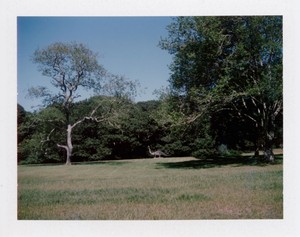
Jonathan Griffin traveled to Marfa to see the second iteration of Christopher Wool’s See Stop Run exhibition and to talk with the artist about his latest work, and about the photography series and sculptures that grew from his time in the Texas town.

Gagosian Quarterly Fall 2025

Now available
Gagosian Quarterly Fall 2025

The Fall 2025 issue of Gagosian Quarterly is now available, featuring Andy Warhol’s Blue Liz as Cleopatra (1962) on the cover.

Rudolf Stingel: Vineyard Paintings

Rudolf Stingel: Vineyard Paintings

Thomas Demand looks at Rudolf Stingel’s Vineyard Paintings.

At the Movies with Andy Warhol

At the Movies with Andy Warhol

Carlos Valladares tracks the artist’s engagements with Hollywood glamour, thinking through the ways in which the star system and its marketing engine informed his work.

Rollin’ High and Mighty Traps: Richard Prince

Rollin’ High and Mighty Traps: Richard Prince

Sydney Stutterheim traces the linkages and affinities between the work of Richard Prince and that of Bob Dylan. Using Prince’s Untitled (Dylan) as a starting point, she considers the artist’s enduring interest in questions of originality and authorship, as well as his sustained relationship with the worlds of American music and counterculture.

AMA Venezia

AMA Venezia

Celebrating the collector Laurent Asscher’s new art space in Venice, William Middleton underscores the richness of Asscher’s relationships with artists.

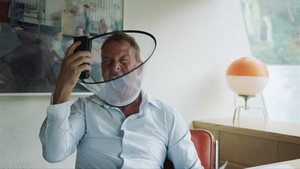
On Willem de Kooning: Albert Oehlen In Conversation with John Corbett

On Willem de Kooning: Albert Oehlen In Conversation with John Corbett

On the occasion of Willem de Kooning: Endless Painting, curated by Cecilia Alemani and comprising paintings from 1944 through 1986 and two sculptures, the Quarterly revisits a conversation between Albert Oehlen and John Corbett from 2013. The pair reflect on de Kooning’s late work and its lasting influence on them.

Gagosian Quarterly Spring 2025

Now available
Gagosian Quarterly Spring 2025

The Spring 2025 issue of Gagosian Quarterly is now available, featuring Cy Twombly’s Paesaggio (1986) on the cover. 

Cy Twombly by Jenny Saville: To Lift the Veil

Cy Twombly by Jenny Saville: To Lift the Veil

Jenny Saville reflects on Cy Twombly’s poetic engagement with the world, with time and tension, and with growth in this excerpt from her Marion Barthelme Lecture, presented at the Menil Collection, Houston, in 2024.

Rudolf Stingel: A Trace

Rudolf Stingel: A Trace

Jessica Beck surveys the career of Rudolf Stingel, noting his sustained engagements with painting, environment, and memory.

Gagosian Quarterly Fall 2024

Now available
Gagosian Quarterly Fall 2024

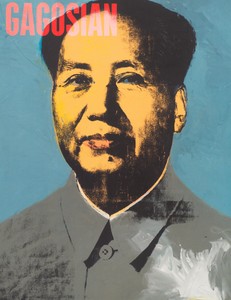
The Fall 2024 issue of Gagosian Quarterly is now available, featuring Andy Warhol’s Mao (1972) on the cover.

Mao: In the Land of Warhol

Mao: In the Land of Warhol

Jessica Beck examines Andy Warhol’s return to painting in the 1970s, focusing on the artist’s Mao series.

Roy

Roy

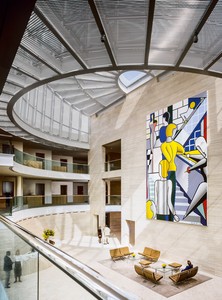
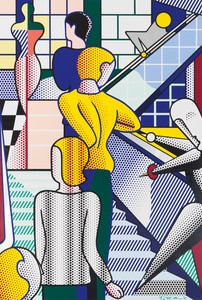
Michael Ovitz, cofounder of Creative Artists Agency (CAA), looks back to 1989, the year he and the architect I. M. Pei commissioned Roy Lichtenstein to create the Bauhaus Stairway Mural for the then new CAA Building in Los Angeles. Through the experience of working with Lichtenstein, Ovitz formed a meaningful friendship with the artist.

Remembering Brice Marden

Remembering Brice Marden

In conjunction with the memorial service for Brice Marden held at the Museum of Modern Art, New York, Mirabelle and Melia Marden produced a short film directed by Chiara Clemente to honor the late artist. Featuring interviews, archival photographs, and family videos, this film captures Marden’s vibrant life and enduring cultural impact.

Bauhaus Stairway Mural

Bauhaus Stairway Mural

Alice Godwin and Alison McDonald explore the history of Roy Lichtenstein’s mural of 1989, contextualizing the work among the artist’s other mural projects and reaching back to its inspiration: the Bauhaus Stairway painting of 1932 by the German artist Oskar Schlemmer.

Gagosian Quarterly Summer 2024

Now available
Gagosian Quarterly Summer 2024

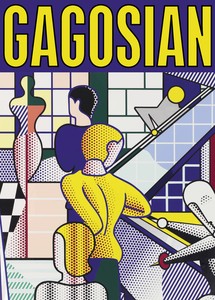
The Summer 2024 issue of Gagosian Quarterly is now available, featuring a detail of Roy Lichtenstein’s Bauhaus Stairway Mural (1989) on the cover.