Artist Devin B. Johnson meets with Diallo Simon-Ponte to reflect on the evolution of his practice, the impact of place on the temporal dimensions of his work, and the reemergence of ceramics in his exploration of abstraction and figuration.
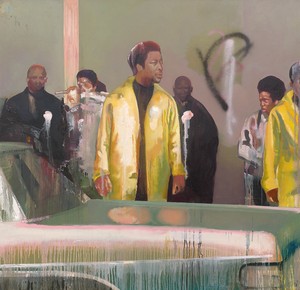
Devin B. Johnson, Diesel Clad Ensemble, 2024, oil on linen, 60 × 62 inches (152.4 × 157.5 cm)
Devin B. Johnson, Diesel Clad Ensemble, 2024, oil on linen, 60 × 62 inches (152.4 × 157.5 cm)
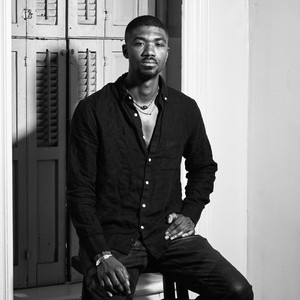
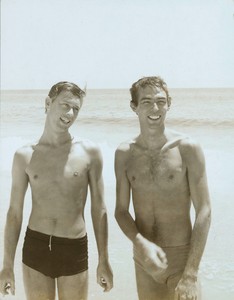
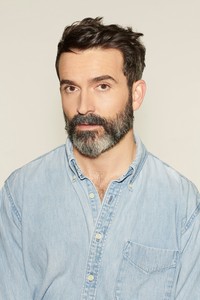
Devin B. Johnson obtained his BA in fine arts from the California State University Channel Islands in 2015 and his MFA at Pratt Institute, Brooklyn, in 2019. In addition to being named an artist-in-residence for Fountainhead, Miami, in 2023, he was selected as an Artsy Vanguard in 2022, named to Forbes’s 30 Under 30 Art and Design list that same year, was included in Cultured’s “Young Artists” list in 2021, and was one of sixteen artists from around the world selected for the inaugural year of the Black Rock Senegal residency in 2020. Photo: Xavier Scott Marshall
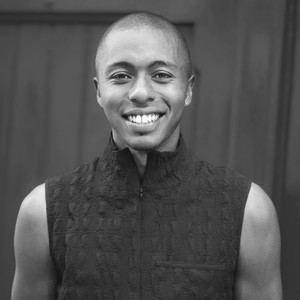
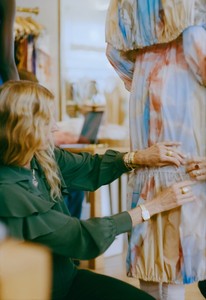
Diallo Simon-Ponte is a writer and curator who works at Gagosian. Since starting there in 2021, he has supported exhibitions for artists including Derrick Adams, Cy Gavin, Lauren Halsey, Deana Lawson, Rick Lowe, Tyler Mitchell, Amanda Williams, and others. Photo: Nzinga Nwa
Diallo Simon-PonteSo Devin, first and foremost I want to say it’s a pleasure to be in conversation with you, given we’ve known each other for some time. How are you feeling?
Devin B. JohnsonI’m feeling really good. I feel blessed to be in this space and to be able to open up our relationship in this way.
DSPYou live and work in Brooklyn now, but you’re from California.
DBJYes, I was born in Los Angeles, and shortly after that my family and I moved to San Diego. We lived there until I was ten years old, and I was lucky to have had some early art experiences there; my grandfather would take me after school to drawing classes. He’d pick me up in his old Pontiac and drop me off at the studio in this plaza, and he would just sit outside for two hours while I played around with pastels, oil, acrylic, and all that stuff for the very first time. It was really a space where a lot of my needs and interests were nurtured by my parents and grandparents.
DSPIt’s beautiful that they supported your curiosities in that way. Then you moved back to LA, right? I remember you telling me about encountering the Underground Museum, and how that operated as a lighthouse for you at a formative time.
DBJRight after I graduated college I wanted to learn more about contemporary art. I was going out of my comfort zone, and outside my neighborhood, Woodland Hills, to downtown to find out more about the museum circuit there. I started meeting people, and this space in Crenshaw called the Underground Museum kept coming up. This was shortly after Noah Davis, the artist who founded the museum with his wife, Karon Davis, passed away; his dying wish was to have the Underground Museum be a place that serves the community, and it really succeeded in that. In my life, it became a place to have discourse, to see films, and to really connect with others with an interest in contemporary art. I appreciate what the space did for me.
DSPWould you say it shaped your ideas of what the Black contemporary art world could look like?
DBJAbsolutely. It was around that time when I learned a lot about Pope.L, Kerry James Marshall, and Theaster Gates, to name a few. It was there that I first saw their work in person. I was learning more about contemporary art everywhere I could. I was doing a lot of investigation on YouTube, the University of YouTube [laughter]—I was able to simply type “Theaster Gates” or “Henry Taylor” and learn more about who these people are and what their practices are. More generally, I was interested in learning more about conceptual artists and how to think more broadly across the spectrum of ideas, outside the realm of paint.
Devin B. Johnson, Congealed & Stuck, 2024, oil on linen, 24 × 30 inches (61 × 76.2 cm)
DSPIs this what led you to Pratt for your graduate degree, and to New York?
DBJI received my undergraduate degree in 2015, and for two years after that I had a job working as an Uber driver and I did Instacart shopping. I did that to pay my bills and pay my gas money and pay for materials. Driving around LA, being stuck in traffic, I had such a long time to think for myself, and at twenty-four I was like, This cannot be the end. I have to figure out how to challenge myself. And so when I was driving around, I was listening to lectures with Thelma Golden and other people. With all that inspiration from the Underground Museum and the online media I was able to engage with, I decided to make work that would then be my portfolio to submit to an MFA program. I was so emboldened; I felt that whatever MFA I chose—I chose just one—if I got in, it was God given. If I didn’t, then it was also God-given. I just did one Hail Mary application to Pratt, and I had no doubt in my mind that I was going to get accepted. I got the acceptance letter in February and moved to New York.
DSPAnd so now in New York, how did your practice begin to evolve and develop?
DBJAt the time, I was rendering a lot more in my painting, working toward something more figurative. During my first semester of MFA, this was one of the things that I felt I had to quickly dismantle, thinking more in depth about the ideas and concepts of my practice, the whys and the scaffolding of what my practice was based on. And I was around influential professors: Greg Drasler, Torkwase Dyson, and Cullen Washington Jr. All of them challenged their students to think and talk about their work in a more philosophical manner. Dyson, for instance, has this structure around Black compositional thought that follows the ethos of why the paintings are what they are. That was inspirational as a way to identify what the scaffolding of a painting could be.
DSPAt this moment in your painting practice, how would you describe the relationship between figuration and abstraction? What does that investigation look like?
DBJFor a couple of years I was trying to figure out, What is the voice that I’m pushing? What are the ideas that I’m challenging? Can I go beyond what the conventional ideas of figuration are? To work through these questions I needed to give myself room to switch between the figurative and the abstract. In my figurative works there had to be a balance between chance and technicality, but in the process of reaching that balance, I’d encounter frustrations, and I’d need to create in a more abstract mode. Doing this, I’d often be startled by what abstraction allowed: it was real and it was raw.
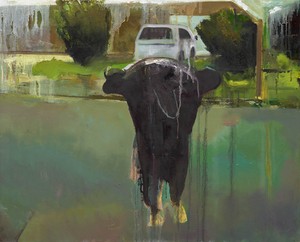
Devin B. Johnson, Pull up to the curb, 2024, oil on linen, 24 ¼ × 30 inches (61.6 × 76.2 cm)
I was interested in the weathering of the surfaces and how I could extend paint to look like the weathering, decaying, metal erosion or corrosion that’s indicative of time passing.
Devin B. Johnson
DSPI want to touch on the passage of time in your work. The surfaces of your paintings feel like they’ve undergone a chemical treatment, like you’ve worked to weather them—the canvases have undergone some sort of temporal change. How would you say you’re wielding temporality as you paint?
DBJOne of the main takeaways that I first identified when I moved into the city was, How does one interact with the city and the landscape? In LA you’re confined by the seatbelt of your car and your vision is stipulated by your car window—there’s a distance to integrating with your space; in New York, moving around on foot, a new vantage point is opened up regarding space and time. I was so interested in the textures, the entropy, energy, and electricity, involved in the arteries and capillaries of a bustling tightknit city. And what technique can really show how time and how entropy work? Graffiti, the degradation of buildings, and the tear-aways of ads in the subway station—those textures are indicative of a moving city. That’s a landscape’s memory. And how do the filters of the individual also dictate how they move and see things in a city or in a place? More specifically, after I came back from Senegal, the city was barred up in a particular way where you couldn’t go into buildings. You couldn’t go into your favorite places.
DSPBecause you came back from Senegal in 2020, at the height of the pandemic?
DBJRight, I was in Senegal for four months, and I witnessed the social upheaval that resulted from the murders of George Floyd and Breonna Taylor and Ahmaud Arbery from afar. It was an eye-opening experience, and for me as an artist, I thought about that sound bite that floats around the Internet with Nina Simone saying something like, “If you’re an artist, how are you talking to the changing times?” So when I came back to New York, things were in this liminal space. The boarded-up riot signs and the graffiti of all those things that had been taking place in months prior pushed me to think about the cathartic and ambiguous nature of reality at that moment. So the paintings became a mirror of that, riddled with grief and anxiety. But through that, I started to figure out how to stretch the plasticity of my paint to mirror the type of synesthesia of emotions that I was feeling, stretching out the painting to be viscous and watery, to think about crying or think about dread or think about a long, dissonant chord. I started experimenting with different concoctions, watering down pigments and pouring it all down and using spray paint and pouring other pigments down and covering things up. I was interested in the weathering of the surfaces and how I could extend paint to look like the weathering, decaying, metal erosion or corrosion that’s indicative of time passing.
DSPI know that J. M. W. Turner is a big influence on you, the way he pushes the crescendos and brushstrokes of light and shadow.
DBJTurner is so interesting because his works are figurative but ultimately they’re very abstract: the whooshes of color and the inferences of space. He creates these dreamy spaces. There’s this void, but there is also shape to weigh down the void. And this quality he achieved has provided a key in my own work in abstraction: I think about space and void, but there has to be shape and structure.
DSPIt’s clear—this is the scaffolding you mentioned previously.
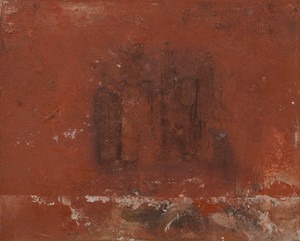
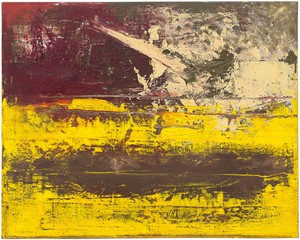
Devin B. Johnson, Rough Rub, 2024, oil on linen, 16 × 20 inches (40.6 × 50.8 cm)
DSPTwo of your paintings in Social Abstraction, Rough Rub and Diesel Clad Ensemble [both 2024], are directly related to each other and play off each other through color and form.
DBJRough Rub was the first painting that came out of the conjuring of this series. It was made in between other paintings as just like a bup-bup-bup. And it was weird because the colors are ones that I don’t typically work with in abstraction.
DSPYou’re also showing a ceramic work. How did you begin exploring this medium?
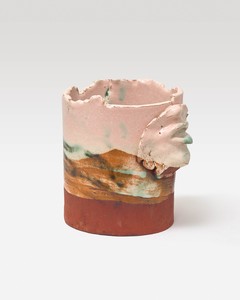
DBJIn undergrad, even, I was always straddling painting with ceramic courses. The hard part about ceramics, ultimately, is access to a studio. So when I was able to do my MFA, I enrolled in a few ceramic classes. My entry point wasn’t necessarily throwing anything on the wheel; I’ve always been more drawn to the hand-built. Beyond that, my interest lies in figuring out how I can make something sculptural with enough surface to think in a painterly way. I came up with these slab-built forms that I shaped into cylinders, composited with other clay remnants, and collaged together. I kept making more of those cylinder vases, or freestanding vessels, that I then personified with the likeness of my lips. But there’s also this connection to other parts of the world where ceramics are made in the context of goods and design. They’re used to decorate or even uplift or add color to a space. The Surma people in the Omo Valley in Ethiopia live along the river, and they decorate their bodies with the mud from the banks of the river; it’s a way for them to signify beautification for themselves to attract a mate. I find it interesting to have a connection where the personification of these lips and these painted vessels become these beautiful things that connect us to the earth.
Devin B. Johnson obtained his BA in fine arts from the California State University Channel Islands in 2015 and his MFA at Pratt Institute, Brooklyn, in 2019. In addition to being named an artist-in-residence for Fountainhead, Miami, in 2023, he was selected as an Artsy Vanguard in 2022, named to Forbes’s 30 Under 30 Art and Design list that same year, was included in Cultured’s “Young Artists” list in 2021, and was one of sixteen artists from around the world selected for the inaugural year of the Black Rock Senegal residency in 2020. Photo: Xavier Scott Marshall
Diallo Simon-Ponte is a writer and curator who works at Gagosian. Since starting there in 2021, he has supported exhibitions for artists including Derrick Adams, Cy Gavin, Lauren Halsey, Deana Lawson, Rick Lowe, Tyler Mitchell, Amanda Williams, and others. Photo: Nzinga Nwa