Fall 2024 Issue

The gospel according to
beauty supply

Sculptor and creative director Ryuan Johnson focuses on the works of Allana Clarke and Lauren Halsey to examine the key place of hair in Black culture. Through image and poetry, Johnson reveals the cultural and historical significance of hair as a medium to discuss identity, community, and the politics of representation.

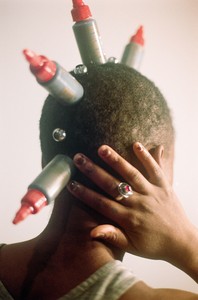
Portrait of the back of a person's head with a mohawk created from hair dye bottles

Photo: Ese Gagoh

Photo: Ese Gagoh

Looking at the work of Allana Clarke and Lauren Halsey, I feel a deep connection to the beauty supply store, a pivotal institution in Black hair culture. This space serves as a mecca nurturing transformation, enhancement, and self-esteem. The beauty supply store is almost synonymous with the experience of being a Black woman.

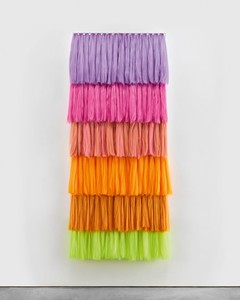
Both Halsey and Clarke represent Black hair culture in unique and compelling ways. Halsey’s work glorifies and preserves the vibrance of braiding hair and the creativity of traditional Black hairstyles. Her art showcases Black hair culture in a fantastical, empowering, and culturally rich light. It represents the avant-garde, free, and expressive nature of Black hair, beautifully capturing these styles as a time capsule, offering a glimpse into the evolving era of Black hair.

Gagosian quarterly weekend reads

Get the best of the Quarterly in your inbox twice a month.

By subscribing you agree to our Privacy Policy.

Lauren Halsey, Untitled, 2024, synthetic hair and mirror on wood, 120 × 56 × 8 inches (304.8 × 142.2 × 20.3 cm) © Lauren Halsey. Photo: Allen Chen

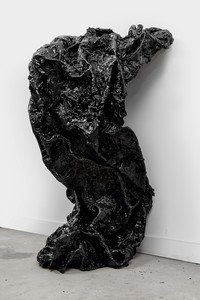
Allana Clarke, Witness Me, 2024, 30 Sec. hair bonding glue (rubber latex and black carbon dye), 69 × 43 × 27 inches (175.3 × 109.2 × 68.6) © Allana Clarke. Photo: Jeff McLane

Clarke on the other hand focuses on track glue, a product used in Black hair-styling. Her sculptures made from this glue critique its use, because, despite allowing for expressive hairstyles, it can cause traction alopecia. Clarke uses track glue as a metaphor for the pressures Black women face in society. She speaks to the way we sometimes conform to beauty standards even if they harm us, pointing out the struggle between beauty and survival in a world where hair can influence our opportunities and relationships. Track glue represents this tension.

Clarke’s work is about the lengths we go to fit in and be seen as special, often by aligning with unnatural standards. It critiques how society dictates our worth through beauty standards. Halsey’s art celebrates the creativity and heritage of Black hair, while Clarke examines its complex effects. Both artists are connected by the beauty supply store, the only place to find both braiding hair and track glue.

I feel a deep connection to the beauty supply store, a pivotal institution in Black hair culture. This space serves as a mecca nurturing transformation, enhancement, and self-esteem.

Ryuan Johnson

“The Gospel according to the Beauty Supply” is my response to the impact of the beauty supply store on both artists’ work and on Black hair culture. I compare the beauty supply store to a church because it’s a place where we go to transform, feel better about ourselves, and feel safe. Finding the right pack of hair, the right earrings, or the right do-rag can be as uplifting as a spiritual experience, making the beauty supply store a place of worship in its own right. But like religion, the beauty supply store has its darker side: sometimes we go there to conform out of insecurity, and some of its products, like track glue or perms, can have long-term health effects. Despite this, the beauty supply store is a crucial part of Black life, offering comfort and connection even when it demands conformity.

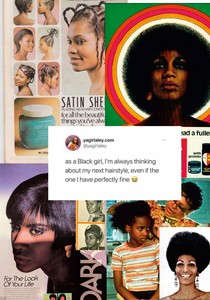
Collage by Ryuan Johnson; post by @yagirlaley


Untitled

The church bells ring

I go in because I feel this place knows me

Bonnets sacred as halos

Rush to receive Communion

We looking to find god

or

Blue Magic grease

No difference

Where we from

$20s, $50s, hunnids pass in offering trays

    We tithe for salvation

    Or

Knotless braids

as if there’s a difference

    Where we from

Everyone in the aisles

Jumping, exalting, beaming

We all feel the Holy Spirit

Or a fresh bundle

Or a new outlook on life

Or a Dr. Miracle’s hair-growth oil

We don’t know there to be a difference
Social Abstraction, Gagosian, Beverly Hills, July 18–August 30, 2024

Social Abstraction, Gagosian, Hong Kong, September 10–November 2, 2024

The “Gagosian & Social Abstraction” supplement also includes: “The Building Blocks: Amanda Williams & Alteronce Gumby,” “Kahlil Robert Irving & Cameron Welch,” “Rick Lowe & Beasley,” “Devin B. Johnson,” “Cy Gavin,” and “Kyle Abraham

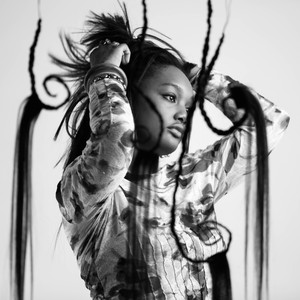
Black and white portrait to Ryuan Johnson

Ryuan Johnson is a Chicago-based sculptor and creative director who primarily works with hair. Introduced to braiding as a form of self-care in her youth, Johnson views hair as both a means of self-expression and a reflection of her emotional and mental states. Her grandmother’s work in a hair salon influenced her understanding of the cultural significance of hair. Johnson’s sculptural pieces, which resemble glimmering chandeliers and sprawling canopies, represent pride, confidence, and culture, using hair to communicate an affective universe in her creative direction and art.

Francis Bacon: Reinventing Realism

Francis Bacon: Reinventing Realism

Francis Bacon lived and worked in Paris for a decade starting in the mid-1970s. The city and the art he encountered there provided a profound backdrop for his austere late style, which often brings together smooth, colorful backgrounds, spare architectural signifiers, and sculptural human forms. Here, three striking paintings from that period are considered by Sebastian Smee.

Divine Emanations: Nymphs, Poets, and the Painter’s Palette

Divine Emanations: Nymphs, Poets, and the Painter’s Palette

Janne Sirén considers Anselm Kiefer’s new paintings, the subject of an exhibition at Gagosian, New York, entitled Seal My Ears Shut and I Shall Hear You Still.

Giuseppe Penone: The Reflection of Bronze

Giuseppe Penone: The Reflection of Bronze

Adam D. Weinberg has been working with Giuseppe Penone on an exhibition of the artist’s new sculptures, The Reflection of Bronze, that opens at Gagosian, New York, on April 22. The works explore the character and possibilities of bronze. Here, Weinberg considers Penone’s enduring engagement with the alloy and addresses the conceptual underpinnings of the exhibition’s three-room structure.

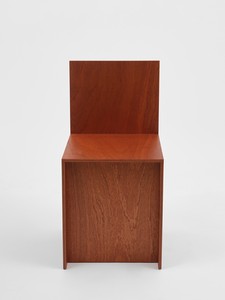
Donald Judd: Patiently Constructed

Donald Judd: Patiently Constructed

From their respective fields, three international cultural figures—artist and designer Ronan Bouroullec, fashion visionary Michèle Lamy, and chef and restaurateur Enrique Olvera—reflect on Donald Judd’s work in furniture, the subject of recent exhibitions in South Korea and Japan.

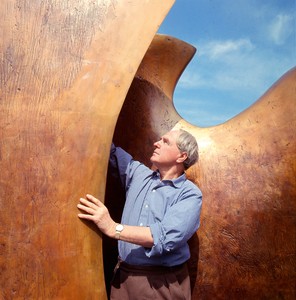
Henry Moore: Monumental Nature

Henry Moore: Monumental Nature

Laura Bruni writes about a major exhibition celebrating the work of the British sculptor Henry Moore at the Royal Botanic Gardens, Kew, London.

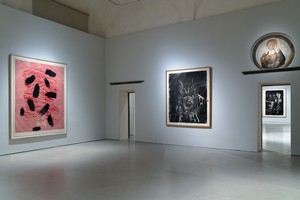
Georg Baselitz and the Possibilities of Print

Georg Baselitz and the Possibilities of Print

On the occasion of Baselitz: AVANTI! at the Museo Novecento in Florence, Italy, Holly EJ Black considers the roots and reverberations of Georg Baselitz’s printmaking.

Portrait of the Artist as a Young Choreographer: Emily Coates Dances Early Balanchine

Portrait of the Artist as a Young Choreographer: Emily Coates Dances Early Balanchine

Mark Franko considers how Emily Coates resurrects the spirit of George Balanchine’s American beginnings through archival research, spoken dialogue, and movement in her performance Tell Me Where It Comes From.

Francesca Woodman: Brushing with Infinity

Francesca Woodman: Brushing with Infinity

On the occasion of the exhibition Francesca Woodman: Lately I Find a Sliver of Mirror Is Simply to Slice an Eyelid at Gagosian, Rome, Alyce Mahon explores the artist’s engagements and affinities with Surrealism, from the writings of André Breton to the photographs of Hans Bellmer. Mahon focuses on the time Woodman spent in Rome while she was a student at the Rhode Island School of Design.

Ellen Gallagher: Submergent Visions

Ellen Gallagher: Submergent Visions

Sharad Chari reflects on a recent visit to Ellen Gallagher’s studio in Rotterdam, Netherlands, thinking through the artist’s intertextual interrogation of the oceanic and the ways in which her practice is informed by a wider Black intellectual and artistic world, an abiding interest in Herman Melville’s Moby-Dick, and the imperatives that surround this studio by the Port of Rotterdam.

The American Library in Paris

The American Library in Paris

Christian House reports on Paris’s American Library, a storied collection of English-language books in the French capital, tracking its evolution and enduring role in a cosmopolitan literary milieu from World War I to the present day.

Beatrice Wood

Game Changer
Beatrice Wood

Salomé Gómez-Upegui honors Beatrice Wood, the “Mama of Dada,” an underappreciated trailblazer within the movement who went on to become a brilliant ceramist.

Archigram: How Beautiful It Was Tomorrow

Archigram: How Beautiful It Was Tomorrow

D.A.P. and Designers & Books have published the first authorized facsimile of the highly influential and heterodox magazine Archigram, produced by the architectural collective of the same name between 1961 and 1974. This new edition faithfully duplicates the original nine and a half issues, complete with pop-ups, electric resistors, gatefolds, and all, and accompanies them with a collection of essays by key figures from the world of architecture. Here, Dan Fox considers the legacy of this innovative, irreverent, and prophetic magazine.