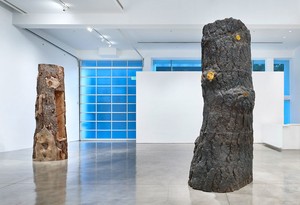
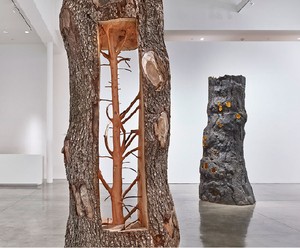
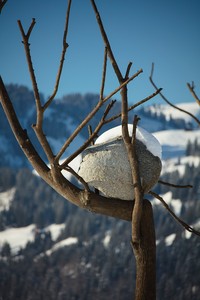
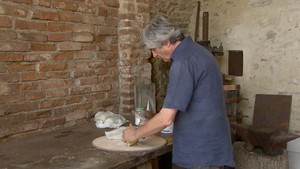
What fascinates me about trees is their structure: the tree is a being that memorializes the feats of its existence in its very form. Similarly, our bodies could be considered the sum of the performance of our existence. The tree can be considered a metaphor for the work of a sculptor who fixes his actions in the material.
—Giuseppe Penone
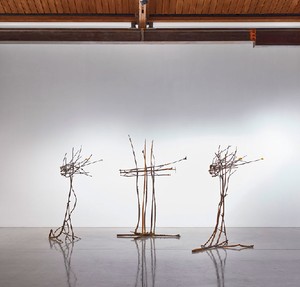
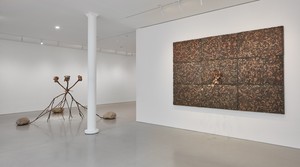
Gagosian Beverly Hills is pleased to present Giuseppe Penone’s first major exhibition on the West Coast.
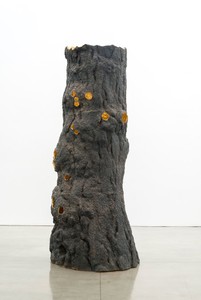
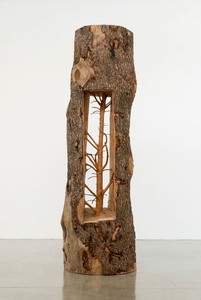
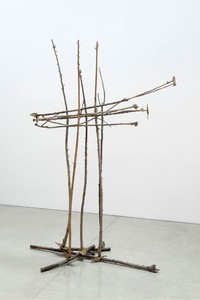
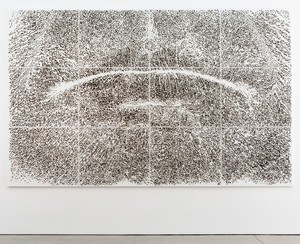
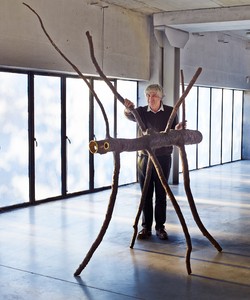
In sculptures, drawings, photographs, and installations, Penone heightens the subtle levels of interplay between man, art, and nature. His work represents a poetic expansion of Arte Povera’s radical break with conventional media in favor of organic and accessible matter, and emphasizes the involuntary processes of respiration, growth, and aging that are shared by man and tree. During the late 1960s in the forests near Garessio, Italy, Penone stunted the growth of trees with nails, metal wire, and an iron cast of his hand that gripped a living trunk, thus insinuating himself into the cycles of the landscape. He continued to engage his own body in the early 1970s by drawing the textures of his skin and casting his face in plaster; in To Reverse One’s Eyes (1970), he was photographed wearing mirrored contact lenses, positing vision as the precise point of separation between self and environment. In recent years, Penone has taken the natural attributes of traditional sculptural media, including wood, bronze, and marble, as points of departure for the creation of monumental, tactile forms.
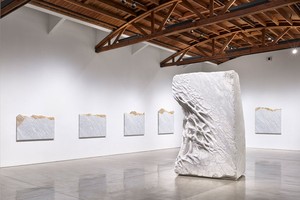
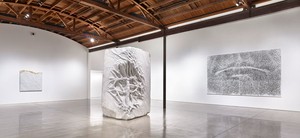
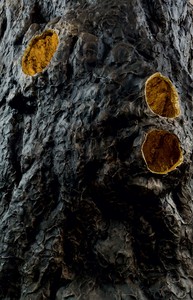
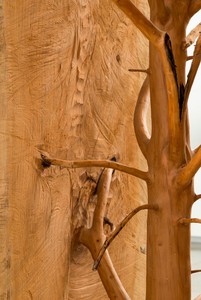
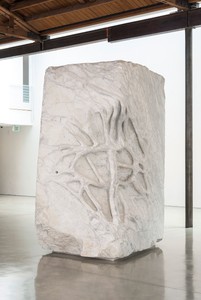
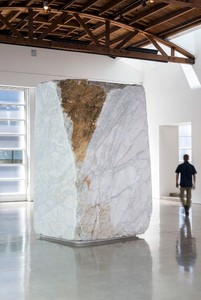
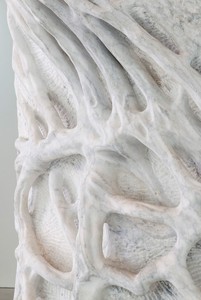
The exhibition takes its title from a passage in John Keats’s poem Ode to Psyche (1819), an anecdotal narrative of love, nature, and the creative imagination. Each work is a revelation of the sculptural qualities innate to natural materials. Penone chisels cedar trunks and masses of marble to expose the deep patterns resulting from growth and time, characteristics that he further emphasizes through carving, patination, and replication. In Anatomia / Anatomy (2011), a 23-ton marble block, he reconceives the veined surface as a matrix of tendrils, advancing the original marks into multiple dimensions.