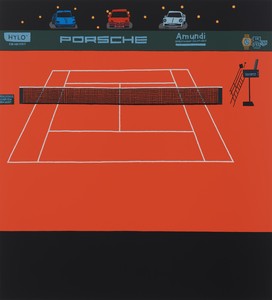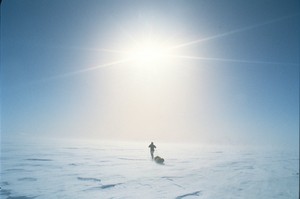
Ed Ruscha and Erling Kagge: Silence, Slowness, Exploration
Ed Ruscha sits down with the author and explorer Erling Kagge to discuss existence.
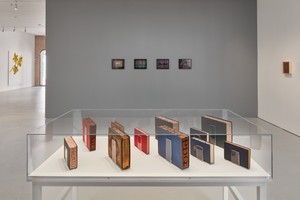
Installation view
Artwork, left to right: © Jonas Wood, © Ed Ruscha. Photo: Johnna Arnold
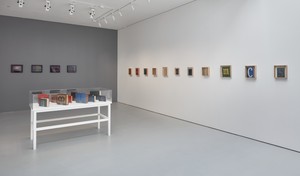
Installation view
Artwork © Ed Ruscha. Photo: Johnna Arnold
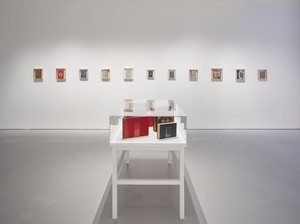
Installation view
Artwork © Ed Ruscha. Photo: Johnna Arnold
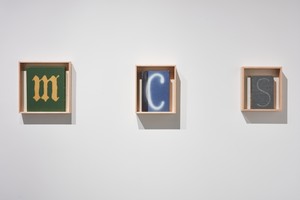
Installation view
Artwork © Ed Ruscha. Photo: Johnna Arnold
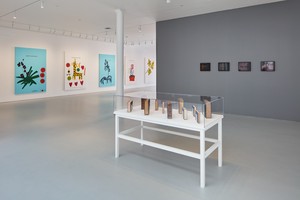
Installation view
Artwork, left to right: © Ed Ruscha, © Jonas Wood. Photo: Johnna Arnold
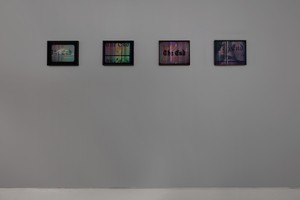
Installation view
Artwork © Ed Ruscha. Photo: Johnna Arnold
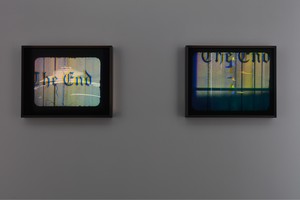
Installation view
Artwork © Ed Ruscha. Photo: Johnna Arnold
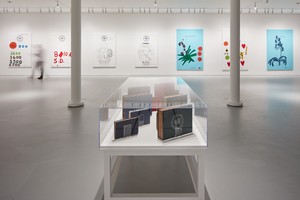
Installation view
Artwork, front to back: © Ed Ruscha, © Jonas Wood. Photo: Johnna Arnold
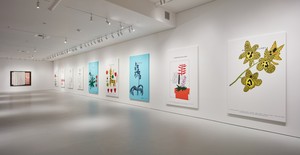
Installation view
Artwork, left to right: © Ed Ruscha, © Jonas Wood. Photo: Johnna Arnold
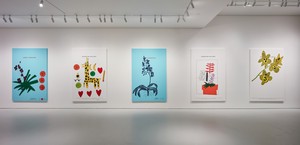
Installation view
Artwork © Jonas Wood. Photo: Johnna Arnold
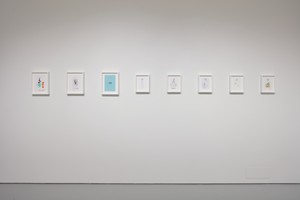
Installation view
Artwork © Jonas Wood. Photo: Johnna Arnold
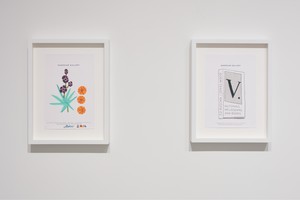
Installation view
Artwork © Jonas Wood. Photo: Johnna Arnold
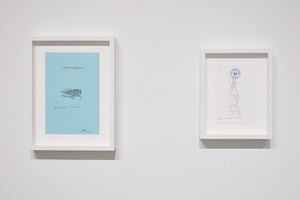
Installation view
Artwork © Jonas Wood. Photo: Johnna Arnold
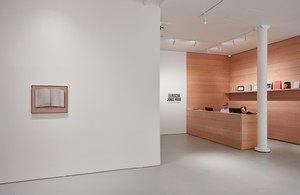
Installation view
Artwork © Ed Ruscha. Photo: Johnna Arnold
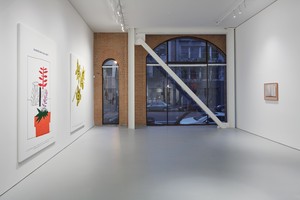
Installation view
Artwork, left to right: © Jonas Wood, © Ed Ruscha. Photo: Johnna Arnold
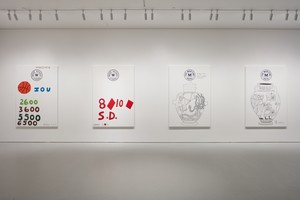
Installation view
Artwork © Jonas Wood. Photo: Johnna Arnold
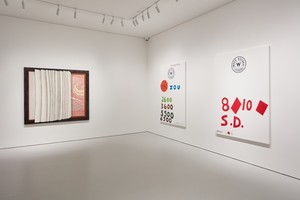
Installation view
Artwork, left to right: © Ed Ruscha, © Jonas Wood. Photo: Johnna Arnold
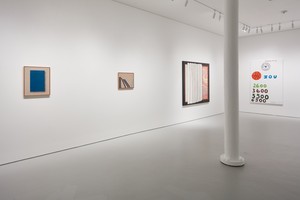
Installation view
Artwork, left to right: © Ed Ruscha, © Jonas Wood. Photo: Johnna Arnold
Installation view
Artwork © Ed Ruscha. Photo: Johnna Arnold

Ed Ruscha
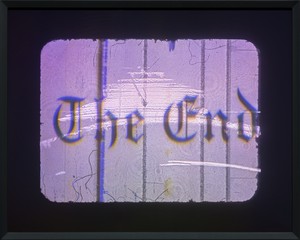
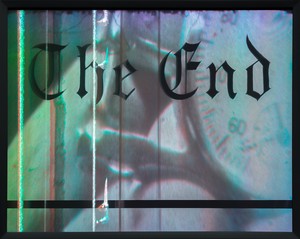
The End #1–#4, 1998–2016
Holograms, set of 4, each: 11 × 14 inches (27.9 × 35.6 cm), edition of 23 + 2 PP
© Ed Ruscha. Photo: Fredrik Nilsen
Ed Ruscha
The End #1–#4, 1998–2016 (detail)
Holograms, set of 4, each: 11 × 14 inches (27.9 × 35.6 cm), edition of 23 + 2 PP
© Ed Ruscha. Photo: Fredrik Nilsen
Ed Ruscha
The End #1–#4, 1998–2016 (detail)
Holograms, set of 4, 11 × 14 inches (27.9 × 35.6 cm), edition of 23 + 2 PP
© Ed Ruscha. Photo: Fredrik Nilsen
Ed Ruscha
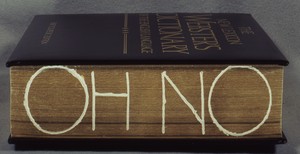
Oh No, 2011
Hand-drilled intaglio on gilt-edged book (The New Lexicon Webster’s Dictionary of the English Language, 1988 edition), 11 × 8 ⅝ × 3 ⅛ inches (27.9 × 21.9 × 7.9 cm)
© Ed Ruscha. Photo: Paul Ruscha
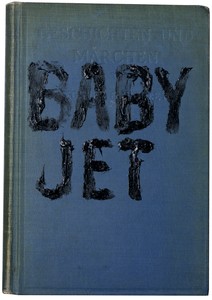
Ed Ruscha
Baby Jet, 2010
Acrylic on book cover (Geschichten und Marchen, 1929 edition), 7 ⅜ × 5 ⅛ × ¾ inches (18.7 × 13 × 1.9 cm)
© Ed Ruscha. Photo: Paul Ruscha
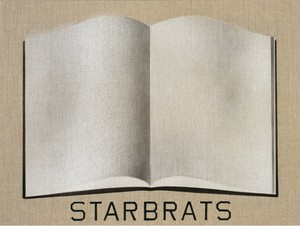
Ed Ruscha
Starbrats Open Book, 2003
Acrylic on linen, 18 × 24 inches (45.7 × 61 cm)
© Ed Ruscha. Photo: Paul Ruscha
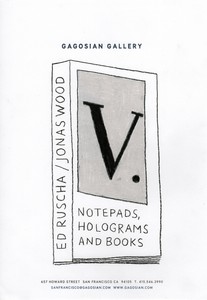
Jonas Wood
Untitled (V), 2017
Colored pencil on paper, 9 × 6 ¼ inches (22.9 × 15.9 cm)
© Jonas Wood
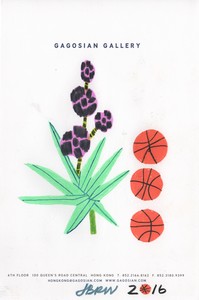
Jonas Wood
Untitled Drawing, 2016
Colored pencil on paper, 9 ⅛ × 6 ⅛ inches (23.3 × 15.6 cm)
© Jonas Wood
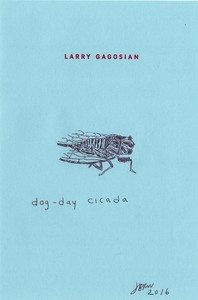
Jonas Wood
Larry Cicada, 2016
Pen on paper, 9 ¼ × 6 ⅛ inches (23.5 × 15.6 cm)
© Jonas Wood
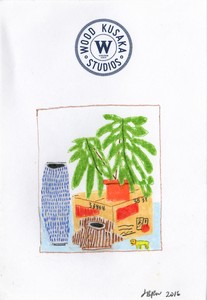
Jonas Wood
Untitled Drawing 2, 2016
Colored pencil on paper, 6 ½ × 4 ½ inches (16.5 × 11.4 cm)
© Jonas Wood
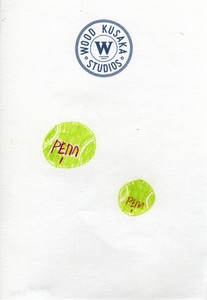
Jonas Wood
Untitled (2 Tennis Balls), 2016
Colored pencil on paper, 6 ½ × 4 ½ inches (16.5 × 11.4 cm)
© Jonas Wood
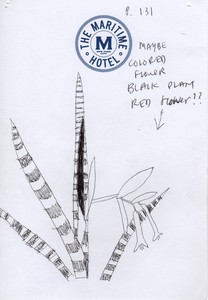
Jonas Wood
Untitled (P131), 2011
Pen on paper, 6 ½ × 4 ½ inches (16.5 × 11.4 cm)
© Jonas Wood
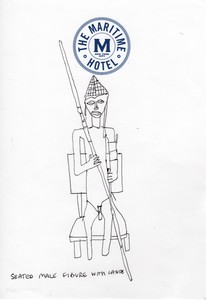
Jonas Wood
Untitled (Seated Male Figure), 2009
Pen on paper, 6 ½ × 4 ½ inches (16.5 × 11.4 cm)
© Jonas Wood
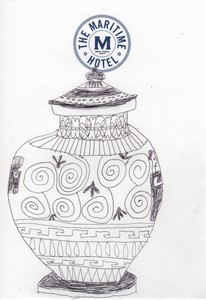
Jonas Wood
Untitled (Greek Spirals), 2007
Pen on paper, 6 ½ × 4 ½ inches (16.5 × 11.4 cm)
© Jonas Wood
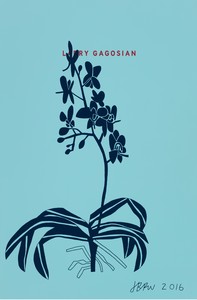
Jonas Wood
LG NPP #1, 2017
Screenprint and oil on canvas, 93 × 61 inches (236.2 × 154.9 cm)
© Jonas Wood. Photo: Brian Forrest
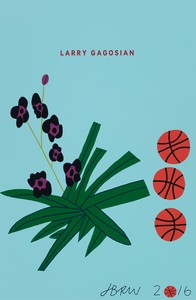
Jonas Wood
LG NPP #2, 2017
Screenprint and oil on canvas, 93 × 61 inches (236.2 × 154.9 cm)
© Jonas Wood. Photo: Brian Forrest
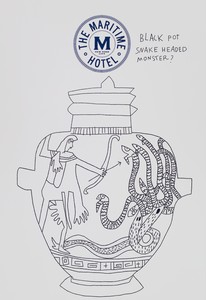
Jonas Wood
Maritime NPP #2, 2017
Screenprint and oil on canvas, 76 × 52 inches (193 × 132.1 cm)
© Jonas Wood. Photo: Brian Forrest
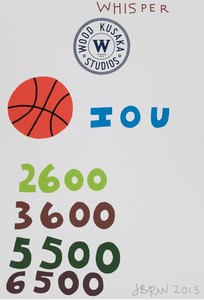
Jonas Wood
WKS NPP #3, 2017
Screenprint on oil and canvas, 76 × 52 inches (193 × 132.1 cm)
© Jonas Wood. Photo: Brian Forrest
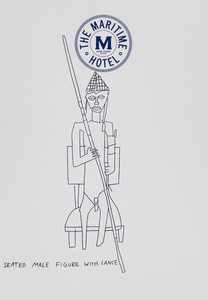
Jonas Wood
Maritime NPP #1, 2017
Screenprint and oil on canvas, 76 × 52 inches (193 × 132.1 cm)
© Jonas Wood. Photo: Brian Forrest
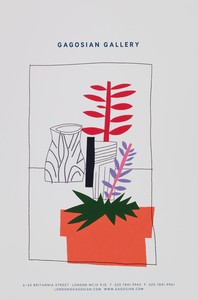
Jonas Wood
GG London NPP #1, 2017
Screenprint and oil on canvas, 93 × 61 inches (236.2 × 154.9 cm)
© Jonas Wood. Photo: Brian Forrest
Jonas Wood
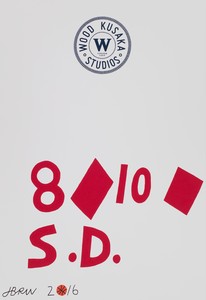
WKS NPP #2, 2017
Screenprint and oil on canvas, 76 × 52 inches (193 × 132.1 cm)
© Jonas Wood. Photo: Brian Forrest
Jonas Wood
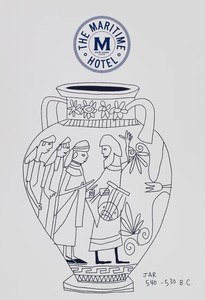
Maritime NPP #3, 2017
Screenprint and oil on canvas, 76 × 52 inches (193 × 132.1 cm)
© Jonas Wood. Photo: Brian Forrest
Jonas Wood
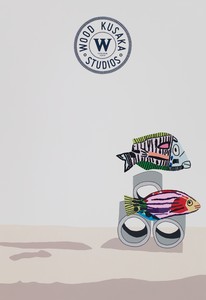
WKS NPP #1, 2017
Screenprint and oil on canvas, 76 × 52 inches (193 × 132.1 cm)
© Jonas Wood. Photo: Brian Forrest
Jonas Wood
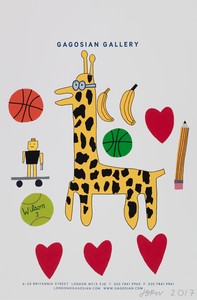
GG London NPP #2, 2017
Screenprint and oil on canvas, 93 × 61 inches (236.2 × 154.9 cm)
© Jonas Wood. Photo: Brian Forrest
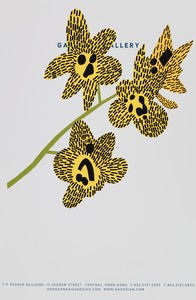
Jonas Wood
GG HK NPP #1, 2017
Screenprint and oil on canvas, 93 × 61 inches (236.2 × 154.9 cm)
© Jonas Wood. Photo: Brian Forrest
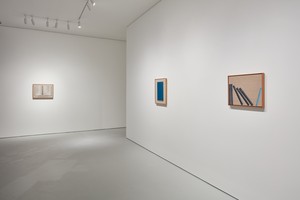
Gagosian is pleased to present Notepads, Holograms and Books, an exhibition of works by Ed Ruscha and Jonas Wood, two artists who explore the nature of the real and the represented, language and image, writing and typography. The exhibition includes paintings, holograms, and hand-modified books by Ruscha, and new paintings by Wood.
In Ruscha’s work, the traditions and techniques of graphic design and the restrained artistry of typesetting serve as vehicles for the commutation between picture and word, sign and signifier. He superimposes text and image across media: from billboards to books, from screens to paintings and holograms. With the reverence and technical mastery of a trompe l’oeil painting, Fanned Book (2012) depicts the turning pages of a bound volume with marbled endpapers. Elsewhere, Ruscha’s text paintings of phrases such as “OH NO” migrate to the spines and fore edges of actual books. Small works on canvas show granular, individual typeset alphabetic letters—examining the form, as much as the emblematic function, of the phoneme—and a hologram proclaims “THE END” in stylized letters on what appears to be vellum, making light projection resemble an archaic art. Through a shifting exchange of abstraction and figuration, the book in all its forms pervades Ruscha’s investigations of the nature of language and the distribution of information.
For Wood, shifts in scale push the limits of traditional painting genres. The still life, a recurring theme in his work, has been the subject of abstracted enlargement before. In public commissions, he has covered the facades of buildings with vivid paintings of potted plants, the overlapping leaves, shelves, and cylindrical vases taking on the grandeur of a rainforest or cityscape. In Notepads, Holograms and Books, logotyped and trademarked desk notepads are enlarged to become wall-covering canvases, which act as backdrops for paintings. Typographic emblems, such as “Gagosian Gallery” and “Maritime Hotel,” are silk-screened onto canvas, mimicking the original format of the signature-branded notepads. The impulse for these works originates in Wood’s habit of drawing on hotel and office stationery. Transposed from small drawings to large-scale compositions, the subjects of the paintings range from foliage and drawings his child made to abstract jottings that record running poker debts. The works thus straddle private and commercial zones through disorienting compressions of space and a deep attunement to patterning and color. Wood’s visual language finds a new iteration, playing between the portable and the monumental, between traditions of print and of paint, between inventions of his own and oblique responses to Ruscha’s peerless precedents.
Ed Ruscha sits down with the author and explorer Erling Kagge to discuss existence.

Following a recent visit to Jonas Wood’s Los Angeles studio, Justin Beal thinks through the artist’s paintings of tennis courts—the subject of an exhibition at Gagosian, Beverly Hills—examining their relation to the game, color theory, and the rewards of practice.

Eli Diner visits Jonas Wood in his Los Angeles studio as the artist prepares for an exhibition of new paintings in London.
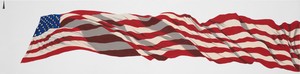
Gillian Pistell writes on the loaded symbol of the American flag in the work of postwar and contemporary artists.
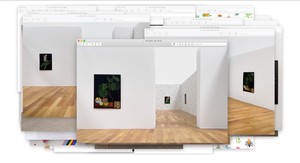
Join Jonas Wood on a virtual tour through the creation of his first solo exhibition in Hong Kong. Wood narrates the genesis and development of the new paintings, drawings, and wallpaper.
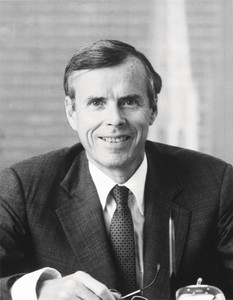
Jacoba Urist profiles the legendary collector.
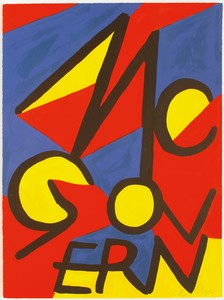
Against the backdrop of the 2020 US presidential election, historian Hal Wert takes us through the artistic and political evolution of American campaign posters, from their origin in 1844 to the present. In an interview with Quarterly editor Gillian Jakab, Wert highlights an array of landmark posters and the artists who made them.
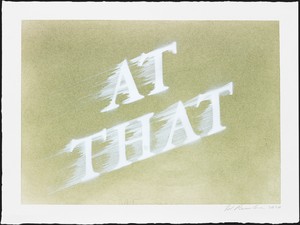
Lisa Turvey examines the range of effects conveyed by the blurred phrases in recent drawings by the artist, detailing the ways these words in motion evoke the experience of the current moment.
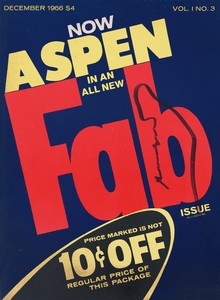
Gwen Allen recounts her discovery of cutting-edge artists’ magazines from the 1960s and 1970s and explores the roots and implications of these singular publications.
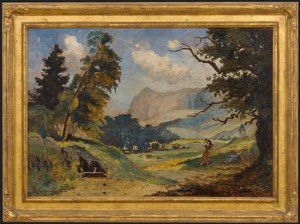
Ed Ruscha tells Viet-Nu Nguyen and Leta Grzan how he first encountered Louis Michel Eilshemius’s paintings, which of the artist’s aesthetic innovations captured his imagination, and how his own work relates to and differs from that of this “Neglected Marvel.”
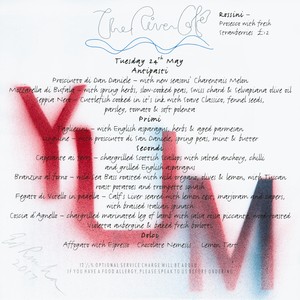
London’s River Café, a culinary mecca perched on a bend in the River Thames, celebrated its thirtieth anniversary in 2018. To celebrate this milestone and the publication of her cookbook River Café London, cofounder Ruth Rogers sat down with Derek Blasberg to discuss the famed restaurant’s allure.
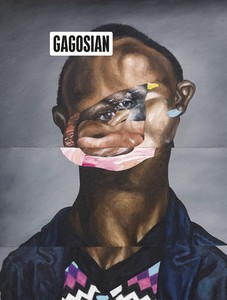
The Fall 2019 issue of Gagosian Quarterly is now available, featuring a detail from Sinking (2019) by Nathaniel Mary Quinn on its cover.
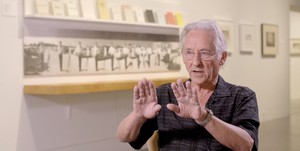
In conjunction with his exhibition VERY at Louisiana Museum of Modern Art in Humlebæk, Denmark, Ed Ruscha sat down with Kasper Bech Dyg to discuss his work.
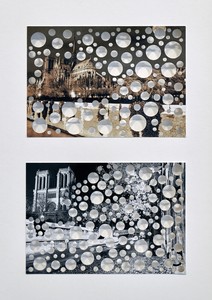
An exhibition at Gagosian, Paris, is raising funds to aid in the reconstruction of the Cathédrale Notre-Dame de Paris following the devastating fire of April 2019. Gagosian directors Serena Cattaneo Adorno and Jean-Olivier Després spoke to Jennifer Knox White about the generous response of artists and others, and what the restoration of this iconic structure means across the world.
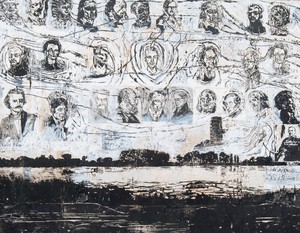
An exhibition at the Broad in Los Angeles prompts James Lawrence to examine how artists give shape and meaning to the passage of time, and how the passage of time shapes our evolving accounts of art.
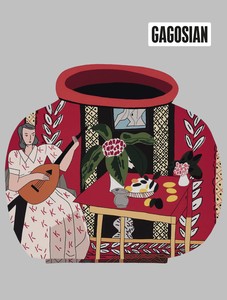
The Spring 2019 issue of Gagosian Quarterly is now available, featuring Red Pot with Lute Player #2 by Jonas Wood on its cover.
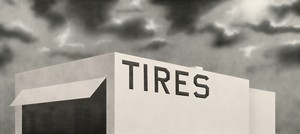
Ed Ruscha sat down with Tom McCarthy and Elizabeth Kornhauser, curator at the Metropolitan Museum of Art, to discuss the nineteenth-century artist Thomas Cole, whose Course of Empire paintings inspired a series of works by Ruscha more than a century later.
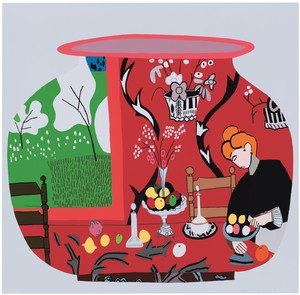
On the occasion of Jonas Wood’s first survey of prints, the artist spoke about the development of his printmaking practice and its influence on his paintings with legendary Los Angeles–based printmaker Jacob Samuel.
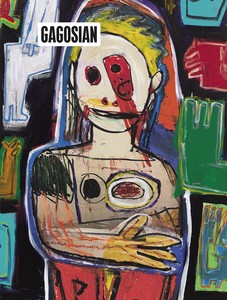
The Winter 2018 issue of Gagosian Quarterly is now available. Our cover this issue comes from High Times, a new body of work by Richard Prince.
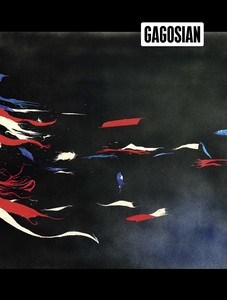
The Spring 2018 Gagosian Quarterly with a cover by Ed Ruscha is now available for order.