
Now available
Gagosian Quarterly Summer 2026
The Summer 2026 issue of Gagosian Quarterly is now available, featuring Ellen Gallagher’s Fast-Fish and Loose-Fish (2026) on the cover.
Exhibition
You’re only as young as the last time you changed your mind.
—Timothy Leary
Gagosian is pleased to present Broadcast: Alternate Meanings in Film and Video, an online exhibition of artists’ films and videos viewable exclusively on gagosian.com. The exhibition will be organized into a series of “chapters,” each lasting two weeks. The first chapter begins on Tuesday, May 19, 2020.
Broadcast: Alternate Meanings in Film and Video employs the innate immediacy of time-based art to spark reflection on the here and now, taking the words of famed psychologist and countercultural icon Timothy Leary as its starting point. In the midst of the political tumult of the late 1960s, Leary’s phrase “turn on, tune in, drop out” became a mantra for a generation defined by its upending of convention. In this exhibition, the slogan transcends its original link with the psychedelic experience to address the impulse to find alternative models for life and thought during times of crisis and uncertainty.
The featured works consider alternate meanings of Leary’s words under three distinct headings: “turn on” features films and videos that explore levels of self-awareness; “tune in” comprises works that investigate or dramatize interactions with the external world; and “drop out” describes artistic efforts to enact groundbreaking change.
Some of the featured video works present artistic ruminations on alternative forms of introspection. In Cutaways (2012), Taryn Simon appears to be a wayward test subject, staring silently at her interviewers on the Prime Time Russia news show when, in fact, the sequence was recorded as extra footage to finesse postproduction. Richard Serra’s Hand Catching Lead (1968) records the artist attempting to grasp—and thus modify—pieces of the metal dropped from above.
Other works in the exhibition approach their ostensible subjects through meditations on the moving image as document. To film Domestic (as long as it lasts) (2002), Douglas Gordon kicked a camera around his New York apartment. The resultant kinetic footage, in which the artist’s boot comes in and out of view, deteriorates gradually over the course of fourteen minutes until the camera fails. In Adam McEwen’s four-channel loop Escape from New York (2014) (named for the 1981 John Carpenter film), journeys through the city’s Lincoln, Holland, Battery, and Midtown Tunnels end abruptly as each car resurfaces beyond the island of Manhattan. And hinging on the contextual possibilities and oddities of television is Chris Burden’s The TV Commercials 1973–77 (1973–77): in the mid-1970s, Burden aimed to break the medium’s “omnipotent stranglehold of the airwaves” by purchasing commercial spots, which he used to air footage ranging from recordings of his own performance works to sequences that toy with the platform’s characteristic qualities.
Adam McEwen’s Escape from New York is currently installed in the storefront windows of Gagosian Park & 75 in New York.
The exhibition will include works by Chris Burden, Rachel Feinstein, William Forsythe, Theaster Gates, Piero Golia, Douglas Gordon, Damien Hirst and Angus Fairhurst, Carsten Höller, Harmony Korine, Vera Lutter, Man Ray, Adam McEwen, Nam June Paik, Steven Parrino, Sterling Ruby, Ed Ruscha, Richard Serra, Taryn Simon, and others.
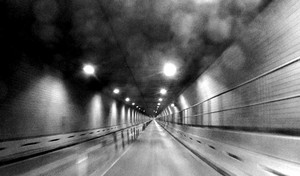
Adam McEwen, Escape from New York, 2014 (still from “Battery Tunnel”) © Adam McEwen
Adam McEwen, Escape from New York, 2014 (still from “Battery Tunnel”) © Adam McEwen
The Summer 2026 issue of Gagosian Quarterly is now available, featuring Ellen Gallagher’s Fast-Fish and Loose-Fish (2026) on the cover.

In this video, Jenny Saville sits down inside her first major exhibition in Venice to discuss how the great Venetian artists of the past and the city’s heritage influence her work. The show brings together more than thirty canvases and works on paper from the 1990s to the present, tracing the development of her practice, which is deeply rooted in the history of painting.

Francis Bacon lived and worked in Paris for a decade starting in the mid-1970s. The city and the art he encountered there provided a profound backdrop for his austere late style, which often brings together smooth, colorful backgrounds, spare architectural signifiers, and sculptural human forms. Here, three striking paintings from that period are considered by Sebastian Smee.
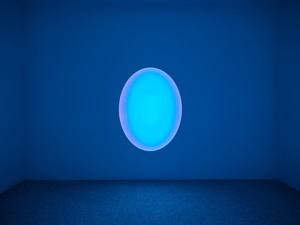
An exhibition at Gagosian, Hong Kong, brings together three of James Turrell’s Glasswork pieces along with site plans, photographs, and models of his Skyspaces and Roden Crater. Here, Alice Godwin explores the history of the Glassworks and their relationship to the artist’s wider practice.

Janne Sirén considers Anselm Kiefer’s new paintings, the subject of an exhibition at Gagosian, New York, entitled Seal My Ears Shut and I Shall Hear You Still.

On April 16, the Institute of Contemporary Art, Boston, opened the first midcareer survey of Derrick Adams’s multidisciplinary practice. Covering over twenty years of work, the exhibition, titled View Master, brings together the artist’s painting, sculpture, collage, performance, and video, as well as a vibrant new commission created for the museum’s façade. Ahead of the opening, Adams met with Tessa Bachi Haas, cocurator of the survey, to discuss his formative experiences with television, the impact of his work in arts education on his practice, and the importance of taking a more complex, more joyful, and more expansive approach to Black American life and culture.

Adam D. Weinberg has been working with Giuseppe Penone on an exhibition of the artist’s new sculptures, The Reflection of Bronze, that opens at Gagosian, New York, on April 22. The works explore the character and possibilities of bronze. Here, Weinberg considers Penone’s enduring engagement with the alloy and addresses the conceptual underpinnings of the exhibition’s three-room structure.

On March 28, a major exhibition of Jenny Saville’s work opened at Ca’ Pesaro–Galleria Internazionale d’Arte Moderna in Venice, bringing together nearly thirty paintings from the 1990s to the present. The exhibition is curated by Elisabetta Barisoni, head of the museums division at Venice’s Ca’ Pesaro, Museo Fortuny, and head of MUVE in Mestre. Saville’s monumental canvases are set in dialogue with the great Venetian artists of the past, creating a unique encounter between contemporary painting and the city’s artistic heritage. Here, the artist speaks with Stefania Ventra, professor with Ca’ Foscari University of Venice, about her early trips to Venice, the radicality of Titian’s painting, and depicting emotional truth.

Jeff Koons tells Alison McDonald about his appreciation for the pioneering artist and thinker Marcel Duchamp.
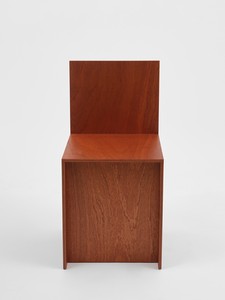
From their respective fields, three international cultural figures—artist and designer Ronan Bouroullec, fashion visionary Michèle Lamy, and chef and restaurateur Enrique Olvera—reflect on Donald Judd’s work in furniture, the subject of recent exhibitions in South Korea and Japan.
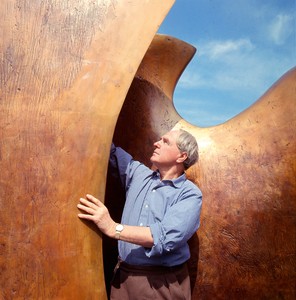
Laura Bruni writes about a major exhibition celebrating the work of the British sculptor Henry Moore at the Royal Botanic Gardens, Kew, London.
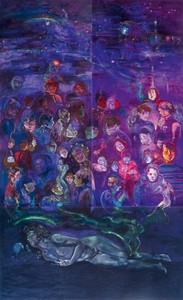
The most recent edition of Picture Books, an imprint organized by Emma Cline and Gagosian, pairs Mary Gaitskill’s novella STAUF: A Tragedy with Jill Mulleady’s painting The Shift. In celebration of this forthcoming publication, Gaitskill and Mulleady discuss the myth of Faust, good and evil in the digital age, and the channeling of raw matter into art.