Costume design duo Reid Bartelme and Harriet Jung speak with playwright Jackie Sibblies Drury about building the world of Illinoise, a musical based on the Sufjan Stevens album Illinois (2005) with choreography by Justin Peck. Having premiered at Bard College’s Fisher Center in 2023, in 2024 Illinoise had runs in Manhattan, at the Park Avenue Armory and on Broadway. Bartelme, Jung, and Drury also discuss designing for the stage versus the fashion runway, a Britney Spears Halloween costume, and a new project for Alvin Ailey that will debut this winter.
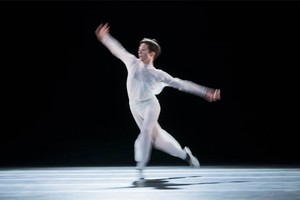
I was waiting for the echo of a better day (2021), choreographed by Pam Tanowitz, Fisher Center, New York, 2021. Photo: Maria Baranova
I was waiting for the echo of a better day (2021), choreographed by Pam Tanowitz, Fisher Center, New York, 2021. Photo: Maria Baranova
Reid Bartelme and Harriet Jung met in 2009 while pursuing fashion design degrees at the Fashion Institute of Technology, New York. They started designing collaboratively in 2011 and have focused their practice primarily on costuming dance. They work often with Justin Peck, Pam Tanowitz, and Kyle Abraham, and have devised costume-centric performances for commissions from the Museum of Art and Design and the Solomon R. Guggenheim Museum, New York. They made their Broadway design debut in 2023 with Bob Fosse’s Dancin’ and in 2024 designed Peck’s Broadway musical Illinoise. Jung and Bartelme have completed research fellowships at the Center for Ballet and the Arts at New York University and the New York Public Library for the Performing Arts.
Jackie Sibblies Drury is a Brooklyn-based playwright. Most recently she worked on Illinoise with Justin Peck, based on the album by Sufjan Stevens. Her plays include Marys Seacole (Obie Award), Fairview (Pulitzer Prize, Susan Smith Blackburn Prize), Really, Social Creatures, and We Are Proud to Present a Presentation. . . . Presenters of her plays include Soho Rep, Donmar Warehouse, the Young Vic, LCT3, New York City Players, Abrons Arts Center, and T: The New York Times Style Magazine.
Reid BartelmeJackie, I thought about you today, because I was thinking about a dilemma that Harriet and I encounter. I went back and saw Illinoise on Monday for the last time.
Jackie Sibblies DruryI can’t believe it’s the last week!
RBI know! I was thinking about what happens during our design processes—and it happened during Illinoise—which is where you get to know who a particular character’s going to be, you think hard about what their costume will be, you bring together all these clothes to try, but then the outfit that the performer walks into the room wearing inevitably is the best-looking. And you think, “Why do we even bother?” So much inspiration for us comes from seeing what performers have in their closets, what their regular clothes are, and then trying to achieve that level of “lived-in” that’s nearly impossible to achieve for the stage. And I was thinking, I wonder if Jackie encounters that when she hears conversations people are having, and thinks, Is that something I can achieve in my writing?
JSDOne hundred percent. But when playwrights or screenwriters try too hard to capture dialogue that doesn’t sound “written,” that false tone just sticks out immediately. Whenever there’s a line in a TV show or something that’s like, “You know, the thing about plants is that they’re always going to grow,” that cadence irks me, because it sounds so prescribed.
In terms of your work, at some point I was standing next to Harriet and you were trying on different things for the cast member Tanner Porter. I was like, “Wow, I didn’t even realize she was in her costume.” The difficulty of trying to make someone seem natural in costume—could you say more about how you two approach that? Is it just a gut feeling, or is there more of a process to it that you’ve developed over time?
Harriet JungThere is something instinctual for me. I gravitate toward a particular color or fabric or shape of a garment, and something tells me I want to try it on this person. And then when I see it, I’ll know, “That’s it.” But there’s also a good amount of forethought. As Reid pointed out, when it comes to more theatrical shows like Illinoise, and even in pure modern dance and ballet, we look at how performers dress themselves. They have a sense of their own bodies, they’ve lived in their bodies the longest, and generally they know what looks good on them. But I will say, if you really let everyone go on stage in what they want to wear, it won’t look good [laughs].
JSDMadness.
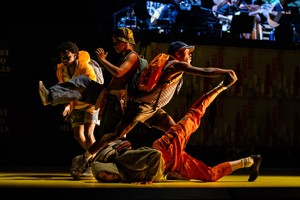
Illinoise (2023), directed and choreographed by Justin Peck, book by Justin Peck and Jackie Sibblies Drury. Photo: Maria Baronova
HJThis is where we come in. Our job is to be like, “How do we achieve that worn-in, this-is-me look, but also create this cohesive, larger environment?” And that’s where we’re thinking about color balance, fit balance, and all of that.
Jackie, Illinoise was the first dance-centered piece you worked on, correct?
JSDIt’s certainly the most in-depth experience I’ve ever had with a dance-centered piece.
HJHow was that? What was that experience like and how different was it from your normal way of working, writing words for people to say?
JSDI worked with the choreographer Nichole Canuso, who has a company in Philadelphia—she did this piece [The Garden, 2013] that involved audience participation and I wrote text for her for that. But my very first ballet class was when I did warm-ups with the Illinoise folks a couple of weeks ago. I think I’m still sore, just holding onto the barre and stepping, I’d never done that before. But I’ve always loved the art form—there’s something so emotional about it. As a person who doesn’t have any physical articulateness, people who are able to have that amount of control over themselves, to make it look like they’re in different environments almost, I find it so miraculous and moving.
There is something instinctual for me. I gravitate toward a particular color or fabric or shape of a garment, and something tells me I want to try it on this person.
Harriet Jung
There can be something that feels limiting about text. It often has to mean one thing, and it has to be clearly conveyed from one person to another person. Even though Illinoise is a narrative dance piece, there was so much about it that felt flexible and fungible, and that was exciting. We didn’t have to answer definitively, I don’t know, “Is this character closeted? Does he know what his sexuality is? Is there a relationship between him and another character that’s unrequited, or is it unconsummated?” There’s flexibility for all these things to shift and be true, and that doesn’t mess up the story of it. That feels closer to the way life is: even though we all have identities, they’re always shifting slightly based on what our context is.
RBI think we forget how rare it is to have that kind of space inside a physicalized art, where “What does this mean?”—when the medium is human bodies—can be answered in many ways.
JSDI know that you both also have fashion training. How do costuming and fashion relate for you? Is there an overlap between those worlds, or do they feel very separate?
HJConceptually, you would think they should have a lot of overlap, but working in theater, and starting to work on Broadway in particular, made me see that costume-design education and fashion-design education are actually quite distinct.
RBThinking back ten, twelve years ago, when we were in fashion school together at FIT [the Fashion Institute of Technology, New York], I was really following contemporary fashion shows because all the students were so invested in what popular designers of the time were doing. When we’re involved in design processes now, I occasionally think back to that time, and I wonder when I stopped valuing fashion culture as much. I think inspiration comes from a different kind of research at this point in my life, and “fashion” has become just one facet of what’s going on in the process. When I look at runway shows now, I’m reminded what that kind of financial support and connections to celebrity culture can achieve aesthetically. I still look at them to check in with what’s going on in fashion, and sometimes find myself swept up in the glamour, but I don’t necessarily feel a sense of wanting to be involved with it the way I did in school.
JSDI don’t know very much about fashion, but I’m intrigued by the things that go viral or that are more theatrical. There was a Rick Owens show a decade or so ago, where they used dancers and nontraditional models, that got my attention. There seems to be something similar about designing for a fashion runway—thinking about how a fabric moves—and your approach to work for the stage, but maybe it’s not that way in practice?
RBI would just say that a fashion show is such a controlled environment, and it’s so brief, so there’s a lot of range in terms of what’s feasible. Harriet and I are always thinking about, How is this going to survive extreme movement, how is this going to survive over a period of time, how is it going to be useful to a company and not have to be remade. Those just aren’t concerns in fashion design, so the container and the performance itself are quite different: in fashion shows, even if something isn’t particularly wearable, they make it so it’s wearable for those five minutes.
JSDI’m hearing that they’re opposite in a way.
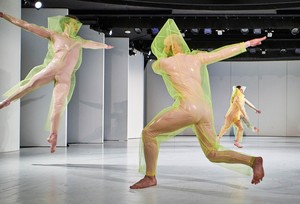
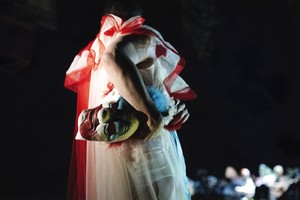
Works & Process (2018), created and directed by Reid & Harriet Design, choreographed by Burr Johnson, Solomon R. Guggenheim Museum, New York. Photo: Robert Altman
Illinoise (2023), directed and choreographed by Justin Peck, book by Justin Peck and Jackie Sibblies Drury. Photo: Maria Baronova
HJI don’t know if I would say “opposite,” because in fashion design—even though there are different requirements for durability, and different monetary incentives—at the end of the day, you still have to make something that someone can wear. Reid and I get asked about our approach all the time, and the short answer of it all is, it’s different for every single project. We’re working on a piece for Alvin Ailey [Many Angels, 2024], for example, and they tour a lot, so one of their main points was, “These costumes, whatever they are, better be able to be washed and dried and ready to go.” So that became a focus of our design this time around. Of course it still had to have our aesthetic, it had to have the fabrics we like, it had to make sense in the context of the choreography, the music, the set design. But we really tried to make the costumes washable and durable, because that’s the premise of this piece. And then sometimes we do pieces where there are only four performances, and we get to create more delicate costumes that will have a shorter life. So the answer is always, it just depends on who’s involved and what the project is, and also budget. We have so many puzzle pieces we have to think about while we’re trying to be creative, you know?
RBI also think that, especially in women’s wear, one desirable quality is ethereality, this kind of flowy, delicate, transparent thing that lends itself well to dance and movement. And we’re often trying to translate that into performance wear—how do you solve the challenges of taking this thing that’s not meant to be durable and make it durable? So over the years we’ve worked together, we’ve explored many different fabrics and fabrications and ways of creating space between the body and the garment so there isn’t pressure on the seams. It’s definitely informed our aesthetic and our practice. Obviously there was a lot of failure initially, making things that just fell apart as people danced in them, but nowadays it’s too tiring to do that [laughs].
JSDHearing you say “there has to be space so you’re not putting pressure on seams,” you’re thinking about body—I can’t even call it clothing—body fabric in a completely different way than I ever have.
RBBody fabric. I’m writing that down.
JSDYou’re welcome. When you write a book about your career: Body Fabric.
RBThat’s the title.
HJBody fabric. Wait, Jackie, did you know there’s a dance-wear brand called Body Wrappers [laughter]?
JSDThat’s delightful.
Can you tell me more about your work for the Alvin Ailey piece? That’s very cool.
RBYes, it’s our first time designing a dance for them. Lar Lubovitch, a choreographer I used to dance for, is making a work for five dancers in the Ailey company, and it seems to be a reflection on heaven a little bit—angels, the sky. When he approached us he brought these images of the sky and clouds. Out of a few options he went with one that’s particularly heavenly, with pink and gold and sunrays setting in the clouds—that’s going to be printed on a giant plastic scrim that can be lit from behind. So that’s what we were working with when we received the Ailey assignment. We’re going typical Reid-and-Harriet style, if there is one, which is sheer.
HJYes, angels, sheer, over a classic stretch biketard situation.
RBMetallic, so you get reflective underneath a net jumpsuit.
JSDDo you also feel like material scientists at this point? You have to know not only how the costumes will move, but also how they’ll interact with the backdrop, the light, the space. Do you make your own fabrics?
RBNo, but sometimes we have fabrics printed, or we paint fabrics, so we manipulate them to become different fabrics. Actually the fabric we’re trying to use as the underlayers for Lubovich’s Ailey piece, we used it in a Pam Tanowitz piece a few years ago where we quilted it over foam, and we turned it into a whole other Moncler-type fabric. Puffy vest.
JSDI want to wear that.
RBLike a coat. It would be absolutely incredible. It would be luxe.
Many Angels (2024), choreographed by Lar Lubovitch for Alvin Ailey American Dance Theater. Photo: Paul Kolnik
It’s about creating inner logic, but one that isn’t obvious, so there can be moments of deviation to create a kind of poetry or a little bit of disorganization.
Reid Bartelme
JSDAll these people in their North Face whatever can’t even dream of a quilted foam vest.
RBMetallic quilted foam, the next new thing. I was actually touring China with the Lar Lubovitch dance company in, like, 2009, it was cold, and I remember people in China at the time wearing puffy coats that looked lacquered. Whatever fabric it was, it was so high gloss. Incredible. I haven’t really seen it much here.
JSDI’m dating myself, but that sounds like something in a Missy Elliott video, which I think was probably just a shiny plastic bag or something, but it looked cool [laughter].
HJThat’s an iconic look.
RBHarriet once wore that wet-look shiny-red Britney Spears jumpsuit from a video for Halloween, but made it out of vinyl.
HJI even did her hair—I got a wig.
JSDDid you feel powerful?
HJYes, to be in this crazy vinyl tight unitard and a long wig, it was fun.
RBIt was pretty perfect. It didn’t look like, “Oh, I made a Halloween costume of a Britney Spears costume.” It was like, “I have the jumpsuit.”
JSDYou should just wear that all the time. Although if I were a dancer coming into a fitting and you were dressed in a red wet look, I’d be so intimidated. I would just feel like, “I’ll wear whatever you want, it doesn’t matter.”
RBThat’s the next phase, Harriet, where we come in wearing absolutely absurd outfits to fittings so that people are scared. We actually take the opposite approach, of looking entirely unassuming in fittings [laughs].
HJRight, and then people are like, “Let me design it,” and we’re like, “Please don’t.”
JSDDoes that happen to you? A funny thing to me about working on Illinoise was learning that choreographers making dances don’t get notes the way theater people do. It made me realize that theater people get a lot of notes because people feel like creating narrative is really easy, because we all do it all the time. Does that happen to you a lot, where people are like, “Oh, I dress myself, I don’t leave my house naked, I know what clothes are, so I know how to do this just as well as you do”?
RBWhen you’re talking about getting notes for Illinoise, were they coming from the producers? Or who were you getting notes from—the dancers?
JSDNo, from producers.
RBOh right, okay. I guess normally when Justin is making dances, there isn’t a next person whose job it is to give feedback unless he’s asking for it. In the theater situation, the producers would be those people.
JSDProducers, artistic directors.
RBSo you were accustomed to that.
JSDVery much so. I was surprised we weren’t getting more, honestly. I like getting feedback, it’s always part of my process, but I just noticed that the notes weren’t ever, “Can we add another spin here?” They were like, “I don’t think the story is clear enough in this section,” not, “The jump should be on a different count.” But maybe that’s not the sort of feedback the producers offer.
RBI guess conventionally in the ballet-company environment there’s a culture of not interfering with the choreographer, but I don’t think it’s always been so. I think there have been situations like the Ballets Russes, when [Sergei] Diaghilev had the idea of pairing designers and choreographers with visual artists—there, everyone was getting notes from the director. Nowadays artistic directors’ jobs are to curate a season, but then give freedom to the choreographer. But we get notes all the time [laughs]. All the time.
HJThat’s true. For the New York City Ballet, the tech rehearsal might be what, Reid, two days?
RBTwo days.
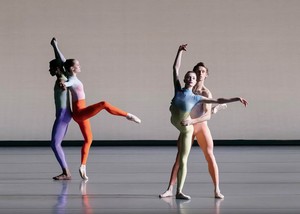
Law of Mosaics (2022), choreographed by Pam Tanowitz for New York City Ballet. Photo: Erin Baiano
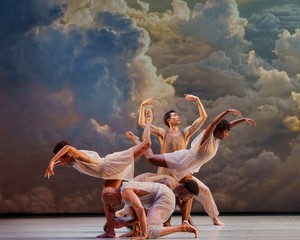
Watermark (2021), choreographed by Pam Tanowitz for the Australian Ballet. Photo: James Brickwood
HJSo you have two days to give notes. But on Broadway, for [the 2023 revival of Bob Fosse’s] Dancin’ [1978] I think they had a month to give us notes, you know?
RBYes. And not just, “Can that skirt be shorter?” It was, “Can all those costumes be different?” I mean, no [laughs].
JSDBut with that kind of a process, why even do any work before you start teching, if you’re going to have to change everything and you’re going to be working on it for an entire month?
RBIf the realities of production didn’t exist, that would be the best way to do it. You’d just go in when you’re actually in the space with the actual lights and the actual bodies, and then you’d let the clothes evolve organically. But there has to be this planning process, so that there’s time to build clothes, and that is a problem.
There can be something that feels limiting about text. It often has to mean one thing. . . . [In dance] there’s flexibility for all these things to shift and be true, and that doesn’t mess up the story of it. That feels closer to the way life is.
Jackie Sibblies Drury
HJA lot of times, directors and choreographers don’t really understand the hours it takes to make one shirt. Because we’re used to walking into Walmart and being like, “There are 100 shirts, pick one, buy it, who cares.” So there’s sometimes this disconnect.
RBThe dream scenario working in this multidisciplinary theater environment would be that we would have a team of production people who were with us the whole time and had access to all the machinery on-site. So even if tech had started and we’d roughed out clothes, everything would get finished and built and shifted in real time in the theater, so that the line of productivity would be clear and fast. That actually does exist in some opera houses in Europe, but it’s not possible here.
JSDThat would be so organic and satisfying.
RBThat’s the dream.
JSDYou’ve also melded your designs and personal style in such a way that I remember at one of the opening nights, [the dancer] Gaby [Diaz] wore a dress inspired by her character, which I thought was so cute. She’s now wearing things that fit her body the same way, because it feels celebratory and natural to her. You may have impacted her personal style going forward!
RBThat happens quite a lot, where performers don’t know about a certain shape of garment, and then they wear it enough that they’re like, “Oh, actually—now I’m feeling myself,” and they want to buy clothes that reflect that. That’s fun. We’ll start dressing you up, Jackie.
JSDI would want to be dressed as an Illinoise hiker, but maybe not as a dancer in Pam Tanowitz’s Day for Night, that performance that you guys just did at Little Island [in Manhattan]. I feel like that would be less natural for me.
RBWe wouldn’t want to change your style, Jackie.
HJI was actually going to say, I think you have really good personal style. I remember you wore this almost Western-themed button-up blouse, I don’t remember to which premiere, but it was so perfect and cute. Do you know what I’m talking about?
JSDI do. I think that was at Bard—still got it in the closet. Do you feel like you’re collaborating more with the dancers or the choreographers you work with, or are you also communicating between them?
HJThat’s a really great question, Jackie, because sometimes what the dancer wants and what the choreographer wants aren’t the same, and that’s when it gets really difficult, because we’re stuck in the middle. Sometimes the director or choreographer doesn’t like the look but the dancer is in love with it, and we want to make the dancer feel comfortable and good, so we’re like, “Oh my goodness, what do we do?”
Illinoise (2023), directed and choreographed by Justin Peck, book by Justin Peck and Jackie Sibblies Drury. Photo: Maria Baronova
RBYes. Psychological navigation is a huge part of our work.
JSDEspecially with dance pieces that are less narrative than Illinoise, where you’re creating something that’s almost sculptural, it must be hard to decide if something is correct or not. Or is it easier when narrative is removed?
RBNot easier, it just becomes a less story-driven question, as opposed to an aesthetic question. It’s about creating inner logic, but one that isn’t obvious, so there can be moments of deviation to create a kind of poetry or a little bit of disorganization. Harriet and I also have to navigate each other in fittings. Sometimes we know it’s great and we can both be like, “Yay!,” but other times I’m like, “I don’t know if Harriet likes this,” so I don’t say anything initially to avoid the two of us disagreeing in front of other people, because that gets strange for the client or the dancer, whomever.
HJBut we do sometimes [laughs].
RBOccasionally.
HJWe do. But our disagreement in fittings isn’t tense, it’s not like, “You’re wrong,” it’s more like, “Well, I like this one,” and Reid will say, “Actually I like this other one,” and we’ll decide, “Okay, we’ll sleep on it.”
RBYes.
JSDI think your relationship is more functional than most marriages.
HJThis is the longest relationship we’ve both had.
RBWe just keep making it work.
HJReid and I have financials together, we have so many things together.
RBYes. There are all these areas where our lives are enmeshed, but then there are very easy boundaries in terms of what we keep separate, which I think is good. We manage to have a lot of fun in the studio. When it’s just Harriet and me, we’re laughing.
Many Angels, Alvin Ailey American Dance Theater, New York City Center, New York, December 12, 2024–January 5, 2025
Reid Bartelme and Harriet Jung met in 2009 while pursuing fashion design degrees at the Fashion Institute of Technology, New York. They started designing collaboratively in 2011 and have focused their practice primarily on costuming dance. They work often with Justin Peck, Pam Tanowitz, and Kyle Abraham, and have devised costume-centric performances for commissions from the Museum of Art and Design and the Solomon R. Guggenheim Museum, New York. They made their Broadway design debut in 2023 with Bob Fosse’s Dancin’ and in 2024 designed Peck’s Broadway musical Illinoise. Jung and Bartelme have completed research fellowships at the Center for Ballet and the Arts at New York University and the New York Public Library for the Performing Arts.
Jackie Sibblies Drury is a Brooklyn-based playwright. Most recently she worked on Illinoise with Justin Peck, based on the album by Sufjan Stevens. Her plays include Marys Seacole (Obie Award), Fairview (Pulitzer Prize, Susan Smith Blackburn Prize), Really, Social Creatures, and We Are Proud to Present a Presentation. . . . Presenters of her plays include Soho Rep, Donmar Warehouse, the Young Vic, LCT3, New York City Players, Abrons Arts Center, and T: The New York Times Style Magazine.