July 22, 2015

Piotr UkLański
The Joy of
Photography

Sex and death, the crossroads of the human experience, make up the theme of Piotr Uklański’s double bill of exhibitions on photography at the Metropolitan Museum of Art. Text by Aaron Moulton.

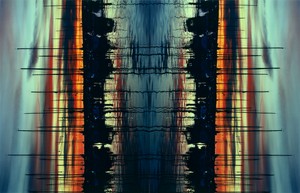
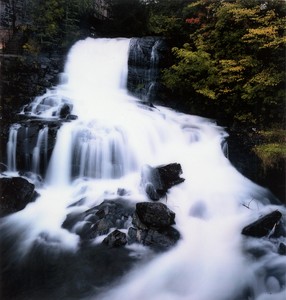
Piotr Uklański, Untitled (Waterfall), 2001, c-print mounted on aluminum under Plexiglas, 50 × 48 inches (127 × 121.9 cm)

Piotr Uklański, Untitled (Waterfall), 2001, c-print mounted on aluminum under Plexiglas, 50 × 48 inches (127 × 121.9 cm)

Piotr Uklański, Untitled (Waterfall), 2001, c-print mounted on aluminum under Plexiglas, 50 × 48 inches (127 × 121.9 cm)

Piotr Uklański’s artistic terrain is a quasi-ethnographic exploration of the materials associated with craft, folk, and visual culture. Known for his artisanal and meticulously handmade approach to aesthetics, materials such as ceramics, fiber art, embroidery, construction paper, and ink and crayons all come together to form alternative avenues to painting. Every undertaking, every medium, and every technique is given a meta-treatment—Uklański uses medium as genre. In his varied bodies of work, the viewer is shown a thorough and generous taxonomy, like a pantone sample of all outcomes that the selected medium can accomplish in true-to-form fidelity. The presence of the artist’s hand remains spectral, seemingly mass-produced.

In the Metropolitan Museum of Art’s newly opened exhibition entitled Piotr Uklański: Fatal Attraction the artist uses the medium of photography as agent. Sex and death, different poles of the human experience, pervade the survey that covers two decades of the artist’s extensive foray into photography. The show includes an artist-curated selection of works from the Met’s own collection. Framing works through technical and cultural contexts, Uklański’s image-making practice demonstrates both a promiscuous theft of the pre-existing, and the mythological ability of the medium of photography to capture the subject’s essence.

Piotr Uklański, Untitled (Solidarność), 2007, inkjet on cotton, overall: 150 × 240 inches (381 × 609.6 cm)

A series entitled The Joy of Photography, the title of which refers to a publication from the company Eastman Kodak, acts as a conceptual pivot for the artist’s interest in photography. The original publication served as an introduction to the technical practice of photography for many artists and amateur photographers—the book was a technical bible for a generation. A pantheon of photographers, from Magnum to mainstream fashion analyzed iconic compositions, revealed their secrets and offered methods for alchemical manipulation.

Looking at the exhibition these hallmarks and technical exercises appear in an exact rendering, creating a confused sense of authorship. Images like Untitled (Waterfall) or Untitled (Flowers) have a generic anonymity and seem like found inventory from the art gallery in the local mall. Nature and cityscapes explore high contrast plays with light, reflection and shadow, whereas other imagery moves towards an ethereal blur, presenting colorfully out-of-focus puddles of flora. The humor is dry; Uklański is proving his deft capability with the camera, having taken the tutorial to a literal and structuralist extreme. Like a catalogue of possible aesthetic identities, The Joy of Photography gave artists avenues and techniques to develop personal style: Uklański chose all of them.

Piotr Uklański, Untitled (Inga Rubenstein), 2010, c-print, 55 ½ × 36 ½ inches (140.9 × 92.7 cm)

In this sense, his practice has always circled the building blocks of visual literacy and its varied typologies. The grouping pulled from the Met’s collection runs the gamut of timeless tropes of looking and being looked at, from keyhole to casting couch, cradle to casket. While demonstrating layers of photographic history located within art, popular culture or in the medium itself, the artist even indexes his own heritage by including a ramshackle salon of images of Polish neo avant-garde art from the 1970s. Even for the avid contemporary art enthusiast, this parallel art history is a contrast to the highlights selected from the Met, and demonstrates an effort to collapse cultural vernacular into a how-to manual.

With framing and darkroom effects now a swipe and tap away, the overall project stands as a memento mori to the oedipal mentor of Eastman Kodak, and to photography as spirit medium. Uklański is disguised as an anthropological shutterbug, camouflaged in stock photography, a sublimation that reveals an empirical endgame of perfection, both storied and D.I.Y. Fatal Attraction is the artist’s own riff on the many possible deaths of the author to liberate the medium. Point and shoot.
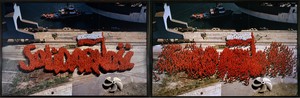
Piotr Uklański, Untitled (Boats), 2000, c-print, two panels, each: 40 × 32 ⅛ inches (101.6 × 81.6 cm)

Artwork © Piotr Uklański

Alex Israel: Upside Down

Alex Israel: Upside Down

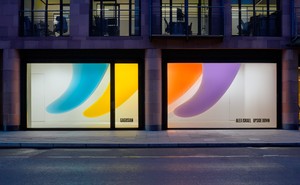
Ahead of Alex Israel’s exhibition of four new Fin sculptures at Gagosian, London, the artist spoke with Susan Casey, author of The Wave: In Pursuit of the Rogues, Freaks, and Giants of the Ocean (2010), about the ocean, surfing, and Los Angeles.

Simon Hantaï: The Paradox of the “last studio”

Simon Hantaï: The Paradox of the “last studio”

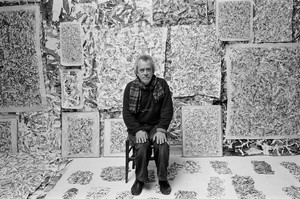
On July 9, Simon Hantaï: the last studio opens at Gagosian, Gstaad. Curated by Anne Baldassari, the show comprises sixteen of the artist’s dernier atelier (last studio) paintings of 1982–85. The exhibition is accompanied by an illustrated catalogue, copublished by Gagosian and Skira, which features an essay by Baldassari and an extensive portfolio of previously unpublished photographs by Édouard Boubat. Here, we share the introductory chapter from the publication.

Giuseppe Penone: The Reflection of Bronze

Giuseppe Penone: The Reflection of Bronze

Adam D. Weinberg has been working with Giuseppe Penone on an exhibition of the artist’s new sculptures, The Reflection of Bronze, that opens at Gagosian, New York, on April 22. The works explore the character and possibilities of bronze. Here, Weinberg considers Penone’s enduring engagement with the alloy and addresses the conceptual underpinnings of the exhibition’s three-room structure.

Henry Moore: Monumental Nature

Henry Moore: Monumental Nature

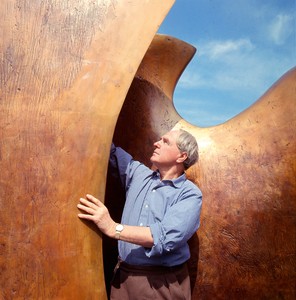
Laura Bruni writes about a major exhibition celebrating the work of the British sculptor Henry Moore at the Royal Botanic Gardens, Kew, London.

Georg Baselitz and the Possibilities of Print

Georg Baselitz and the Possibilities of Print

On the occasion of Baselitz: AVANTI! at the Museo Novecento in Florence, Italy, Holly EJ Black considers the roots and reverberations of Georg Baselitz’s printmaking.

Portrait of the Artist as a Young Choreographer: Emily Coates Dances Early Balanchine

Portrait of the Artist as a Young Choreographer: Emily Coates Dances Early Balanchine

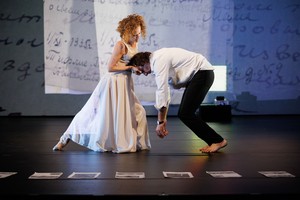
Mark Franko considers how Emily Coates resurrects the spirit of George Balanchine’s American beginnings through archival research, spoken dialogue, and movement in her performance Tell Me Where It Comes From.

Savor “The Moment”

Savor “The Moment”

Carlos Valladares wades through the discourse around the musician and actress Charli XCX’s mockumentary, guiding us through its myriad references, from the Spice Girls to Andy Warhol.

Donald Judd: Patiently Constructed

Donald Judd: Patiently Constructed

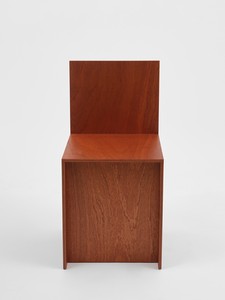
From the perspectives of their respective fields, three international cultural figures—artist and designer Ronan Bouroullec, fashion visionary Michèle Lamy, and chef and restaurateur Enrique Olvera—reflect on Donald Judd’s work in furniture, the subject of recent exhibitions in South Korea and Japan.

Divine Emanations: Nymphs, Poets, and the Painter’s Palette

Divine Emanations: Nymphs, Poets, and the Painter’s Palette

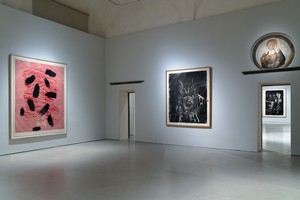
Janne Sirén considers Anselm Kiefer’s new paintings, the subject of an exhibition at Gagosian, New York, entitled Seal My Ears Shut and I Shall Hear You Still.

Francesca Woodman: Brushing with Infinity

Francesca Woodman: Brushing with Infinity

On the occasion of the exhibition Francesca Woodman: Lately I Find a Sliver of Mirror Is Simply to Slice an Eyelid at Gagosian, Rome, Alyce Mahon explores the artist’s engagements and affinities with Surrealism, from the writings of André Breton to the photographs of Hans Bellmer. Mahon focuses on the time Woodman spent in Rome while she was a student at the Rhode Island School of Design.

Francis Bacon: Reinventing Realism

Francis Bacon: Reinventing Realism

Francis Bacon lived and worked in Paris for a decade starting in the mid-1970s. The city and the art he encountered there provided a profound backdrop for his austere late style, which often brings together smooth, colorful backgrounds, spare architectural signifiers, and sculptural human forms. Here, three striking paintings from that period are considered by Sebastian Smee.

Ellen Gallagher: Submergent Visions

Ellen Gallagher: Submergent Visions

Sharad Chari reflects on a recent visit to Ellen Gallagher’s studio in Rotterdam, Netherlands, thinking through the artist’s intertextual interrogation of the oceanic and the ways in which her practice is informed by a wider Black intellectual and artistic world, an abiding interest in Herman Melville’s Moby-Dick, and the imperatives that surround this studio by the Port of Rotterdam.