
A Tremendous Generosity: Jeff Koons on Marcel Duchamp
Jeff Koons tells Alison McDonald about his appreciation for the pioneering artist and thinker Marcel Duchamp.
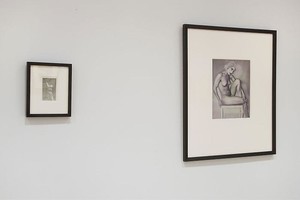
Installation view
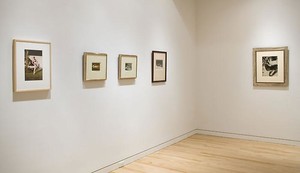
Installation view
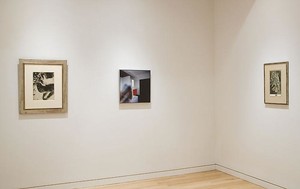
Installation view
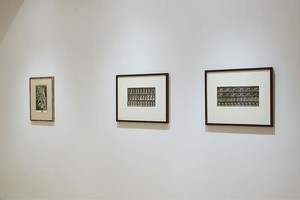
Installation view
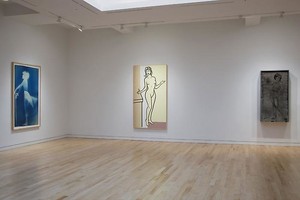
Installation view
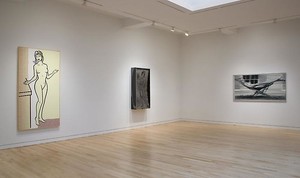
Installation view
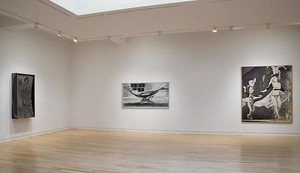
Installation view
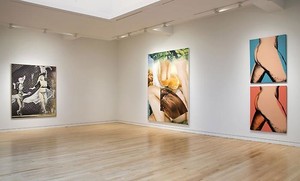
Installation view
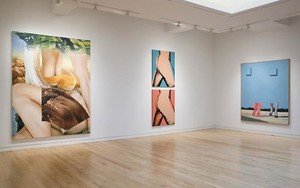
Installation view
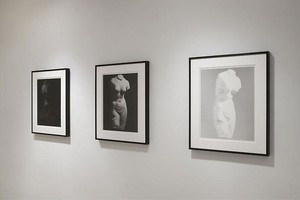
Installation view
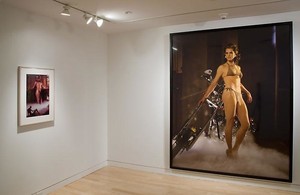
Installation view
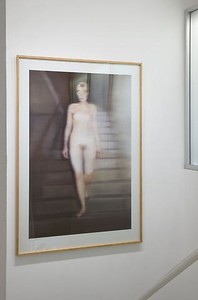
Installation view
Installation video
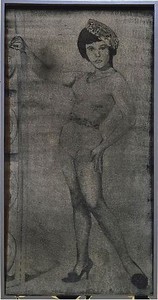
Richard Artschwager
Mirror Painting, 1962
Acrylic on Celotex, Formica, and wood, 60 × 31 inches (152.4 × 78.7 cm)
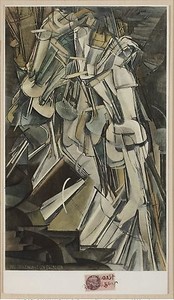
Marcel Duchamp
Nude Descending a Staircase, 1912
Print, 13 ⅝ × 7 ¾ inches (34.6 × 19.7 cm)
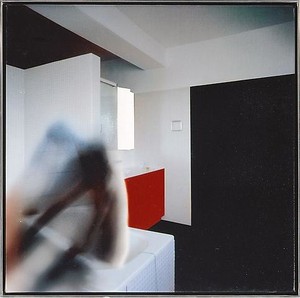
Richard Hamilton
Bathroom - fig. 1, 1997
Oil on Cibachrome print on canvas, 19 ¾ × 19 ¾ inches (50 × 50 cm)
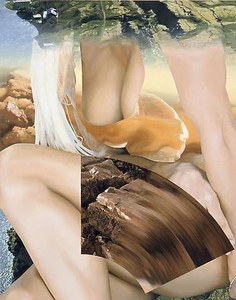
Jeff Koons
Pam, 2001
Oil on canvas, 108 × 84 inches (274.3 × 213.4 cm)
© Jeff Koons
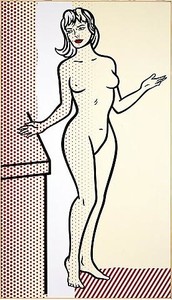
Roy Lichtenstein
Nude, 1997
Oil and Magna on canvas, 82 ½ × 45 inches (209.6 × 114.3 cm)
© Estate of Roy Lichtenstein
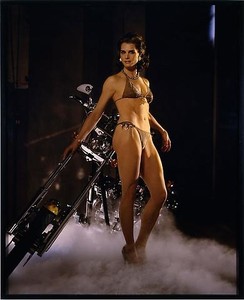
Richard Prince
Spiritual America 4, 2005
Ektacolor photograph, 90 ½ × 72 inches (229.9 × 182.9 cm), edition of 6
© Richard Prince
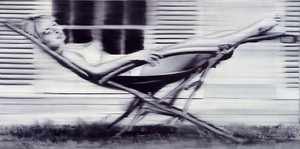
Gerhard Richter
Deck Chair II, 1965
Oil on canvas, 39 ¼ × 78 ⅜ inches (99.7 × 199.1 cm)
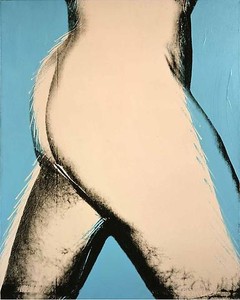
Andy Warhol
Walking Torso, 1977
Synthetic polymer paint and silkscreen ink on canvas, 50 × 40 ⅛ inches (127 × 101.9 cm)
© Andy Warhol Foundation for the Visual Arts/Artists Rights Society (ARS), New York
Gagosian is pleased to present Go Figure.
Artists include: Richard Artschwager, Marcel Duchamp, Richard Hamilton, Jeff Koons, Roy Lichtenstein, Robert Mapplethorpe, László Moholy-Nagy, Carlo Mollino, Eadweard Muybridge, Sigmar Polke, Richard Prince, Man Ray, Gerhard Richter, James Rosenquist, Andy Warhol
Jeff Koons tells Alison McDonald about his appreciation for the pioneering artist and thinker Marcel Duchamp.

Helter Skelter—an exhibition at Fondazione Prada’s Venetian venue, Ca’ Corner della Regina—marks the first creative dialogue between two visionaries of American art, Arthur Jafa and Richard Prince. The show explores the grit, grift, violence, and ingenuity of American culture through more than fifty works, including photography, video, and large-scale installations that interrogate themes of race, gender, media, and politics. In the interview below, Nancy Spector, the exhibition’s curator, speaks about the shared motifs—from apocalyptic sunsets to a fascination with “monstrosity”—that led her to pair these artists for the first time.

The Spring 2026 issue of Gagosian Quarterly is now available, featuring Marcel Duchamp’s L.H.O.O.Q. (1964) on the cover.
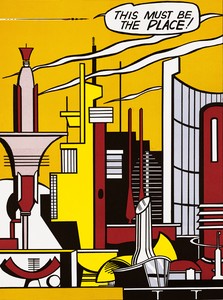
Avis Berman’s biography of Roy Lichtenstein, Becoming Roy Lichtenstein: The Path to Pop, will be published this fall by Abbeville Press, aligning with a major retrospective at the Whitney Museum of American Art, New York, in October. For the Quarterly she has adapted part of her text to focus on the artist’s formative experiences in New York in the 1920s and ’30s.

Stella McCartney’s new limited-edition capsule collection made in collaboration with Jeff Koons launched in January 2026. Blending the two creators’ singular visions, the collection, which was first seen in McCartney’s Winter 2025 runway show, features a wide array of garments and accessories printed with artworks by Koons and slogans by McCartney. The collaboration continues the pair’s long-standing creative partnership, which has previously included jewelry, prints, and charitable initiatives. At the unveiling in New York, Koons met with Derek C. Blasberg to reflect on the collaboration, the importance of caring and community, and meeting Salvador Dalí when he was nineteen years old.

The Winter 2025 issue of Gagosian Quarterly is now available, featuring Jeff Koons’s Kissing Lovers (2016–25) on the cover.
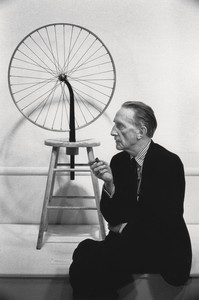
Don Quaintance’s new book Duchamp in California: Walter Hopps Curates a Retrospective (Menil Collection/König, 2025) details the rich history of the Pasadena Art Museum and the consequential Marcel Duchamp retrospective that Walter Hopps curated there in 1963. Here Quaintance gives the backstory to the monograph and shares an excerpt from the book’s fourth chapter.

With an exhibition of all-new work at Gagosian, New York, in November, Jeff Koons met with Alison McDonald at his New York studio to discuss the processes, inspirations, and metaphysical underpinnings of his latest sculptures and paintings.

The Fall 2025 issue of Gagosian Quarterly is now available, featuring Andy Warhol’s Blue Liz as Cleopatra (1962) on the cover.

Carlos Valladares tracks the artist’s engagements with Hollywood glamour, thinking through the ways in which the star system and its marketing engine informed his work.

Sydney Stutterheim traces the linkages and affinities between the work of Richard Prince and that of Bob Dylan. Using Prince’s Untitled (Dylan) as a starting point, she considers the artist’s enduring interest in questions of originality and authorship, as well as his sustained relationship with the worlds of American music and counterculture.
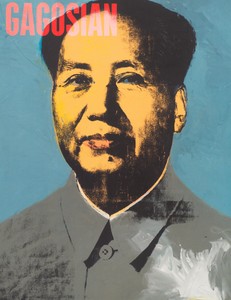
The Fall 2024 issue of Gagosian Quarterly is now available, featuring Andy Warhol’s Mao (1972) on the cover.

Jessica Beck examines Andy Warhol’s return to painting in the 1970s, focusing on the artist’s Mao series.
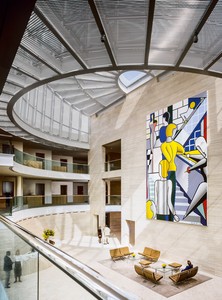
Michael Ovitz, cofounder of Creative Artists Agency (CAA), looks back to 1989, the year he and the architect I. M. Pei commissioned Roy Lichtenstein to create the Bauhaus Stairway Mural for the then new CAA Building in Los Angeles. Through the experience of working with Lichtenstein, Ovitz formed a meaningful friendship with the artist.
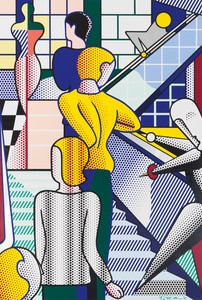
Alice Godwin and Alison McDonald explore the history of Roy Lichtenstein’s mural of 1989, contextualizing the work among the artist’s other mural projects and reaching back to its inspiration: the Bauhaus Stairway painting of 1932 by the German artist Oskar Schlemmer.
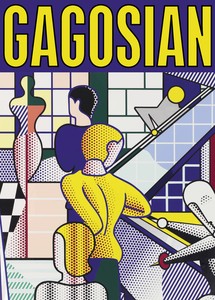
The Summer 2024 issue of Gagosian Quarterly is now available, featuring a detail of Roy Lichtenstein’s Bauhaus Stairway Mural (1989) on the cover.
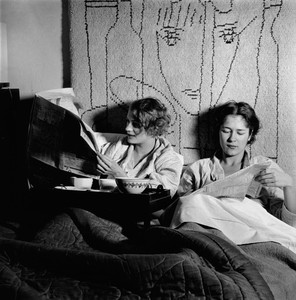
Lee Miller and Tanja Ramm’s friendship took them from New York to Paris and back, in front of and behind many cameras, and into the Surrealist avant-garde. Here, Gagosian director Richard Calvocoressi speaks with Ramm’s daughter, art historian Margit Rowell, about discovering her mother’s early life, her memories of Miller, and the collaborative work of photographers and models.

In celebration of the centenary of Roy Lichtenstein’s birth, Irving Blum and Dorothy Lichtenstein sat down to discuss the artist’s life and legacy, and the exhibition Lichtenstein Remembered curated by Blum at Gagosian, New York.
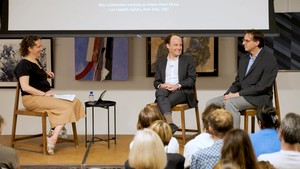
Gagosian and the Art Students League of New York hosted a conversation on Roy Lichtenstein with Daniel Belasco, executive director of the Al Held Foundation, and Scott Rothkopf, senior deputy director and chief curator of the Whitney Museum of American Art, New York. Organized in celebration of the centenary of the artist’s birth and moderated by Alison McDonald, chief creative officer at Gagosian, the discussion highlights multiple perspectives on Lichtenstein’s decades-long career, during which he helped originate the Pop art movement. The talk coincides with Lichtenstein Remembered, curated by Irving Blum and on view at Gagosian, New York, through October 21.
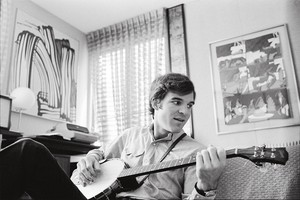
Actor and art collector Steve Martin reflects on the friendship and professional partnership between Roy Lichtenstein and art dealer Irving Blum.
