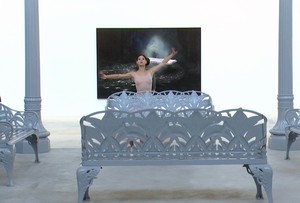
Le Jardin Décomposé
Choreographer Benjamin Pech’s danseur étoile, an original ballet composed for the group exhibition Le Jardin Décomposé.
Extended through February 28, 2015
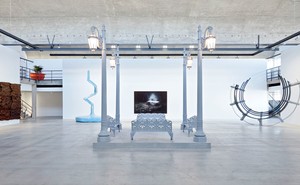
Installation view
Artwork, left to right: © Giuseppe Penone; © Richard Prince; © Archiv Franz West; © Chris Burden/Licensed by the Chris Burden Estate and Artists Rights Society (ARS), New York; © Dan Colen. Photo: Thomas Lannes
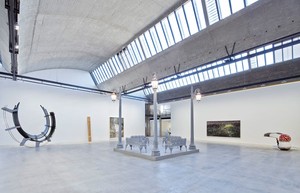
Installation view
Artwork, left to right: © Dan Colen; © Giuseppe Penone; © Jeff Koons; © Chris Burden/Licensed by the Chris Burden Estate and Artists Rights Society (ARS), New York; © Zeng Fanzhi; © Carsten Höller. Photo: Thomas Lannes
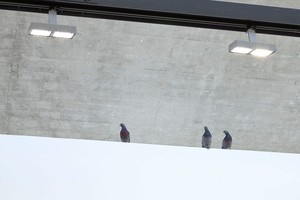
Installation view
Artwork © Maurizio Cattelan. Photo: Thomas Lannes
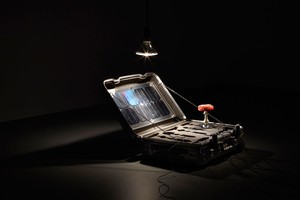
Installation view
Artwork © Carsten Höller. Photo: Thomas Lannes
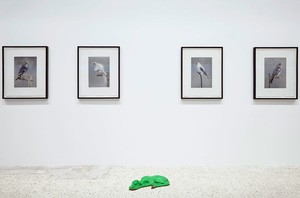
Installation view
Artwork © Carsten Höller. Photo: Thomas Lannes
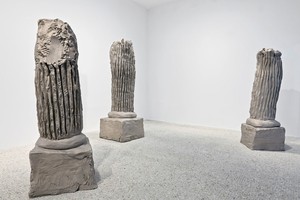
Installation view
Artwork © Urs Fischer. Photo: Thomas Lannes
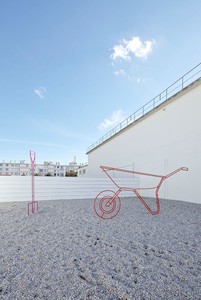
Installation view
Artwork © Michael Craig-Martin. Photo: Thomas Lannes
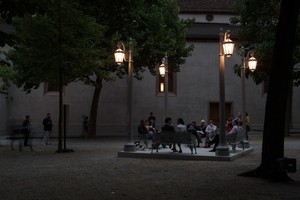
Chris Burden
Holmby Hills Light Folly, 2012
Mixed media, dimensions variable
© Chris Burden/Licensed by the Chris Burden Estate and Artists Rights Society (ARS), New York
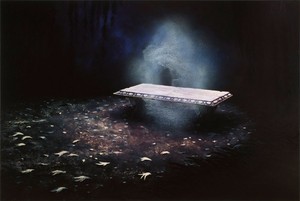
Dan Colen
An Allegory of Faith, 2008
Oil on canvas, 84 × 124 inches (213.4 × 315 cm)
© Dan Colen
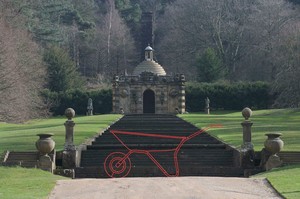
Michael Craig-Martin
Wheelbarrow (red), 2013
Powder-coated steel, 100 ⅜ × 192 ⅞ inches (255 × 490 cm), edition of 3
© Michael Craig-Martin
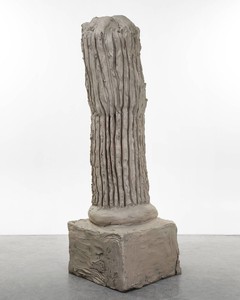
Urs Fischer
column one, 2014
Cast bronze, 74 × 25 × 24 inches (188 × 63.5 × 61 cm), edition of 2
© Urs Fischer. Photo: Melissa Christy
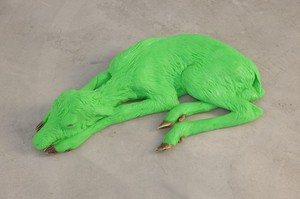
Carsten Höller
Reindeer, 2008
Epoxy resin, glass eyes, and horn, 3 ⅞ × 20 ½ × 11 inches (10 × 52 × 28 cm), edition of 5
© Carsten Höller. Photo: Josh White
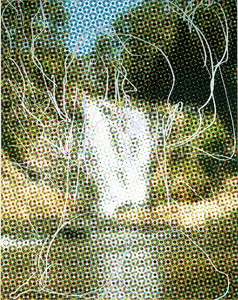
Jeff Koons
Waterfall Dots (Tree Rocks), 2008
Oil on canvas, 108 × 84 inches (274.3 × 213.4 cm)
© Jeff Koons
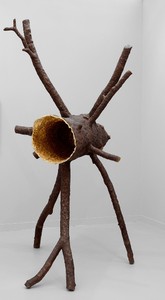
Giuseppe Penone
Spazio di luce, 2008
Bronze and gold, 104 × 68 ½ × 49 ¼ inches (264 × 174 × 125 cm)
© Giuseppe Penone
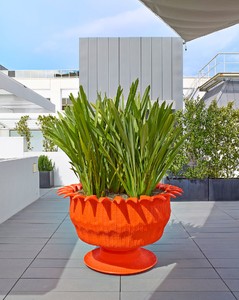
Richard Prince
Untitled (tire planter), 2007
Cast polyurethane, 40 × 68 × 68 inches (101.6 × 172.7 × 172.7 cm)
© Richard Prince. Photo: Douglas M. Parker Studio
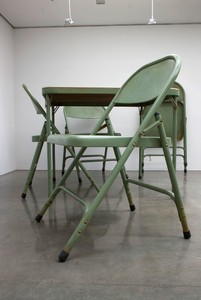
Robert Therrien
No title (Folding table and chairs, green), 2008
Painted metal and fabric, overall dimensions variable
© Robert Therrien/Artists Rights Society (ARS), New York
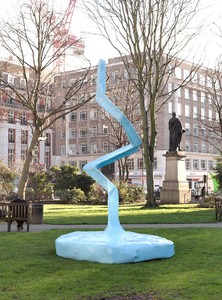
Franz West
Garden Pouf, 2010
Lacquered aluminum, 173 ¼ × 102 ⅜ × 88 ⅝ inches (439.9 × 260 × 225.1 cm)
© Archiv Franz West. Photo: Mike Bruce
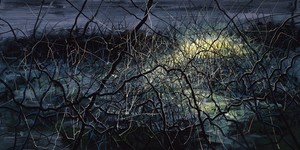
Zeng Fanzhi
Untitled, 2012
Oil on canvas, 78 ¾ × 157 ½ inches (200 × 400 cm)
© Zeng Fanzhi. Photo: Krause, Johansen
By nature the Third Landscape constitutes a territory for the multitude of species not finding place elsewhere.
—Gilles Clément
Gagosian Paris is pleased to present Le Jardin Décomposé / Decomposed Garden. The exhibition features works by Chris Burden, Maurizio Cattelan, Dan Colen, Michael Craig-Martin, Urs Fischer, Carsten Höller, Jeff Koons, Giuseppe Penone, Richard Prince, Robert Therrien, Franz West, and Zeng Fanzhi.
Comprising more than twenty monumental sculptures and paintings, Le Jardin Décomposé evokes an overlapping of city and nature, a place akin to botanist and writer Gilles Clément’s characterization of the Third Landscape as “the space left over by man to landscape evolution—to nature alone.” Clément places swamps, roadsides, railroad embankments, and other peripheral spaces within a category of “genetic reservoirs” where unattended plant life mixes with the urban environment and its detritus, sometimes to extraordinary effect. Works such as Richard Prince’s Untitled (tire planter) (2007), a bright-orange, tire-shaped vessel containing a tuft of weeds, and Carsten Höller’s Giant Triple Mushroom (2014), a mixed-media fungal hybrid created for this exhibition, allude to the gradual commingling that might take place in such forgotten terrain. Tenuously merging human and natural imagery in Waterfall Dots (Tree Rocks) (2008), Jeff Koons employs an oscillating visual field and anatomical overdrawing, revisiting Marcel Duchamp’s Étant donnés, where an idyllic landscape is the backdrop for a disturbing naked female body. In Holmby Hills Light Folly (2012), Chris Burden designates an incongruous yet inviting park square with cast-iron benches and lampposts.
In the Third Landscape, nature that has been displaced by industrial development adapts in improbable ways; replication and exaggeration of growth patterns lead to radiant dimensions. Giuseppe Penone’s Scrigno (Casket) (2007) is a patchwork mural of overlapping sections of weathered brown leather; moving around a living tree, he hammered the leather against it to impress the bark’s natural pattern and texture into the yielding membrane. Across the center of this vast work, which measures approximately fifteen meters wide, lies a small tree cast in bronze, split open to reveal its rich resin interior. Franz West’s bright-blue aluminum Garden Pouf (2010) is a treelike abstraction that zigzags more than four meters in the air, while in Zeng Fanzhi’s ominous landscape painting Untitled (2012), gnarled branches crisscross the lower registers of a nocturnal scene that combines controlled calligraphic techniques and supernatural light effects.
On October 25 at 2pm, dancers Raphaëlle Delaunay, Benjamin Pech, and Alice Renevand will perform an original ballet choreographed by Pech, étoile dancer at the Ballet de l’Opera National de Paris, to compositions by Claude Debussy, Antonio Vivaldi, and contemporary composer Emanuele De Raymondi.
Choreographer Benjamin Pech’s danseur étoile, an original ballet composed for the group exhibition Le Jardin Décomposé.
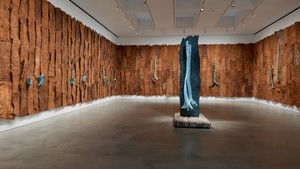
On the occasion of his exhibition The Reflection of Bronze at Gagosian, New York, Giuseppe Penone and curator Adam D. Weinberg sit down to discuss the genesis of, and their collaboration on, the show.

Adam D. Weinberg has been working with Giuseppe Penone on an exhibition of the artist’s new sculptures, The Reflection of Bronze, that opens at Gagosian, New York, on April 22. The works explore the character and possibilities of bronze. Here, Weinberg considers Penone’s enduring engagement with the alloy and addresses the conceptual underpinnings of the exhibition’s three-room structure.
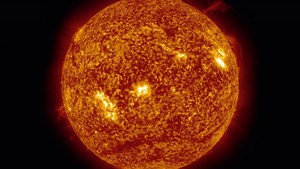
Helter Skelter—an exhibition at Fondazione Prada’s Venetian venue, Ca’ Corner della Regina—marks the first creative dialogue between two visionaries of American art, Arthur Jafa and Richard Prince. The show explores the grit, grift, violence, and ingenuity of American culture through more than fifty works, including photography, video, and large-scale installations that interrogate themes of race, gender, media, and politics. In the interview below, Nancy Spector, the exhibition’s curator, speaks about the shared motifs—from apocalyptic sunsets to a fascination with “monstrosity”—that led her to pair these artists for the first time.
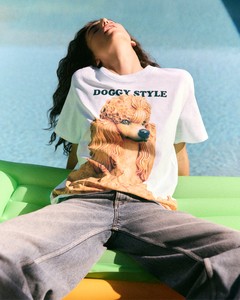
Stella McCartney’s new limited-edition capsule collection made in collaboration with Jeff Koons launched in January 2026. Blending the two creators’ singular visions, the collection, which was first seen in McCartney’s Winter 2025 runway show, features a wide array of garments and accessories printed with artworks by Koons and slogans by McCartney. The collaboration continues the pair’s long-standing creative partnership, which has previously included jewelry, prints, and charitable initiatives. At the unveiling in New York, Koons met with Derek C. Blasberg to reflect on the collaboration, the importance of caring and community, and meeting Salvador Dalí when he was nineteen years old.

The Winter 2025 issue of Gagosian Quarterly is now available, featuring Jeff Koons’s Kissing Lovers (2016–25) on the cover.

With an exhibition of all-new work at Gagosian, New York, in November, Jeff Koons met with Alison McDonald at his New York studio to discuss the processes, inspirations, and metaphysical underpinnings of his latest sculptures and paintings.

Tracking works by Chris Burden, Bruce Nauman, Maria Nordman, and Eric Orr as outliers and outcroppings of the California Light and Space movement, Michael Auping argues that darkness—the absence of light and space—is a key element of the aesthetic.

Sydney Stutterheim traces the linkages and affinities between the work of Richard Prince and that of Bob Dylan. Using Prince’s Untitled (Dylan) as a starting point, she considers the artist’s enduring interest in questions of originality and authorship, as well as his sustained relationship with the worlds of American music and counterculture.

Coinciding with an exhibition at Gagosian, London, of new work by Maurizio Cattelan, a new English translation of Francesco Bonami’s 2011 “autobiography” of the artist is being published by Gagosian. Here, we share an excerpt that recounts—or reimagines, shall we say—Cattelan’s childhood and decision to become an artist.

Bartolomeo Sala considers the brief yet revolutionary dreams of Arte Povera. On the occasion of a retrospective at the Bourse de Commerce, Paris, he explores the historical conditions that gave rise to the radical midcentury movement and the warnings we might glean today from its legacy.

As part of Art Basel Paris’s public programming, Gagosian presented a new large-scale sculpture by Carsten Höller at Place Vendôme. In this video, the artist sits down to discuss the genesis of the work, Giant Triple Mushroom (2024).

For the first time ever, the Robert Therrien Estate presents a collaborative exhibition in the artist’s Los Angeles studio. Sculptor Isabelle Albuquerque kicks off a series of shows that place noteworthy voices in dialogue with Therrien’s practice. Here, Albuquerque speaks with Dean Anes and Paul Cherwick from the estate about the collaboration.

Gagosian and Sadie Coles HQ hosted a conversation between Urs Fischer and film curator and writer Róisín Tapponi about fearless creativity and the artist’s most recent monograph, Urs Fischer: Monumental Sculpture.

Michael Craig-Martin’s sixty-year career is the subject of a retrospective at the Royal Academy of Arts, London, on view through December 10, 2024. Ahead of the exhibition’s opening, the artist met with his longtime friend, the novelist Colm Tóibín, to discuss his materials and the generative inquiries at the heart of his practice.

As American identity once again comes into question during a politically charged election cycle, the Quarterly revisits the motif of the American flag in art. Here, John B. Ravenal contextualizes Robert Lazzarini’s new wall-based flag sculptures and elucidates the tensions they lay bare in the symbol of our nation.
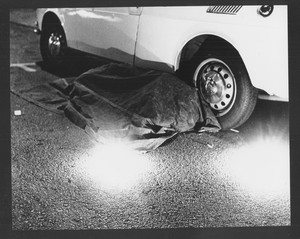
Sydney Stutterheim has published Artist, Audience, Accomplice: Ethics and Authorship in Art of the 1970s and 1980s (Duke University Press, 2024), a survey of performance art and related practices that involve, in various manners, the figure of the accomplice. To celebrate the publication, the Quarterly is publishing an excerpt that examines Chris Burden’s Deadman (1972).
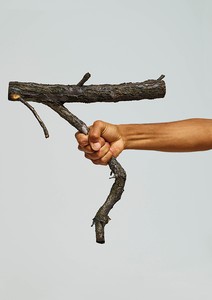
Curated by Francesco Bonami, Sunday is the first solo presentation of new work by Maurizio Cattelan in New York in over twenty years. Here, Bonami asks us to consider Cattelan as a political artist, detailing the potent and clear observations at the core of these works.
In conjunction with Franz West: Papier, the gallery’s presentation of paper-based works by Franz West at Frieze Masters 2023, artist Oscar Murillo and arts writer, critic, and broadcaster Ben Luke sit down to discuss Murillo’s collaboration in selecting the works on view, as well as his personal experiences meeting the late artist in London.
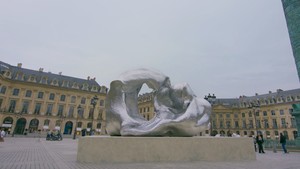
In this video, Urs Fischer elaborates on the creative process behind his public installation Wave, at Place Vendôme, Paris.
